

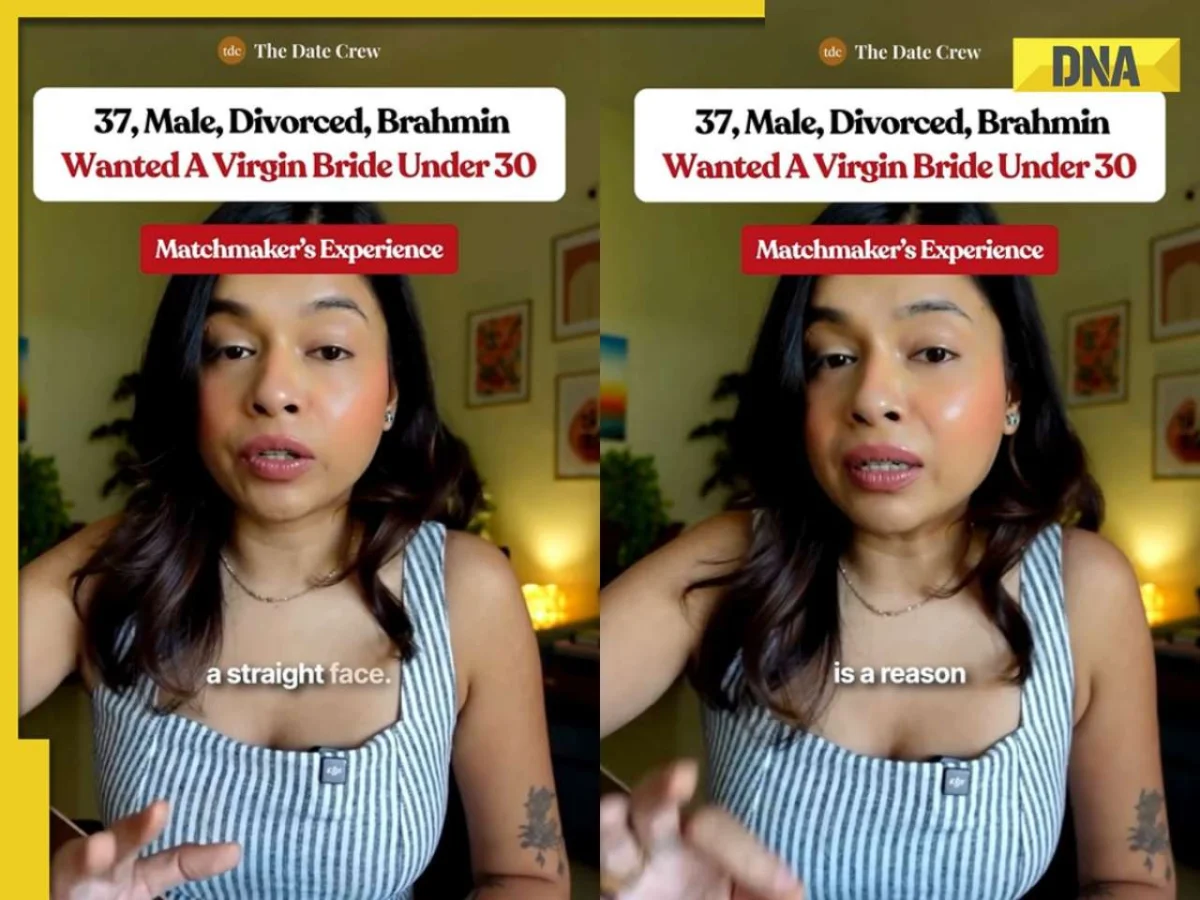
A recent viral post by prominent matchmaker and dating coach Oendrila Kapoor has ignited a fervent debate across social media platforms, exposing the deeply entrenched double standards and often archaic expectations that persist within certain segments of the modern Indian marriage market. The controversy centers around a 37-year-old divorced IIT graduate, a seemingly accomplished individual in his professional life, who presented a set of highly specific and, to many, offensive criteria for a potential bride. His demands—a woman under 30, from the Brahmin community, with no prior romantic or sexual history—have been widely condemned as hypocritical, regressive, and indicative of a troubling mindset.
The Case of the Demanding IITian: A Matchmaker’s Revelation
The genesis of this public outcry lies in a candid post by Oendrila Kapoor, who shared her experience with a client whose expectations, she felt, crossed a line. Kapoor, known for her insights into relationship dynamics and matchmaking, detailed a consultation with a 37-year-old divorced man. This individual, by his own account, boasted an impressive educational pedigree from the Indian Institute of Technology (IIT), a prestigious institution, and held a senior corporate position, reportedly as a director at a billion-dollar company. Despite his own marital history, which had ended in divorce, he articulated a stringent set of requirements for his next partner.
)
His primary stipulations included:

- Age Limit: The bride must be under 30 years old.
- Community: She must belong to the Brahmin community.
- Relationship History: She should have no prior romantic relationships.
- Sexual History: She must have no past sexual experience.
Kapoor, accustomed to navigating diverse client preferences, found these demands particularly rigid and non-negotiable. The stark contrast between the man’s own divorced status and his insistence on a woman who was, in his terms, "untouched" immediately raised red flags.
)
The Man’s "Research" and Troubling Justifications
When questioned about the rationale behind his exacting criteria, the IIT graduate reportedly cited unspecified "research." He claimed that his findings suggested women with multiple past relationships were more prone to infidelity. Kapoor, as a professional who deals with the complexities of human relationships, found this justification both questionable in its validity and deeply unfair in its application.
)
The matchmaker pressed him on whether the same logic—the potential for future infidelity based on past experiences—should apply to him, given his divorce. His response, as recounted by Kapoor, was dismissive and revealing. He reportedly stated that his situation was not equivalent. When further prodded to explain this distinction, he allegedly uttered the words that would become the focal point of widespread criticism: "Because I am a man."
)
This statement starkly illuminated the perceived double standard at play: a divorced man, by his own admission, felt entitled to demand virginity and a complete lack of romantic history from a potential partner, while absolving himself of any similar scrutiny based solely on his gender.
)
A Matchmaker’s Ethical Stance: Refusal to Proceed
Oendrila Kapoor, faced with the client’s rigid and biased mindset, ultimately made the decision not to take him on as a client. She articulated her reasoning clearly, stating that his approach reflected a desire for control rather than a genuine pursuit of compatibility and partnership. Kapoor argued that his expectations were not only unrealistic but also rooted in prejudice and a lack of understanding of modern relationship dynamics.
)
Furthermore, she astutely pointed out the inherent contradiction in his demands. Kapoor suggested that a woman who would meet all his criteria—young, Brahmin, and with no past relationships—would likely come from a very traditional background. Such a background, she reasoned, might make it exceptionally difficult for her to accept a partner who was divorced and harbored such rigid, controlling expectations about her past. The potential mismatch in values and societal conditioning was, in her view, a significant impediment to any potential successful match.
)
The Social Media Storm: A Torrent of Criticism
The repercussions of Kapoor’s post were swift and far-reaching. Social media platforms erupted with a deluge of reactions, overwhelmingly critical of the IIT graduate’s demands. Users from various backgrounds and demographics weighed in, expressing their dismay and anger.
)
Key themes that emerged in the online discourse included:
)
- Hypocrisy and Double Standards: The most prevalent criticism focused on the blatant hypocrisy of a divorced man demanding a woman with no past romantic or sexual experience. Commenters highlighted the perceived unfairness of applying different standards based on gender.
- Outdated and Regressive Mindset: Many users described the man’s expectations as belonging to a bygone era, out of sync with contemporary societal values and the realities of modern dating. The emphasis on virginity and a lack of relationship history was seen as a relic of patriarchal control.
- Irony of the IIT Background: The fact that the individual hailed from an IIT, an institution often associated with progressive thought and academic rigor, added a layer of irony and disappointment for some. It challenged the assumption that higher education automatically equates to enlightened perspectives on relationships.
- Control vs. Compatibility: Kapoor’s assessment that the man’s demands were about control rather than compatibility resonated with many. Users agreed that a healthy relationship is built on mutual respect, understanding, and acceptance, not on dictating a partner’s past.
- Echoes of Arranged Marriage Dynamics: Several users shared similar experiences or observations from the world of arranged marriages, noting that such stringent demands regarding a woman’s virginity and lack of prior relationships are unfortunately not uncommon. This brought to light the persistent societal pressures faced by women in these contexts.
- The "Because I am a Man" Remark: The man’s justification for the disparity in expectations became a symbol of patriarchal entitlement. It was widely condemned as a clear admission of gender bias and a refusal to acknowledge the equal agency and experiences of women.
The sentiment was succinctly captured by many comments that labeled the demands as "ridiculous," "unacceptable," and "emblematic of toxic masculinity." The incident served as a stark reminder that even within privileged circles, regressive attitudes towards women and relationships can persist.
)
Broader Implications and Evolving Relationship Narratives
This incident transcends the story of a single individual’s peculiar demands. It has become a catalyst for a wider conversation about several critical issues:
)
- Gender Equality in Relationships: The controversy underscores the ongoing struggle for genuine gender equality in romantic partnerships. The expectation that men can have a past while women must be "pure" is a deeply ingrained patriarchal notion that needs to be dismantled.
- The Evolution of Matchmaking: While traditional matchmaking practices have often involved considerations of community and background, the modern approach increasingly emphasizes compatibility, shared values, and emotional intelligence. Kapoor’s stance reflects this evolving professional standard, prioritizing healthy relationship dynamics over archaic criteria.
- Societal Pressure on Women: The incident highlights the immense pressure women often face regarding their virginity and relationship history, particularly within traditional societal frameworks. This pressure can be a significant barrier to their personal freedom and agency.
- The Role of Education in Shaping Attitudes: While education is often seen as a tool for progress, this case raises questions about whether educational attainment always translates into progressive attitudes towards gender and relationships. It suggests that societal conditioning and personal biases can often outweigh academic knowledge.
- The Power of Social Media as a Platform for Discourse: The viral nature of Kapoor’s post demonstrates the power of social media to amplify individual experiences and spark collective dialogue on sensitive social issues. It provides a space for people to voice their opinions, challenge regressive norms, and advocate for change.
As the debate continues, the story of the divorced IIT graduate serves as a potent reminder of the work that still needs to be done to foster a society where relationships are built on mutual respect, equality, and a genuine understanding of individual worth, irrespective of gender or past experiences. The pursuit of a partner should be about finding a compatible soul, not about fulfilling a checklist rooted in outdated prejudices and self-serving justifications. Oendrila Kapoor’s professional integrity and her decision to refuse a client whose mindset she deemed detrimental have inadvertently empowered a larger conversation about what constitutes a healthy and equitable partnership in the 21st century.
