

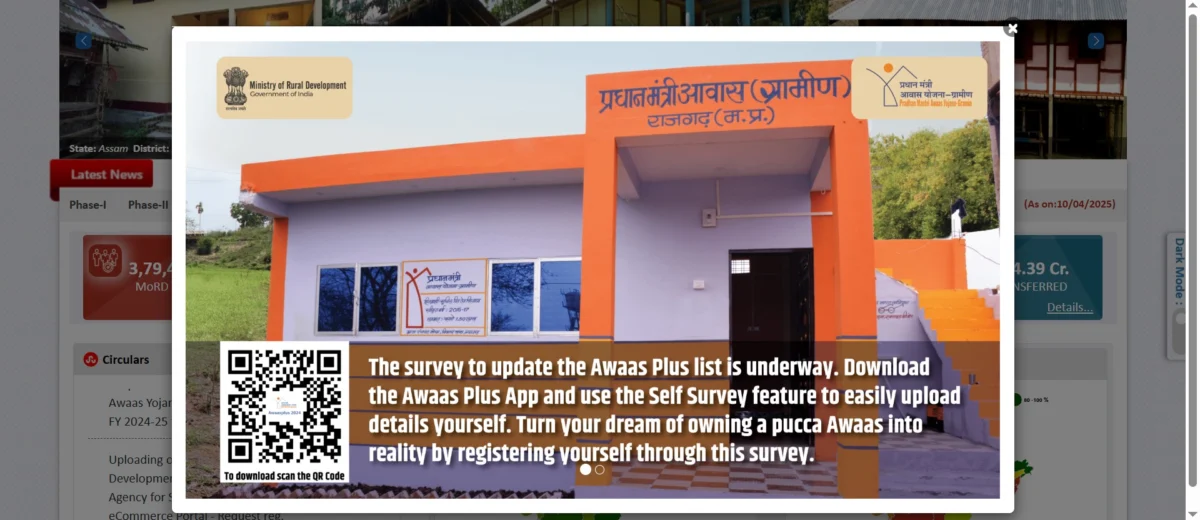
The Pradhan Mantri Awas Yojana (PMAY) stands as the cornerstone of the Indian government’s commitment to "Housing for All." Originally launched in 2015, the scheme has undergone a significant evolution, transitioning into its second major iteration—PMAY-U 2.0 and PMAY-G Phase 2. This initiative is designed to bridge the housing gap for the economically weaker sections (EWS), low-income groups (LIG), and middle-income groups (MIG), ensuring that every Indian citizen has access to a dignified living space equipped with basic amenities.
As the official portal undergoes a revamp to align with the 2025-2029 vision, this report provides an enriched, journalistic analysis of the scheme’s current status, application methodologies, and strategic implications for India’s socio-economic landscape.
1. Main Facts: The Architecture of PMAY-U 2.0
The Pradhan Mantri Awas Yojana is divided into two primary verticals: PMAY-Urban (PMAY-U) and PMAY-Gramin (PMAY-G). With the recent Union Budget announcements, the government has set an ambitious target of constructing an additional 3 crore houses—2 crore in rural areas and 1 crore in urban centers.

Income-Based Beneficiary Categories
To ensure targeted delivery, the scheme categorizes applicants based on their annual household income:
- Economically Weaker Section (EWS): Households with an annual income up to ₹3 Lakh.
- Low-Income Group (LIG): Households with an annual income between ₹3 Lakh and ₹6 Lakh.
- Middle-Income Group (MIG): Households with an annual income between ₹6 Lakh and ₹18 Lakh.
Core Objectives
The scheme provides a Credit Linked Subsidy Scheme (CLSS), where beneficiaries receive interest subsidies on home loans, effectively reducing their Equated Monthly Installments (EMIs). Under PMAY-U 2.0, the subsidy structure has been revised, with the maximum subsidy now capped at ₹1.80 lakh, distributed over five annual installments, ensuring sustained financial support for new homeowners.
2. Chronology: From Inception to the 2029 Vision
The journey of PMAY reflects the government’s shifting focus from mere construction to integrated urban development.

- June 2015: PMAY-Urban is launched with an initial target to be met by March 2022.
- 2015–2024 (Phase 1): During this decade, the scheme achieved remarkable milestones. Approximately 118.64 lakh houses were sanctioned, with 92 lakh units successfully constructed and delivered to beneficiaries.
- August 2024: The Union Cabinet, chaired by Prime Minister Narendra Modi, approves the implementation of PMAY-U 2.0 for the period of FY 2024-25 to FY 2028-29.
- March 2022 – December 2025: The deadline for completing houses sanctioned under Phase 1 (up to March 31, 2022) is extended to December 31, 2025, ensuring that no project is left halfway due to administrative timelines.
- October 2025: The "PM Awas Mela Shehri" is scheduled as part of the Angikaar 2025 campaign, focusing on on-the-spot verification and loan facilitation.
3. Supporting Data: Sanctions and State-Wise Progress
Recent data from the Ministry of Housing and Urban Affairs (MoHUA) highlights a surge in administrative approvals to meet the 2029 targets.
Recent Approvals (2024-2025)
In a significant move, the MoHUA approved an additional 1.47 lakh pucca houses under PMAY-U 2.0 across 14 States and Union Territories. This brings the total sanctioned houses under the new phase to 8.56 lakh.
Key Beneficiary States in the Latest Round:
The approvals cover a diverse geographical spread, including Gujarat, Himachal Pradesh, Ladakh, Madhya Pradesh, Manipur, Maharashtra, Mizoram, Odisha, Puducherry, Punjab, Tamil Nadu, Tripura, Uttarakhand, and Uttar Pradesh.

Quick Facts Table
| Feature | Phase 1 (2015-2024) | Phase 2 (2025-2029) |
|---|---|---|
| Sanctioned Houses | 118.64 Lakh | 3 Crore (Total Target) |
| Delivered Units | 92 Lakh | 1 Crore (Urban) / 2 Crore (Gramin) |
| Max Subsidy | ₹2.67 Lakh | ₹1.80 Lakh (Revised) |
| Focus | Initial Housing Demand | PMAY-U 2.0 & Saturation Approach |
4. Official Responses and Application Methodology
The government has streamlined the application process by leveraging digital infrastructure, though offline avenues remain available to ensure inclusivity.
How to Apply Online for PMAY-U 2.0
The official portal (pmaymis.gov.in) has been revamped. The process is now more rigorous to prevent fraud:
- Eligibility Check: Applicants must enter their state, household income, and selected "vertical" (e.g., Beneficiary Led Construction or Affordable Housing in Partnership).
- Strict Declarations: Applicants must confirm they do not own a pucca house anywhere in India and have not availed of government housing benefits in the last 20 years.
- Aadhaar Authentication: The system uses Aadhaar-based OTP verification to ensure the applicant’s identity matches official records.
- Documentation: Digital copies of income certificates, identity proof, and property affidavits must be uploaded.
Offline and Bank-Led Applications
For those without digital access, Common Service Centres (CSCs) facilitate applications for a nominal fee of ₹25. Additionally, empaneled banks (NHB, HUDCO, and SBI) serve as primary lending institutions. Applicants can submit their Aadhaar and income documents directly to these banks to initiate the Credit Linked Subsidy process.

Official Stance on Grievances
The MoHUA has established a dedicated grievance redressal system. Deputy Secretary Manish Joon oversees the "Housing for All" Directorate, emphasizing that "simply filling the form does not entitle a citizen to benefits; eligibility must be verified by State/UT/ULB authorities."
5. Implications: Beyond Brick and Mortar
The expansion of PMAY into Phase 2 carries profound implications for India’s economy and social fabric.
Economic Stimulus
The construction of 3 crore houses acts as a massive multiplier for the economy. It drives demand in the steel, cement, and paint industries while generating millions of man-days of employment for both skilled and unskilled labor.

Integration with Social Welfare (Convergence)
PMAY-U 2.0 is not operating in a vacuum. Through the Angikaar Module, the government is integrating housing with other flagship schemes:
- PM Surya Ghar: Facilitating solar rooftop installations for new homeowners.
- Ayushman Bharat: Ensuring health insurance for PMAY beneficiaries.
- PM Ujjwala Yojana: Providing clean cooking gas connections to every new household.
Tax Benefits for the Middle Class
The scheme offers significant fiscal advantages under the Income Tax Act:
- Section 24(b): Deductions up to ₹2 lakh on home loan interest.
- Section 80C: Deductions on the principal repayment component.
- Section 80EE/80EEA: Additional benefits for first-time homebuyers, subject to prevailing budget mandates.
Technical and Social Challenges
Despite the progress, challenges remain. The 1-to-3-month processing time for applications often fluctuates based on local Urban Local Body (ULB) efficiency. Furthermore, the transition to PMAY-U 2.0 requires strict adherence to the new "vertical" selection, which cannot be changed once submitted, necessitating high levels of applicant awareness.

6. Common Pitfalls and Expert Advice
To ensure a successful application, prospective homeowners should avoid these frequent mistakes:
- Inconsistent Data: Ensure the name on the application matches the Aadhaar card exactly.
- Income Misreporting: Providing incorrect income details can lead to permanent disqualification and potential legal action.
- Property Ownership: The scheme is strictly for first-time homeowners. Any existing pucca house ownership by any family member (spouse or unmarried children) disqualifies the entire household.
- Technical Stability: Use an updated browser and a stable internet connection, as the revamped portal handles high-encryption data for Aadhaar authentication.
7. Frequently Asked Questions (FAQs)
Q1: What is the maximum subsidy available now?
Under PMAY-U 2.0, the maximum interest subsidy is ₹1.80 lakh, which is a reduction from the previous ₹2.67 lakh. This is now disbursed in five annual installments.
Q2: Can I edit my form after submission?
No. Once the PMAY online form is submitted, it cannot be edited. Applicants must use the "Edit" option only before final submission or contact local authorities for manual corrections if a genuine error occurs.

Q3: Is there a fee for the application?
The online portal is free for self-registration. If using a Common Service Centre (CSC), a fee of ₹25 is mandated by the government. Beware of private entities asking for higher fees.
Q4: How long does the verification take?
Typically, the process takes 1 to 3 months. This includes Aadhaar validation (1-2 weeks) followed by physical field verification by local municipal authorities.
Journalistic Perspective:
The Pradhan Mantri Awas Yojana is more than a housing project; it is a social contract aimed at urban dignity. By extending deadlines and increasing targets for 2029, the government is signaling that the "saturation" of housing needs is a non-negotiable priority. However, the success of Phase 2 will depend heavily on the seamless coordination between Central Nodal Agencies and local state bodies to ensure that the "last mile" beneficiary is not lost in digital bureaucracy.
