

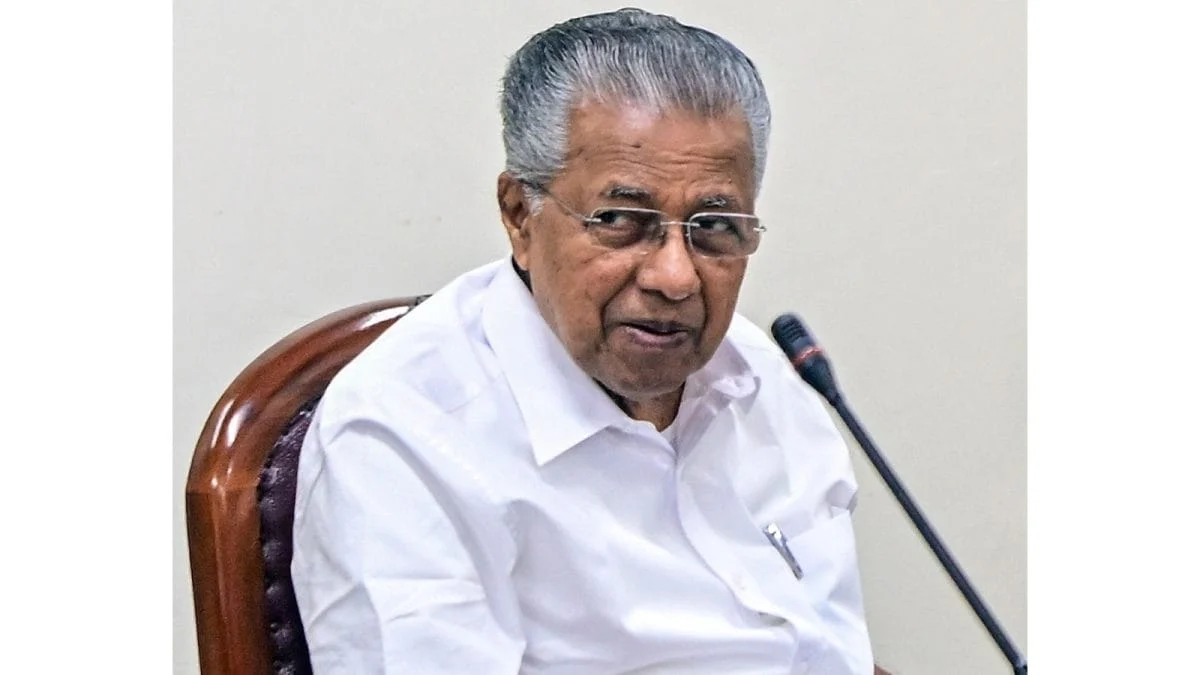
Thiruvananthapuram, India – May 27, 2026 – In a dramatic escalation of a high-profile corruption probe, the Enforcement Directorate (ED) today conducted extensive raids at multiple residences associated with Pinarayi Vijayan, the former Kerala Chief Minister and current Leader of Opposition. The synchronized searches, carried out across several locations in Kerala, including Vijayan’s rented residence in Thiruvananthapuram, are part of the ongoing investigation into the politically charged Cochin Minerals and Rutile Limited (CMRL) case, which involves alleged illegal financial transactions linked to his daughter, Veena Thaikkandiyil’s IT firm, Exalogic Solutions Pvt. Ltd.
The raids immediately ignited a fierce political backlash, with Vijayan launching a scathing attack on the Bharatiya Janata Party (BJP)-led central government, accusing it of weaponizing central agencies to target opposition leaders. Adding another layer of controversy, Vijayan also criticized the Congress party, particularly its prominent leader Rahul Gandhi, suggesting that the ED’s actions would bring them "great satisfaction." The developments underscore the intensifying political hostilities in India, where central agency probes against opposition figures have become a recurrent feature of the national political landscape.
Main Facts of the Developing Story
The morning of May 27, 2026, witnessed a significant turn in the CMRL controversy as ED teams fanned out across Kerala. The primary targets of the raids included the residential premises of Pinarayi Vijayan, who served as Chief Minister of Kerala from 2016 to 2021 and currently holds the position of Leader of Opposition. Crucially, the searches were also directed at locations connected to Exalogic Solutions Pvt. Ltd., the IT company owned by his daughter, Veena Thaikkandiyil. Ms. Thaikkandiyil is understood to be residing at the same Thiruvananthapuram address where her father was also subjected to searches.
The genesis of the ED’s involvement lies in the broader CMRL case, which first came to public light through findings by the Income Tax Interim Settlement Board. The Board had alleged that CMRL made illicit payments to Exalogic Solutions and directly to Pinarayi Vijayan, without any discernible services rendered. These payments, totaling significant sums, were controversially characterized as "protection money" by the Income Tax authorities, a claim vehemently denied by Vijayan and his family. The ED, operating under the Prevention of Money Laundering Act (PMLA), stepped in to investigate the potential money laundering aspects of these alleged transactions.
The raids follow closely on the heels of a major legal setback for CMRL and its officials. Just a day prior, the Kerala High Court had refused to quash the ED’s ongoing investigation into the company, effectively giving the central agency a green light to proceed with its probe. This judicial decision appears to have paved the way for the intensified investigative actions seen today, transforming a complex financial dispute into a full-blown political crisis that threatens to reverberate across Kerala’s political spectrum and potentially impact national dynamics.
Chronology of the CMRL Case and Related Investigations
The CMRL case, at the heart of today’s ED raids, has a complex history stretching back several years and involving multiple central agencies.
- Initial Allegations and Income Tax Findings (Early 2020s): The controversy first gained significant public attention when the Income Tax Interim Settlement Board, in its assessment of Cochin Minerals and Rutile Limited (CMRL), unearthed alleged irregular payments. The Board’s findings indicated that CMRL had paid Rs 1.72 crore to Exalogic Solutions Pvt. Ltd., the IT firm owned by Veena Thaikkandiyil, the daughter of Pinarayi Vijayan. Furthermore, the Income Tax department also alleged direct payments of Rs 80 lakh to Pinarayi Vijayan himself. The board’s contentious observation was that these payments were made without any actual services being rendered, suggesting they were "protection money" or illegal gratification. This finding sparked the initial wave of political outrage and demands for a thorough investigation.
- Political Fallout and Public Demands (Mid-2020s): Following the Income Tax findings, opposition parties in Kerala, particularly the Congress-led United Democratic Front (UDF) and the BJP, seized upon the allegations. They consistently demanded comprehensive probes into the financial dealings, highlighting the perceived impropriety of a Chief Minister’s family member receiving substantial payments from a private company under such circumstances. Pinarayi Vijayan and the CPI(M) consistently defended the transactions, asserting that Exalogic Solutions had indeed provided legitimate IT services and that all dealings were above board.
- Entry of Serious Fraud Investigation Office (SFIO) (Late 2024/Early 2025): As the political pressure mounted, the Union Ministry of Corporate Affairs initiated a probe by the Serious Fraud Investigation Office (SFIO) into Exalogic Solutions and CMRL. The SFIO, a multi-disciplinary organization under the Ministry of Corporate Affairs, is mandated to investigate white-collar crimes and serious corporate frauds. Its involvement broadened the scope of the investigation beyond just income tax implications to potential corporate governance and fraud issues.
- Enforcement Directorate’s Intervention (Early 2026): Given the nature of the alleged illicit financial transactions and the sums involved, the Enforcement Directorate (ED) subsequently registered a case under the Prevention of Money Laundering Act (PMLA). The ED’s mandate is to trace and attach proceeds of crime, making it a powerful agency in cases involving alleged financial irregularities. The ED’s entry elevated the case’s severity, as PMLA provisions allow for arrests and attachment of properties.
- Legal Challenges and High Court Decision (May 26, 2026): Prior to today’s raids, CMRL and its officials had sought to quash the ED’s investigation through legal channels. However, the Kerala High Court, after hearing arguments from both sides, delivered a significant ruling on May 26, 2026, refusing to halt the ED’s probe. This judicial validation of the ED’s jurisdiction and investigative powers in the CMRL case was a critical precursor, effectively clearing the path for the agency to intensify its actions, culminating in today’s coordinated searches.
Supporting Data and Broader Context
The allegations surrounding the CMRL case are specific yet resonate with a broader pattern of scrutiny faced by high-profile political figures and their families in India. The Income Tax Interim Settlement Board’s finding of Rs 1.72 crore paid to Exalogic Solutions and Rs 80 lakh directly to Vijayan, without corresponding services, forms the financial backbone of the entire investigation. These figures, while disputed, represent a substantial sum that warrants rigorous examination under anti-money laundering laws.
The Enforcement Directorate’s operations are governed by the Prevention of Money Laundering Act (PMLA), a robust legislation designed to combat financial crimes, including the laundering of illegally obtained funds. Under PMLA, the ED has extensive powers to summon individuals, conduct searches and seizures, provisionally attach properties, and make arrests based on reasonable suspicion. The agency’s actions today are firmly rooted in these legal provisions, allowing them to gather evidence and trace potential proceeds of crime.
The context for these raids extends beyond Kerala’s borders. In recent years, central investigative agencies, particularly the ED and the Central Bureau of Investigation (CBI), have been increasingly active in probing opposition leaders across various states. Leaders from the Aam Aadmi Party (AAP) in Delhi, the Trinamool Congress (TMC) in West Bengal, the Rashtriya Janata Dal (RJD) in Bihar, and several others have faced similar investigations, raids, and even arrests. This trend has fueled a nationwide debate about the independence of these agencies and whether they are being selectively deployed as political instruments by the ruling BJP to weaken its opponents. Critics argue that while corruption must be tackled, the timing and focus of these probes often appear politically motivated, especially ahead of crucial elections.
In Kerala’s vibrant and often tumultuous political landscape, the CMRL case holds particular significance. The state is traditionally dominated by two major fronts: the Left Democratic Front (LDF), led by the Communist Party of India (Marxist) [CPI(M)], and the United Democratic Front (UDF), led by the Indian National Congress. The BJP has been striving to establish a stronger foothold in the state. An investigation involving a former Chief Minister and his family member, especially one that touches upon allegations of financial impropriety, inevitably becomes a major flashpoint. The integrity of political leadership and the transparency of financial dealings are always critical issues for the Kerala electorate, making the outcome of this probe potentially impactful on future electoral dynamics.
Official Responses and Intense Political Reactions
The immediate aftermath of the ED raids saw a flurry of sharp reactions from all corners of the political spectrum, underscoring the deep divisions and high stakes involved.
Pinarayi Vijayan’s Vehement Counter-Attack:
Addressing reporters shortly after the searches concluded at his residences, Pinarayi Vijayan launched a blistering attack, characterizing the raids as a politically motivated witch-hunt orchestrated by the BJP-led central government. "The BJP government has always been carrying out deliberate attacks against opposition leaders in the country," Vijayan asserted, his voice firm despite the circumstances. "Strong protests against it have risen across the country, yet they continue this abuse of power."
Vijayan then turned his ire towards the Congress party, making a pointed reference to Rahul Gandhi. "For a long time, the ED has wanted to conduct a search at my house. I feel that this search would give great satisfaction to certain people, especially to someone like Rahul Gandhi," he stated, alluding to past comments by the Congress leader. He elaborated on his accusation, claiming, "Rahul Gandhi had publicly asked why my house had not been raided and why I had not been arrested. The Congress position is that the ED’s intrusion against parties other than their own should continue. This shows a disturbing lack of solidarity among opposition parties and plays directly into the hands of the ruling establishment." Vijayan vehemently denied any wrongdoing, reiterating that all financial dealings of Exalogic Solutions were legitimate and transparent.
Congress’s Measured Yet Critical Stance:
Responding to Vijayan’s accusations, leaders from the Kerala Congress unit adopted a more nuanced, yet critical, position. While denying any direct support for the alleged misuse of central agencies by the BJP, they maintained that the investigation into the CMRL case was necessary given the gravity of the allegations.
"Pinarayi Vijayan’s attempt to deflect blame onto the Congress is a transparent tactic," stated V.D. Satheesan, the Leader of Opposition in the Kerala Assembly (and hence Vijayan’s successor, assuming Vijayan is the former CM, and the current state LoP). "Let me be clear, the Congress has consistently opposed the weaponization of central agencies against political rivals. However, that does not mean we will turn a blind eye to serious allegations of corruption involving public figures, regardless of their party affiliation. The CMRL case has legitimate questions that demand answers."
Ramesh Chennithala, another senior Congress leader, added, "If Pinarayi Vijayan is innocent, he should cooperate fully with the investigation instead of playing the victim card and dragging the Congress into his troubles. The people of Kerala deserve transparency, and the ED must be allowed to conduct a fair and impartial probe." Rahul Gandhi’s office, while not issuing an immediate direct response to Vijayan’s specific "satisfaction" comment, has previously maintained that central agencies should act impartially and that no one is above the law.
BJP’s Demand for Accountability:
The BJP in Kerala, meanwhile, welcomed the ED’s action and strongly refuted Vijayan’s claims of political vendetta. State BJP President K. Surendran declared, "The Enforcement Directorate is an independent agency, and its actions are based on evidence, not political dictates. Pinarayi Vijayan’s accusations are a desperate attempt to distract from the serious charges of corruption and money laundering involving his family. The CMRL case is not a new development; it has been under scrutiny for years. This raid is a logical progression of a legitimate investigation."
Surendran further demanded that Vijayan and his family fully cooperate with the probe, stating, "If there is nothing to hide, then why the outrage? The people of Kerala expect full accountability from their leaders, and the law must take its course without any political interference."
Implications and Future Outlook
The ED raids on Pinarayi Vijayan’s residences and the ensuing political mudslinging carry significant implications for the political landscape of Kerala and potentially for national politics.
Impact on Pinarayi Vijayan and the CPI(M): For Pinarayi Vijayan, already a towering figure in Kerala politics, these raids represent a major personal and political challenge. While he has consistently denied any wrongdoing, the allegations of financial impropriety involving his daughter cast a shadow over his public image, particularly given the CPI(M)’s traditional stance against corruption. The raids could potentially undermine his authority and credibility within his party and among the broader electorate. The CPI(M) and the Left Democratic Front (LDF) will now face the arduous task of defending their leader against mounting accusations, even as they attempt to rally support against what they perceive as federal overreach. This could distract from governance issues and impact the party’s performance in upcoming local body or state elections.
Legal Ramifications: From a legal standpoint, the raids signify an intensification of the ED’s investigation. The agency will now analyze the seized documents, digital evidence, and potentially summon individuals for questioning. This could lead to further searches, provisional attachment of properties under PMLA, and potentially arrests if sufficient evidence of money laundering is found. The legal battle is likely to be protracted, with both sides employing their legal teams to navigate the complex provisions of the PMLA. The courts will play a crucial role in scrutinizing the ED’s actions and the evidence presented.
National Political Discourse: On a national level, these raids will undoubtedly add fuel to the ongoing debate about the independence and alleged misuse of central investigative agencies. Opposition parties across India are likely to cite this as another example of the BJP’s strategy to target dissent and consolidate power. This could further solidify the opposition’s narrative of a government using its power to suppress political rivals, potentially galvanizing them to forge stronger alliances against the ruling party. However, it also presents the BJP with an opportunity to project itself as a government committed to fighting corruption, regardless of political affiliations.
Public Perception: The public’s perception will be critical. While a segment of the population may view the raids as a legitimate exercise in tackling corruption, another may see it as political persecution. The narrative crafted by both the ruling party and the opposition will heavily influence public opinion. For Vijayan and the CPI(M), the challenge will be to convincingly argue their innocence and portray the raids as an attack on federalism, while for the BJP, it will be to demonstrate the legal legitimacy and impartiality of the ED’s actions.
In conclusion, the ED raids on Pinarayi Vijayan’s residences have plunged Kerala into a fresh political crisis. What began as a complex financial investigation has now exploded into a full-blown political confrontation, intertwining allegations of corruption with charges of political vendetta. As the legal processes unfold and political rhetoric intensifies, the eyes of the nation will be on Kerala, watching how this high-stakes battle between a powerful opposition leader and a determined central agency ultimately plays out. The repercussions are likely to shape political narratives and electoral outcomes in the months and years to come.
