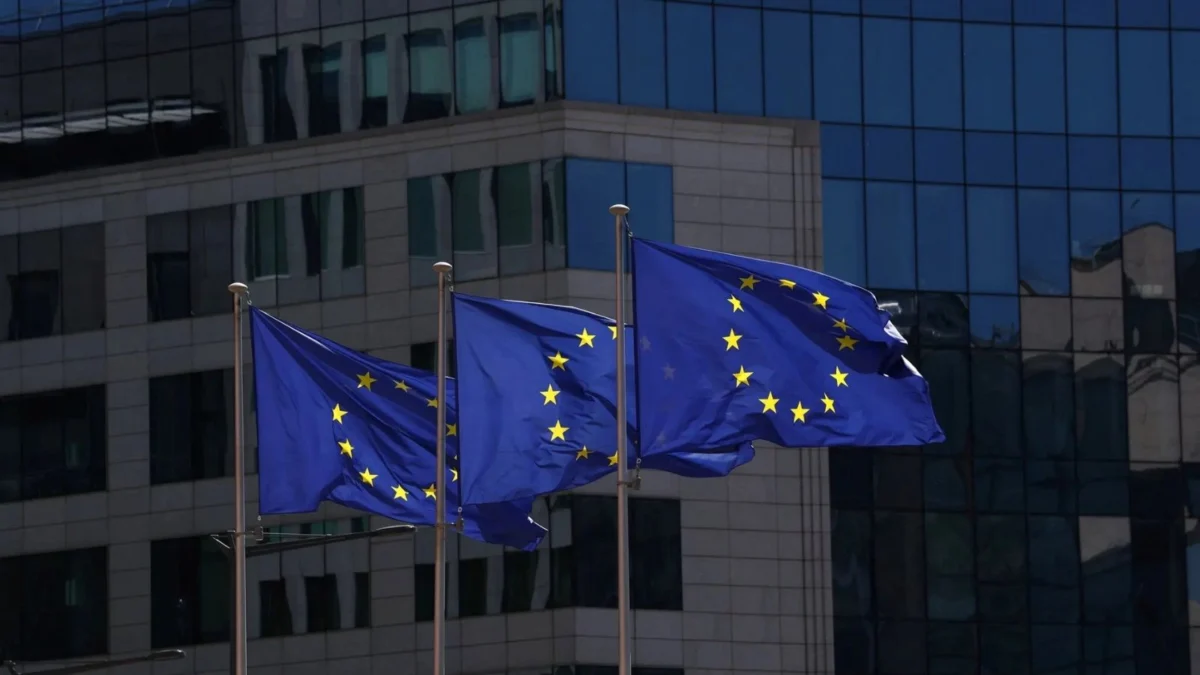
Europe Declares Digital Independence: EU Unveils Sweeping Plan to Curtail Reliance on American Tech
BRUSSELS, Belgium – June 4, 2026 – In a landmark strategic pivot, the European Union today unveiled a comprehensive and ambitious plan aimed at drastically reducing its dependence on American technology across critical sectors. Driven by growing concerns over economic vulnerability, geopolitical security, and the lingering shadow of strained transatlantic relations, the 27-nation bloc is embarking on an unprecedented push for "digital sovereignty." The strategy, announced by European Commission President Ursula von der Leyen, signifies a profound shift in the EU’s approach to its digital future, promising greater government involvement in the tech industry, a revival of domestic manufacturing capabilities, and a prioritisation of European suppliers in essential contracts.
The blueprint for this digital emancipation outlines a multi-pronged approach, targeting areas from artificial intelligence and cloud computing to the bedrock of the modern digital economy: semiconductors. At its core, the initiative seeks to insulate Europe from potential external leverage, particularly from a United States administration perceived as willing to weaponize technological dominance for political or economic gain. Officials openly voiced fears of a "kill switch" – a scenario where access to vital tech services could be unilaterally blocked, crippling European hospitals, energy grids, and public services.
"We cannot afford to depend on others for the technologies that keep our hospitals running, our energy grids stable and our services secure," President von der Leyen stated unequivocally, underscoring the existential nature of the challenge. The Commission’s data paints a stark picture: the bloc currently relies on foreign providers for over 80% of its digital products, services, infrastructure, and intellectual property. This new strategy is not merely about fostering a local tech ecosystem; it is about building fundamental resilience and securing Europe’s strategic autonomy in an increasingly complex and interconnected world.
The proposals, while broad and far-reaching, are expected to navigate a complex legislative journey, requiring consensus from member states and the 720-member European Parliament, a process that could span a year or more. Nevertheless, the announcement signals an undeniable commitment from Brussels to reshape the continent’s technological landscape, moving beyond regulation to proactive industrial policy.
Main Facts: A Bold Declaration of Digital Sovereignty
The European Union’s newly announced strategy represents a definitive move to assert "digital sovereignty," a concept increasingly central to the bloc’s long-term vision. This initiative is far more than a simple protectionist measure; it is a meticulously crafted response to decades of growing reliance on predominantly American technology giants, a dependency now viewed as a significant strategic liability. The comprehensive plan touches upon several critical pillars:
Firstly, a substantial increase in government involvement and investment is envisioned for Europe’s domestic tech industry. This marks a departure from a traditionally lighter touch, signalling a willingness to deploy state aid and public funds to nurture homegrown champions. The objective is to foster an environment where European innovators can compete effectively on a global scale, reducing the brain drain and capital flight often associated with the dominance of foreign tech.
Secondly, the strategy prioritises the acceleration of critical digital infrastructure development. A cornerstone of this effort is the ambitious goal to at least triple Europe’s data centre capacity by 2030. This will be facilitated by streamlining permit processes, ensuring reliable and sustainable electricity supply, and directing significant government investment. The aim is to ensure that European data, especially sensitive public and private sector information, is stored and processed within the EU’s jurisdictional boundaries, enhancing data privacy and security.
Thirdly, the plan includes a powerful legislative instrument, "Chips Act 2.0," building upon a previous 2023 law. While the first iteration focused on bolstering semiconductor manufacturing capabilities within the EU, this new phase shifts emphasis towards stimulating demand for European-made chips across key industries. Sectors like automotive, defence, industrial automation, and critical infrastructure are encouraged to integrate locally produced semiconductors, thereby creating a robust internal market and fostering a resilient supply chain. This move is particularly salient given the global semiconductor shortages experienced during recent crises, which exposed the fragility of global supply chains.
Fourthly, the EU intends to implement "Buy European" policies for government and business procurement, particularly for critical technology contracts. This measure aims to steer public sector spending towards domestic suppliers, providing a vital initial market for European tech firms. Critically, the plan contemplates potentially barring American firms from cloud computing contracts deemed essential for security. This specific exclusion highlights the EU’s heightened concerns regarding the extraterritorial reach of foreign laws, such as the U.S. CLOUD Act, which could compel American cloud providers to grant U.S. authorities access to data stored on their servers, regardless of its physical location.
The overarching rationale articulated by European officials is not to replace American technology wholesale, but to cultivate a strategic redundancy and resilience. The goal is to prevent any single foreign power from holding disproportionate sway over Europe’s digital destiny, ensuring that vital services and economic functions can continue uninterrupted, even in times of geopolitical friction or supply chain disruption. This quest for "open strategic autonomy" acknowledges the benefits of global technological collaboration while simultaneously fortifying Europe’s foundational digital capabilities.
Chronology: A Decades-Long March Towards Digital Autonomy
The EU’s declaration of digital independence is not an overnight phenomenon but the culmination of a decades-long evolution of concerns, policies, and geopolitical shifts.
Early Seeds of Concern (1990s – Early 2010s)
While the internet was rapidly globalizing, early European anxieties revolved around data privacy and the dominance of American tech giants in consumer software and online services. The establishment of stringent data protection laws, culminating in the General Data Protection Regulation (GDPR), was an early indicator of Europe’s unique approach to the digital sphere, prioritising citizen rights over commercial exploitation. However, during this period, the focus was largely regulatory rather than industrial, with the EU content to rely on the perceived efficiency and innovation of Silicon Valley. Discussions around a "Digital Single Market" began, but primarily aimed at breaking down national barriers within the EU, not challenging external tech dominance.
The Wake-Up Call: Surveillance, Data Breaches, and Trade Tensions (2013 – 2016)
The Edward Snowden revelations in 2013 served as a profound wake-up call, exposing the vast scope of U.S. surveillance programmes, including the collection of data from major tech companies. This significantly intensified European concerns about data sovereignty and the security implications of storing sensitive information with U.S.-based providers. Subsequent legal battles, notably the Schrems I and II rulings by the European Court of Justice, invalidated transatlantic data transfer agreements (Safe Harbour and Privacy Shield), citing inadequate protection for European citizens’ data from U.S. intelligence agencies. These rulings highlighted the fundamental divergence in legal frameworks and the inherent risks of dependency. Concurrently, incidents like major cybersecurity breaches further underscored the vulnerabilities inherent in globally interconnected systems.
The Trump Administration Era: Accelerating the Urgency (2017 – 2020)
The presidency of Donald Trump proved to be a critical accelerant for the EU’s digital sovereignty ambitions. The "America First" doctrine led to unpredictable trade policies, tariffs, and threats of sanctions, creating a climate of profound uncertainty for European businesses. The Trump administration’s willingness to use economic and technological leverage as geopolitical tools – notably against Chinese tech giant Huawei – demonstrated the potent "kill switch" capability that European leaders now fear. This period highlighted that technological dependence was not merely an economic issue but a grave national and regional security concern. The EU began to seriously re-evaluate its strategic autonomy, recognising that relying on a single dominant foreign power, even an ally, carried unacceptable risks. Initiatives like Gaia-X, a project aimed at creating a sovereign European data infrastructure, gained traction during this time.
Post-Trump and Global Crises: Solidifying Resolve (2021 – 2025)
Even after the Trump administration, the geopolitical landscape continued to evolve rapidly, solidifying Europe’s resolve. The COVID-19 pandemic exposed the critical fragility of global supply chains, particularly in semiconductors, severely impacting key European industries like automotive manufacturing. The war in Ukraine further underscored the importance of strategic autonomy in energy, defence, and, by extension, digital infrastructure.
This period also saw the EU enacting ground-breaking digital legislation, including the Digital Services Act (DSA) and the Digital Markets Act (DMA), designed to curb the power of large online platforms and foster fairer competition. While primarily regulatory, these acts demonstrated a growing assertiveness and a desire to shape the digital sphere according to European values. The first European Chips Act in 2023, aimed at boosting semiconductor manufacturing, was a direct response to supply chain vulnerabilities and a clear precursor to today’s broader digital sovereignty plan. The cumulative effect of these events has been a hardening of the EU’s stance, leading directly to the comprehensive strategy unveiled today in 2026.
Supporting Data: The Stark Reality of Digital Dependency
The EU’s pivot towards digital sovereignty is underpinned by a compelling body of data illustrating its profound and often precarious reliance on foreign — predominantly American — technology providers. The statistic cited by the European Commission, stating that the bloc relies on foreign providers for over 80% of its digital products, services, infrastructure, and intellectual property, is a stark indicator of this vulnerability.
Economic Dependency: A Market Dominated by Foreign Giants
The digital economy is awash with evidence of non-EU, specifically US, dominance:
- Cloud Computing: The hyperscale cloud market is overwhelmingly controlled by a handful of American giants: Amazon Web Services (AWS), Microsoft Azure, and Google Cloud Platform (GCP). Collectively, these three providers command a global market share estimated to be well over 60%, with their presence in Europe mirroring this dominance. European businesses, from SMEs to large corporations, increasingly rely on these platforms for data storage, processing, and application hosting. This translates to billions of euros flowing out of the EU economy annually, hindering the growth of local cloud providers and creating a single point of failure.
- Semiconductors: While Europe has strong research capabilities in chip design (e.g., ARM, which is UK-based but broadly integrated into the global ecosystem, and various European design houses), its manufacturing capacity for cutting-edge logic chips is severely limited. The vast majority of advanced semiconductors, critical for everything from smartphones and AI accelerators to electric vehicles and defence systems, are produced in Asia (Taiwan, South Korea) or designed by US firms (Intel, Nvidia, Qualcomm, AMD). The EU’s reliance on these external supply chains leaves its industries vulnerable to geopolitical tensions, natural disasters, and trade disputes, as vividly demonstrated during the 2020-2022 chip shortage.
- Software and Operating Systems: From enterprise resource planning (ERP) systems to office productivity suites and mobile operating systems (Android, iOS), American software holds an almost ubiquitous presence across European businesses and consumer devices. This creates not only an economic outflow but also a dependency on foreign standards, security updates, and data management policies.
- Artificial Intelligence (AI): While Europe boasts excellent AI research, the foundational platforms, large language models, and AI development tools are largely spearheaded by US tech behemoths. This risks European AI applications being built upon external frameworks, potentially embedding foreign biases or limiting the ability to tailor AI to European ethical and regulatory standards.
This economic dependency represents a significant drain on European capital, limits high-value job creation within the EU tech sector, and stifles the development of a truly competitive indigenous innovation ecosystem.
Strategic Vulnerabilities: More Than Just Economics
Beyond the economic implications, the reliance on foreign tech presents critical strategic vulnerabilities:
- Supply Chain Risks: The COVID-19 pandemic and geopolitical events starkly exposed the fragility of global supply chains. A disruption in the supply of critical components, particularly semiconductors, can bring entire industries to a halt, as evidenced by the automotive sector’s struggles. Digital sovereignty aims to mitigate these risks by diversifying sources and increasing local production.
- Cybersecurity Implications: Relying on foreign-controlled digital infrastructure raises profound cybersecurity concerns. While providers assert robust security measures, the potential for state-sponsored espionage, backdoors, or compelled data access by foreign governments (e.g., through legal frameworks like the US CLOUD Act) remains a significant worry. A breach or forced data disclosure could compromise sensitive government data, critical infrastructure controls, and private citizen information.
- Data Sovereignty and Privacy: The fundamental divergence between European data protection laws (like GDPR) and the legal frameworks of other nations, particularly the US, creates ongoing tension. The EU’s desire for data sovereignty ensures that data generated within Europe remains subject to European laws, even when processed by foreign entities, a principle often challenged by the extraterritorial reach of foreign legal systems.
- Loss of Control over Critical Infrastructure: Cloud computing underpins vast swathes of modern critical infrastructure, from healthcare systems and energy grids to financial services and public administration. Handing control of these foundational digital services to foreign providers means surrendering a degree of strategic autonomy over essential societal functions. The "kill switch" scenario, while extreme, highlights the potential for external actors to disrupt vital services, whether intentionally or inadvertently.
- Impact on Innovation and Competition: The entrenched market power of dominant foreign tech firms can stifle competition and innovation within the EU. Smaller European startups often struggle to gain traction against well-funded, established players, leading to a less dynamic and diverse tech landscape. Digital sovereignty seeks to level the playing field and foster a more vibrant internal ecosystem.
The combined weight of this data underscores the strategic imperative behind the EU’s new plan. It is a pragmatic response to an unsustainable level of dependency that poses risks to Europe’s economic prosperity, security, and geopolitical standing.
Official Responses: Unpacking the EU’s Strategic Vision
The official responses from European leaders and the details emerging from the Commission elaborate on a strategy rooted in "open strategic autonomy" – a nuanced approach that seeks self-reliance without resorting to outright protectionism.
EU Officials’ Elaboration: Beyond the Headline
President Ursula von der Leyen’s initial statement set the tone, but further insights reveal the depth of the EU’s commitment:
- Executive Vice-President Margrethe Vestager, responsible for digital and competition policy, is expected to emphasize that the strategy is about fostering a competitive European market, not isolating it. She might highlight the importance of fair competition, robust regulation, and targeted investment to create a level playing field for European innovators. Her office would likely stress that while cooperation with international partners remains vital, it must be on terms that uphold European values and interests.
- Commissioner for Internal Market, Thierry Breton, a vocal proponent of European industrial sovereignty, is anticipated to provide granular details on the industrial policy aspects. He would likely elaborate on the specifics of the "Chips Act 2.0," explaining how it will complement the existing manufacturing push by focusing on demand-side incentives. This could include public procurement mandates for European-made chips in sectors like 5G infrastructure, defence, and automotive, as well as subsidies for companies that integrate these chips into their products. Breton might also highlight efforts to build European champions in niche, high-value chip segments where the EU can genuinely compete, rather than attempting to replicate full-scale, cutting-edge logic chip manufacturing which is capital-intensive and dominated by a few global players.
- Regarding data centres, officials are likely to detail the blend of regulatory and financial incentives. This includes expedited permitting processes at national and local levels, direct government funding for green data centre construction (emphasizing energy efficiency and renewable sources), and guarantees for reliable, high-capacity energy grids. The ambition to triple capacity by 2030 is not just about quantity but also about quality and security, ensuring these centres meet the highest European standards for data protection and cybersecurity. The goal is to build a distributed, resilient network of sovereign cloud infrastructure that can serve the diverse needs of member states and industries.
- The "Buy European" procurement policies will be critical. This is not just a suggestion but will likely involve specific criteria for government contracts, particularly for sensitive cloud computing services, where European-owned and operated providers will be given preference. The potential to bar American firms from these "critical security" cloud contracts is a clear signal that the EU is prepared to use its market power to protect its strategic interests. This will likely involve defining what constitutes "critical security" with precision, focusing on data storage, processing, and management for public administrations, defence, healthcare, and energy sectors.
- Officials will continuously frame the strategy as one of "resilience, not replacement." They will argue that a diversified tech ecosystem, with strong European players, strengthens the global digital landscape rather than undermining it. This narrative aims to pre-empt accusations of protectionism and maintain open dialogue with international partners, including the United States.
Member State and Industry Reactions: A Mixed Chorus
Achieving consensus across 27 diverse member states and the European Parliament will be a significant challenge, but the underlying sentiment for greater autonomy is broadly shared.
- Key Proponents: Countries like France and Germany, with their strong industrial bases and long-standing focus on strategic autonomy, are likely to be leading advocates for the plan. They have consistently pushed for greater European technological independence and are likely to invest significantly in the proposed initiatives. Their national industries stand to benefit from increased domestic procurement and investment.
- Potential Reservations: Other member states, particularly those with closer economic or security ties to the United States or those with less developed indigenous tech sectors, might express reservations. Concerns could arise regarding the potential for increased costs for businesses if European alternatives are less competitive, or the risk of alienating key allies. They might seek guarantees that the policies will not unduly restrict access to world-leading technologies. However, the overarching geopolitical context and supply chain vulnerabilities have likely shifted many hesitant nations towards greater acceptance of the need for sovereignty.
- European Tech Industry: Generally, European tech firms are expected to welcome the plan. They see it as a much-needed boost, providing a clearer path to growth, access to capital, and a protected domestic market to scale their innovations. Startups and scale-ups, in particular, could benefit from the "Buy European" policies and increased investment in R&D and infrastructure.
- US Tech Firms: American technology giants are likely to react with caution and concern. While they may publicly reiterate their commitment to the European market and their contributions to local economies (jobs, investment), they will privately lobby against measures that restrict their access. They might argue that such policies foster protectionism, hinder innovation, fragment the global market, and could lead to retaliatory measures from the US. Their primary concern will be the potential loss of lucrative public sector contracts and the creation of barriers to market entry. They may also highlight their existing investments in European data centres and compliance efforts with EU regulations.
The legislative process will be a crucial battleground, with intensive lobbying from both sides of the Atlantic. However, the political will in Brussels, fortified by recent geopolitical and economic shocks, suggests that the core tenets of this digital sovereignty strategy are set to become law.
Implications: Reshaping the Digital Future
The EU’s comprehensive plan for digital sovereignty is poised to have profound and far-reaching implications, not only for Europe itself but also for the United States and the broader global technological landscape.
For the European Union: A Path to Resilience and Potential Pitfalls
- Economic Impact: The strategy holds immense potential for economic revitalisation within the EU. Increased investment in data centres, semiconductor manufacturing, and AI development will foster job creation in high-skill sectors, stimulate innovation, and attract private capital. A robust domestic tech ecosystem could reduce the outflow of capital currently spent on foreign providers. However, there are risks: if European alternatives are not sufficiently competitive in terms of cost or performance, businesses might face higher operational expenses, potentially hindering their global competitiveness. There’s also the challenge of avoiding market fragmentation that could make it harder for European tech firms to achieve economies of scale necessary to compete globally.
- Geopolitical Standing: A digitally autonomous Europe will possess significantly greater geopolitical leverage. It will be less susceptible to external pressure, enabling it to pursue its foreign policy objectives with greater independence. This could lead to a more balanced transatlantic partnership, where the EU engages with the US as an equal rather than a dependent. It also positions Europe as a potential third pole in global tech, offering an alternative model to the US and China.
- Technological Advancement: The focus on strategic sectors like AI and semiconductors could spur a new wave of European technological innovation. By controlling more of its digital stack, the EU can ensure that technology development aligns with its values, such as human-centric AI and robust data protection. This could lead to unique European tech solutions that gain global appeal.
- Challenges and Execution Risk: The successful implementation of such an ambitious plan faces several hurdles. Funding will be massive, requiring sustained political will and financial commitment from member states. The talent gap in highly specialized tech fields (e.g., chip design, advanced AI engineering) needs to be addressed through education and immigration policies. Maintaining competitiveness against established global giants while fostering domestic growth will be a continuous balancing act. Lastly, the EU must deftly navigate accusations of protectionism to maintain its image as an open, rules-based economy.
For the United States: A Shifting Transatlantic Relationship
- Market Share Loss: The most immediate impact for the US will be the loss of market share for its dominant tech companies in the lucrative European public sector and potentially private sector. This could translate into reduced revenues and slower growth for major cloud providers, semiconductor firms, and software companies.
- Trade Tensions and Diplomatic Friction: While the EU frames its strategy as resilience, the US may perceive it as a protectionist trade barrier. This could lead to increased trade disputes, diplomatic friction, and potentially even retaliatory measures. The relationship will require careful management to prevent a full-blown tech decoupling.
- Strategic Adaptation: US tech firms will be forced to adapt their strategies for the European market. This could involve greater localisation of data centres, increased investment in European subsidiaries, and more stringent compliance with EU regulations. Some might even consider establishing independent European entities to qualify for contracts.
- Global Precedent: The EU’s move could set a global precedent. Other regions, feeling similar pressures of tech dependency, might be inspired to pursue their own digital sovereignty initiatives, leading to a more fragmented global digital economy.
Global Impact: Towards a Multi-Polar Digital World
- Digital Fragmentation: The push for digital sovereignty could contribute to a more fragmented global internet and digital ecosystem. While this could enhance resilience in some ways, it might also complicate interoperability, increase costs for multinational businesses, and create challenges for global standards.
- Diversification of Supply Chains: The EU’s focus on diversifying semiconductor and data centre capacities will likely encourage other nations to do the same. This could lead to a more geographically diversified global tech supply chain, reducing reliance on a few critical hubs and enhancing overall resilience.
- New Models for Tech Governance: Europe’s emphasis on ethical AI, data protection, and sovereign infrastructure offers a distinct model for tech governance, contrasting with the more laissez-faire approach of the US and the state-controlled model of China. This could offer developing nations an alternative path for their digital development.
- Innovation and Competition: While potentially leading to short-term market disruptions, the long-term effect could be a more competitive and innovative global tech landscape as more players emerge and compete on different models and values.
Future Outlook: A Long and Winding Road
The path to digital sovereignty will be a long and arduous one, fraught with political, economic, and technological challenges. Success will hinge on the EU’s ability to maintain unity among its member states, secure adequate funding, attract and retain top talent, and foster a truly innovative and competitive European tech ecosystem. The delicate balance between openness and autonomy will define Europe’s place in the evolving global digital order. While the immediate focus is on reducing dependence, the ultimate vision is to create a more robust, resilient, and values-driven digital future for Europe, one that contributes to global stability rather than detracting from it. The announcement today marks not an end, but a decisive new beginning in Europe’s quest for digital destiny.