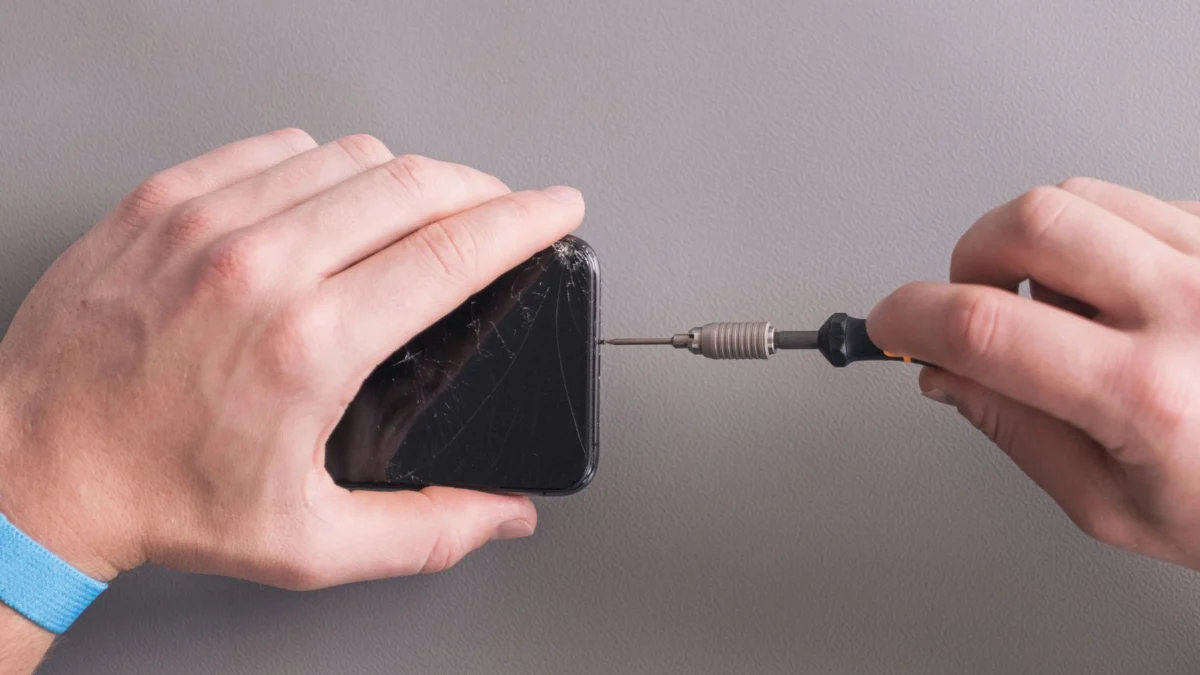
BRUSSELS, BELGIUM – June 3, 2024 – In a significant move signaling a paradigm shift in the consumer electronics industry, Japanese gaming giant Nintendo has confirmed plans to launch a revised version of its upcoming Switch 2 console specifically for the European Union market. This redesigned model will feature user-replaceable batteries, a direct response to stringent new EU regulations aimed at enhancing product longevity and combating electronic waste. The announcement, made by Nintendo on Wednesday, June 3, underscores the profound impact of the EU’s "right to repair" legislation, which is compelling manufacturers worldwide to re-evaluate fundamental product design principles.
The EU’s mandate, set to take effect on February 18, 2027, requires that a broad array of electronic gadgets, including portable game consoles, must be designed to allow end-users to easily remove and replace their batteries. Nintendo’s proactive compliance, particularly with a flagship product like the Switch 2, highlights the seriousness with which global tech companies are approaching these new environmental and consumer-focused directives. While the current iteration of the Switch 2 reportedly employs a glued-in battery, typical of many modern devices and necessitating a multi-step professional removal process, the EU-specific version will undoubtedly feature a more accessible design. Nintendo has yet to detail the precise technical alterations, nor has it clarified whether this user-serviceable model will extend beyond EU borders.
In an official statement published on its website, Nintendo affirmed its commitment, stating it is "implementing measures to comply with these requirements by preparing versions of products to meet the Regulation." This compliance will extend to all Nintendo products with model numbers beginning with "BEE," encompassing the Switch 2, the Pro Controller, and the Joy-Cons. To distinguish these compliant versions, the company added, "Future compliant versions will have unique model numbers and the additional code ‘OSM’ visible on the packaging, designating them as separate products for regulatory purposes."
Nintendo, however, is not an isolated case. The EU’s comprehensive battery legislation is poised to reshape the entire consumer tech landscape, prompting questions about its specific requirements, the range of gadgets it covers, potential exemptions, and its broader implications for global manufacturing and consumption patterns.
The Genesis of the EU’s "Right to Repair" Mandate: A Chronology of Change
The European Union’s journey towards mandating user-replaceable batteries is not an isolated policy decision but a cornerstone of its broader environmental strategy, particularly the European Green Deal and its accompanying Circular Economy Action Plan. These ambitious initiatives aim to transform Europe into a climate-neutral continent by 2050, promoting sustainable resource use and drastically reducing waste.
Early 2010s: Growing Concerns Over E-Waste and Planned Obsolescence
Discussions around the burgeoning problem of electronic waste (e-waste) intensified across Europe. Consumers increasingly voiced frustration over products designed with sealed components, making repairs difficult, expensive, or impossible, leading to shorter product lifespans—a phenomenon often termed "planned obsolescence." This fueled the nascent "Right to Repair" movement, advocating for consumers’ ability to repair their own devices or have them repaired by independent shops.
2019: The European Green Deal Launch
The European Commission launched the European Green Deal, a comprehensive package of policy initiatives to make the EU climate neutral. The deal specifically highlighted the need for a more circular economy, where products are designed for durability, reusability, and repairability.
March 2020: Circular Economy Action Plan
As part of the Green Deal, the Commission adopted a new Circular Economy Action Plan. This plan included specific legislative and non-legislative measures targeting the entire lifecycle of products, from design and manufacturing to consumption, repair, reuse, and recycling. Enhancing product durability and repairability, especially for electronics, became a key focus.
December 2022: Provisional Agreement on Batteries and Waste Batteries Regulation
After extensive negotiations, the European Parliament and Council reached a provisional agreement on a new regulation concerning batteries and waste batteries. This landmark agreement aimed to modernize EU battery legislation, addressing environmental and social impacts throughout the battery lifecycle, from raw material extraction to disposal. A core element was the requirement for portable batteries to be easily removable and replaceable by end-users.
June 2023: Formal Adoption of Regulations
The EU officially adopted two pivotal pieces of legislation:
- Regulation (EU) 2023/1542 on batteries and waste batteries (the "Batteries Regulation"): This comprehensive regulation, published in the Official Journal of the EU, sets out requirements for the sustainability, safety, collection, recycling, and removability of batteries across various categories. The provisions concerning user-removable portable batteries are central to this regulation.
- Commission Regulation (EU) 2023/1670 concerning eco-design requirements for smartphones, slate tablets, and mobile phones: This separate, yet related, regulation specifically addresses the repairability and durability of smartphones and tablets, including provisions for battery longevity and spare parts availability.
2025-2027: Phased Implementation
The regulations are structured for a phased implementation to give manufacturers adequate time to redesign products and adjust supply chains:
- August 18, 2025: The eco-design requirements for smartphones and tablets (Regulation EU 2023/1670) come into force.
- February 18, 2027: The core requirements for user-removable portable batteries under the broader Batteries Regulation (EU 2023/1542) become mandatory for most other categories of portable electronics, including the Nintendo Switch 2.
This carefully orchestrated legislative timeline reflects the EU’s strategic intent: to gradually but firmly shift the industry towards more sustainable and consumer-friendly practices, making "right to repair" not just a movement, but a legal obligation.
Deconstructing the EU’s Battery Regulations: What Manufacturers Must Do
The EU legislation is remarkably specific in its demands, moving beyond vague recommendations to legally binding requirements that will fundamentally alter product design.
What the EU Rules State for Portable Batteries (Effective Feb 18, 2027):
At its core, the Regulation (EU) 2023/1542 mandates that manufacturers must design devices such that users can remove and replace their batteries with either basic, commercially available tools or specialized tools that are provided free of charge with the product. Crucially, the process cannot require "proprietary tools, thermal energy, or solvents to disassemble the product." This means no more heavily glued components or bespoke screwdrivers not readily available.
Furthermore, to ensure long-term repairability, manufacturers must make spare batteries compatible with the device available for purchase for at least five years after the product’s market launch. This prevents a scenario where users can remove a battery but cannot find a replacement.
While the battery removal process doesn’t need to be as simple as popping off a clip-on cover, it also cannot be excessively complex. The spirit of the law aims for a balance, allowing for secure enclosures while preventing unnecessary barriers to repair. Removing a few standard screws, for instance, would generally be deemed acceptable.
The legislation defines a "portable battery" as "a battery that is sealed, weighs 5 kg or less, is not designed specifically for industrial use and is neither an electric vehicle battery, an LMT [Light Means of Transportation] battery, nor an SLI [Starting, Lighting, and Ignition] battery." This broad definition captures a vast array of consumer electronics.
The precise legal wording for removability is explicit: "A portable battery shall be considered readily removable by the end-user where it can be removed from a product with the use of commercially available tools, without requiring the use of specialised tools, unless provided free of charge with the product, proprietary tools, thermal energy, or solvents to disassemble the product."
The scope of this particular regulation (EU 2023/1542) is extensive, encompassing:
- Headphones and earphones
- E-readers
- Portable game consoles (such as the Nintendo Switch 2)
- Laptops
- Power tools
- Light means of transport (LMT) batteries, such as for e-bikes and e-scooters
- Starting, Lighting, and Ignition (SLI) batteries for vehicles
- Industrial batteries
The Distinct Case of Smartphones and Tablets (Effective Aug 18, 2025):
Smartphones and tablets, while also covered by EU legislation, fall under a separate directive, Commission Regulation (EU) 2023/1670. This regulation takes a slightly different approach, recognizing the unique design challenges (e.g., slimness, waterproofing) of these ubiquitous devices.
Under these rules, manufacturers are required to make a variety of spare parts available for their devices for at least seven years after the last unit is placed on the market. While some of these parts may only be accessible to professional repairers, other critical components, including batteries, must be provided to end-users. These parts, crucially, must be designed to be replaceable by a layman using basic tools.
However, there is a significant caveat regarding battery replacement in smartphones and tablets: user-replaceability can be limited only to professionals if two specific conditions are met:
- Battery Longevity: The battery must retain at least 83% of its initial capacity after 500 charging cycles, and 80% after 1,000 cycles. This standard aims to ensure a long functional life for the battery, reducing the frequency of replacement.
- Waterproof Rating: The smartphone or tablet must possess an IP67 waterproof rating or higher. This condition acknowledges the engineering challenge of maintaining water resistance while simultaneously facilitating easy user access to internal components like batteries.
This dual-condition exemption reflects a pragmatic approach by the EU, balancing the desire for repairability with the practicalities of modern device design, particularly for devices where water ingress can cause significant damage.
Exemptions to Both Pieces of Legislation:
While broad in scope, the EU legislation does carve out certain exemptions for specific device categories, often due to safety concerns, specialized use cases, or extreme design constraints.
- Certain Medical Devices: Products classified as medical devices often have stringent regulatory requirements that prioritize sterility, precise functionality, and patient safety, which could be compromised by user intervention.
- Devices Subject to Water Immersion: Products "designed for use in an environment regularly subject to splashing water, water streams or water immersion" are exempt. This includes specialized swimming and diving gadgets, as well as bathroom appliances like electric toothbrushes, where easy battery access might compromise waterproofing and safety.
In a further development in April 2026, the EU proposed an additional set of exemptions for six product categories, primarily due to inherent design challenges and potential safety risks:
- Wearables: This includes smartwatches, fitness trackers, and smart glasses. The rationale is that their extremely compact battery enclosures often present a real risk of damaging the battery or device during user removal.
- Electric Toys: Concerns over safety and the potential for improper reassembly.
- Equipment used in explosive atmospheres: Such as explosion-proof motors, sensors, pumps, or forklift trucks, where maintaining device integrity is paramount for preventing hazards.
This proposal had been open for stakeholder comment until May 26, 2026, and is expected to take the form of a delegated act under the Batteries Regulation. The Commission also plans to update existing guidelines on battery removability and replaceability to assist manufacturers in applying these new derogations.
Official Responses: Industry Adaptations and Strategic Shifts
The EU’s battery regulations have sent ripples throughout the global consumer electronics industry, prompting a range of responses from outright compliance and design overhauls to strategic market adjustments and even withdrawals.
Nintendo’s Proactive Stance:
Nintendo’s explicit confirmation for the Switch 2 is a significant marker. The company’s announcement of "BEE" model numbers and the "OSM" (presumably "Open Serviceable Model" or similar) code signifies a clear internal strategy to meet the 2027 deadline. For a console known for its compact design and the need for robust internal components, transitioning from a glued-in battery to one easily removable by users will likely involve a redesign of the console’s chassis, possibly utilizing more screws or modular internal components. This could impact the console’s form factor, weight, or even water resistance, though engineers will undoubtedly strive to minimize such compromises. The decision to potentially limit this model to the EU market suggests a reluctance to implement a global design change unless absolutely necessary, highlighting the perceived trade-offs.
Early Adopters and Repairability Champions:
Some manufacturers have long championed repairability, finding themselves ahead of the curve:
- Fairphone: This Dutch company has built its entire business model around modular, repairable smartphones. Their latest Fairphone 6, for instance, continues this tradition, offering easily replaceable batteries and other components, demonstrating that repairability can be a core product feature.
- Sennheiser and Fender: In the audio space, companies like Sennheiser with its Momentum 5 headphones and Fender with its Mix headphones have already adopted user-replaceable battery designs, often requiring just a common Phillips-head screwdriver or simple access under an ear cushion. This suggests that for certain product categories, the engineering challenges are less severe.
- Amazon and Microsoft (Rumored): Purported leaks suggest that Amazon might be developing new Kindle e-readers with user-replaceable batteries, and there are unverified rumors of an upcoming Xbox Elite 3 controller adopting a similar feature. These indicate that even major players are exploring or actively planning for these changes.
Compliance Strategies for Smartphones and Tablets:
For the smartphone and tablet sector, the situation is nuanced due to the exemption conditions. Most major smartphone manufacturers are likely to target these exemptions rather than fully embrace universal user-replaceability, which could impact design aesthetics and waterproofing.
- Battery Longevity: Brands like Realme and Oppo have already been touting batteries that retain 80% of their charge after 1,600 cycles, well exceeding the EU’s 1,000-cycle threshold. This focus on battery health management through software and optimized charging is a direct response to the regulation.
- IP Ratings: Many smartphones, even at lower price points like Motorola’s G Power (boasting an IP69 rating), already meet or exceed the IP67 waterproof requirement. Flagship devices from Apple and Samsung consistently offer high IP ratings.
- Apple’s Evolving Approach: Apple, while historically resistant to easy user repair, has shown signs of adaptation. They have expanded their self-service repair program, offering spare parts and tools to consumers. More tellingly, recent reports indicate that the iPhone 16 series utilizes an "electrical-release adhesive" for the battery compartment. This innovative adhesive requires only a small electrical charge to unstick the battery, significantly simplifying the removal process for professionals, even if not fully user-accessible without specialized (but provided) tools. This demonstrates a shift towards making professional repair easier, aligning with the spirit of the legislation for smartphones.
Resistance and Market Withdrawals:
Not all companies are embracing the changes with open arms. The stringent nature of the regulations, particularly for highly integrated and compact devices, has led some to reconsider their market strategies:
- Meta (Ray-Ban Display Smart Glasses): Recent news reports indicate that Meta is reportedly holding off on launching its Ray-Ban Display smart glasses in Europe, specifically citing the battery rules. For wearables, where miniaturization and sleek design are paramount, the engineering challenge of making batteries easily user-replaceable, especially with the proposed exemptions still under debate, appears to be a significant deterrent. This highlights a potential consequence of the regulations: some companies might choose to forgo specific markets rather than undertake costly redesigns or compromise core product features.
The industry’s response is thus a mix of proactive compliance, leveraging existing strengths to meet exemptions, and, in some cases, strategic market adjustments. The common thread is that no major player can afford to ignore these directives.
Implications: A Paradigm Shift for Consumer Electronics
The EU’s battery regulations represent far more than just a legislative tweak; they signify a profound paradigm shift for the global consumer electronics industry, with cascading implications for consumers, manufacturers, and the environment. This "right to repair" movement, spearheaded by the EU, is poised to redefine product design, supply chains, and consumer expectations for decades to come.
For Consumers: Empowerment and Economic Benefits
The most immediate beneficiaries of these regulations are consumers.
- Cost Savings and Extended Lifespan: The ability to easily replace a worn-out battery, often the first component to degrade in a device, will significantly extend the useful life of products. This translates directly into cost savings for consumers, who will no longer be forced to purchase an entirely new device simply because its battery has failed or become inefficient.
- Empowerment and Choice: The "right to repair" is a core tenet of consumer advocacy. These rules empower individuals to take control of their devices, either by performing repairs themselves or by choosing independent repair shops without being locked into expensive manufacturer-only services. This fosters a more competitive repair market.
- Environmental Consciousness: As consumers become more aware of the environmental impact of e-waste, the option to repair rather than replace aligns with growing ecological values, encouraging more sustainable consumption habits.
- Potential Trade-offs (Debatable): While the benefits are clear, there are ongoing debates about potential trade-offs. Critics argue that making batteries user-replaceable could lead to thicker devices, compromise waterproofing, or even increase initial manufacturing costs. However, proponents argue that clever engineering can mitigate these issues, and the long-term savings and environmental benefits far outweigh any minor design compromises.
For Manufacturers: A Fundamental Rethink of Design and Business Models
The impact on manufacturers is transformative, demanding a fundamental rethinking of product development:
- Design-for-Repairability: Engineers will no longer design solely for miniaturization, aesthetics, or water resistance. Repairability will become a critical design constraint from conception, necessitating modular components, standardized fasteners, and accessible internal layouts. This could spur innovation in assembly techniques and materials.
- Supply Chain Adjustments: Manufacturers must ensure a robust supply chain for spare batteries for at least five years post-launch. This requires careful inventory management, manufacturing capacity, and distribution networks for components, not just finished products.
- Competitive Landscape Shift: Companies that embrace repairability as a core product feature, like Fairphone, may gain a significant competitive advantage. Other brands might find themselves playing catch-up, or, as seen with Meta’s Ray-Ban smart glasses, choose to withdraw from the EU market for certain challenging product categories.
- The "Brussels Effect": Global Harmonization: The EU has a strong track record of setting global regulatory standards, often referred to as the "Brussels Effect." Given the size of the EU market, it often becomes uneconomical for multinational corporations to produce separate, non-compliant versions for other regions. This could lead to user-replaceable batteries becoming a de facto global standard, even in countries without similar legislation, as companies streamline their production for economies of scale. We’ve seen this with GDPR for data privacy and the upcoming USB-C common charger mandate.
- Increased Transparency and Sustainability Reporting: The regulations are part of a broader push for greater corporate accountability regarding environmental impact. Manufacturers will face increased pressure to report on product lifecycles, material sourcing, and end-of-life management.
Environmental Impact: A Step Towards a Circular Economy
The environmental benefits of these regulations are substantial and align perfectly with the EU’s Green Deal objectives:
- Reduced Electronic Waste (E-waste): Extending the lifespan of devices directly reduces the volume of e-waste, a rapidly growing global environmental problem. E-waste contains hazardous materials that can leach into soil and water, and valuable rare earth minerals that are costly and environmentally intensive to extract.
- Resource Conservation: Longer product lifespans mean less frequent manufacturing of new devices, thereby reducing the demand for raw materials (metals, plastics, rare earth elements) and the energy required for their extraction and processing.
- Lower Carbon Footprint: Manufacturing new electronic devices is energy-intensive and contributes significantly to greenhouse gas emissions. By enabling longer use, the regulations indirectly contribute to a lower overall carbon footprint for the consumer electronics sector.
- Promoting Circularity: This legislation is a cornerstone of the circular economy model, which aims to keep resources in use for as long as possible, extract the maximum value from them whilst in use, then recover and regenerate products and materials at the end of each service life.
The Future Outlook: A New Era of Consumer Electronics
The EU’s battery regulations are not an endpoint but a significant milestone in the broader "Right to Repair" movement. As these rules take full effect, we can expect:
- Further Expansion: Other product categories might eventually come under similar scrutiny, and the scope of repairability requirements could broaden to include other components beyond batteries.
- Global Adoption: Pressure from consumer groups and environmental advocates in other major markets (North America, Asia) could push their respective governments to adopt similar legislation, accelerating the global shift towards repairable electronics.
- Innovation in Sustainability: Manufacturers will likely invest more in research and development for sustainable materials, modular designs, and efficient recycling processes, transforming environmental responsibility from a compliance burden into a competitive advantage.
- Evolving Consumer Expectations: Over time, consumers may come to expect repairability as a standard feature, making it a key differentiator in purchasing decisions.
In conclusion, Nintendo’s decision to adapt the Switch 2 for user-replaceable batteries is a vivid illustration of the profound influence of the EU’s "right to repair" legislation. This move, and the broader industry adjustments it foreshadows, signals a future where consumer electronics are not just innovative and powerful, but also durable, repairable, and ultimately, more sustainable. The era of disposable gadgets may finally be drawing to a close, ushering in a new age of empowered consumers and responsible manufacturing.