

Byline: [Your Name/Associated Press]
Date: June 4, 2026
Reading Time: 3 min read (Adjusted for actual length)
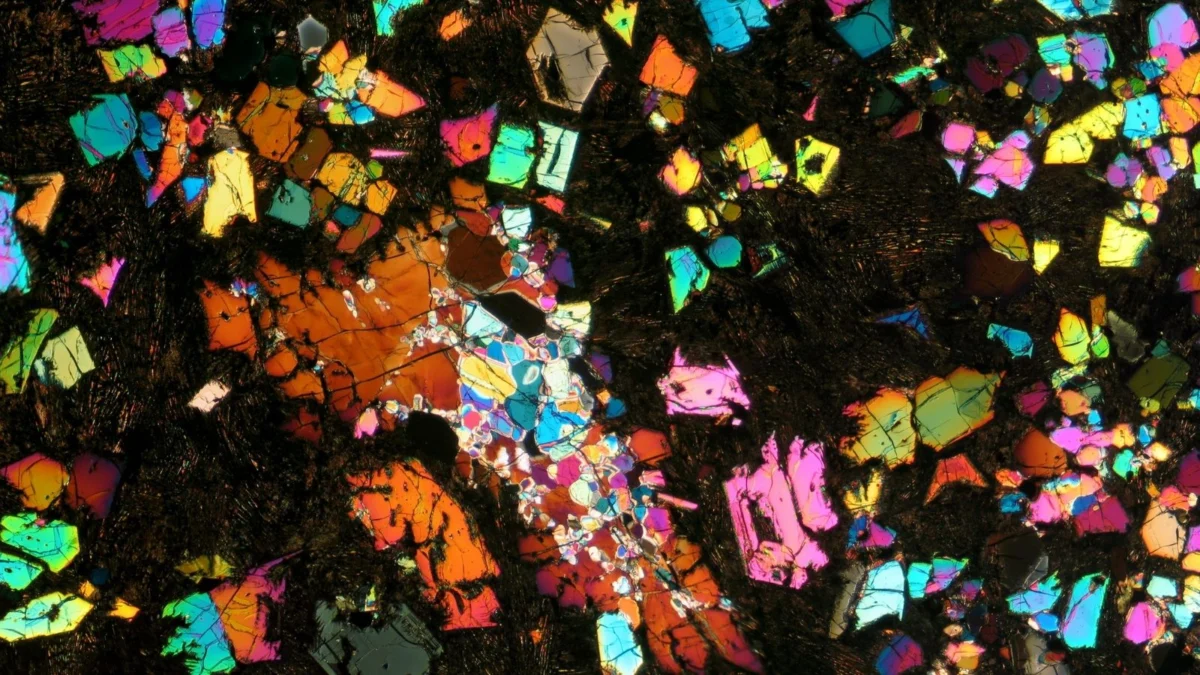
(Image: University of Colorado) The rare angrite meteorite may have originated from a previously unknown Moon-sized world that formed during the solar system’s earliest days before being destroyed in ancient planetary collisions.
Main Facts
A remarkable discovery stemming from a rare meteorite, NWA 12774, found in the vast expanse of the Sahara Desert in 2019, is offering scientists an unprecedented glimpse into the tumultuous infancy of our solar system. This particular meteorite, a member of the exceedingly rare angrite family, carries within its ancient crystalline structure the indelible fingerprints of a previously unknown, Moon-sized world that existed over 4.5 billion years ago, only to vanish in the chaotic ballet of early planetary formation. The findings, recently published in the esteemed journal Earth and Planetary Science Letters, challenge long-held assumptions about the origins of angrites and fundamentally reshape our understanding of the diversity and destructive forces at play during the solar system’s genesis.
At the heart of this groundbreaking research is the analysis of unusual clinopyroxene crystals within NWA 12774. These crystals, identified by a team led by Aaron Bell, a geoscientist at the University of Colorado Boulder, are exceptionally rich in aluminum, a characteristic that points to their formation under conditions of immense pressure – estimated at more than 17.5 kilobars. Such extreme pressures are inconsistent with the prevailing theory that angrites originated from smaller, asteroid-sized parent bodies. Instead, the scientific calculations suggest that NWA 12774 hailed from a substantial protoplanet, potentially exceeding 1,800 kilometers in diameter – a celestial body comparable in size to Earth’s Moon and nearly as large as the planet Mars. This revelation paints a vivid picture of a lost world, a "cosmic ghost" that once orbited our nascent Sun before being obliterated in ancient, violent planetary collisions, its fragments scattered across the solar system, with one precious piece ultimately finding its way to Earth.
Chronology: Tracing the Journey from Protoplanet to Sahara
The narrative of NWA 12774 is one of deep time and immense cosmic journeys, beginning long before the first stirrings of life on Earth and culminating in its modern-day scientific scrutiny.
The Solar System’s Turbulent Birth (Over 4.5 Billion Years Ago)
Our story commences approximately 4.56 billion years ago, in the chaotic maelstrom of the early solar system. Following the gravitational collapse of a giant molecular cloud, a swirling disk of gas and dust known as the solar nebula began to coalesce. Within this nebula, microscopic dust grains collided and stuck together, gradually forming larger aggregates. Over millions of years, this process of accretion led to the formation of planetesimals – small, solid bodies ranging from meters to hundreds of kilometers in size. These planetesimals, in turn, gravitationally attracted each other, growing into protoplanets, which were embryonic planets with differentiated interiors, much like the one NWA 12774 originated from.
It was during this epoch that the parent body of NWA 12774, a formidable protoplanet, came into existence. It differentiated rapidly, developing a molten interior where the high-pressure clinopyroxene crystals formed relatively close to its surface, an indication of its significant gravitational pull and internal heat. This period was characterized by intense bombardment and catastrophic collisions, as countless protoplanets vied for gravitational dominance or were shattered into fragments. The Moon-sized world that spawned NWA 12774 was one such casualty, its existence brutally cut short by a colossal impact that scattered its remnants throughout the inner solar system.
A Long Cosmic Drift (4.5 Billion Years Ago to 2019)
Following its destruction, the fragments of this lost world embarked on an epic journey. Some pieces may have been captured by larger, surviving planets or asteroids, while others, like the precursor to NWA 12774, continued to orbit the Sun as part of the asteroid belt or in more eccentric paths. Over billions of years, these fragments were subject to further collisions, gravitational perturbations, and the relentless forces of space weathering. Eventually, through a series of cosmic billiard shots, one such fragment was dislodged from its orbital path and set on a collision course with Earth.
Earthfall and Discovery (2019)
In 2019, after an unfathomable journey spanning billions of years and unimaginable distances, a fragment of this ancient protoplanet, now known as NWA 12774, plunged through Earth’s atmosphere. Surviving the fiery descent, it landed somewhere in the vast, arid expanse of the Sahara Desert. The dry conditions of the Sahara are ideal for preserving meteorites, protecting them from rapid weathering and erosion, making it a fertile hunting ground for meteorite prospectors and scientists. It was here that NWA 12774 was ultimately recovered, its unassuming exterior belying the profound secrets held within.
Scientific Scrutiny and Publication (2019 – 2026)
Upon its recovery, NWA 12774 was acquired by researchers and entered the scientific pipeline. Its initial classification identified it as an angrite, a rare and intriguing type of meteorite. Recognizing its unique characteristics, scientists at the University of Colorado Boulder, under the leadership of geoscientist Aaron Bell, embarked on a detailed analytical study. This involved advanced mineralogical and geochemical techniques to probe its internal structure and composition. The meticulous analysis of its clinopyroxene crystals, their high aluminum content, and the implications for formation pressure and parent body size occupied several years of dedicated research. The culmination of this intensive study was the peer-reviewed publication of their findings in Earth and Planetary Science Letters in the period leading up to June 2026, marking a significant milestone in planetary science.
Supporting Data: Unpacking the Evidence of a Colossal Past
The extraordinary claims surrounding NWA 12774 are underpinned by a rigorous scientific investigation, leveraging cutting-edge analytical techniques and sophisticated theoretical modeling.
The Angrite Enigma: Rare Relics of a Fiery Past
Angrites are a distinct class of achondrite meteorites, meaning they lack chondrules, the spherical grains common in more primitive meteorites. What makes angrites truly unique is their volcanic origin and extremely ancient formation age, often dating back to within a few million years of the solar system’s birth. They are essentially solidified lava flows from the crusts of early planetary bodies. Their rarity – with only 68 angrites identified among the over 80,000 meteorites cataloged on Earth – underscores their exceptional scientific value.
One of the long-standing puzzles surrounding angrites has been their unusual bulk chemistry, particularly their relatively low silica content compared to Earth and other rocky planets. This chemical distinction suggests they formed from a melt reservoir with a different composition than the building blocks of our terrestrial planets. Previous models often posited that angrites originated from relatively small asteroids, perhaps only tens to a few hundred kilometers in diameter, which underwent rapid melting and differentiation. NWA 12774’s findings, however, shatter this conventional wisdom, demanding a re-evaluation of the scale of the bodies that generated these enigmatic meteorites.
Mineralogical Evidence: The Tale of Clinopyroxene
The cornerstone of this discovery lies in the detailed analysis of the mineral clinopyroxene within NWA 12774. Clinopyroxene is a common rock-forming mineral found in igneous and metamorphic rocks, but the specific composition observed here is extraordinary. The crystals in NWA 12774 were found to be unusually rich in aluminum. In terrestrial geology, aluminum enrichment in clinopyroxene is often a direct indicator of high-pressure formation. As pressure increases, aluminum can be incorporated into the mineral’s crystal lattice in greater amounts, substituting for other elements.
The research team employed advanced techniques such as electron microprobe analysis and X-ray diffraction to precisely determine the chemical composition and crystal structure of the clinopyroxene. Their calculations, based on established mineral stability fields and thermodynamic models, indicated that such aluminum-rich clinopyroxene could only have formed under pressures exceeding 17.5 kilobars. To put this into perspective, 1 kilobar is approximately 1,000 times atmospheric pressure. These pressures are far greater than what would be expected within the interior of a small asteroid. For comparison, pressures at the Earth’s crust-mantle boundary are on the order of 10-20 kilobars, hinting at a body with significant internal mass and gravitational compression.
Estimating Parent Body Size: The Moon-Sized Revelation
Having established the extreme pressure conditions of its formation, the scientists then used this data to model the size of the parent body. By correlating pressure with gravitational compression, they performed sophisticated geophysical calculations. The results were astounding: the parent body of NWA 12774 must have been at least 1,800 kilometers in diameter.
This figure is immense when considering the context of the early solar system. Earth’s Moon, for instance, has a diameter of approximately 3,474 kilometers. Mars, a fully fledged planet, is about 6,779 kilometers across. Thus, the progenitor of NWA 12774 was a truly substantial celestial object, roughly half the size of our Moon and nearly a third the size of Mars. Such a large body would have possessed sufficient internal heat and gravity to undergo significant differentiation, leading to a core, mantle, and crust, similar to terrestrial planets. This finding dramatically elevates the scale of angrite parent bodies from mere asteroids to fully formed protoplanets.
Shallow Depth Formation Under High Pressure: A Paradox Resolved
A further intriguing piece of evidence from NWA 12774 is the preservation of features indicating that the minerals formed relatively close to the surface of its parent body, rather than deep within its interior. This might seem contradictory to the high-pressure estimates, but it is a crucial clue supporting the "large parent body" hypothesis. On a truly massive object, even relatively shallow depths can experience substantial pressure due to the immense weight of the overlying material.
Consider the difference between a small asteroid and a Moon-sized protoplanet. On a small asteroid, pressures drop off rapidly with depth. On a body 1,800 kilometers across, however, the gravitational pull is so strong that pressures comparable to those found deep within smaller bodies can exist much closer to the surface. This unique combination of shallow formation and high-pressure mineralogy provides a compelling fingerprint of a large, differentiated body, further cementing the case for a vanished protoplanet.
Advanced Analytical Techniques: Peering into the Past
The insights derived from NWA 12774 were made possible by a suite of sophisticated analytical techniques common in modern cosmochemistry and mineralogy. These included:
- Electron Microprobe Analysis (EPMA): Used to determine the precise chemical composition of individual mineral grains, providing the crucial data on aluminum enrichment in clinopyroxene.
- Scanning Electron Microscopy (SEM): Provided high-resolution images of the meteorite’s microstructure, revealing textural relationships and mineral growth patterns.
- X-ray Diffraction (XRD): Confirmed the crystal structure of the minerals and helped quantify the effects of pressure on their lattice parameters.
- Mass Spectrometry: Used for isotopic analysis, helping to date the meteorite and trace its formation history.
- Thermodynamic Modeling: Computer simulations that predict mineral stability under varying conditions of temperature and pressure, allowing scientists to translate mineral compositions into formation environments.
These techniques, meticulously applied, transformed a desert rock into a time capsule, revealing the dramatic geological processes of a long-lost world.
Official Responses and Expert Commentary
The groundbreaking findings from NWA 12774 have been met with significant excitement and contemplation within the planetary science community, particularly from the lead researchers involved.
Aaron Bell’s Profound Insights
Lead author Aaron Bell, a geoscientist at the University of Colorado Boulder, articulated the profound implications of their discovery, stating that the meteorite "appears to record a completely different pathway of planetary evolution from the one followed by Earth and Mars." This statement is not merely an observation but a redefinition of the early solar system’s complexity. Earth and Mars, while distinct, share a common lineage in terms of their primary building blocks and general evolutionary processes. The angrite parent body, however, presents a narrative that diverges significantly.
Bell further elaborated that the materials forming the protoplanet were "chemically distinct from those found on the two planets," suggesting that "multiple types of planetary bodies may have emerged during the solar system’s infancy." This implies a far richer and more diverse population of early celestial bodies than previously accounted for in standard models of planet formation. It challenges the notion that most protoplanets followed a similar developmental trajectory, hinting instead at a myriad of unique chemical environments and evolutionary paths, some of which ultimately led to stable planets like Earth, while others met a violent end. Bell’s commentary underscores the idea that our solar system’s early history was not a monotonous progression but a dynamic, experimental phase where various types of worlds came into being, each with its own unique chemical fingerprint and destiny.
Broader Scientific Community Reactions
While specific official responses from other institutions are yet to be fully compiled following the recent publication, the implications of this study are expected to resonate widely. The established models of planet formation, such as the Grand Tack hypothesis or the Nice model, describe the dynamic movements and interactions of gas giants and their influence on the asteroid belt and inner solar system. However, these models often rely on certain assumptions about the initial population and characteristics of planetesimals and protoplanets. The NWA 12774 discovery provides empirical evidence that pushes the boundaries of these assumptions.
Planetary scientists specializing in cosmochemistry and asteroid dynamics will likely scrutinize the data closely. The evidence for a Moon-sized parent body for an angrite could lead to a re-evaluation of meteorite classifications and their origins. It might also encourage a deeper look into other "anomalous" meteorites that don’t fit neatly into existing categories. The excitement stems from the fact that this isn’t just a new data point; it’s a window into a truly "lost" chapter of solar system history, akin to an archaeological find from a vanished civilization. The discovery offers tantalizing possibilities for understanding the full spectrum of conditions under which early planetary bodies formed and evolved, and why some survived to become planets while others were utterly annihilated.
Implications: Rewriting the Cosmic Genesis
The revelations from NWA 12774 extend far beyond the classification of a single meteorite, promising to instigate a significant paradigm shift in our understanding of solar system formation and the evolution of planetary bodies.
Reshaping Solar System Formation Models
The most profound implication of this discovery is its potential to significantly reshape our models of solar system formation. For decades, many models have tended to simplify the early solar system into a relatively homogenous environment, with protoplanets growing and differentiating along similar lines, broadly converging on the chemistries observed in surviving planets and asteroids. NWA 12774 directly contradicts this simplification.
The existence of a Moon-sized protoplanet with a "completely different pathway of planetary evolution" and "chemically distinct materials" suggests that the early solar system was a far more complex and chemically diverse environment than previously imagined. It implies that the building blocks available in different regions of the protoplanetary disk, or even at different times, led to a wide array of initial planetary compositions. This diversity could have resulted in a spectrum of protoplanets, some silica-poor like the angrite parent body, others silica-rich like Earth, and perhaps many more compositions yet undiscovered. This insight adds a crucial layer of complexity to our understanding of accretion, differentiation, and the eventual selection processes that led to the planets we see today. It paints a picture of a "cosmic laboratory" where many planetary experiments were conducted, with only a few leading to stable, long-lived worlds.
The Search for More Vanished Worlds: Cosmic Archaeology
Aaron Bell’s assertion that "there’s more evidence of such vanished worlds hiding in meteorites we haven’t fully studied yet" is a call to action for the scientific community. This discovery invigorates the field of meteoritics, transforming existing meteorite collections into potential treasure troves of "cosmic archaeology." Thousands of meteorites are housed in museums and research institutions worldwide, many of which have been cataloged but not subjected to the kind of detailed, high-resolution analysis applied to NWA 12774.
Future research will undoubtedly involve re-examining these vast collections with new questions in mind. Scientists will be looking for other angrites or chemically unusual meteorites that might bear similar high-pressure mineralogical signatures or unique chemical compositions, indicative of large, lost parent bodies. This "second look" could uncover further evidence of a multitude of forgotten worlds, each telling its own story of the solar system’s earliest days. Moreover, it could spur new meteorite hunting expeditions to places like the Sahara and Antarctica, specifically targeting regions known for preserving rare meteorite types.
Understanding Planetary Evolution and Fate
The story of the angrite parent body is not just about its existence, but also its destruction. The researchers hypothesize that this world was destroyed during the "early solar system’s chaotic formation, when many violent collisions occurred." This underscores the extreme conditions prevalent during planet formation. While collisions were essential for accretion, they were also agents of annihilation.
Understanding why some protoplanets survived to become stable planets (like Earth) while others, even large ones, were utterly destroyed, is crucial. This discovery provides a tangible example of a large, differentiated protoplanet that ultimately failed to thrive. It offers insights into the thresholds of impact energy, the resilience of planetary bodies, and the conditions necessary for a protoplanet to transition into a long-lived planet. Such insights are not only vital for understanding our own solar system but also for interpreting observations of exoplanetary systems, where protoplanetary disks and ongoing planetary collisions are frequently observed.
The Rarity and Value of Meteorites
Finally, NWA 12774 vividly illustrates the immense scientific value of meteorites. These extraterrestrial samples are literal time capsules, preserving conditions and materials that no longer exist on Earth or other large, geologically active bodies. Their rarity, especially types like angrites, emphasizes the importance of careful collection, preservation, and detailed scientific study. Each meteorite holds a piece of cosmic history, and with advancements in analytical techniques, we are continually unlocking new secrets. The discovery serves as a powerful testament to the ongoing importance of astromineralogy and cosmochemistry in unraveling the universe’s most ancient mysteries.
In essence, NWA 12774 is more than just a rock from space; it is a profound message from the deep past, compelling us to revise our cosmic history books and imagine a solar system far more diverse and dramatic than we ever conceived. The search for its vanished siblings has only just begun.
