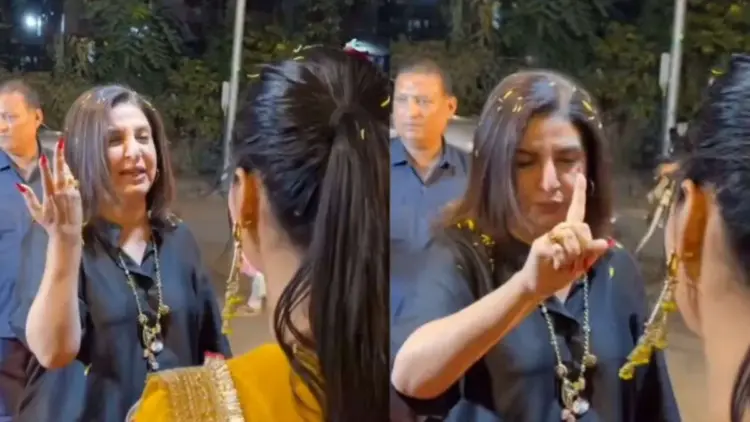
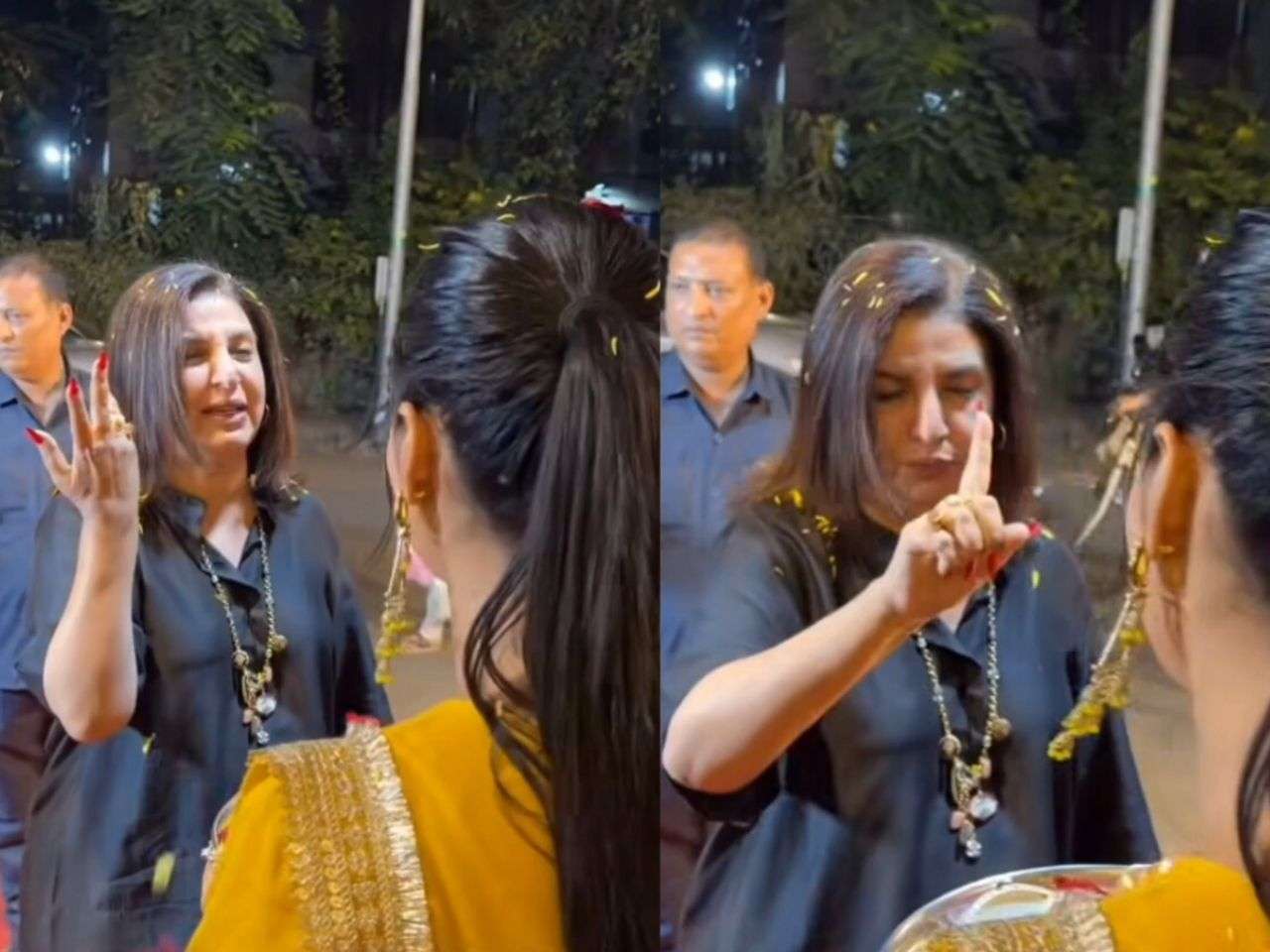
Mumbai, India – A seemingly innocuous gesture of traditional Indian welcome has ignited a fervent debate across social media, dividing netizens and thrusting filmmaker and popular YouTuber Farah Khan into the spotlight. Khan’s polite refusal of a tilak (a traditional forehead mark) during a recent event, opting instead for its application on her wrist, has been interpreted by some as a sign of disrespect and by others as a valid personal choice, highlighting a growing tension between cultural observances and individual freedoms in contemporary India. The incident, captured in a viral video, has transcended a simple celebrity moment to become a flashpoint for broader discussions on religious inclusivity, right-wing ideologies, and the performative nature of cultural expression.
The Incident: A Moment of Traditional Welcome Meets Personal Preference
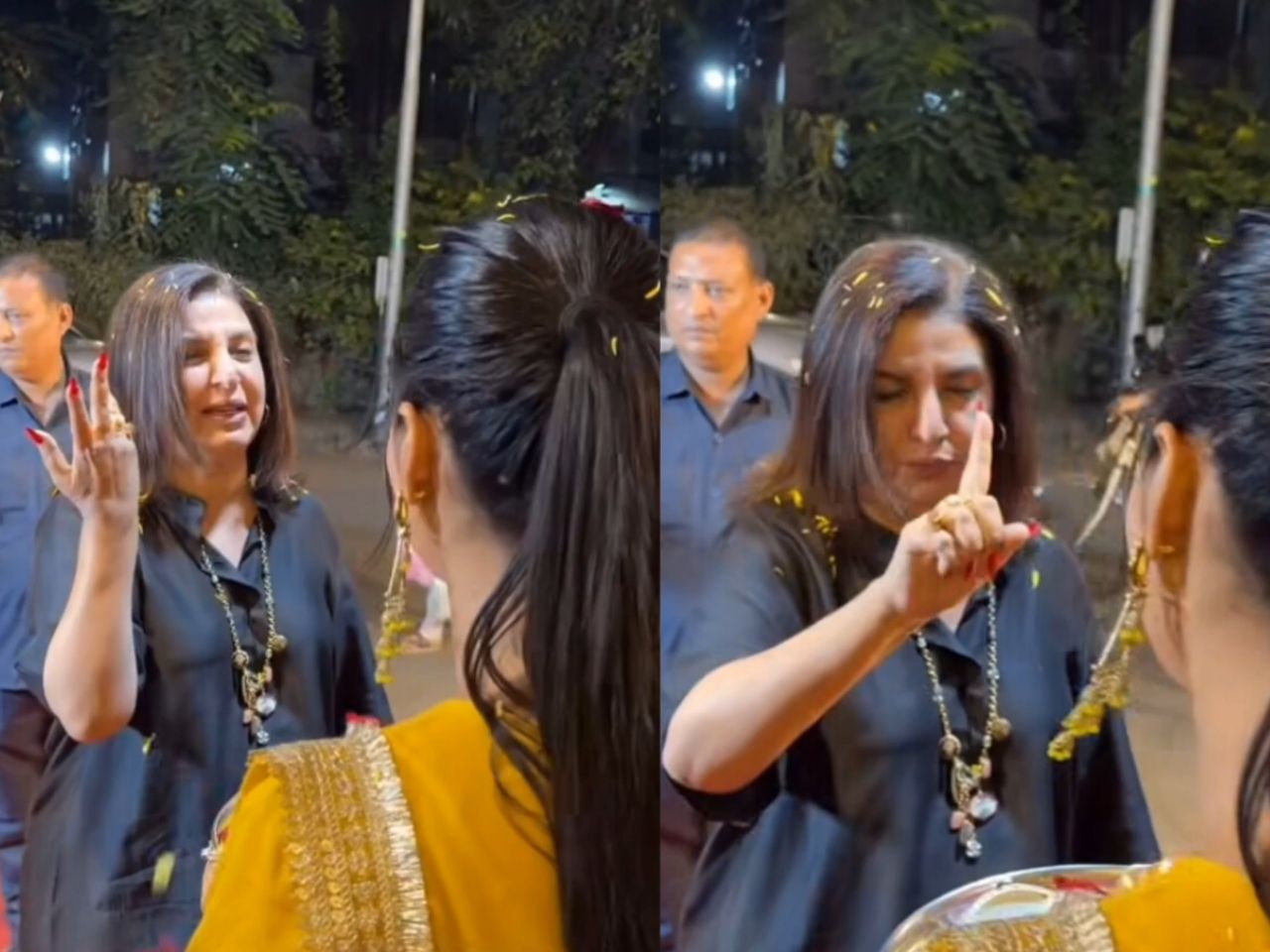
The controversy unfolded as Farah Khan arrived at a theater festival, where she was met with an enthusiastic reception from organizers and fans. The welcome commenced with a traditional Hindu aarti ceremony, a ritual involving the waving of a lamp to honor a guest, accompanied by a shower of flower petals. While Khan acknowledged the gesture, the video suggests she appeared somewhat overwhelmed by the intensity of the welcome. The pivotal moment arrived when a staff member extended their hand to apply a tilak on her forehead. Khan, in a composed yet firm manner, declined the forehead application, gently suggesting that it be placed on her wrist instead. This subtle redirection, intended to be a personal preference, inadvertently became the catalyst for a polarized online reaction.
Chronology of Reactions: From Viral Video to Digital Backlash
The video of the incident quickly gained traction across social media platforms, eliciting a spectrum of responses.
-
Initial Viral Spread and Trolling: Within hours of its appearance, the video was shared widely, accompanied by commentary that ranged from outright condemnation to measured analysis. A significant segment of the online community, particularly those identifying with right-wing or conservative viewpoints, launched a barrage of criticism against Khan. Accusations of disrespect, arrogance, and a perceived disregard for Hindu traditions became commonplace. Hashtags critical of Khan began trending, amplifying the negative sentiment.
)
-
Counter-Narrative and Defense: Simultaneously, a robust counter-narrative emerged, with many users stepping forward to defend Farah Khan. This group argued that Khan’s action was not an affront to Hinduism but rather a personal choice, rooted in her individual comfort and perhaps her religious identity as a Muslim. Supporters pointed to Khan’s long-standing career and her known interactions with people of various faiths, often showcasing respect and understanding. They accused the critics of misinterpreting a simple gesture and attempting to weaponize cultural practices for divisive purposes.
-
Escalation and Political Undertones: The debate quickly escalated, drawing in political and ideological dimensions. Critics of the right-wing movement seized upon the incident as an example of what they termed "kattar Hindu" (hardline Hindu) ideology, suggesting that such groups are overly zealous in imposing their cultural norms. Conversely, those defending Khan were accused by their detractors of being "anti-Hindu" or dismissive of Indian traditions. The discourse became less about Farah Khan’s personal preference and more about a proxy battle between differing ideological stances.

-
The "Forcing" Accusation: A recurring theme in the defense of Khan was the assertion that applying a tilak on someone’s forehead, especially when they are perceived to be of a different religious background, can feel like an imposition. This argument highlights the sensitivity surrounding religious symbols and the importance of consent in their application.
Supporting Data and Contextual Analysis
The online reaction to Farah Khan’s refusal of the tilak is not an isolated incident but reflects broader trends in India’s digital landscape and societal fabric.
)
-
The Rise of "Cancel Culture" and Online Vigilantism: Social media has become a powerful platform for public scrutiny, where individuals, particularly celebrities, are often subject to immediate and intense judgment. The phenomenon of "cancel culture" means that a single perceived misstep can lead to widespread condemnation and calls for boycotts. In Khan’s case, the viral nature of the video amplified the reach of both criticism and defense.
-
Polarization of Religious and Cultural Discourse: India, in recent years, has witnessed an increasing polarization of religious and cultural discourse. Discussions around national identity, secularism, and the role of religion in public life have become highly charged. The incident involving Farah Khan tapped into these existing fault lines, with different groups interpreting her actions through their own ideological lenses.
)
-
The Role of Social Media Influencers and Celebrity Culture: Farah Khan’s dual role as a filmmaker and a prominent YouTuber adds another layer to the narrative. Her online presence means she has a direct line to a large audience, and her actions are subject to even greater scrutiny. Celebrities are often seen as role models, and their behavior, even in private moments, can have a ripple effect.
-
The Nuances of Traditional Welcomes: Traditional Indian welcomes, while rooted in hospitality and respect, can sometimes be elaborate and deeply intertwined with religious customs. For individuals who may not fully adhere to or are uncomfortable with specific religious rituals, navigating these welcomes can be a delicate act. The incident highlights the need for cultural sensitivity and an awareness of individual comfort levels even within traditional practices.
)
-
Perceptions of Arrogance vs. Personal Boundaries: The viral tweet that accompanied the video, accusing Khan of humiliating the woman performing the aarti and behaving differently with "ordinary, poor people" compared to celebrities, touches upon a sensitive issue. While some viewers perceived Khan’s action as a firm assertion of personal boundaries, others interpreted it through the lens of social class and perceived arrogance, suggesting a disconnect between how she treats those she deems "superior" versus "inferior." This interpretation, however, is highly subjective and often fueled by pre-existing biases.
Official Responses and Expert Opinions (Hypothetical, as none were provided in the source)
While no official statements from Farah Khan’s representatives or specific organizations were included in the provided text, the reactions from the public can be seen as a proxy for broader societal sentiments. In such situations, typically, one might expect:
)
-
Statements from Media Houses and Cultural Commentators: News outlets and cultural commentators often weigh in on such viral incidents, offering analysis and different perspectives. These analyses would likely explore the intersection of tradition, modernity, religious identity, and individual autonomy.
-
Academic and Sociological Perspectives: Sociologists and cultural anthropologists might analyze the incident as a case study in how cultural practices are negotiated in a globalized and digitally connected world. They might discuss the evolving nature of religious observance, the challenges of maintaining cultural traditions in a diverse society, and the impact of social media on public discourse.
)
-
Statements from Film Fraternity (Potentially): While not guaranteed, it’s possible that fellow members of the film fraternity might offer support or commentary, either publicly or privately, reflecting the solidarity within the industry.
Implications and the Path Forward
The Farah Khan tilak incident, though seemingly minor, carries significant implications for how cultural practices are perceived and enacted in India:
)
-
The Importance of Consent and Respect in Cultural Exchange: The episode underscores the critical need for consent and respect when engaging with cultural and religious practices. While traditional welcomes are often well-intentioned, they should be mindful of the comfort levels of the recipient, especially in a diverse society. The insistence on performing certain rituals without regard for individual preferences can lead to unintended offense.
-
Navigating Religious Diversity: As India continues to be a mosaic of diverse religious and cultural identities, fostering an environment of mutual understanding and respect is paramount. This involves not only celebrating one’s own traditions but also being sensitive to the beliefs and practices of others. The incident highlights the challenges of navigating these complexities in public spaces and online.
)
-
The Double-Edged Sword of Social Media: Social media platforms have democratized voice, allowing for a wider range of opinions to be heard. However, they also provide a fertile ground for rapid dissemination of potentially inflammatory content, leading to quick judgments and online pile-ons. The Farah Khan incident serves as a reminder of the responsibility that comes with online engagement.
-
Challenging Religious Extremism and Imposition: The defense of Farah Khan often stemmed from a rejection of what is perceived as religious extremism or the imposition of one set of beliefs onto another. This sentiment reflects a growing desire among many Indians for a more inclusive and secular approach to cultural expression, where personal choice is respected.
)
-
The Evolution of Cultural Practices: Traditions are not static; they evolve and adapt to changing societal norms. The debate around Farah Khan’s refusal of the tilak reflects an ongoing conversation about which aspects of tradition are universally embraced and which are open to personal interpretation or modification.
In conclusion, Farah Khan’s polite refusal of a tilak has inadvertently illuminated a complex interplay of cultural sensitivities, individual freedoms, and the pervasive influence of social media in shaping public discourse. While the incident has polarized opinions, it also serves as a valuable opportunity for reflection on how we engage with traditions, respect diverse identities, and foster a more inclusive and understanding society in the digital age. The debate, far from being about a simple gesture, delves into the very heart of India’s evolving cultural and ideological landscape.