

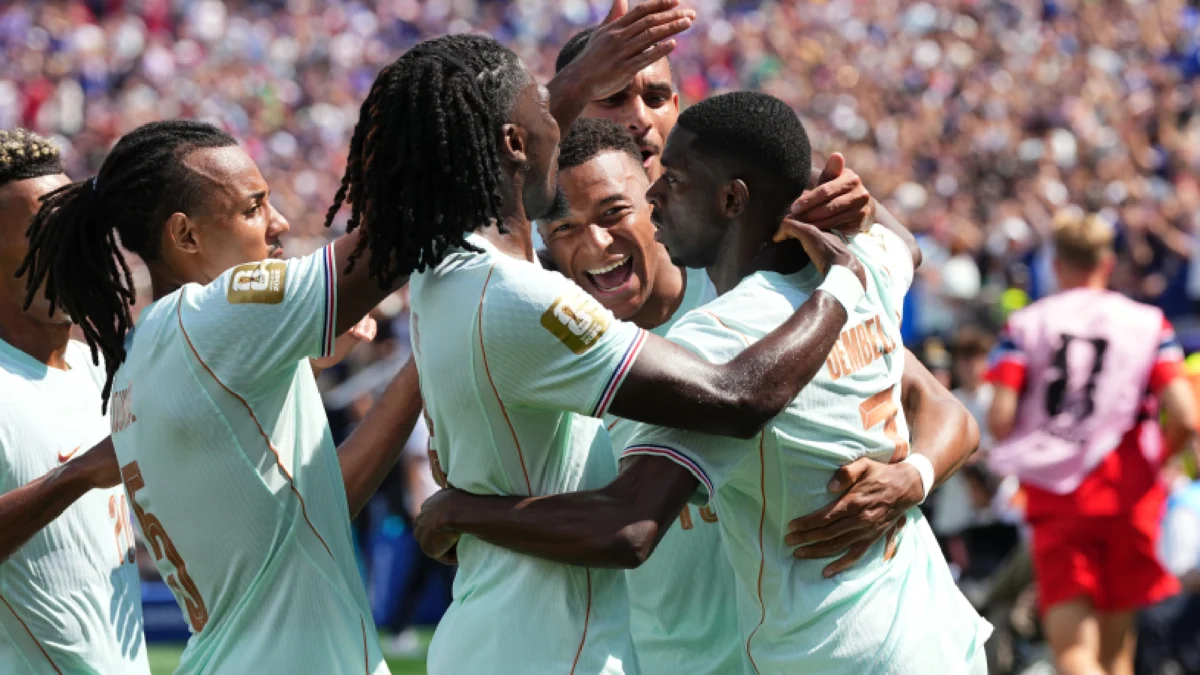
France, seeking an unprecedented third FIFA World Cup title after their triumphs in 1998 and 2018, has emphatically swept its group matches for the first time since their inaugural victory two decades prior. This dominant performance in Group I, where they secured maximum points, places them alongside Argentina and Mexico as the only nations to emerge from the group stage with a perfect record in this tournament. Their flawless run stands in stark contrast to the erratic performance of other contenders, such as Sweden, who concluded Group F in third place after a rollercoaster of results: a resounding 5-1 victory over Tunisia, followed by a humbling 1-5 defeat to the Netherlands, and a hard-fought 1-1 draw with Japan.
This impeccable start, however, merely sets the stage for a deeper, more profound question that looms large over the French camp: Will the real France, brimming with a frightening abundance of attacking talent, finally step up and consistently deliver on the biggest stage?
The Weight of Expectation: A Generation’s Defining Moment
Frightfully abundant in attacking talent, this French squad represents a generation that has the makings of a footballing dynasty. Yet, their recent history is peppered with an inability to convert individual brilliance and collective strength into a consistent slew of major trophies. This dichotomy invites comparisons to footballing legends: France could have been the Brazil of 1958-70, a side that carved out an untouchable legacy, falling only once to the Italians in a 12-year cycle of dominance built by an assembly line of domestic talent lining up behind the mercurial Pelé.
As France head coach Didier Deschamps, widely speculated to be overseeing his swansong tournament, prepares for the knockout rounds, the onus is on his charges to demonstrate an unwavering capacity to "get the job done." The pressure is immense, not least on their talismanic captain and central striker, Kylian Mbappé, who at 27 years old, is France’s undisputed leading man. Bereft of any significant defensive responsibilities, Mbappé operates precisely where he desires to be, at the heart of France’s formidable attack. The last visual memory of him from a World Cup remains one of breathtaking singularity: three goals in 120+ minutes of football, followed by one of three converted penalties in the excruciating 2022 final shootout against Argentina. Mbappé joined Geoff Hurst as the only players to score a hat-trick in a World Cup final, yet still ended up on the wrong side of the result. Qatar, for Mbappé and for France, remains an unhealed scar, a source of immense motivation and an unyielding burden.
Main Facts: France’s Unblemished Group Stage and Lingering Questions
France’s impeccable record in Group I of the 2026 FIFA World Cup has sent a clear message to their rivals: they are here to compete for the ultimate prize. With three wins from three matches, they mirrored their own performance from 1998, a year that culminated in their first-ever World Cup triumph on home soil. This perfect group stage campaign saw them dispatch Norway, Denmark, and Canada with a blend of tactical discipline, defensive solidity, and devastating attacking flair. They scored freely, conceded minimally, and showcased a squad depth that few nations can match.
However, the euphoria of a perfect group stage is tempered by a historical narrative that has often seen France flatter to deceive. Despite boasting arguably the most gifted squad in international football for the better part of a decade, their trophy cabinet, while impressive with two World Cups and a Nations League, feels somewhat lighter than the sheer talent at their disposal would suggest. The memory of the 2022 World Cup final, where Mbappé’s individual heroics were not enough to secure victory, looms large, a testament to the fine margins at this elite level and perhaps, a lingering question mark over their collective mental fortitude in the decisive moments.
The squad under Didier Deschamps is a potent mix of seasoned veterans and explosive young talent. Mbappé, now at his peak, leads an attack that includes Antoine Griezmann, Ousmane Dembélé, and emerging stars like Randal Kolo Muani. Behind them, a midfield anchored by Aurélien Tchouaméni and Eduardo Camavinga provides both steel and creativity, while a robust defense marshaled by the likes of William Saliba and Dayot Upamecano offers formidable protection. The question is not about their individual quality, but whether this collective unit can consistently harness its power and avoid the pitfalls that have sometimes plagued French teams in the past – moments of complacency, tactical inflexibility, or a failure to adapt under extreme pressure.
Chronology: A Trajectory of Triumph, Trauma, and Renewed Ambition
France’s journey through World Cup history has been a captivating saga of highs and lows, building to the current moment of immense anticipation.
The Genesis of Greatness (1998 & 2000):
The story of modern French football truly began in 1998, when a diverse and talented squad, captained by a pragmatic Didier Deschamps, lifted the World Cup trophy on home soil. This was followed by a European Championship victory in 2000, establishing France as the dominant force at the turn of the millennium. These successes cemented a winning culture that would inspire future generations.
The Era of Zidane and Near Misses (2002-2006):
The post-1998 period saw France struggle to replicate their success, crashing out in the group stage of the 2002 World Cup without scoring a goal. However, Zinedine Zidane’s magical return in 2006 propelled them to another World Cup final, where they ultimately fell to Italy in a dramatic penalty shootout, famously marred by Zidane’s red card. This period showcased individual brilliance but also the fragility of an aging squad.
Rebuilding and Resurgence (2010-2014):
The 2010 World Cup in South Africa marked a nadir for French football, plagued by player revolts and a humiliating group stage exit. Didier Deschamps took the helm in 2012, initiating a comprehensive rebuilding process. By 2014, France, with a youthful squad, reached the quarter-finals, signaling their return to contention.
The Second Star and Mbappé’s Ascendancy (2016-2018):
Under Deschamps, France reached the final of Euro 2016, only to suffer a shock defeat to Portugal on home turf. This heartbreak, however, fueled their resolve. Two years later, in Russia, a potent mix of seasoned campaigners and explosive young talents, notably a then-19-year-old Kylian Mbappé, powered France to their second World Cup title, defeating Croatia 4-2 in a thrilling final. Mbappé announced himself on the global stage with a stunning performance throughout the tournament.
The Qatar Scar (2022):
The defense of their title in Qatar 2022 saw France reach the final once again, showcasing incredible resilience despite numerous key injuries. The final against Argentina was an epic encounter, widely hailed as one of the greatest in World Cup history. Mbappé delivered a performance for the ages, scoring a hat-trick – including two late goals to force extra time and then a penalty in the 118th minute – to bring France back from the brink multiple times. Yet, despite his individual brilliance, France ultimately succumbed to Argentina in a penalty shootout. This loss, particularly after Mbappé’s herculean effort, left a deep "scar," fueling a fierce desire for redemption.
The 2026 Group Stage: A Statement of Intent
Entering the 2026 tournament, France carried the weight of that 2022 disappointment but also the confidence of being reigning World Cup finalists. Their Group I campaign was a masterclass in controlled dominance:
- Match 1 vs. Norway (Foxborough, Mass.): France opened their campaign with a commanding 3-0 victory over Norway. Mbappé scored an early penalty, followed by goals from Ousmane Dembélé and Antoine Griezmann, setting a confident tone. Their defense, led by Saliba and Upamecano, comfortably nullified Norway’s limited threats.
- Match 2 vs. Canada: Against a spirited Canadian side, France showed resilience, securing a 2-0 win. While not as free-flowing as their opener, goals from Randal Kolo Muani and a late strike from Mbappé showcased their ability to grind out results against determined opponents.
- Match 3 vs. Denmark: In a highly anticipated clash against European rivals Denmark, France put on their most impressive display, clinching a 4-1 victory. Mbappé netted a brace, reaffirming his status as the tournament’s leading scorer, with Tchouaméni and Griezmann adding to the tally. The performance was a comprehensive demonstration of their attacking prowess and tactical superiority, securing their perfect record and top spot in Group I.
Sweden’s Tumultuous Campaign:
In stark contrast, Sweden’s journey through Group F was a study in inconsistency. They began with an impressive 5-1 thrashing of Tunisia, hinting at a potential dark horse run. However, their hopes were quickly dashed by a brutal 1-5 defeat at the hands of a rampant Netherlands side. Their final match, a hard-fought 1-1 draw with Japan, sealed their third-place finish and early exit, underscoring the fine margins and unforgiving nature of the World Cup group stage. This erratic performance serves as a potent reminder of the level of sustained excellence required to progress in this competition, a level that France has, so far, exemplified.
Supporting Data: The Pillars of French Dominance
France’s perfect group stage performance is not merely a statistical anomaly but a reflection of deep-seated strengths, both tactical and individual.
Statistical Prowess:
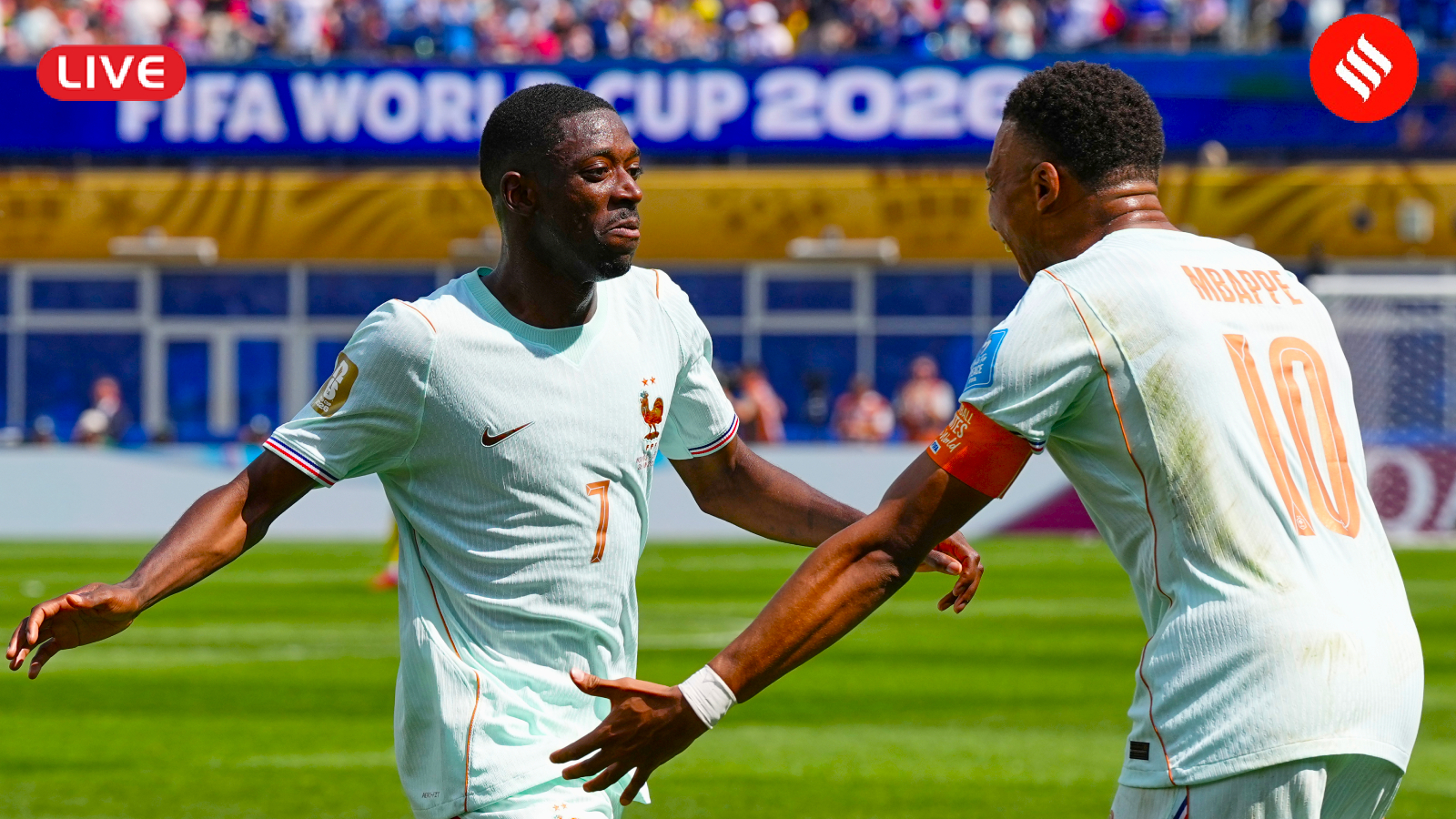
In their three group matches, France scored 9 goals while conceding only 1, boasting an impressive goal difference of +8. This offensive output was complemented by two clean sheets, highlighting their defensive solidity. Mbappé, with 4 goals, currently leads the Golden Boot race, demonstrating his lethal form. The team averaged over 60% possession across their games, with an 88% pass accuracy, showcasing their control and technical superiority. Their shot conversion rate was also remarkably efficient, indicating clinical finishing.
Tactical Blueprint: Deschamps’ Pragmatic Brilliance:
Didier Deschamps typically deploys a flexible 4-3-3 or 4-2-3-1 formation, designed to maximize his attacking talent while maintaining defensive balance.
- Mbappé’s Central Role: The decision to deploy Mbappé as a central striker, rather than a left-winger, has been pivotal. This allows him to play off the shoulders of defenders, utilizing his blistering pace and clinical finishing directly in front of goal. His freedom from defensive duties ensures he remains fresh and focused on tearing apart opposition defenses.
- Griezmann’s Orchestration: Antoine Griezmann’s role as a creative midfielder, dropping deep to link play and initiate attacks, is crucial. His vision, passing range, and tireless work rate provide the engine room for France’s transitions.
- Midfield Engine Room: The partnership of Aurélien Tchouaméni and Eduardo Camavinga offers a blend of defensive steel, progressive passing, and box-to-box energy. They shield the defense, win possession, and contribute to both phases of play.
- Defensive Rock: The central defensive pairing of William Saliba and Dayot Upamecano provides pace, power, and composure, making them incredibly difficult to break down. Their ability to play out from the back also contributes to France’s fluid build-up.
- Squad Depth: Perhaps France’s greatest asset is its unparalleled squad depth. Players like Kingsley Coman, Olivier Giroud, Adrien Rabiot, and Jules Kounde offer world-class alternatives, allowing Deschamps to rotate and adapt without significant drop-offs in quality.
The Brazil Comparison Revisited:
The comparison to Brazil’s 1958-70 dynasty is both flattering and challenging. That Brazilian side, built around Pelé, Garrincha, Rivelino, and Jairzinho, won three out of four World Cups, showcasing a blend of unparalleled individual artistry and collective cohesion. They achieved true dynastic status through sustained excellence and multiple major trophy wins.
France possesses the individual talent, particularly in Mbappé, who draws parallels with Pelé’s generational impact. They have also won two World Cups in a relatively short span (1998, 2018). However, the "peppered with the inability to win a slew of major trophies" phrase highlights the difference. Brazil’s dominance was more absolute, with fewer major tournament disappointments during their peak. France, despite their World Cup successes, has experienced significant setbacks (Euro 2016 final, Euro 2020 R16, 2022 World Cup final loss). To truly emulate Brazil, this French generation needs to convert their potential into a more consistent stream of silverware, and a third World Cup would be a monumental step towards that.
Official Responses: Confidence, Caution, and Redemption
The mood within the French camp, while confident, remains grounded. Both Didier Deschamps and Kylian Mbappé have articulated a clear focus on the immediate challenges, tempered by the bitter lessons of the past.
Didier Deschamps on Group Stage Success:
"We are pleased with the three victories and topping the group," Deschamps stated in a post-match press conference. "It’s a good foundation, but nothing is won yet. The knockout stages are a different competition entirely. We saw in 2022 that a perfect group stage doesn’t guarantee the ultimate prize. We must remain humble, focused, and continue to improve." When pressed about his future, Deschamps remained evasive but alluded to his "journey": "Every tournament is special. This team, this journey, it means a lot. My focus is entirely on the next match, on making sure these players achieve what they are capable of." He also praised Mbappé’s leadership: "Kylian has embraced the captaincy with maturity and responsibility. He leads by example, both on and off the pitch. His performances speak for themselves."
Kylian Mbappé on Leadership and Legacy:
As captain, Mbappé has consistently emphasized the collective goal over individual accolades. "The hat-trick in the final was special, but it wasn’t enough," Mbappé reflected on 2022. "That scar fuels us. We want to go one step further, together. My role is to lead this team, to ensure everyone is pulling in the same direction. Winning this World Cup as captain would be the greatest achievement of my career, but it’s not about me; it’s about France." He also acknowledged the pressure: "We know the expectations. We have an incredible squad, but talent alone isn’t enough. We need grit, determination, and a bit of luck. We are ready for the fight."
Player Perspectives:
Midfielder Aurélien Tchouaméni echoed the sentiment of cautious optimism: "We know what we are capable of. The group stage was good, but now the real tournament begins. Every game is a final. We have learned from our past experiences, especially 2022, and we are hungrier than ever." Veteran forward Antoine Griezmann, often seen as the tactical brain on the field, added: "The blend of youth and experience in this squad is fantastic. We have players who have won it before and young talents who are desperate to make their mark. The atmosphere is great, and we are all pulling for each other."
Expert Opinion:
Football pundits widely acknowledge France’s formidable status. "France are undoubtedly the team to beat," remarked former international player and current analyst Gary Lineker. "Their squad depth is frightening, and Mbappé is playing at a level that very few in history have reached. The question is whether they can maintain that psychological edge through the knockout rounds, especially if they face early adversity. The ghost of Qatar still hovers."
Implications: A Defining Chapter for French Football
The trajectory of France’s 2026 World Cup campaign carries profound implications, not just for the current squad and coaching staff, but for the legacy of French football for decades to come.
For France as a Nation:
A third World Cup title would solidify France’s position as one of the undisputed giants of international football, placing them alongside Brazil, Germany, and Italy in the pantheon of multi-World Cup winners. It would cement their status as the dominant force of the early 21st century, a testament to their robust youth development programs and strategic investment in football. Such a victory would undoubtedly ignite national pride, unite the country, and inspire a new generation of footballers. Conversely, a failure to capitalize on their immense talent, especially after such a strong group stage, would be a bitter pill to swallow, leading to intense scrutiny and renewed questions about their ability to consistently deliver.
For Kylian Mbappé’s Legacy:
For Kylian Mbappé, this tournament is potentially his defining moment. At 27, he is at the peak of his powers, captaining his country. Winning the World Cup as captain would elevate him to an almost mythical status, placing him in the conversation for the greatest players of all time, alongside Pelé and Maradona, who also led their nations to glory. It would be the ultimate redemption for the heartbreak of 2022, transforming that "scar" into a badge of honor. A World Cup victory would not only secure his place in history but would also likely solidify his claim as the undisputed best player of his generation, potentially even surpassing Lionel Messi and Cristiano Ronaldo in terms of international accolades at a younger age. Failure, however, while not diminishing his immense talent, would leave a persistent void in his international trophy cabinet as captain, and the narrative of "almost" would continue to cling to him.
For Didier Deschamps’ Coaching Swansong:
If this is indeed Didier Deschamps’ final tournament as coach, a third World Cup title for France (his second as coach, complementing his 1998 triumph as captain) would be an unparalleled farewell. He would become the first person in history to win two World Cups as a coach, and only the second, after Mario Zagallo, to win it multiple times as both a player and coach. This would cement his legacy as one of the most successful and influential figures in football history, a master tactician who built and rebuilt multiple generations of French talent. It would be a storybook ending to an extraordinary career. Should France falter, the whispers of his pragmatic style hindering attacking flair might resurface, and his swansong would lack the desired triumphant crescendo.
Broader World Cup Impact:
France’s performance sets a high benchmark for all other contenders. Their dominant group stage has reinforced the notion that established European and South American powers continue to dictate the terms of engagement at the highest level. Should they go on to win, it would underline a significant era of French dominance, influencing tactical trends and player development philosophies globally. It would also further elevate the stature of the FIFA World Cup as the ultimate stage where individual brilliance and collective cohesion combine to forge immortality.
The stage is set. France, with its galaxy of stars, its tactical mastermind, and its captain driven by redemption, stands on the precipice of a defining moment. The question of whether this "dynasty in waiting" can finally translate its immense potential into consistent, undeniable glory will be answered in the coming weeks, etching a new chapter into the annals of football history.
