

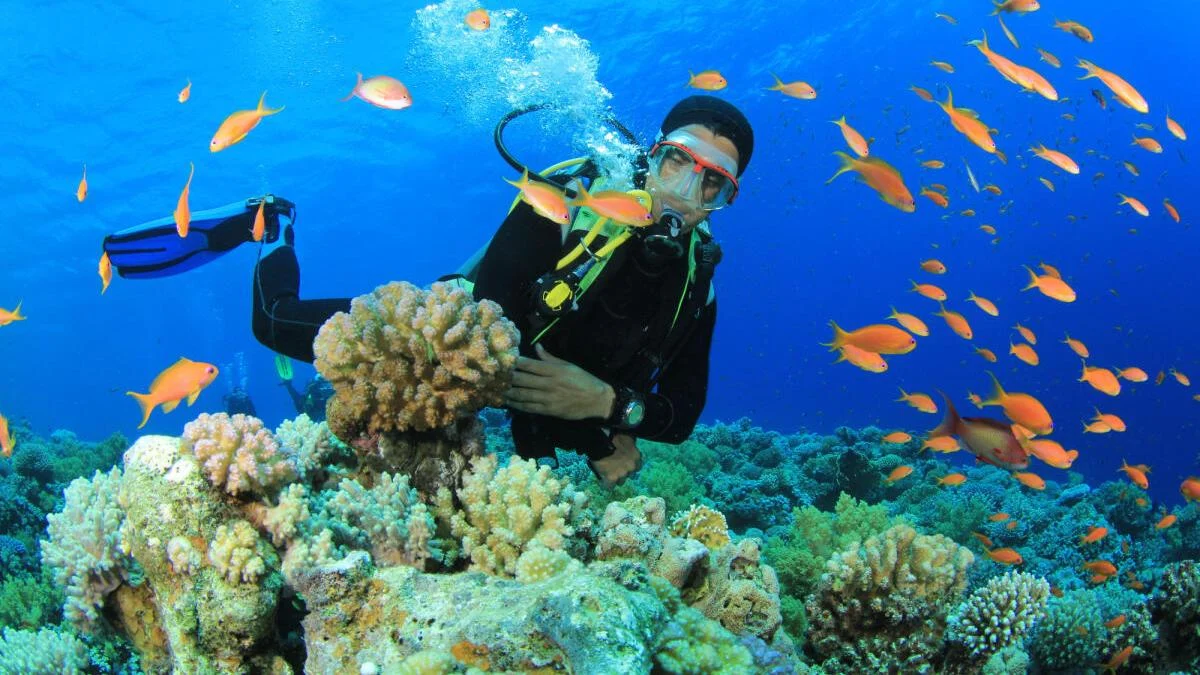
The Andaman Islands, India – For generations, the sea surrounding the Andaman Islands was not a frontier to be conquered, nor a resource to be exploited. It was a living, breathing entity, an intrinsic part of life for communities like the Karen and Ranchi. Their fathers and grandfathers possessed an innate understanding of the ocean – deciphering weather patterns from shifting clouds, sensing the subtle pull of currents, and spotting elusive marine life where outsiders saw only an endless expanse of blue. This intimate, inherited knowledge, passed down through familial lines, was as familiar as the language spoken at home.
However, this profound connection rarely translated into tangible economic prosperity. The traditional livelihoods of fishing and boatmanship, while deeply entwined with the sea, often offered little in the way of advancement or stability. Today, a quiet revolution is unfolding across Havelock Island, a transformation that is artfully bridging this gap. Descendants of these ancestral seafarers are now emerging as certified diving instructors, skilled marine guides, and captains of their own destinies, forging a new path where their inherited relationship with the ocean becomes a vibrant, professional calling. This shift is not merely reshaping individual lives and families; it is fostering a palpable sense of community empowerment and economic revitalization across the islands.

The Genesis of a Blue Economy Initiative
At the forefront of this burgeoning transformation are Poonam Darne and her husband, D Santosh. Founders of Gypsy Divers, a PADI (Professional Association of Diving Instructors) affiliated five-star dive school and resort nestled on Havelock Island’s Beach No. 2, they have become instrumental in unlocking the potential of the local communities. Their vision extended far beyond typical tourism ventures; it was rooted in a deep-seated belief that the inherent maritime knowledge of the Karen and Ranchi people could be leveraged into sustainable and rewarding careers.
Poonam Darne, a pioneer in Indian scuba diving and one of the country’s earliest female dive instructors, brings a wealth of technical expertise and passion for the underwater world. D Santosh, a former theatre actor who shared the silver screen with Bollywood legends like Amitabh Bachchan and Mithun Chakraborty, complements Poonam’s technical acumen with a unique approach to communication and community engagement. Together, they established Gypsy Divers in 2016, embarking on a mission to empower the local populace through professional dive training.

Over the past decade, Gypsy Divers has become a beacon of opportunity. The school has successfully trained over a thousand individuals from the Karen and Ranchi communities, alongside local schoolchildren, recreational enthusiasts, and even Army personnel undergoing specialized rescue diver certification. While the impact on tourism and individual careers is significant, the most profound and lasting change has been felt within the fabric of these coastal communities.
Bridging the Knowledge Divide: From Fishermen to Dive Masters
When Poonam Darne first encountered young men from the Karen and Ranchi communities, their connection to the sea was immediately evident. Many were engaged in traditional fishing or assisted in operating the wooden boats that ferried tourists between the islands. "What struck me was how intimately they knew the sea," Poonam recalls. "They could read currents with uncanny accuracy, spot marine life with astonishing ease, and free dive for extended periods without any equipment. Their practical, hands-on skills were exceptional. What was challenging was the theoretical knowledge, the language of certification, and the formal training process."

Recognizing this disparity, Gypsy Divers initiated a dedicated program to bridge this knowledge gap. Working with dedicated translators and mentors, the school began to equip local youth with the professional skills required to excel in the diving industry. The initial cohort comprised around ten young men from the Karen community. Through rigorous training and mentorship, they transformed into certified divemasters, securing employment and, crucially, inspiring a wave of others to follow suit. Today, hundreds of men and women from both the Karen and Ranchi communities are integral to the Andaman diving industry, serving as qualified diving instructors, knowledgeable marine guides, and adept boat captains.
The Karen and Ranchi Communities: A Legacy of the Sea
To fully appreciate the significance of this transformation, it’s essential to understand the rich heritage of the communities involved.

The Karen Community: Masters of the Forest and the Sea
The Karen people, an ethnic minority group originally from Myanmar’s Kayin State, have a deep-rooted connection to nature. British colonial authorities first brought Karen families to the Andaman Islands in the early 1920s, recognizing their exceptional forestry skills and familiarity with tropical forest ecosystems. These early settlers, numbering 12 families in the first organized group in April 1925, were known for their proficiency as woodsmen, boat builders, farmers, and naturalists.
Today, an estimated 2,500 to 3,000 Karen individuals reside primarily in North and Middle Andaman, with established settlements in villages like Webi, Karmatang, and Borang. They remain among the islands’ most environmentally knowledgeable communities, continuing their legacy of sustainable living. The community is actively seeking Scheduled Tribe status in India, aiming for greater recognition and protections. Their ancestral skills, honed over generations in their native lands and further developed in the Andamans, have provided a natural foundation for their engagement with the marine environment.

The Ranchi Community: Migrant Roots, Island Adaptation
The "Ranchi" community in the Andamans is not a monolithic tribe but rather a collective term encompassing Adivasi or tribal settlers whose ancestors migrated from regions including Jharkhand, northern Odisha, and Chhattisgarh. This diverse group comprises tribes such as the Oraon (Kurukh), Munda, Kharia, Mahli, Turi, Ghasi, and Cheek. Anthropological research, such as Philipp Zehmisch’s 2015 paper, "The Invisible Architects of Andaman: Manifestations of Aboriginal Migration from Ranchi," highlights that migration began during British colonial rule and continued through post-independence settlement programs. It is estimated that approximately 50,000 to 100,000 individuals, often referred to as "Ranchiwalas," now inhabit various parts of the Andaman and Nicobar Islands, including South Andaman, Middle Andaman, Little Andaman, and the Nicobar Islands. Similar to the Karen community, the Ranchi community is advocating for Scheduled Tribe status in the Andamans, which they hold in their ancestral states, to secure constitutional benefits and protections. Their journey to the islands, driven by historical migration patterns, has instilled in them resilience and adaptability, qualities that have served them well in embracing new opportunities.
Economic Empowerment and Social Upliftment
The impact of Gypsy Divers’ initiative resonates deeply within the economic and social structures of these communities. Families that once relied solely on the often unpredictable income from fishing now benefit from stable, year-round employment. This newfound financial security has a ripple effect, enabling children to receive better education and improving the overall quality of life.

"Children are receiving better education, wives and parents often visit the dive school to share milestones that would have been difficult to imagine a generation ago," Poonam shares with evident satisfaction. The ability to build better housing, such as concrete homes replacing traditional huts, symbolizes this tangible progress.
Women Ascend to New Roles
Significantly, the initiative has also created vital opportunities for women. Ashrita Kissipota, a 33-year-old woman from the Ranchi community, exemplifies this shift. Initially joining Gypsy Divers in a domestic role, Ashrita gradually acquired administrative skills, learning paperwork and computer operations. Today, she plays a crucial role in managing key aspects of the dive school’s operations. Across the islands, an increasing number of women from Karen and Ranchi communities are entering the diving profession, a field that was historically dominated by men. This inclusion not only diversifies the workforce but also empowers women, providing them with economic independence and a stronger voice within their communities.

Cultivating a Culture of Conservation
Beyond professional development, Gypsy Divers is deeply committed to fostering a culture of marine conservation. Regular workshops are conducted by marine biologists, educating students and local staff on the intricacies of coral reef ecosystems, the importance of conservation efforts, and the broader principles of ocean ecology.
"The ocean has given us purpose," Poonam states, her voice filled with conviction. "If people learn to love the sea, they naturally develop a relationship with it and want to protect it." The overarching goal, she explains, is not merely to train individuals as divers but to cultivate a generation of dedicated ocean custodians who understand and champion the preservation of these vital marine environments. This holistic approach ensures that the economic benefits derived from the ocean are balanced with a profound responsibility for its stewardship.

The Future is Blue: A Legacy of Opportunity
The success story of Gypsy Divers is a testament to the inherent potential within the Karen and Ranchi communities. It underscores the fact that their generations-old, intimate relationship with the sea provided a fertile ground for growth and opportunity.
Saw Tooaye, a 25-year-old from Mayabunder, who has been associated with Gypsy Divers for eight years, embodies this journey. He began as ground staff and has now proudly risen to the position of a boat captain. His role involves ferrying divers to prime locations and overseeing on-water operations, often starting his day before dawn to capitalize on the calmest sea conditions. This year, during the monsoon off-season, he is investing in building a concrete home for his family, a stark contrast to the leaf-thatched hut he once inhabited. His words, "Aur bhi bada karna hai life mein" (I want to do bigger things in life), speak volumes about his ambition and the newfound possibilities that have opened up for him.

Saw Toole, 35, has been with Gypsy Divers for 17 years and now works as a divemaster. His responsibilities include imparting crucial safe diving practices to divers of all ages and assisting with PADI-certified courses. The appreciation he receives from guests, who often shake his hand and express their intent to return, brings a shy smile to his face. His impact extends beyond his personal career; he actively encourages younger generations within his community to pursue diving, recognizing its potential to provide sustainable livelihoods.
As dive boats depart from the shores each morning, they carry more than just tourists into the cerulean depths. They carry the aspirations of a generation that is redefining its relationship with the ocean. In the Andamans, the sea is no longer just an inheritance; it is a vibrant, tangible source of opportunity, a testament to the power of empowerment, education, and a deep-seated respect for the natural world. The journey of the Karen and Ranchi communities is a powerful narrative of how ancestral wisdom, when coupled with modern training and a forward-looking vision, can chart a course towards a brighter, more prosperous future.
