

By [Your Name/Pseudonym]
A serene spring afternoon on a sun-drenched verandah was interrupted by an unexpected arrival, setting in motion a narrative that would unravel the complexities of familial discord and challenge conventional notions of power and healing. What began as a simple culinary discussion between the narrator and Phuphee, a woman of evident wisdom and calm, transformed into a profound lesson in human dynamics, disguised as a supernatural encounter. The tale, rich with local flavour and a touch of mystique, ultimately reveals that the most potent forms of magic often operate beyond the realm of the visible, subtly reshaping destinies with an unseen hand.
The Unforeseen Arrival and the Father’s Grievance
The peaceful rhythm of the afternoon was shattered by the sudden appearance of a large party at the gate. Leading the entourage was an elderly gentleman, his countenance etched with a palpable air of annoyance and distress. Before even settling, he launched into a lament, his words a cry of anguish and bewilderment. "What can I tell you, my sister," he exclaimed, his voice heavy with despair, "I am facing such hardship. We got this son of ours married with so many hopes and dreams, but I don’t know who has given us the evil eye." His dramatic gestures, including beating his chest, conveyed a deep-seated agitation that momentarily startled the narrator. Phuphee, however, remained unperturbed, her steady gaze absorbing his outburst with practiced composure.
The elder’s grievance, once his initial theatrical display subsided, focused on a young woman standing at the back of the group – his daughter-in-law. He was convinced that the family had fallen victim to the "evil eye" or, more ominously, that she was possessed by a jinn, a supernatural entity, due to her perceived "abominable" behavior towards him. His specific complaint was stark: "She isn’t speaking to me at all. I think she has been possessed," he declared, casting a cross glance at the young woman.
The Daughter-in-Law’s Perspective: A Voice of Reason Amidst Accusation
Phuphee, with her characteristic quiet authority, invited the daughter-in-law and her husband to step forward. She directly addressed the young woman, encouraging her to speak openly. Her account, delivered with a calm dignity that belied the accusations leveled against her, offered a starkly different interpretation of the situation.

"He speaks to me unkindly, often treating me as an outsider," she explained. "He hurls abuses at my parents and other family members. If anything goes wrong in our home, he puts the blame at my feet. He seems to feel that it is acceptable for him to treat me this way because I am his daughter-in-law. There was nothing else I could do to hold him accountable, so I simply stopped speaking to him." Her words painted a picture not of demonic possession, but of a woman pushed to her limit by persistent disrespect and blame.
The father-in-law, predictably, reacted with renewed aggression. "See! See, my sister, how she speaks. No respect for her elders, no respect for you," he retorted, his voice rising in pitch and volume.
Phuphee’s Intervention: A Subtle Shift in the Narrative
Phuphee, absorbing the conflicting narratives, proposed a brief respite. She invited everyone to sit for some kehwe (a traditional beverage), a gesture that served to diffuse the immediate tension. She then requested the father-in-law to accompany her inside, while Aisha, the household help, was instructed to bring him his kehwe ti kulche (a type of bread).
After approximately twenty minutes, Phuphee and the father-in-law reappeared on the verandah. The atmosphere had subtly shifted. Phuphee then approached the daughter-in-law and, in a moment of quiet intimacy, whispered something in her ear. Once the guests had finished their drinks, Phuphee bid them farewell.
The Narrator’s Inquiry and Aisha’s Revelation
Left alone with Phuphee, the narrator, still grappling with the unresolved conflict and the apparent lack of a dramatic exorcism, voiced a natural curiosity. "What did you whisper in the young woman’s ear?" she asked. Phuphee’s response was characteristically understated: "I told her to come back in a week’s time and tell me how everything is at home."

The narrator’s surprise was evident. "That’s it? But what about the exorcism?" she pressed, perhaps anticipating a more overt display of supernatural intervention. Phuphee, with a hint of amusement, dismissed the notion, attributing the narrator’s expectation to an overindulgence in aanchaar (pickle) and suggesting a walk to clear her head.
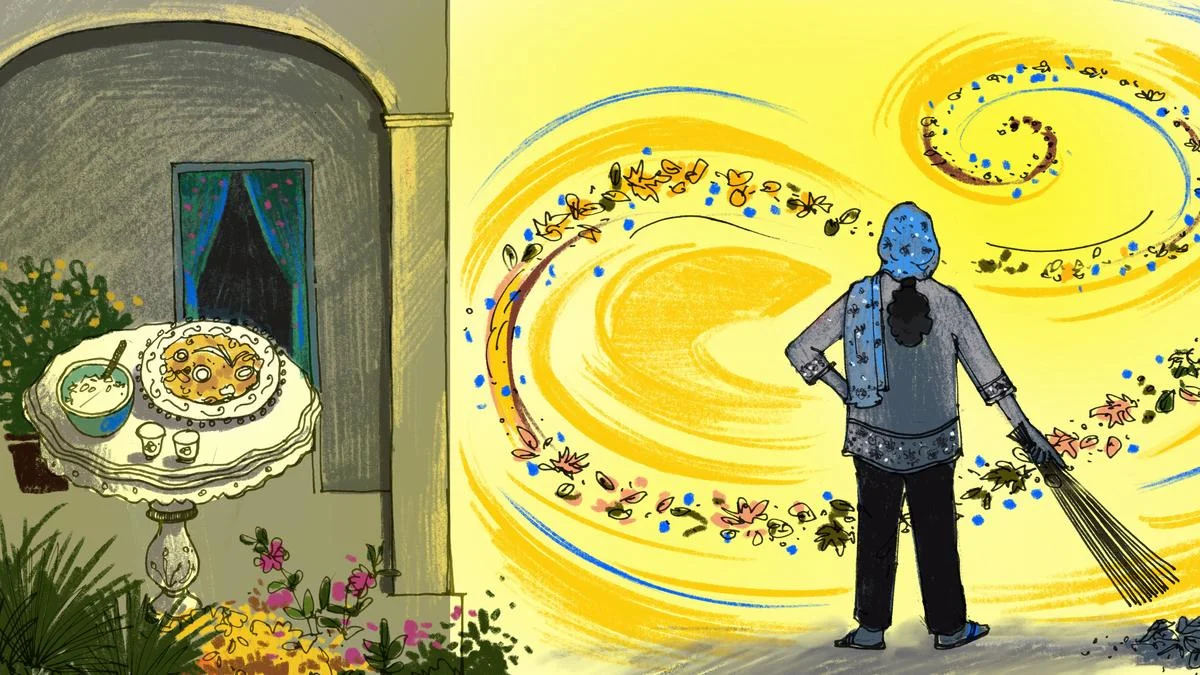
Seeking further insight, the narrator turned to Aisha, who was diligently sweeping the garden. Aisha, with a knowing smile, agreed to shed light on the events that transpired indoors. Her explanation revealed the true ingenuity of Phuphee’s approach, a masterclass in psychological manipulation and strategic communication.
The "Possession" Explained: A Clever Stratagem
Aisha recounted how Phuphee had engaged the father-in-law in a private conversation. She had, in essence, played into his belief system by confirming his suspicions of possession. However, she introduced a critical twist: it wasn’t just the daughter-in-law who was afflicted, but also his son. She suggested that jinns sometimes operated in pairs and that this particular pair was exceptionally powerful. The implication was dire: any failed attempt at exorcism could result in the demise of both the daughter-in-law and her son, the elder’s only child.
Faced with the potential loss of his son, the gentleman, according to Aisha, fell silent and inquired about alternative solutions. Phuphee then presented him with two stark choices: either treat his daughter-in-law and son with the respect due to such powerful entities, or expel them both from the family home. The father-in-law, understandably, chose the former, opting to keep his son at home.
The Deeper Meaning: Entitlement and Invisible Power
Aisha’s concluding remarks provided a poignant commentary on the underlying issue. "I have already said too much," she chuckled, before adding a profound observation: "Sometimes entitlement runs so deep, it feels demonic when you finally have to face it. I guess everything changes when you have skin in the game, right?" Her words underscored the societal and familial dynamics at play, where ingrained notions of entitlement, particularly within patriarchal structures, could manifest in behaviors that others perceived as malevolent or irrational.

As the narrator swept the garden, a sense of wonder lingered. She had anticipated overt displays of magic, incantations, and bubbling cauldrons. Yet, she began to grasp a deeper truth. Phuphee’s "magic" was not about casting spells, but about understanding human nature, leveraging ingrained beliefs, and subtly guiding individuals towards a more equitable and respectful resolution. The power lay not in supernatural forces, but in astute observation, empathetic communication, and the courage to challenge entrenched behaviors, even if it meant employing a theatrical, yet ultimately transformative, stratagem.
The story concludes with the narrator’s nascent understanding that true magic is often invisible, a gentle force that works beneath the surface, orchestrating profound changes in the tapestry of human lives. Phuphee, through her quiet wisdom and unconventional methods, had orchestrated a "real magic," one that reshaped destinies not with a wand, but with a whispered word and a profound understanding of the human heart. The "jinn" that Phuphee confronted was not a supernatural entity, but the deeply ingrained entitlement that had festered within the father-in-law, and the quiet strength of a daughter-in-law seeking basic respect.
