

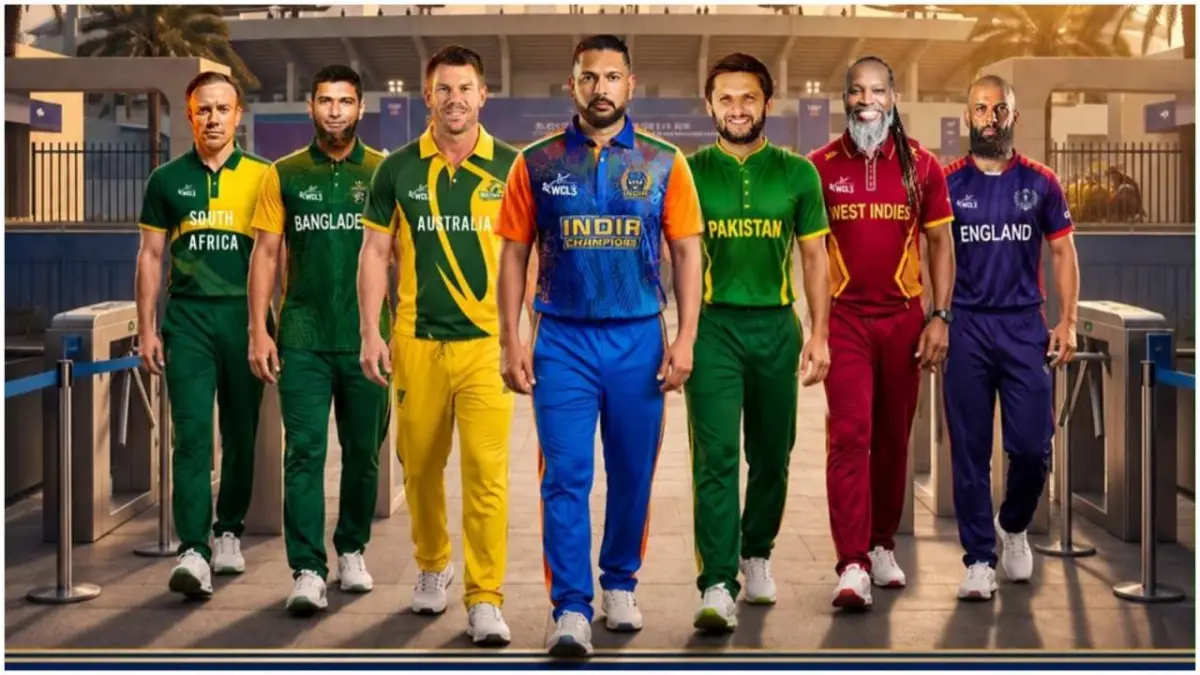
Dubai, UAE – October 5, 2026 – The eagerly anticipated World Championship of Legends (WCL) has once again found itself at the nexus of high-stakes cricket and intricate geopolitical dynamics. Following a season marred by controversy involving its two biggest draws, India and Pakistan, the Pakistan Cricket Board (PCB) has finally granted a No Objection Certificate (NoC) for the Pakistan Champions to participate in the ongoing 2026 edition in Dubai and Sharjah. However, this clearance comes laden with significant conditions, primarily concerning the India Champions team, reigniting the contentious debate over sport and diplomacy.
The decision, confirmed by sources close to the WCL management and reported by ANI, signifies a conditional truce rather than a complete resolution. The PCB’s demands, which included an apology from Indian players for their refusal to compete last season and assurances regarding future encounters, have cast a long shadow over the tournament, highlighting the persistent challenges in fostering sporting camaraderie between the rival nations. While the WCL management reportedly did not concede to the non-commercial demands, their acceptance of PCB’s financial terms has paved the way for Pakistan’s participation, albeit under a cloud of unresolved issues.
Main Facts: A Conditional Return to the Legends Arena
The core of the unfolding drama revolves around the Pakistan Champions’ re-entry into the World Championship of Legends for its 2026 season. The tournament, designed to bring retired cricketing icons back to the field, is currently being played across various venues in the United Arab Emirates.
After considerable deliberation and a period of uncertainty that kept fans and organisers on edge, the Pakistan Cricket Board (PCB) officially issued a No Objection Certificate (NoC) to the Pakistan Champions squad. This NoC is crucial, as it provides the necessary clearance for Pakistani players, even retired ones, to participate in international, privately organised leagues. Without it, their involvement would be deemed unsanctioned.
)
However, the PCB’s clearance was far from unconditional. Reports indicate that the Pakistani cricketing authority attached several stipulations, the most prominent of which directly pertained to the India Champions team. These conditions stemmed from a bitter controversy that overshadowed the previous 2025 edition of the WCL, where matches between India and Pakistan were cancelled due to the Indian team’s refusal to play.
Specifically, the PCB sought assurances from the WCL management that it would have no objection if Indian players chose not to participate in the tournament, or conversely, that the tournament would not penalise Pakistan if such a situation arose again. More controversially, the PCB reportedly demanded a written apology from the Indian players involved in last season’s boycott. Furthermore, it suggested that a public handshake between the players of both nations would be an agreeable gesture following the previous season’s dispute.

While the WCL management has accepted the commercial terms put forth by the PCB, ensuring the financial viability of Pakistan’s participation, they have reportedly not acceded to the non-commercial demands, particularly those related to the apology and specific assurances regarding Indian player participation. This rejection sets up a delicate situation, as Pakistan Champions are now competing in a tournament where the fundamental issues that led to last year’s controversy remain unaddressed from the PCB’s perspective. The ongoing WCL 2026 is therefore proceeding with a palpable undercurrent of tension, as stakeholders grapple with the implications of this conditional return.
Chronology of Controversy: A Look Back at the 2025 Season
The current situation is a direct consequence of events that transpired during the 2025 edition of the World Championship of Legends. That season was intended to celebrate the camaraderie and enduring appeal of cricket’s veterans, but it instead became a stage for heightened political and sporting tensions between India and Pakistan.
)
The Genesis of the Dispute (2025 Season):
As the 2025 WCL tournament progressed, the fixture everyone anticipated – a clash between India Champions and Pakistan Champions – loomed large. These matches, regardless of the format or the age of the players, traditionally draw immense global viewership and evoke unparalleled passion among fans. However, as the scheduled group stage encounter approached, geopolitical relations between India and Pakistan experienced a period of significant strain. While the specific nature of these "surging tensions" is typically not detailed in sporting reports to maintain focus on the game, they are widely understood to encompass various political, diplomatic, and security-related issues that frequently impact cross-border interactions.
The Group Stage Boycott:
Under pressure stemming from these external factors and potentially public sentiment within India, the India Champions team made a unilateral decision not to take the field against their Pakistani counterparts. This refusal led to the immediate cancellation of the much-anticipated group stage match. The decision sent shockwaves through the tournament, disappointing organisers, broadcasters, and most importantly, the millions of fans who tune in specifically for this rivalry. The cancellation not only impacted the schedule but also raised questions about the integrity of the competition and the spirit of sportsmanship.
)
Semi-Final Repeat and Pakistan’s Advancement:
The controversy escalated further as the tournament moved into its crucial knockout stages. In a twist of fate, India Champions and Pakistan Champions were again slated to face each other, this time in a semi-final showdown. Despite the high stakes and the potential for a place in the final, the India Champions reiterated their stance and once again refused to play.
This second boycott had more profound implications for the tournament’s competitive structure. With India Champions refusing to participate, the Pakistan Champions were effectively granted a walkover. This meant that without striking a single ball in that semi-final, the Pakistani side automatically advanced to the final of the 2025 World Championship of Legends. While technically adhering to tournament rules regarding walkovers, this outcome felt hollow to many, detracting from the purity of competition and leaving an asterisk next to Pakistan’s path to the final.
)
Impact on the Tournament and Player Morale:
The repeated cancellations not only disrupted the WCL’s schedule and broadcast commitments but also created an awkward atmosphere among the participating legends. Many retired players, regardless of nationality, cherish the opportunity to play competitive cricket and reconnect with former rivals. The political interference in sporting matters often places these athletes in an uncomfortable position, caught between national directives and their personal desire to play. The 2025 controversy left a lingering sense of disappointment and a clear mandate for the WCL organisers to address these deeply entrenched issues before the subsequent seasons.
Official Responses and Diplomatic Manoeuvres: PCB’s Demands and WCL’s Stance
The aftermath of the 2025 controversy necessitated a careful diplomatic dance, primarily involving the Pakistan Cricket Board (PCB) and the World Championship of Legends (WCL) management. The PCB, acting as the guardian of Pakistani cricket, was keen to ensure that the integrity and respect for its players were maintained, leading to the formulation of its conditions for the 2026 season.
)
The PCB’s Conditions for NOC:
Before agreeing to issue the NoC for the Pakistan Champions team’s participation in the 2026 WCL, the PCB laid out a series of demands. These conditions were clearly aimed at addressing the grievances from the previous season and establishing a framework for future India-Pakistan encounters within the WCL.
-
Assurances Regarding Indian Player Participation: The PCB initially sought specific assurances from the WCL management. According to ANI reports, one key aspect was that the WCL "would have no objection if Indian players did not participate in the tournament." This seemingly paradoxical demand could be interpreted in several ways. It might suggest the PCB wanted a guarantee that if Indian players again refused to play Pakistan, the WCL would not penalize the Pakistan Champions or create a situation that would disadvantage them. Alternatively, it could imply a desire for the WCL to ensure that Indian players would participate without controversy, or if they didn’t, it would be formally understood and accepted without repercussions for the Pakistani side. It signals a proactive attempt by the PCB to pre-empt a repeat of the 2025 scenario.
)
-
Demand for a Written Apology from Indian Players: This was perhaps the most contentious of the PCB’s demands. The Pakistani board insisted that the Indian players who refused to play against Pakistan Champions in the 2025 edition issue a written apology for their decision. This demand goes beyond mere administrative agreement; it delves into the realm of accountability and public acknowledgement of what the PCB perceived as unsportsmanlike conduct. Such an apology would serve as a formal concession and a gesture of goodwill, crucial for rebuilding trust from Pakistan’s perspective.
-
Proposal for a Public Handshake: Alongside the apology, the PCB also indicated that it would be agreeable to a public handshake between the players of both nations. This gesture, often symbolic in sports, would be intended to signify a burying of the hatchet and a return to sporting civility after the previous season’s acrimony. It would present a visual narrative of reconciliation, important for public perception.
)
WCL Management’s Response:
The World Championship of Legends management found itself in a challenging position, balancing the need to secure the participation of a major draw like Pakistan with the complexities of geopolitical sensitivities.
According to the same WCL sources quoted by ANI, the tournament management "did not agree to any of the demands made by the PCB" concerning the non-commercial aspects. This means that the WCL effectively rejected the call for an apology from Indian players and did not provide the specific assurances the PCB sought regarding Indian participation or the public handshake. The WCL, as a private entity, likely found itself unable or unwilling to dictate terms to players of another sovereign nation or to mediate such a sensitive diplomatic issue. Issuing demands for apologies or enforcing specific social interactions falls outside the typical purview of a tournament organiser.
)
However, a critical concession was made: the WCL management "has accepted the commercial terms put forward by the PCB." This signifies that while the ideological and diplomatic demands were rejected, the financial negotiations were successful. These commercial terms likely include participation fees for the Pakistan Champions team, broadcast rights, and other revenue-sharing agreements that make Pakistan’s involvement financially beneficial for both parties. The acceptance of these terms indicates the WCL’s strong desire to have Pakistan Champions participate, recognising their commercial value and the appeal they bring to the tournament, even if it meant navigating a thorny path.
This dual response – rejection of diplomatic demands but acceptance of commercial ones – underscores the complex reality of modern sports. While principles and past grievances are paramount for national boards, the commercial imperative often dictates the ultimate outcome for tournament organisers.
)
Supporting Data and Context: The Broader Landscape of Legends Cricket and India-Pakistan Rivalry
To fully appreciate the gravity of the ongoing situation, it is crucial to place it within the broader context of ‘legends’ cricket and the unparalleled India-Pakistan rivalry. These elements are not just background noise but fundamental drivers of the WCL’s appeal and the intensity of the current administrative standoff.
The World Championship of Legends (WCL): A Vision and its Challenges:
The WCL, like other ‘legends’ or ‘veterans’ cricket leagues (e.g., Road Safety World Series, Legends League Cricket), was conceived with a noble objective: to rekindle the magic of cricketing heroes from yesteryears. These tournaments aim to provide fans with a nostalgic trip down memory lane, watching their favourite retired stars compete in a more relaxed, yet still competitive, environment, often in the T20 or T10 format. Beyond nostalgia, they offer these former players an opportunity to continue playing the game they love, earn an income, and remain connected to the sport.
)
The success of such leagues heavily relies on two critical factors:
- Star Power: The participation of iconic players from major cricketing nations like India, Pakistan, Australia, England, West Indies, and Sri Lanka is paramount. These players bring instant recognition, draw crowds, and attract lucrative broadcast and sponsorship deals.
- Rivalries: While the spirit is generally convivial, the inclusion of traditional rivalries significantly boosts viewership and engagement. An India-Pakistan match, even between retired players, is a guaranteed spectacle.
The WCL’s vision is therefore intrinsically linked to the ability to host such high-profile matches without external interference. The 2025 controversy directly undermined this vision, demonstrating how external geopolitical factors can severely impact the core offering of the tournament.
)
The Unparalleled India-Pakistan Cricket Rivalry:
The cricketing rivalry between India and Pakistan is arguably the most intense and globally watched fixture in the sport. It transcends mere competition; it is often described as a battle of national pride, history, and identity.
- Historical Significance: Born out of the partition of 1947, the rivalry carries a deep historical weight. Every match is imbued with narratives of national honour.
- Massive Global Viewership: An India-Pakistan match consistently breaks viewership records, dwarfing almost any other bilateral or even multilateral sporting event in cricket. Broadcasters pay premium prices, and sponsors flock to advertise during these games. The financial stakes are enormous.
- Emotional Investment: For fans in both countries and the diaspora worldwide, these matches are not just games; they are emotional rollercoasters. The outcome often dictates national mood.
- Rarity and Exclusivity: Due to political tensions, bilateral series between India and Pakistan have been suspended for over a decade. They only face each other in multi-nation tournaments (ICC events, Asia Cup). This rarity further elevates the significance of every encounter, making any cancellation even more impactful.
When the India Champions refused to play Pakistan Champions in the 2025 WCL, it wasn’t just another match cancellation; it was the cancellation of the tournament’s most valuable asset. This act directly hit the WCL’s commercial viability and its ability to deliver on its promise of star-studded rivalries. The PCB’s subsequent demands reflect an understanding of this leverage and a desire to ensure that such a commercially and emotionally significant fixture is treated with due respect and guarantees.
)
The Role of Cricket Boards and Geopolitical Influence:
National cricket boards like the PCB and the BCCI (Board of Control for Cricket in India) are not just administrative bodies; they are powerful national institutions. They operate under immense public scrutiny and often reflect the prevailing political climate of their respective nations.
- PCB’s Stance: The PCB’s insistence on an apology and assurances highlights its role in protecting the national image and the dignity of its players. It also showcases a strategic move to assert its position on the global cricketing stage, especially when dealing with India.
- BCCI’s Unspoken Influence: While the BCCI is not directly mentioned in the PCB’s demands to WCL, its influence over Indian players is undeniable. The decision of Indian players not to participate in 2025 would almost certainly have been influenced by, or in alignment with, the BCCI’s broader stance on sporting ties with Pakistan, which in turn is often guided by government policy.
- Commercial Realities for WCL: The WCL’s acceptance of PCB’s commercial terms, despite rejecting the diplomatic ones, underscores the overwhelming financial importance of Pakistan’s participation. Without both India and Pakistan, the WCL loses a significant chunk of its market appeal, affecting sponsorship, broadcast rights, and overall revenue. The WCL management is walking a tightrope, trying to ensure the tournament’s financial health while navigating politically charged waters.
In essence, the ongoing WCL controversy is a microcosm of the larger, complex relationship between India and Pakistan, where even a game played by retired legends cannot escape the long shadow of geopolitical realities and national pride.
)
Implications: A Precarious Future for WCL and India-Pakistan Sporting Ties
The conditional return of Pakistan Champions to the WCL 2026, marked by the PCB’s unfulfilled demands and the WCL’s pragmatic compromises, carries significant implications for the tournament itself and the broader landscape of India-Pakistan sporting relations.
Immediate Impact on WCL 2026:
The most immediate consequence is the uncertainty surrounding potential India-Pakistan matches in the current season. With the WCL management reportedly rejecting the PCB’s non-commercial conditions, especially the demand for an apology, the underlying tension from 2025 remains unresolved.
)
- Will India Champions Play Pakistan Champions? This is the million-dollar question. If an India-Pakistan fixture arises in the group stage or knockout rounds, will India Champions again refuse to play, citing the same reasons as last year? Or will the WCL, having accepted Pakistan’s conditional participation, find a way to ensure the matches proceed?
- Tournament Integrity: Another boycott would severely damage the WCL’s credibility and its ability to deliver a fair and competitive tournament. It would force the WCL to consider stricter rules or contingency plans for future seasons.
- Player Morale: The players, particularly the Indian and Pakistani legends, are once again caught in the crossfire. This can create an awkward environment, detracting from the spirit of camaraderie that such tournaments aim to foster.
Long-Term Implications for the WCL:
The WCL’s long-term viability hinges on its ability to consistently attract top legends and, crucially, to stage marquee matchups.
- Brand Damage: Recurring controversies, especially surrounding its biggest rivalry, can significantly tarnish the WCL’s brand image. Sponsors and broadcasters might become hesitant to invest heavily if there’s a risk of match cancellations and diplomatic disputes overshadowing the sport.
- Future Participation: If the WCL cannot guarantee a neutral and controversy-free environment, it might struggle to attract Pakistani players (if PCB continues its stringent stance) or even other international players who might not want to be associated with political drama.
- Sustainability: For a ‘legends’ league to be sustainable, it needs predictable revenue streams and a stable competitive environment. The current situation introduces an element of unpredictability that could undermine its foundation. The WCL might be forced to consider a format where India and Pakistan are deliberately kept apart or to implement stricter contractual obligations for all participating teams.
Broader India-Pakistan Sporting Relations:
This incident, even in a ‘legends’ tournament, reflects and potentially exacerbates the challenges in normalizing sporting ties between India and Pakistan.
)
- Reinforced Stances: The PCB’s firm stance, even if partially unfulfilled, sends a message that it will not shy away from making demands based on perceived slights. Conversely, India’s continued refusal to engage in certain sporting contexts without political resolution reinforces its own position.
- Precedent Setting: While ‘legends’ leagues are distinct from official ICC or bilateral series, the dynamics observed here could set a precedent or influence the approach taken by the respective boards in other cricketing formats or even other sports.
- Diplomatic Hurdles: Sporting events often serve as informal diplomatic channels. When even these are fraught with conditions and controversies, it highlights the deep-seated political hurdles that need to be overcome before any significant thaw in relations can occur. The dream of regular bilateral cricket between the two nations appears more distant than ever.
PCB’s Strategic Maneuvering:
The PCB’s decision to issue a conditional NoC, despite the WCL’s rejection of key demands, demonstrates a nuanced strategic approach.
- Asserting Authority: By putting conditions, the PCB asserted its authority and made it clear that past incidents would not be overlooked.
- Balancing Act: Accepting the commercial terms while maintaining the diplomatic stance allows Pakistan Champions to participate, ensuring financial benefits and exposure for its players, without fully compromising on the principles the PCB wishes to uphold. It’s a pragmatic compromise that keeps Pakistan in the tournament while still signalling discontent.
- Public Perception: This move helps the PCB maintain a strong image domestically, showing its public that it stands firm on issues of national pride and respect for its players.
In conclusion, the WCL 2026 finds itself in a precarious position, attempting to celebrate the glorious past of cricket while navigating the turbulent present of geopolitical realities. The participation of Pakistan Champions, while welcome, is shadowed by unresolved issues that could erupt at any moment. The delicate balance struck between commercial necessity and national pride underscores the enduring challenge of separating sport from politics when it comes to the India-Pakistan rivalry, leaving fans and organisers alike to wonder whether the spirit of the game can truly transcend the boundaries drawn by nations.
