Wellington, New Zealand – The cricketing world was abuzz following the conclusion of the first Test between India and New Zealand in Wellington, which saw the hard-fought contest end in a draw. While the resilience displayed by the home side on Day 5 successfully thwarted India’s victory aspirations, much of the post-match discourse centered on two pivotal decisions: the surprising omission of star pacer Mohammed Siraj from India’s playing XI and captain Shubman Gill’s call to shake hands with 15 overs still remaining on the final day.
In a candid post-match press conference, Indian skipper Shubman Gill addressed both issues, offering insights into the complex dynamics of team selection and strategic match management. His statements shed light on the difficult choices faced by modern cricket captains, balancing personal relationships, player form, and the overarching demands of a strenuous international calendar.

The Wellington Stalemate: A Series Opener Full of Intrigue
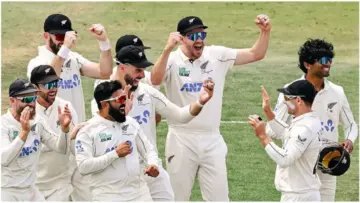
The two-match Test series opener at the Basin Reserve in Wellington promised high-octane action, and it largely delivered, albeit culminating in a stalemate. India, after putting up a formidable total, had New Zealand under pressure for significant portions of the match. However, the Black Caps, renowned for their grit on home soil, mounted a spirited defense on the fifth day. Their batsmen dug deep, showcasing remarkable resolve against a persistent Indian bowling attack, ultimately preventing a collapse and securing a draw.
The pitch at the Basin Reserve, initially offering assistance to seamers, gradually flattened out, making wicket-taking increasingly challenging as the match wore on. While India pushed hard for a result, their efforts were met with stubborn resistance, leaving the series finely poised at 0-0 heading into the second and final Test. The draw meant both teams earned four crucial World Test Championship (WTC) points, though their respective win percentages (PCT) saw a slight dip.

Mohammed Siraj’s Omission: A ‘Tough Call’ for Captain Gill
The most significant talking point even before the first ball was bowled was the absence of Mohammed Siraj from India’s playing XI. A frontline pacer known for his fiery spells, ability to generate pace and bounce, and crucial breakthroughs, Siraj’s exclusion raised eyebrows among fans and pundits alike. His consistent performances across formats in recent years have cemented his place as a vital cog in India’s bowling machinery, making his benching in a crucial Test a subject of intense speculation.
A Shockwave of Speculation: Pre-Match Buzz Around Siraj
Mohammed Siraj has been a revelation for Indian cricket, evolving into a potent force with the red ball. His journey from a promising talent to a match-winner has been marked by memorable spells, particularly in overseas conditions. With a knack for picking up wickets at crucial junctures and maintaining relentless pressure, his inclusion in any Test match squad is usually a given. Therefore, when the playing XI for the Wellington Test was announced without his name, it sent a ripple of surprise through cricketing circles.

Speculation immediately mounted regarding the reasons behind the decision. Was it injury? A strategic call based on pitch conditions? Or perhaps a dip in form that hadn’t been widely publicized? Fans and commentators debated the potential replacements and the implications of sidelining a bowler of Siraj’s caliber, especially in a two-match series where every decision carries significant weight. The general consensus was that Siraj, with his proven track record, would have been an automatic choice, making the actual selection all the more perplexing prior to Gill’s explanation. The decision to opt for an alternative pace combination, possibly prioritizing swing over raw pace or a particular match-up against the New Zealand batsmen, only fueled the debate.
Gill’s Candid Confession: Balancing Friendship and Form
Addressing the elephant in the room, Shubman Gill did not shy away from discussing the difficult nature of dropping Siraj. In the post-match press conference, Gill articulated the emotional and professional challenges involved in such a decision, particularly when it concerns a close friend and a respected teammate.

"Siraj is a really good friend, and dropping him was a really tough call," Gill admitted, his words reflecting the personal weight of the decision. "We have played a lot together, and I know him since early days. I had a chat with him before the Test explaining him the call, and he understood that."
Gill further elaborated on the rationale, emphasizing the team’s commitment to selecting players based on their current performance metrics. "See, every player will see a phase where they are not at their peak, and we picked on current form. The kind of player Siraj is, he will do a better comeback from here." This statement provided a clearer picture, indicating that the decision was not a reflection of Siraj’s overall ability or his standing within the team, but rather a tactical choice based on a perceived temporary dip in form or the suitability of other bowlers for the specific conditions and opposition.

An official statement from ANI further corroborated Gill’s sentiments, quoting him as saying, "Siraj is a great player and a great bowler who has done very well for India. Before all of that, he is a good friend of mine. Leaving him behind was a very tough decision for me as well. It was a tough decision for me. But you have to see which bowlers are in form. I had this conversation with him before the match and told him that he would be missing this match. He understood the logic behind it and why someone else was picked." These words highlight Gill’s maturity as a captain, demonstrating his willingness to engage in direct, honest communication with his players, even when delivering unpopular news.
The Psychology of Selection: Siraj’s Reaction and the Path Forward
The captain’s revelation about Siraj’s reaction – that he "understood the logic behind it" – speaks volumes about the pacer’s professionalism and commitment to the team. In the cutthroat world of international cricket, being dropped can be a significant blow to a player’s confidence and morale. However, Siraj’s reported understanding suggests a mature outlook, recognizing that such decisions are part and parcel of elite sport.

For any player, particularly one of Siraj’s stature, a temporary omission serves as a powerful motivator. The challenge now for Siraj is to channel any disappointment into renewed determination, working on aspects of his game that might have led to this decision and proving his worth for future selections. Gill’s confidence in Siraj’s ability to "do a better comeback from here" indicates that the team management views this as a temporary phase rather than a permanent demotion.
Such selection dilemmas are a recurring feature in top-tier cricket, especially for a team like India with a rich talent pool. Managing player relationships, communicating tough decisions, and maintaining team harmony are critical aspects of captaincy. Gill’s transparent approach, engaging directly with Siraj and explaining the rationale, is a testament to his leadership style and his commitment to fostering a cohesive team environment. It sets a precedent for how difficult personnel choices will be handled under his captaincy, prioritizing clear communication and mutual respect.

The Unused Overs: Gill’s Pragmatic Approach to Match Conclusion
Beyond the Siraj conundrum, another decision that garnered attention was the premature conclusion of the match on Day 5, with approximately 15 overs (nearly an hour of play) still remaining. With India still harboring faint hopes of a breakthrough, the decision to call for a draw raised questions about whether every possible avenue for victory was explored.
The Day 5 Dilemma: When to Call it a Draw?
Test cricket, by its very nature, demands relentless effort over five days. The final session of the fifth day often presents a dramatic spectacle, with teams pushing for a win or desperately defending for a draw. In this context, calling off play with a significant number of overs left is a relatively uncommon occurrence, usually reserved for situations where a result is mathematically impossible or conditions become unplayable.

Given that India had been pressing for wickets, albeit without consistent success, the decision to declare the match a draw raised tactical eyebrows. Some analysts wondered if an extra spell from a fresh bowler, or a few more overs with the older ball, might have created an opportunity. However, Gill’s explanation provided a pragmatic, long-term perspective on the decision.
Prioritizing Player Welfare and Series Longevity
Gill meticulously laid out the reasons behind the early conclusion, prioritizing player welfare and the strategic demands of a condensed series. "If there was a little bit more in the wicket, maybe," Gill began, acknowledging the challenging nature of the pitch. "But fast bowlers were tired; they have bowled almost 50 overs in the match, all of them."

This highlights a critical aspect of modern cricket: player load management. Fast bowlers endure immense physical strain, and their fatigue levels significantly impact their effectiveness and increase the risk of injury. With a quick turnaround for the next Test and travel scheduled for the following day, conserving the bowlers’ energy became a paramount concern.
"So, and also keeping, there’s a quick turnaround with the next match in only three days with travel tomorrow. So, we wanted to keep all our bowlers fresh," Gill explained. "And, didn’t really think having 5-10 extra overs would have helped that much." This decision underscores a strategic shift in Test cricket, where series are often tightly scheduled, and teams must look beyond the immediate match result to ensure their key players are fit and firing for subsequent encounters. The potential gains from a few more overs were deemed minimal compared to the risk of over-exerting the bowling attack, especially with a fresh Test looming. It was a calculated risk assessment, prioritizing the health of the squad and the broader series outcome over a potentially futile late surge for wickets on a unresponsive pitch.

Broader Implications and the Road Ahead
The Wellington Test, despite ending in a draw, has set the stage for a compelling remainder of the series and offered significant insights into India’s team management and Shubman Gill’s nascent captaincy.
World Test Championship Standings: A Modest Gain, a Minor Setback
For both India and New Zealand, the draw translated into four WTC points each. While any points are valuable, a draw means a lower points percentage compared to a victory, which awards 12 points. In the fiercely competitive landscape of the World Test Championship, where every point contributes to a team’s standing for a spot in the final, maximizing points from every match is crucial. Both teams will be keen to secure a decisive victory in the next Test to bolster their WTC aspirations and improve their PCT, especially with the competition heating up amongst the top cricketing nations.

Gill’s Captaincy: Navigating Tough Decisions
Shubman Gill’s handling of the post-match press conference and the decisions made on the field speak volumes about his leadership. His transparent communication regarding Siraj’s omission, coupled with his pragmatic approach to managing player fatigue and series demands, showcases a captain who is not afraid to make tough calls and articulate his reasoning clearly. This early test of his captaincy, involving both personnel management and on-field strategy, suggests a thoughtful and measured leader. His ability to balance the demands of immediate performance with the long-term well-being of his squad will be a defining characteristic of his tenure.
The India-New Zealand Series: Pressure Mounts for the Decider
With the series standing at 0-0, the second Test now becomes a winner-takes-all encounter. Both teams will be under immense pressure to perform, and tactical adjustments are highly likely. India will need to reassess their bowling combinations and potentially consider the re-inclusion of Siraj, depending on the conditions and the perceived form of their other pacers. New Zealand, having shown their resilience, will be aiming to build on their defensive strength and look for opportunities to press for a win. The stakes are higher, and the battle promises to be an intense one, with both sides eager to claim the series.

Conclusion: Lessons from Wellington
The Wellington Test was more than just a drawn match; it was a microcosm of modern Test cricket’s complexities. It highlighted the intricate balance between individual player form and team strategy, the personal relationships within a squad and the professional demands of selection, and the immediate pursuit of victory versus the long-term management of player resources.
Shubman Gill’s captaincy, still in its early stages, has already been tested by difficult decisions, which he appears to have navigated with maturity and clear communication. Mohammed Siraj’s temporary omission serves as a reminder that even the best players face periods of intense competition and evaluation, while the early draw underscores the evolving tactical considerations in a packed international schedule. As the teams now turn their attention to the series decider, the lessons learned from Wellington will undoubtedly inform their strategies, making the upcoming contest an even more eagerly anticipated affair.