

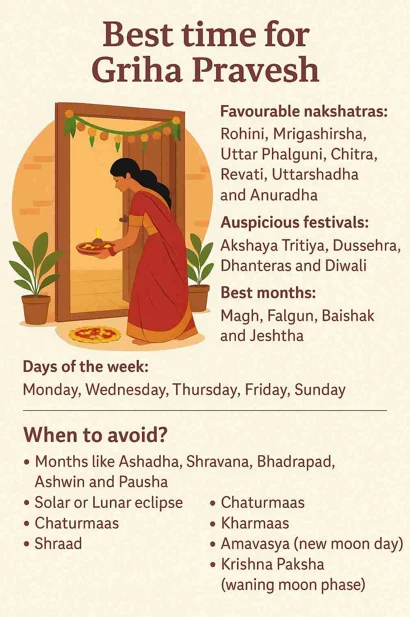
In Hindu culture, a house is more than a structure of bricks and mortar; it is considered a living entity that breathes and influences the lives of its inhabitants. Consequently, the act of moving into a new residence—known as Griha Pravesh—is a spiritual milestone that requires precise timing. According to Vastu Shastra and Vedic astrology, entering a home during a "Shubh Muhurat" (auspicious time) ensures that the property is cleansed of negative energies and aligned with cosmic forces to bring health, wealth, and harmony to the family.
As we look toward 2026, the Hindu lunar calendar (Panchang) reveals specific windows of opportunity for homeowners. This guide provides an exhaustive analysis of the auspicious dates, the spiritual significance of the rituals, and expert-backed advice for a successful transition.
1. Main Facts: The Philosophy of Auspicious Timing
The selection of a Griha Pravesh date is not arbitrary. It is a complex calculation performed by scholars based on the alignment of several astrological factors:
- Tithi (Lunar Day): Certain days of the lunar month, such as Dwitiya (2nd), Tritiya (3rd), and Panchami (5th), are considered high-vibration days.
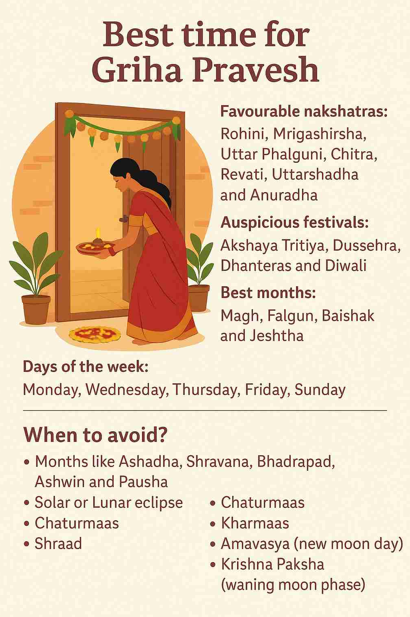
- Nakshatra (Lunar Mansion): Of the 27 constellations, specific ones like Rohini, Mrigashira, and Anuradha are deemed most stable for establishing a permanent residence.
- Vastu Shastra Alignment: The science of architecture (Vastu) dictates that the transition must balance the five elements: Earth, Water, Fire, Air, and Space.
- The Sun’s Position: The movement of the Sun into specific zodiac signs (Sankranti) can render entire months auspicious or inauspicious.
Performing the ceremony during these peaks of positive energy is believed to act as a "spiritual shield," protecting the occupants from "Vastu Dosha" (architectural defects) and past residual energies of the land.
2. Chronology: Auspicious Griha Pravesh Dates for 2026-2027
The year 2026 features distinct periods of high auspiciousness followed by "dry spells" where celestial alignments are unfavorable. Note that the Kharmas period (mid-March to mid-April) and Chaturmas (the four-month period of divine rest) significantly impact the availability of dates.
April to July 2026: The Spring/Summer Window
The early months of 2026 are restricted by Kharmas, which ends on April 14.
| Date | Day | Tithi | Nakshatra | Timing (Muhurat) |
|---|---|---|---|---|
| April 20 | Monday | Tritiya | Rohini | 05:57 AM – 07:27 AM |
| May 4 | Monday | Tritiya | Anuradha | 05:49 AM – 09:58 AM |
| May 8 | Friday | Saptami | Uttara Ashadha | 12:21 PM – 09:20 PM |
| May 13 | Wednesday | Ekadashi | Uttara Bhadrapada | 05:45 AM – 01:29 PM |
| June 24 | Wednesday | Dashami | Chitra | 05:44 AM – 01:59 PM |
| June 26 | Friday | Trayodashi | Anuradha | 10:22 PM – 05:44 AM (Jun 27) |
| July 1 | Wednesday | Dwitiya | Uttara Ashadha | 06:51 AM – 05:46 AM (Jul 02) |
| July 6 | Monday | Saptami | Uttara Bhadrapada | 04:07 PM – 05:47 AM (Jul 07) |
The "Inauspicious Gap": August to October 2026
There are no auspicious dates available in August, September, and October 2026. This is largely due to Bhadrapada and the onset of Chaturmas, periods traditionally reserved for penance and internal reflection rather than new beginnings.

November to December 2026: The Winter Revival
As the festive season peaks, several high-energy dates emerge.
| Date | Day | Tithi | Nakshatra | Timing (Muhurat) |
|---|---|---|---|---|
| Nov 11 | Wednesday | Dwitiya | Anuradha | 06:19 AM – 11:38 AM |
| Nov 20 | Friday | Ekadashi | Uttara Bhadrapada | 06:56 AM – 06:24 AM (Nov 21) |
| Nov 25 | Wednesday | Pratipada | Rohini/Mrigashira | 06:27 AM – 06:27 AM (Nov 26) |
| Dec 3 | Thursday | Dashami | Uttara Phalguni | 06:31 AM – 09:23 AM |
| Dec 12 | Saturday | Tritiya | Uttara Ashadha | 06:37 AM – 02:06 PM |
| Dec 30 | Wednesday | Saptami | Uttara Phalguni | 06:46 AM – 12:36 PM |
Early 2027: Q1 Opportunities
For those looking at early 2027, February and March offer a high frequency of "Shubh" days.
| Date | Day | Tithi | Nakshatra | Timing (Muhurat) |
|---|---|---|---|---|
| Feb 11 | Thursday | Panchami | Revati | 07:03 AM – 03:18 AM (Feb 12) |
| Feb 22 | Monday | Dwitiya | Uttara Phalguni | 11:54 AM – 06:53 AM (Feb 23) |
| March 10 | Wednesday | Dwitiya | Uttara Bhadrapada | 06:37 AM – 06:36 AM (Mar 11) |
| March 24 | Wednesday | Tritiya | Chitra | 06:21 AM – 07:25 PM |
3. Supporting Data: The Significance of Rituals
To the uninitiated, Griha Pravesh may seem like a simple housewarming party, but each ritual is steeped in scientific and spiritual logic.
The Three Types of Griha Pravesh
- Apoorva: Entering a newly constructed house on land for the first time.
- Sapoorva: Re-entering a house after a long period of absence (e.g., returning from abroad).
- Dwandwah: Re-entering a home after extensive renovation or reconstruction following a natural disaster.
The Science of Boiling Milk
A central ritual in Indian households involves boiling milk until it overflows from a new vessel. This is not merely symbolic of abundance; traditionally, the overflow is directed toward the East (the direction of the rising sun). From a practical standpoint, the boiling process was an ancient method of "testing" the new kitchen’s fire source and ensuring the cleanliness of the new environment.
Graha Shanti and Vastu Purusha
The ceremony usually includes a Graha Shanti puja to appease the nine planets (Navagraha) and a Vastu Purusha puja. According to legend, the Vastu Purusha is the deity of the structure who lies with his head to the Northeast. By performing these rituals, homeowners seek to align their personal energy (Atman) with the energy of the building.
4. Official Responses: Expert Perspectives on Vastu and Astrology
Leading Vastu consultants and astrologers emphasize that "universal" dates are a starting point, but personalization is key.
The Role of the Birth Chart (Kundli):
Experts suggest that the Janma Nakshatra (birth star) of the head of the family must not conflict with the chosen date. For instance, if a date is generally auspicious but falls on a day that is "Rahu-heavy" for the homeowner’s specific zodiac, it should be avoided.
The "Choghadiya" Factor:
In cases where a specific Tithi is unavailable, experts often look at the Choghadiya—a Vedic tool that divides the day into eight segments. Segments labeled Amrit, Shubh, and Labh are considered excellent for starting new ventures, while Rog and Kaal are avoided at all costs.
Rented Properties:
A common question posed to experts is whether renters need a Muhurat. The consensus among Vastu practitioners is a resounding "Yes." Even if you do not own the walls, you occupy the space. A simple Ganesh Puja and the lighting of a lamp (Diya) can help harmonize the rented space for the new tenant.
5. Implications: Guidelines and Modern Trends
Moving into a house in 2026 involves a blend of ancient wisdom and modern logistical planning.
Avoidance of Rahu Kaal
Regardless of how auspicious a day is, the Rahu Kaal (a period of approximately 90 minutes each day) is considered "poisonous" for new beginnings.
- Monday: 7:30 – 9:00 AM
- Saturday: 9:00 – 10:30 AM
- Sunday: 4:30 – 6:00 PM
Homeowners must ensure the "Kalash Pravesh" (entry with the holy pot) does not happen during these windows.
Preparation Checklist
- The Threshold: The main door is the "Simha Dwara" (Lion’s Gate). It should be decorated with mango leaves and marigold flowers to invite Lakshmi, the goddess of wealth.
- The First Entry: The husband and wife should enter the house together, usually leading with the right foot.
- Empty House Rule: A Griha Pravesh should never be performed in an empty house. At least the gas stove/stove and basic idols should be moved in during the Muhurat.
- Avoid Furniture Shifting: Heavy furniture should ideally be moved a day after the puja to avoid disturbing the newly settled energies of the house.
Modern Trends: The Digital Puja
The rise of the global Indian diaspora has led to the "E-Puja." In 2026, more families are expected to use high-speed internet to have priests from holy cities like Varanasi or Rishikesh conduct rituals via video call. This allows NRIs to maintain cultural integrity even when local resources are unavailable. Additionally, there is a growing trend toward "Eco-Friendly Griha Pravesh," utilizing organic colors for Rangoli and avoiding single-use plastics during the subsequent feast.
Conclusion: The Viewpoint of Housing Experts
The Griha Pravesh is the bridge between a physical building and a "home." While modern life is fast-paced, the continued adherence to Muhurat dates in 2026 highlights a deep-seated human desire for psychological security and spiritual alignment. By respecting the Panchang and following Vastu guidelines, homeowners can ensure that their new beginning is anchored in positivity, providing a stable foundation for years of prosperity.
Disclaimer: While these dates are calculated based on general Hindu calendars, readers are advised to consult a personal astrologer to align dates with their specific birth charts and regional variations (such as the Tamil or Telugu calendars).
