

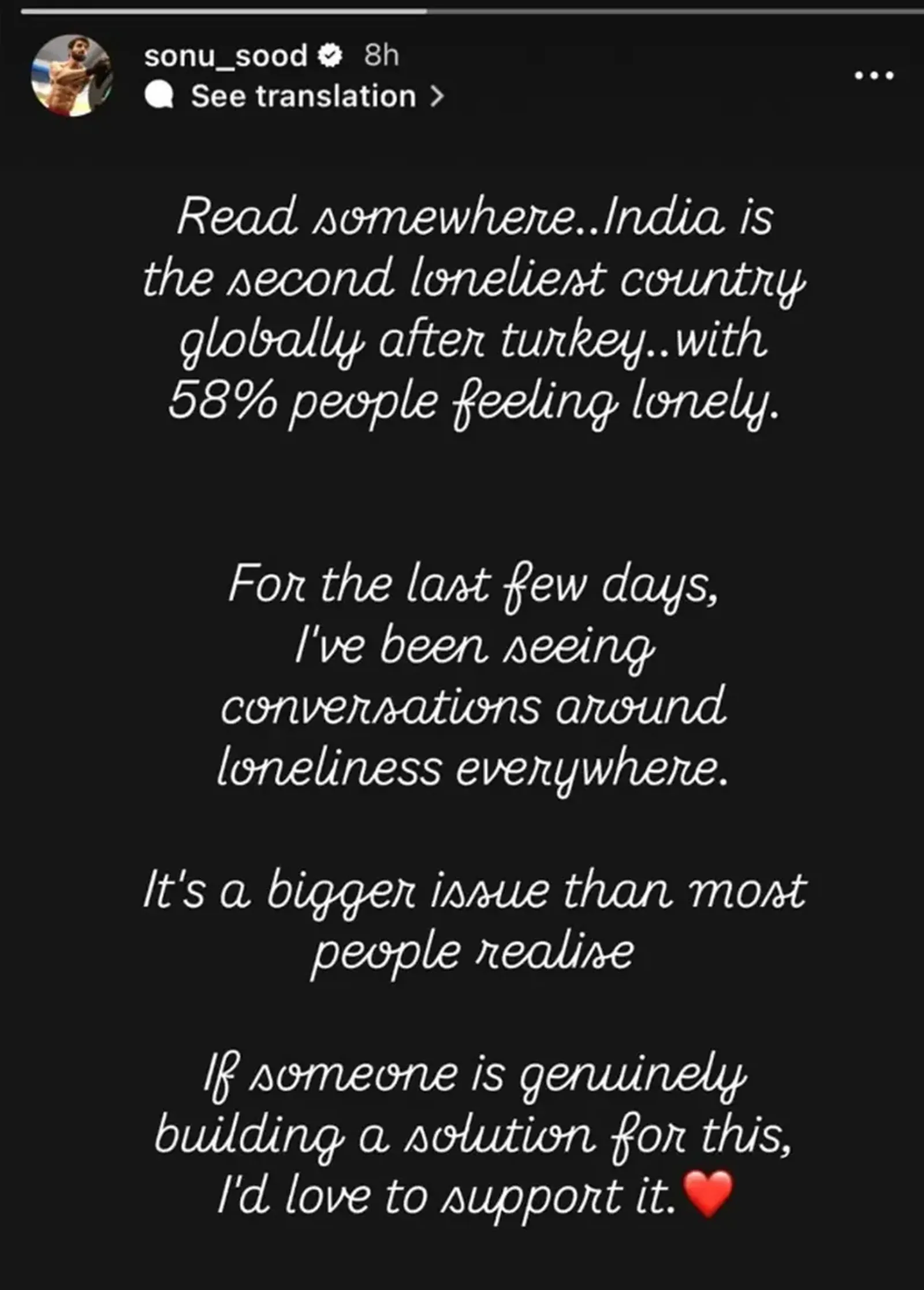
New Delhi, July 16, 2026 – A stark reality is unfolding across India, one that transcends economic indicators and political discourse: the insidious rise of loneliness. Actor Sonu Sood, widely recognized for his philanthropic efforts, has recently amplified this growing concern, highlighting a disturbing statistic that places India among the world’s loneliest nations. His impassioned plea on social media has ignited a critical conversation, underscoring the urgent need to address what experts are calling a significant mental health challenge of our era.
Sood, a prominent figure who has consistently championed social causes, took to his Instagram stories to share a statistic that has sent ripples of concern through the nation. "Read somewhere… India is the 2nd loneliest country globally after Turkey, with 58% people feeling lonely," he posted, his words echoing a sentiment he’s been observing more frequently. "For the last few days, I have been seeing conversations around loneliness everywhere. It’s a bigger issue than most people realise."
This sobering revelation is directly linked to a comprehensive report released in June 2026 by the digital entertainment platform JB.com. The study meticulously examined emotional well-being and social isolation across 36 countries, with its findings painting a concerning picture for India. The actor’s willingness to lend his voice and support to meaningful solutions further underscores the gravity of the situation.
The Mounting Tide of Isolation: Unpacking the Data
The JB.com report, which serves as the bedrock of Sood’s concern, reveals that a staggering 58% of Indians report experiencing feelings of loneliness. This places India in the unenviable position of being the second loneliest country in the world, surpassed only by Turkey. This statistic is not merely a number; it represents millions of individuals navigating a profound sense of isolation, impacting their mental and emotional well-being.
Dr. Rimpa Sarkar, a clinical psychologist and founder of Sentier Wellness in Mumbai, corroborates the urgency of the situation. She emphasizes that loneliness is no longer a peripheral issue but a central mental health challenge, particularly affecting the younger demographic. In an age where digital connectivity is at its zenith, paradoxically, many individuals are experiencing a deficit in deep, meaningful relationships.
"Social connection is not measured by the number of followers or messages we receive, but by the quality of emotional support and the feeling of being understood," Dr. Sarkar explains. "This disconnect is becoming increasingly pronounced, even as our virtual networks expand."
Underlying Factors Fueling the Loneliness Crisis
The surge in loneliness is not attributable to a single cause but rather a complex interplay of societal, technological, and psychological factors. Dr. Sarkar outlines several key contributors to this growing crisis:
The Digital Paradox: Connection vs. Isolation
"Young people are spending more time online, relocating frequently for education and work, working remotely, and navigating relationships in an increasingly fast-paced and uncertain world," Dr. Sarkar observes. "While social media creates the illusion of connection, it often replaces meaningful interaction with passive engagement."
The constant bombardment of curated online lives can create a false sense of community, where individuals may observe the activities of hundreds, if not thousands, of others daily, yet feel profoundly unseen and unknown. This superficial engagement, while providing a sense of being "connected," often fails to address the fundamental human need for genuine emotional intimacy and understanding.
The Pressure to Perform: The Illusion of Perpetual Happiness
In today’s hyper-competitive environment, there’s an escalating pressure to project an image of success, productivity, and unwavering happiness. This facade makes it exceedingly difficult for individuals, especially the youth, to acknowledge and articulate feelings of loneliness or emotional distress.

"Ironically, the more we compare our lives to carefully curated versions of others, the more isolated we may begin to feel," Dr. Sarkar cautions. The constant comparison fuels a sense of inadequacy and further entrenches the feeling that one is alone in their struggles, creating a vicious cycle of isolation.
The Physiological and Psychological Toll of Chronic Loneliness
Beyond the emotional discomfort, chronic loneliness carries significant physiological and psychological consequences. Dr. Sarkar elaborates on the profound impact: "From a psychological perspective, chronic loneliness is not just an emotional experience. It is associated with increased stress, anxiety, depression, sleep disturbances, lower self-esteem, and even poorer physical health."
This is rooted in our fundamental biology. Humans are inherently social beings, hardwired for meaningful connection. Emotional belonging is not a luxury but a core psychological need, akin to the need for food and shelter. When this need is unmet, it can trigger a cascade of negative health outcomes, mirroring the stress response associated with more tangible threats.
Charting a Path Towards Genuine Connection
Addressing the pervasive issue of loneliness requires a nuanced approach that moves beyond simply increasing social interactions. Dr. Sarkar emphasizes a critical distinction: "A common misconception is that loneliness only affects people who are alone. In reality, someone can be surrounded by people and still feel profoundly lonely if they do not experience emotional connection."
Therefore, the solution lies not in merely accumulating acquaintances but in cultivating relationships characterized by safety, acceptance, and genuine understanding. This requires a conscious and intentional effort to build and nurture meaningful connections.
Cultivating Authentic Relationships in a Digital Age
Dr. Sarkar offers practical strategies for individuals, particularly young adults, to counteract the effects of loneliness and foster deeper connections:
- Prioritize Face-to-Face Interactions: In an era dominated by digital communication, intentionally investing time in in-person meetings is paramount. These interactions allow for non-verbal cues, deeper engagement, and a more authentic exchange of emotions.
- Nurture Quality over Quantity: Instead of striving for large social circles, focus on cultivating a few close, supportive friendships. These deep bonds offer a more profound sense of belonging and understanding than a vast network of superficial connections.
- Engage in Communities with Shared Interests: Joining clubs, volunteer groups, or other organizations centered around common passions provides a natural platform for meeting like-minded individuals and forming genuine connections based on shared values and experiences.
- Embrace Honest Conversations About Emotions: Creating spaces where individuals feel safe to express their vulnerabilities and authentic emotions is crucial. This involves active listening, empathy, and a willingness to share one’s own inner world.
- Establish Healthy Boundaries with Social Media: It is imperative to recognize that online interactions should serve as a supplement to, not a replacement for, real-world relationships. Setting limits on social media usage and being mindful of its potential impact on mental well-being is essential.
The Societal Imperative: A Call to Action
Sonu Sood’s intervention, backed by expert insights, serves as a powerful reminder that loneliness is not an individual failing but a societal challenge that demands collective attention. The escalating rates of isolation have far-reaching implications for public health, social cohesion, and the overall well-being of the nation.
The government, educational institutions, community organizations, and individuals all have a role to play in fostering an environment that prioritizes genuine human connection. This includes promoting mental health awareness, destigmatizing conversations about loneliness and emotional struggles, and creating accessible avenues for support.
As India navigates this complex landscape, the message from Sonu Sood and Dr. Sarkar is clear: fostering deep, meaningful relationships is not just a matter of personal happiness, but a fundamental necessity for a healthy and thriving society. The time to act is now, before the silent epidemic of loneliness erodes the very fabric of our communities.
Disclaimer: This article is based on information from the public domain and expert opinions. It is crucial to consult with a qualified health practitioner for any personal health concerns or before making any changes to your health routine.
