

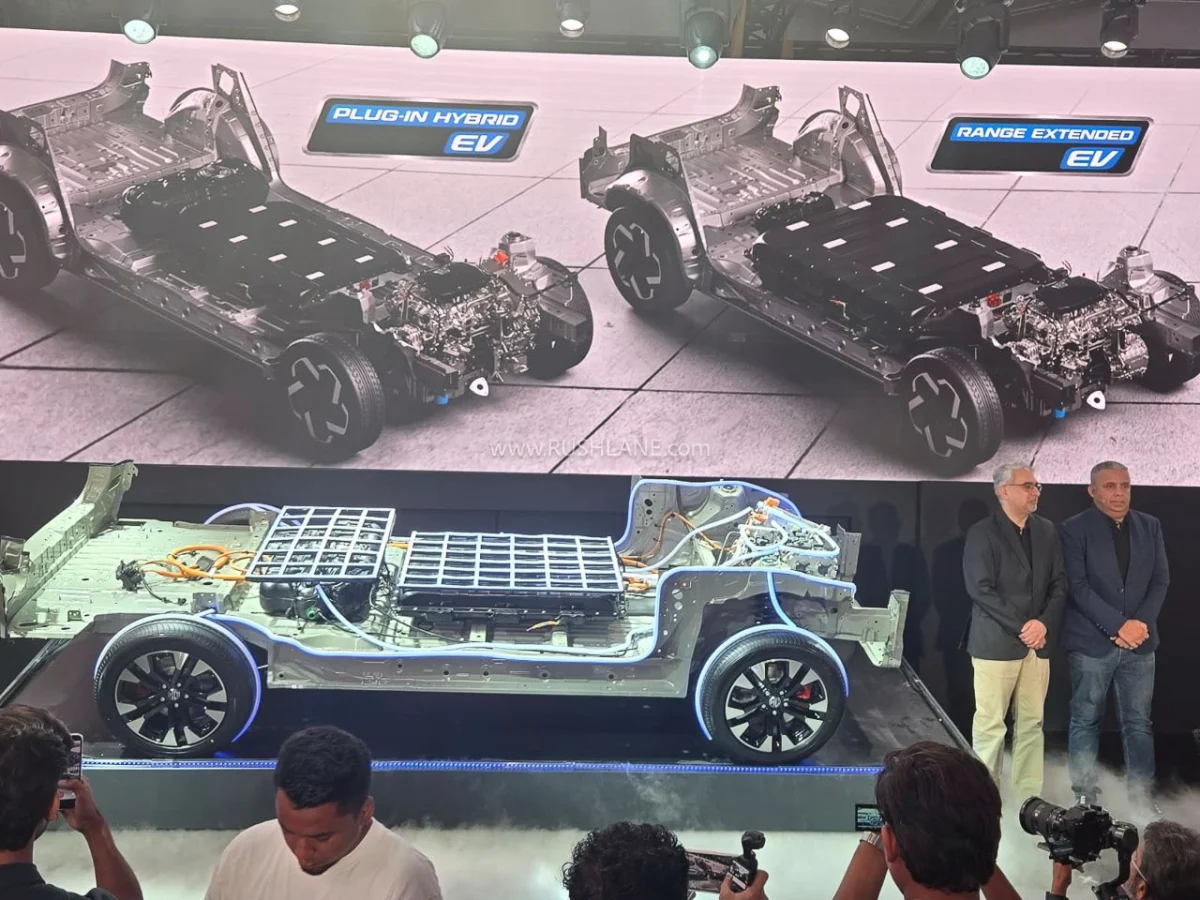
In an era where the Indian automotive landscape is rapidly transitioning from internal combustion engines to sustainable alternatives, JSW MG Motor India has made a definitive move to secure its technological future. Departing from the traditional approach of singular powertrain development, the company has officially introduced MG ADAPT (Advance Drive Architecture Platform Technology).
Billed as India’s first "Multi-New Energy Vehicle" (NEV) platform, ADAPT represents a paradigm shift for the brand. It is a modular, future-ready architecture designed to house four distinct electrified propulsion systems: Battery Electric Vehicles (BEVs), Hybrid Electric Vehicles (HEVs), Plug-in Hybrid Electric Vehicles (PHEVs), and Range Extender Electric Vehicles (REEVs). By establishing this technological foundation, JSW MG Motor India is positioning itself to cater to a diverse consumer base with varying levels of charging infrastructure access and range requirements.
I. Main Facts: The Dawn of the MG ADAPT Era
The announcement of the MG ADAPT platform marks a significant milestone in JSW MG Motor India’s "MG 2.0" strategy. The primary objective of this architecture is to provide a unified skeleton that can be adapted for multiple body styles and energy sources, thereby reducing development costs and accelerating the time-to-market for new models.
Key Highlights of the MG ADAPT Platform:
- Modular Versatility: The platform is engineered to support a wide array of vehicle segments, from compact SUVs to premium sedans.
- Four-Powertrain Compatibility: ADAPT is uniquely designed to accommodate EV, HEV, PHEV, and REEV technologies on a single assembly line.
- Performance Metrics: The company claims the platform will offer superior driving range, faster charging capabilities, and enhanced thermal management.
- Launch Timeline: JSW MG Motor India has confirmed that the first production models based on this platform—specifically one EV and one PHEV—will make their commercial debut in the Indian market during the FY2026-27 period.
- Localized Innovation: While leveraging MG’s global R&D, the ADAPT platform is being tailored to meet the specific rigors of Indian road conditions, climate, and consumer preferences.
II. Chronology: From Spy Shots to Strategic Revelation
The road to the ADAPT unveiling has been paved with months of speculation and industry "bread-crumbs." For the past several weeks, the Indian automotive media has been abuzz with spy shots of camouflaged SUVs testing on public roads. These vehicles, identified as being based on the internationally acclaimed MG Starlight (known as the Wuling Starlight in other markets), fueled rumors that a product launch was imminent.
The Buildup:
- Early 2024: Following the finalization of the JSW-MG joint venture, leadership hinted at a "New Energy" offensive that would move beyond just pure electric cars.
- June – July 2024: Multiple test mules of the MG Starlight EV and Starlight PHEV were spotted across various terrains in India. Industry analysts predicted a mid-July reveal of these specific SUVs.
- The Pivot: Instead of launching a singular product, MG chose to reveal the "brain and bone" behind these vehicles. By unveiling the ADAPT platform, the company provided a broader context for the upcoming Starlight-based models, confirming that the spy-spotted vehicles are indeed the precursors to a new generation of ADAPT-based cars.
This chronological progression indicates a calculated move by JSW MG Motor India to establish technological authority before entering a crowded marketplace with new products.
III. Supporting Data: The Technical Architecture of MG ADAPT
To understand the significance of ADAPT, one must look at the sophisticated engineering components that differentiate it from existing platforms in India. MG has integrated several "industry-first" technologies to ensure the platform remains competitive for the next decade.

1. The 10-in-1 Intelligent Electric Drive Unit
In a traditional EV or hybrid, components like the motor, inverter, DC-DC converter, and onboard charger are often separate units connected by heavy wiring. The ADAPT platform utilizes a 10-in-1 Intelligent Electric Drive Unit. This integration reduces the overall weight of the powertrain, improves energy efficiency by minimizing transmission losses, and frees up significant cabin space for passengers.
2. Electromagnetic Dedicated Hybrid Transmission (DHT)
For its hybrid (HEV and PHEV) iterations, MG has introduced what it claims is the world’s first Electromagnetic Dedicated Hybrid Transmission. Unlike conventional transmissions that rely on hydraulic systems or complex gear sets, an electromagnetic system allows for near-instantaneous switching between the electric motor and the petrol engine. This results in a "seamless" driving experience, eliminating the "rubber-band effect" often associated with hybrid CVTs.
3. The Four Intelligent Operating Modes
The ADAPT platform’s hybrid system is governed by an Intelligent Energy Management System (IEMS). This software-driven brain optimizes fuel and electricity consumption by toggling between four modes:
- Pure Electric Drive: Ideal for zero-emission city commuting.
- Series Hybrid Drive: The petrol engine acts as a generator to provide electricity to the motor, which drives the wheels. This is most efficient in stop-and-go traffic when the battery is low.
- Parallel Hybrid Drive: Both the engine and the motor provide power to the wheels simultaneously, offering maximum torque for overtaking or climbing steep inclines.
- Engine Direct Drive: At steady highway speeds, the engine connects directly to the wheels for peak thermal efficiency, bypassing the electrical system to save energy.
4. Range Extender (REEV) Support
The inclusion of REEV support is a strategic masterstroke for the Indian market. In an REEV setup, the vehicle is always driven by electric motors, but it carries a small petrol engine that never drives the wheels directly; it only charges the battery. This eliminates "range anxiety" for long-distance travelers who may not find high-speed chargers on rural highways.
IV. Official Responses: Leadership Perspectives
The unveiling event featured key insights from the leadership team at JSW MG Motor India, emphasizing the "customer-first" philosophy behind the ADAPT platform.
Anurag Mehrotra, Managing Director of JSW MG Motor India, articulated the company’s vision during the presentation:

"Our goal with MG ADAPT is to empower the Indian consumer. We recognize that the transition to green mobility is not a ‘one-size-fits-all’ journey. By offering a platform that supports EV, PHEV, HEV, and REEV, we are giving our customers the flexibility to choose the energy solution that best fits their lifestyle without compromising on performance, safety, or luxury."
Mehrotra further noted that ADAPT is not just a technological showcase but a business strategy. He emphasized that the modularity of the platform would allow MG to be "agile," responding quickly to changes in government policy or shifts in consumer demand toward a specific type of electrified powertrain.
V. Implications: Reshaping the Indian Automotive Landscape
The introduction of the MG ADAPT platform has profound implications for JSW MG Motor India, its competitors, and the Indian consumer.
1. Disrupting the Hybrid vs. EV Debate
India’s automotive policy has seen a tug-of-war between proponents of pure EVs (like Tata Motors and Mahindra) and proponents of strong hybrids (like Maruti Suzuki and Toyota). By launching a platform that supports both, MG is effectively hedging its bets. They can scale up EV production if infrastructure improves rapidly, or pivot to PHEVs and HEVs if consumers remain wary of charging times.
2. The Rise of the Plug-in Hybrid (PHEV)
While India has several EVs and a few strong hybrids, the PHEV segment has remained largely vacant, occupied only by high-end luxury imports. MG’s commitment to launching a PHEV by FY2026-27 could bring this "best-of-both-worlds" technology to the mass-premium segment. A PHEV offers enough electric range for daily city commutes (typically 60-100km) while retaining a petrol engine for weekend road trips.
3. Local Manufacturing and the "Make in India" Push
The ADAPT platform is designed with high levels of localization in mind. By consolidating multiple powertrains onto one architecture, JSW MG can achieve better economies of scale at its Halol manufacturing facility. This is crucial for keeping the upcoming Starlight-based SUVs priced competitively against formidable rivals like the Mahindra XUV700, Tata Safari, and the upcoming Hyundai Creta EV.

4. Consumer Confidence and Range Anxiety
The REEV and PHEV options within the ADAPT framework directly address the primary barrier to EV adoption in India: range anxiety. By providing vehicles that offer an "EV feel" with a "petrol safety net," MG is likely to attract conservative buyers who are interested in green tech but are not yet ready to rely solely on the public charging grid.
Conclusion: A Foundation for the Future
The debut of the MG ADAPT platform signifies that JSW MG Motor India is no longer content with being a niche player in the SUV segment. With a robust, modular architecture that embraces every facet of New Energy technology, the company is preparing for a high-volume, multi-pronged assault on the Indian market.
While the wait for the production-spec Starlight SUVs continues, the "ADAPT" reveal has provided the industry with something more valuable: a roadmap. As we look toward FY2026-27, the Indian roads are set to become a testing ground for one of the most versatile automotive platforms ever introduced in the country, potentially setting a new standard for how manufacturers approach the complex challenge of sustainable mobility.
