


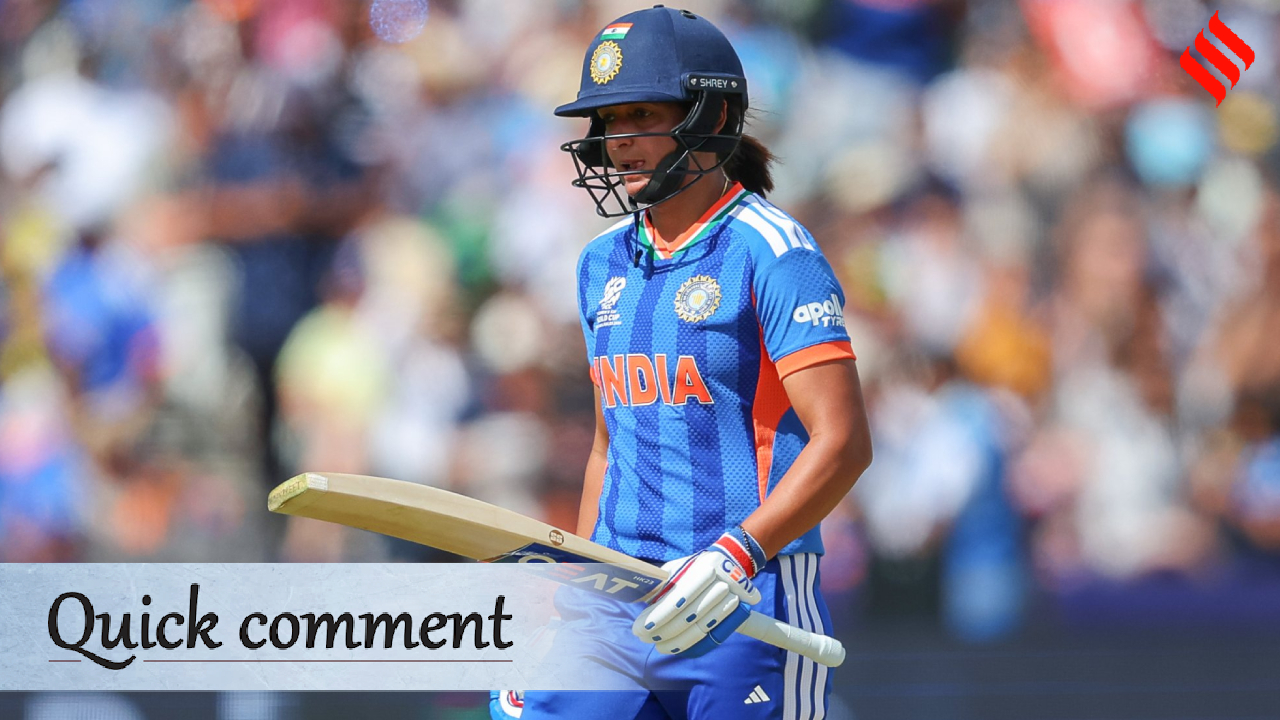
Mumbai, India – June 30, 2026 – Barely two days after a disheartening group-stage exit from the Women’s T20 World Cup, the Board of Control for Cricket in India (BCCI) selectors have unveiled the squad for the upcoming Asian Games in Japan. The announcement, made swiftly following another underwhelming ICC campaign, sends a clear and unequivocal message: continuity over radical change. Despite mounting pressure and a public clamour for introspection, the team management has opted to back virtually the entire core squad, retaining Harmanpreet Kaur as captain and Smriti Mandhana as vice-captain.
This decision has ignited a fervent debate within cricketing circles, raising questions about India’s long-term vision and strategy. While some argue that stability is paramount, others contend that this was a prime opportunity for a much-needed rebuild, or at the very least, a chance to widen the player pool and introduce fresh perspectives ahead of the next global cycle. The lone alteration sees wicketkeeper G. Kamalini replace Yastika Bhatia, a solitary shift that does little to quell concerns about the team’s stagnant progression on the international stage.
The Immediate Aftermath: Continuity Amidst Disappointment
The revelation of the Asian Games squad on June 30, 2026, landed just hours after the Indian women’s team’s premature departure from the T20 World Cup. Their inability to advance beyond the group stage, despite carrying genuine expectations into the tournament, was a bitter pill for fans and players alike. Historically, such significant setbacks often serve as a catalyst for sweeping changes, marking the genesis of a new era or a strategic overhaul. Teams frequently use these moments to reward burgeoning domestic talent, initiate a leadership transition, or embark on a comprehensive rebuilding phase.
However, India’s approach to the Asian Games, scheduled from September 17-22, 2026, in Japan, deviates sharply from this conventional wisdom. By largely retaining the established guard, the selectors have implicitly expressed unwavering faith in the current crop of players. Harmanpreet Kaur, despite facing scrutiny for her captaincy and personal form in crucial moments, retains the armband, while Smriti Mandhana continues as her deputy. This steadfast commitment to the existing hierarchy suggests a belief that the squad possesses the inherent capability to bounce back, requiring more time and opportunities rather than a dramatic shake-up.
The only new face, G. Kamalini, a young wicketkeeper, earns her maiden call-up, replacing Yastika Bhatia. While Kamalini’s inclusion is a testament to her domestic performances and offers a glimpse of potential future talent, it is widely seen as an isolated change rather than a systemic shift. The message, therefore, is unambiguous: the management believes in the current trajectory, opting for resilience and continuity over immediate, drastic reform.
A Chronology of Near Misses and Unfulfilled Potential
To fully grasp the implications of this squad selection, it is crucial to revisit the Indian women’s team’s recent journey, a narrative often punctuated by moments of brilliance overshadowed by the agony of near misses on the grandest stages.
The 2026 T20 World Cup Exit: The most recent disappointment serves as the immediate backdrop. India’s campaign in the T20 World Cup began with a mixture of hope and trepidation. While individual performances shone intermittently, the team struggled to coalesce into a formidable unit. The batting unit, often reliant on a few key players, faltered under pressure, with the middle order consistently failing to provide the impetus or stability required in high-stakes encounters. Critical fielding errors emerged at crucial junctures, undoing the hard work of the bowlers. Ultimately, a lack of consistency across all three departments, coupled with an apparent inability to identify and stick to a settled playing XI, led to their ignominious group-stage departure. The team’s exit was not merely a loss; it was a painful reminder of persistent issues that have plagued them for years.
A Pattern of Elusive Glory (2020-2025): The 2026 World Cup failure is not an isolated incident but rather the latest chapter in a series of heartbreaks for the Indian women’s team. Since finishing as runners-up in the 2020 T20 World Cup, where they captivated audiences with their dynamic play before succumbing to Australia in the final, India has consistently entered successive ICC tournaments carrying genuine expectations.
- 2022 Commonwealth Games: India reached the final, only to once again fall short against Australia, securing a silver medal. While a commendable achievement, it further cemented the narrative of being "bridesmaids, never the bride."
- 2023 T20 World Cup: The semi-final against Australia saw a dramatic turn of events, most notably Harmanpreet Kaur’s unfortunate run-out, which many considered the turning point in a match India seemed poised to win. The exit was agonizing, reinforcing the perception that the team struggled to cross the finish line in crunch situations.
- 2023 Asian Games: In a moment of triumph that briefly offered respite from global tournament woes, India emerged as defending champions, defeating Sri Lanka in the final. This victory established their dominance within the continental arena but did not fully address the deeper issues plaguing their ICC campaigns.
Each of these tournaments, while featuring memorable individual performances and moments of collective brilliance, ultimately ended with the elusive global title slipping through their fingers. The pattern suggests a team capable of reaching the cusp of greatness but consistently unable to take that final, decisive step.
Supporting Data and Analysis: The Unchanged Core’s Performance Dilemma
The decision to largely retain the existing squad for the Asian Games necessitates a deeper look into the performance trends and underlying issues that have contributed to India’s struggles on the biggest stages. The selectors’ faith in the "same core" implies a belief in their ability to overcome these challenges, but the data presents a more nuanced picture.
Inconsistent Batting and the Middle Order Conundrum:
India’s batting line-up has frequently been characterized by a reliance on a few marquee players. While Shafali Verma and Smriti Mandhana can provide explosive starts, consistency has often been an issue. The middle order, comprising experienced players like Jemimah Rodrigues, Richa Ghosh, and Deepti Sharma, has struggled to provide the necessary stability and acceleration. Too often, promising starts have been squandered, or the team has failed to recover from early wickets, leading to sub-par totals. The inability to find a settled and reliable middle-order combination that can rotate strike effectively, build partnerships, and then launch an assault in the death overs has been a recurring Achilles’ heel. The pressure on the top two or three batters becomes immense, and when they fail, the entire edifice often crumbles.
Bowling Woes: Lack of Wicket-Taking Options:
While India boasts a strong spin attack, particularly with Deepti Sharma’s all-round capabilities and Radha Yadav’s variations, the pace department has often lacked genuine wicket-taking prowess, especially in the crucial powerplay and death overs. Renuka Thakur has shown flashes of brilliance, but consistent penetration and the ability to pick up wickets regularly against top opposition have been missing. This often translates to opposition teams building solid foundations, leaving India chasing larger totals or struggling to defend competitive ones. The reliance on restricting runs rather than actively seeking wickets has, at times, cost them dearly.
Fielding Standards and Crucial Errors:
Perhaps one of the most frustrating aspects of India’s recent campaigns has been the visible dip in fielding standards at critical junctures. Dropped catches, misfields, and lapses in concentration have directly contributed to momentum shifts and increased pressure. In T20 cricket, where every run and every opportunity counts, these errors are magnified. While the team possesses athletic individuals, the collective fielding effort, especially under the glare of an ICC tournament, has often left much to be desired.
The "Australian Model" vs. India’s Reality:
The article draws a pertinent comparison with Australia, a team renowned for its consistency and ability to perform under pressure. Australia, too, resists wholesale changes after setbacks, trusting its proven players. However, the fundamental difference lies in the outcome: Australia’s core has consistently repaid that faith, delivering global titles and maintaining an aura of invincibility. India, despite similar backing, has repeatedly flattered to deceive. This suggests that while continuity can foster resilience, it must be accompanied by a tangible improvement in performance and mental fortitude in crucial moments, something India has struggled to achieve with the current group.
The Asian Games as a Strategic Platform:
The Asian Games, unlike an ICC event, offers India a unique advantage. As defending champions and undoubtedly one of the strongest teams in the competition, they are heavy favourites for the gold medal. This provides a luxury: the opportunity to experiment with the squad without significantly compromising their medal aspirations. The pressure is considerably lower, and the opposition, while competitive, generally doesn’t possess the same depth and quality as the top-tier international teams faced in World Cups. The other competing nations – Bangladesh, China, Malaysia, Pakistan, Sri Lanka, and Thailand – represent a diverse range of cricketing strengths, allowing for strategic rotations and the integration of new talent in a less high-stakes environment. This was arguably the perfect testing ground for future stars.
The Missed Domestic Talent Opportunity:
India boasts a vibrant domestic cricket circuit, with numerous promising young talents consistently performing in tournaments like the Senior Women’s T20 Trophy and the Challenger Trophy. Players who have excelled with both bat and ball, demonstrating temperament and skill, often find themselves on the fringes, awaiting an opportunity. The Asian Games could have been an ideal platform to blood a few of these consistent domestic performers, exposing them to international travel, team dynamics, and moderate pressure, thereby broadening the national team’s talent pool. This "missed opportunity" is not about discarding established players but about gradually integrating the next generation alongside them, ensuring a smoother transition when the time inevitably comes.
Official Responses and Implicit Messaging
In the absence of explicit statements from the selectors or team management regarding the rationale behind the Asian Games squad selection, the official response can only be inferred from their actions.
A Clear Vote of Confidence: The primary message conveyed is an undeniable vote of confidence in the established guard. The selectors appear to believe that the current core, despite recent failures, possesses the necessary skill, experience, and resilience to eventually overcome their mental blocks and deliver on the biggest stage. This continuity suggests a long-term investment in these players, hoping that more exposure and continued backing will eventually translate into consistent success.
Reluctance to Destabilize: It is plausible that the selectors opted for stability to avoid further destabilizing the team immediately after a major setback. Introducing too many new faces after a World Cup exit might have been perceived as a knee-jerk reaction, potentially undermining the morale of the existing players. The intention might be to allow the team to regain confidence in a familiar setup, especially in a tournament where they are expected to win.
Prioritizing Immediate Medal Prospects: The Asian Games is a prestigious multi-sport event where India aims for gold medals across disciplines. By sending a full-strength, experienced squad, the BCCI is likely prioritizing the immediate objective of securing a gold medal in women’s cricket. While long-term development is important, the short-term goal of winning silverware for the nation might have taken precedence.
Implicit Backing for Leadership: The retention of Harmanpreet Kaur as captain and Smriti Mandhana as vice-captain signifies continued trust in their leadership abilities. For Harmanpreet, it suggests that her past contributions and experience are valued, and she is being given another chance to steer the team. For Mandhana, it reinforces her position as the heir apparent, albeit one who is still waiting for her turn to fully lead the side. The lack of any explicit justification or press conference surrounding the squad announcement leaves much to interpretation, fueling public debate and speculation about the underlying strategic thinking.
Implications: Short-term Gains vs. Long-term Vision
The decision to maintain continuity has profound implications, both in the immediate future for the Asian Games and for India’s long-term aspirations of securing an elusive ICC title.
Immediate Impact on Asian Games:
In the short term, the selection of a largely unchanged, experienced squad significantly bolsters India’s chances of defending their gold medal at the Asian Games. As the reigning champions and with a squad featuring some of the world’s best players, India will undoubtedly enter the tournament as strong favourites. A gold medal would offer a much-needed morale boost and, critically, provide a degree of vindication for the selectors’ decision. However, the flip side is the immense pressure: anything less than gold would be considered a major failure, intensifying the scrutiny on the team and its leadership.
The Broader ICC Cycle and Stagnation Risk:
The primary concern stemming from this continuity is its impact on India’s quest for an ICC title. If the same core group, despite repeated opportunities, continues to exhibit the familiar problems of inconsistent batting, bowling lapses, and fielding errors, then delaying a necessary transition might prove counterproductive. There is a tangible risk of stagnation, where players, comfortable in their roles, might not be sufficiently challenged to evolve their game, especially if they are not pushed by emerging talent. The question remains: will this continuity help them secure an ICC title, or will it merely postpone the inevitable reckoning?
Leadership Development and Transition:
The continued leadership of Harmanpreet Kaur is understandable, given her experience. However, the Asian Games presented a golden opportunity to gradually groom Smriti Mandhana for future captaincy roles. Allowing her to lead in a lower-pressure tournament would have provided invaluable experience in shaping a side and making independent tactical decisions. By maintaining the status quo, her development as a captain might be delayed, potentially leading to a more abrupt and challenging transition when Harmanpreet eventually steps down or is replaced. True leadership succession is rarely something that happens overnight; it requires careful planning and exposure.
Player Pool and Depth:
Perhaps the most significant long-term implication is the missed opportunity to expand India’s player pool. A robust national team relies on a deep bench, with multiple players capable of stepping up when needed. By not introducing more fresh faces in a tournament like the Asian Games, India risks limiting its options for future ICC events. What happens if key players suffer injuries or experience a significant dip in form? Without having tested and integrated promising domestic talents, the team might find itself scrambling for replacements under high pressure, potentially compromising its performance. Furthermore, consistently overlooking deserving domestic performers could dampen morale and motivation within the wider cricketing ecosystem.
The Unavoidable Transition:
Every successful team eventually faces a period of transition. The only real question is whether a team begins preparing for it early, gradually introducing new talent alongside experienced campaigners, or waits until it has no choice. The latter often results in a more disruptive and challenging period of rebuilding. The Asian Games appeared to be the ideal time to take that first, measured step towards a future-proof squad. Instead, India has chosen continuity once again, gambling that the existing core will finally convert potential into palpable success. Whether this gamble pays off or leaves India further behind in the race for global supremacy remains to be seen.
India’s squad for the 2026 Asian Games: Harmanpreet Kaur (Captain), Smriti Mandhana (Vice-Captain), Shafali Verma, Jemimah Rodrigues, Deepti Sharma, Richa Ghosh (WK), G. Kamalini (WK), Bharti Fulmali, Sree Charani, Renuka Thakur, Kranti Gaud, Arundhati Reddy, Shreyanka Patil* (Subject to fitness clearance), Radha Yadav, Nandni Sharma.
Stay updated with the latest sports news across Cricket, Football, Chess, and more. Catch all the action with real-time live cricket score updates and in-depth coverage of ongoing matches.
