

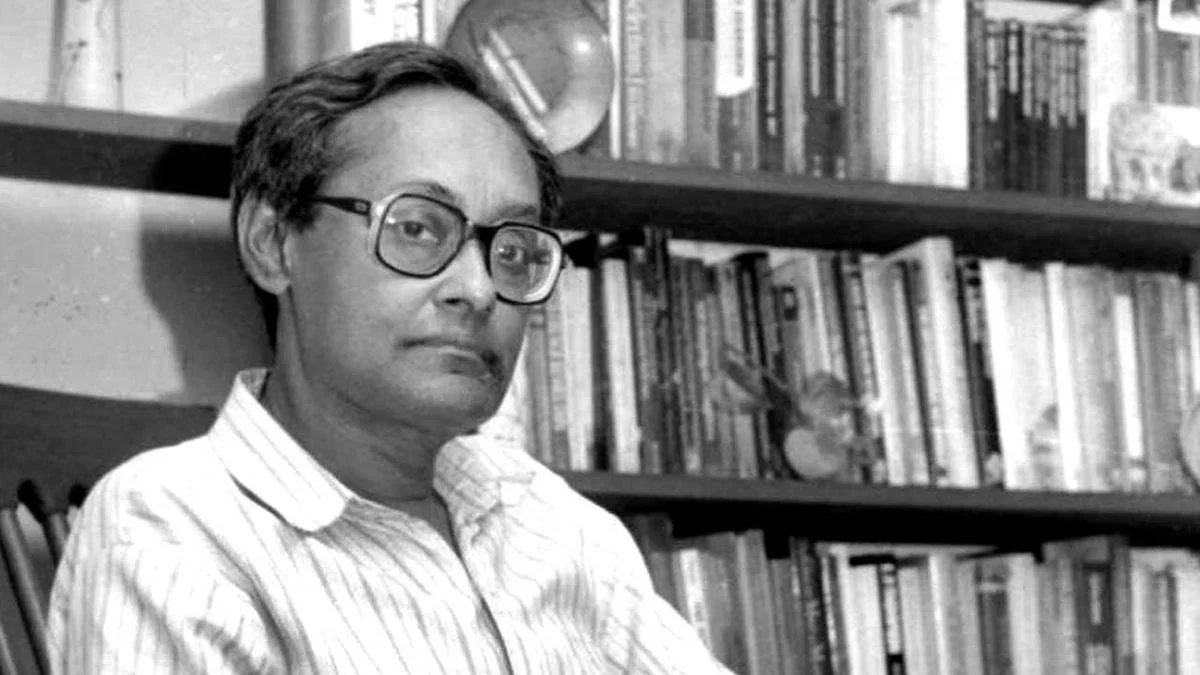
The passing of Professor Sumit Sarkar at the age of 87 marks more than the loss of a distinguished academic; it signals the end of a transformative era in Indian historiography. As a titan of modern Indian history, Sarkar’s influence extended far beyond the lecture halls of Delhi University. He was a scholar who didn’t merely record the past but fundamentally restructured how a nation understands its journey toward modernity. For generations of historians, students, and conscientious citizens, Sarkar’s work served as both a compass and a conscience, challenging the "Great Man" theory of history and replacing it with a vibrant, complex tapestry of the masses.
Main Facts: A Paradigm Shift in Indian Historiography
Sumit Sarkar’s contribution to Indian history is defined by a singular, profound conceptual break: the transition from elite-centric narratives to "history from below." Before Sarkar, the story of Indian independence was often told as a series of high-level negotiations between colonial administrators and nationalist elites. Sarkar’s seminal work, Modern India: 1885–1947, shattered this mold.
Though modestly described by the author as a "textbook," Modern India became the definitive resource for anyone seeking to understand the grassroots reality of the freedom struggle. In its pages, peasants, factory workers, and tribal communities were not merely supporting characters in a drama led by Mahatma Gandhi or Jawaharlal Nehru; they were the primary drivers of historical change. Sarkar acknowledged that while political leaders provided the framework, it was the "unstructured" activity of the masses—their successes, their failures, and their local grievances—that constituted the true basis of the Indian past.
His methodology was characterized by a rigorous adherence to the "protocols of historical research." He insisted on the verifiability of evidence and remained intellectually humble, famously stating that his conclusions were always "open to revision and change." This commitment to truth over dogma allowed him to navigate the treacherous waters of ideological historiography with unparalleled integrity.
Chronology of a Scholarly Life
The trajectory of Sumit Sarkar’s career reflects the evolution of Indian historical thought over five decades.
The Formative Years and the Swadeshi Movement
Sarkar first rose to prominence with his groundbreaking study, The Swadeshi Movement in Bengal: 1903-1908. Published in the early 1970s, this work remains a masterclass in methodological innovation. Moving beyond the standard colonial archives, Sarkar utilized plays, novels, newspapers, and pamphlets to capture the zeitgeist of the era. He explored the nuances of the first partition of Bengal, asking difficult questions about why certain movements gained traction while others faltered. He was among the first to link Indian domestic anger to global events, such as the Russo-Japanese War of 1904-05, which signaled to colonized nations that an Eastern power could indeed defeat a Western giant.
The Definitive ‘Modern India’ (1983)
In 1983, Sarkar published Modern India: 1885–1947. This book arrived at a time when the "Subaltern Studies" collective was beginning to take shape. While Sarkar was a key figure in this movement, his work maintained a unique balance. He retained the traditional periodization (1885 to 1947) because he recognized those sixty years as the most significant transition in India’s long history, but he filled that timeframe with the voices of those previously silenced.
The Late 20th Century: Addressing Communalism
As the Indian political landscape shifted in the late 1980s and early 1990s, so did Sarkar’s focus. Following the demolition of the Babri Masjid in 1992, he collaborated on Khaki Shorts and Saffron Flags (1993). This was not a dry academic text but a "vital short book" that combined historical reconstruction with sensitive fieldwork to analyze the rise of the Rashtriya Swayamsevak Sangh (RSS). It remains a seminal text for understanding the roots of contemporary religious nationalism.
The 21st Century: ‘Modern Times’
In his later years, Sarkar’s Modern Times served as a companion volume to his earlier work. It delved deeper into the cultural histories of the city, print media, and caste, further refining his "history from below" approach to include the complexities of subaltern identity on its own terms.
Supporting Data: Methodological Innovations and the ‘Clerical’ Archive
Sarkar’s Marxism was never a rigid cage; rather, it was a tool for liberation. He broke away from the "economic determinism" and "narrow positivism" that plagued much of the Marxist scholarship of his time.

One of his most striking contributions was his analysis of religion. Unlike many secular historians who dismissed religious movements as "false consciousness," Sarkar treated religion as "the oldest and richest archive in India." He analyzed the 19th-century mystic Ramakrishna Paramhansa not as a believer, but as a historian interested in the "material influence" of his philosophy.
Sarkar linked the popularity of Ramakrishna to the "belated entry of clock-time into India." He argued that the rigid disciplinary mechanisms of colonial clerical labor created a sense of "slavery" among the emerging urban middle class. Ramakrishna’s teachings provided a spiritual refuge from the soul-crushing bureaucracy of the colonial office. By connecting the celestial world to the earthly presence of the "petty-bourgeois" clerk, Sarkar provided a materialist explanation for spiritual phenomena without denigrating the faith of the participants.
Furthermore, Sarkar was a pioneer in "provincializing" Bengal. While much of his early work focused on his home state, he eventually expanded his scope to include the industrial and social histories of Kanpur, Jamshedpur, Bombay, and the Kolar Gold Fields (KGF). This intellectual openness ensured that his "history from below" was truly representative of the diverse Indian landscape.
Official Responses and Political Engagement
Sumit Sarkar was the quintessential "engaged scholar." He believed that a historian’s duty did not end at the archive’s edge. His political positions were often as courageous as his academic ones.
The Critique of the Right
Through works like Khaki Shorts and Saffron Flags, Sarkar provided the intellectual ammunition needed to critique the rise of majoritarianism. He unpacked how "Hindu nationalism" gradually shifted from a fringe ideology to a "common sense" narrative, warning of the long-term consequences for Indian democracy.
The Critique of the Left
Equally significant was his willingness to confront the "official Left." Despite his Marxist roots, Sarkar was unafraid to criticize the Left Front government in West Bengal during the Nandigram and Singur crises. He viewed the state’s surrender to global capital and the subsequent displacement of peasants as a betrayal of the very people the Left claimed to represent. This integrity earned him respect across the political spectrum, even from those who disagreed with his conclusions.
Academic Recognition
While Sarkar often eschewed the trappings of institutional power, his influence within the Centre for Historical Studies at Jawaharlal Nehru University (JNU) and Delhi University helped shape generations of scholars. His peers, including figures like Ranajit Guha, recognized him as a foundational pillar of the Subaltern Studies project, even when Sarkar moved toward his own distinct synthesis of social and cultural history.
Implications: History as Truth vs. History as Pride
The passing of Sumit Sarkar occurs at a critical juncture in Indian public life. Today, we live in an era where "everyone is a historian," and social media platforms often serve as the primary source of historical "knowledge." There is a growing trend toward viewing history solely as a source of "national pride" or a tool for political mobilization.
In this context, the implications of Sarkar’s absence are profound:
- The Loss of Complexity: Sarkar’s work was a testament to the fact that history is messy, contradictory, and often ambiguous. He showed that a Swadeshi editorial could simultaneously support labor rights and the caste system. Without thinkers like Sarkar, there is a risk that Indian history will be flattened into a binary of "heroes" and "villains."
- The Threat to Evidence-Based Research: Sarkar’s insistence on the "verifiability of evidence" stands in stark contrast to the contemporary "post-truth" environment. His legacy serves as a reminder that history is a social science, not a creative writing exercise intended to bolster national ego.
- The Need for a "Revised" Modern India: As Janaki Nair notes, the scholarship of the last four decades has unearthed new histories of regions, social groups, and practices. The question remains: is a new synthesis—one that integrates material conditions and cultural forms as masterfully as Sarkar did—possible in our polarized times?
- A Guide for the Youth: For the younger generation of activists and students, Sarkar’s work remains essential. His ability to link historical research to contemporary political struggle (as seen in his work on the RSS) provides a blueprint for how scholarship can serve the cause of social justice.
Sumit Sarkar did not just write about the past; he gave the "ordinary people" of India a place in their own story. He taught us that the "unfulfilled promises of Indian nationalism" are as much a part of our history as the achievement of independence itself. As we move further into the 21st century, the "well-thumbed" pages of his books will remain a vital resource for anyone who believes that understanding the failures of the past is the only way to build a more honest future. His passing is indeed the end of an era, but the "riches he has left us" ensure that his voice will continue to resonate in every archive, classroom, and protest where the truth is sought.
