

The Indian two-wheeler landscape continues to witness a significant paradigm shift as the 150cc to 200cc motorcycle segment—often referred to as the "premium commuter" or "entry-level performance" category—recorded a stellar performance in May 2026. According to the latest retail and dispatch data, the segment has grown by nearly a quarter compared to the previous year, signaling a robust appetite for motorcycles that offer a blend of daily usability and spirited performance.
Main Facts: A Segment in High Gear
In May 2026, the 150cc-200cc motorcycle segment reached a total domestic sales volume of 1,92,576 units. This represents a substantial leap from the 1,54,536 units sold during the same period in 2025. The absolute volume gain of 38,040 units translates to a year-on-year (YoY) growth of 24.62%.
The market remains highly consolidated, with the top three players—TVS Motor Company, Bajaj Auto, and Honda Motorcycle & Scooter India (HMSI)—accounting for the lion’s share of the volume. However, the narrative of May 2026 is defined by Yamaha’s aggressive ascent and the continued dominance of the TVS Apache series.
Key Highlights:
- Segment Leader: TVS Apache remains the undisputed king with 53,900 units sold.
- Growth Driver: Bajaj Pulsar emerged as a primary volume driver, growing by over 30%.
- Fastest Mainstream Gainer: Yamaha saw a cumulative growth of nearly 57% across its 150-200cc portfolio.
- The "Unicorn" Factor: Despite being an older platform, the Honda Unicorn continues to defy market trends with steady double-digit growth.
- Premium Niche: KTM recorded the highest percentage growth (59.58%), albeit on a lower base, highlighting a shift toward high-performance machines.
Chronology: The Evolution of the 150cc-200cc Powerhouse
To understand the May 2026 figures, one must look at the trajectory of the Indian motorcycle market over the last 24 months. In 2024 and 2025, the industry faced headwinds including fluctuating fuel prices and regulatory transitions. However, by early 2026, a stabilized economy and an increase in disposable income among urban youth have funneled buyers away from the 100-125cc "budget" category and toward the 150cc-200cc "aspirational" category.
In May 2025, the segment was just beginning to recover its pre-pandemic momentum. At that time, TVS was solidifying the Apache’s tech-heavy reputation, and Bajaj was in the midst of refreshing the Pulsar "N" and "NS" lineups. Fast forward to May 2026, and those strategic bets have paid off. The introduction of newer models like the Yamaha XSR and the Honda SP160 in the intervening months has further expanded the segment’s boundaries, attracting a more diverse demographic ranging from college students to office-going professionals.
Supporting Data: Brand-by-Brand Performance Analysis
TVS Motor Company: The Apache Fortress
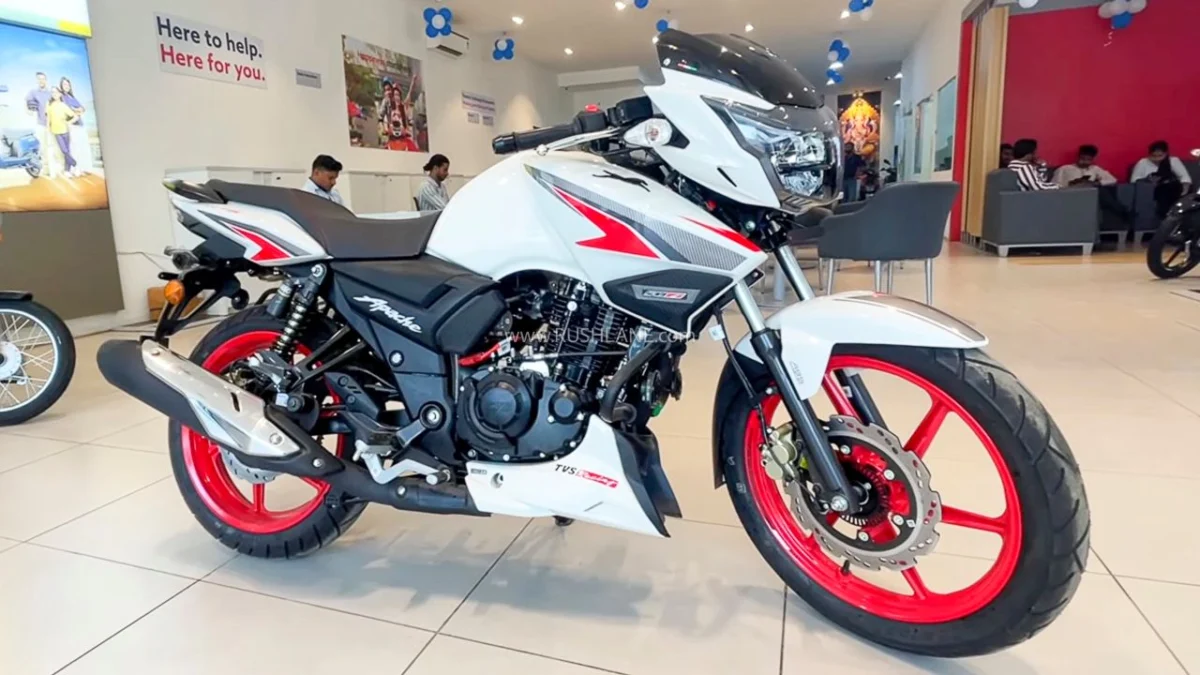
TVS Motor Company continues to leverage its racing pedigree to maintain the top spot. The Apache series, which includes the RTR 160, 160 4V, 180, and 200 4V, sold 53,900 units in May 2026. This is an increase from the 49,099 units sold in May 2025.

- YoY Growth: 9.78%
- Market Share: 27.99%
The Apache’s success is largely attributed to TVS’s "Track to Road" philosophy, offering features like ride modes, GTT (Glide Through Technology), and SmartXonnect Bluetooth connectivity that resonate with tech-savvy buyers.
Bajaj Auto: The Pulsar Resurgence
Bajaj Auto’s Pulsar brand is synonymous with the 150cc+ segment in India. In May 2026, the Pulsar range (specifically the 150, N160, NS160, and NS200) recorded 49,994 units, a massive jump from 38,309 units in the previous year.
- YoY Growth: 30.50%
- Market Share: 25.96%
Bajaj’s strategy of "democratizing performance" through the expansion of the "N" series has successfully clawed back market share from competitors.
Honda Motorcycle & Scooter India (HMSI): A Tale of Two Halves
Honda’s performance presents a study in contrasts. The venerable Honda Unicorn remains a phenomenon, selling 34,925 units (up 22.05% YoY). Its bulletproof reliability and conservative styling continue to attract the "mature commuter." Additionally, the SP160 has found its footing, contributing 4,235 units (up 28.57%).
However, Honda’s premium sporty offerings, the Hornet 2.0 and the CB200X, suffered significant setbacks. The Hornet 2.0 saw a 69.44% decline, while the CB200X dropped by 29.52%.
Yamaha Motor India: The Lifestyle Specialist
Yamaha has emerged as the fastest-growing mainstream manufacturer in this segment. Cumulative sales rose by 56.99% to 40,831 units.
- R15: 9,803 units (up 63.47%)
- MT-15: 9,579 units (up 36.18%)
- FZ Series: 14,862 units (up 14.51%)
- XSR: 6,587 units (New entrant/Full year growth)
Yamaha’s focus on the "Call of the Blue" brand identity has successfully positioned their bikes as lifestyle choices rather than mere transport tools.
Hero MotoCorp and Others
Hero MotoCorp, while dominating the entry-level segment, is still finding its rhythm in the 150-200cc space. The Xpulse 200 (2,579 units) and Xtreme 160 (951 units) showed positive growth of 7.15% and 52.65% respectively. Meanwhile, KTM remains the choice for the hardcore enthusiast, with its 160 and 200 range growing by nearly 60% to reach 3,305 units.
Official Responses and Market Sentiment
While official statements from the "Big Four" (TVS, Bajaj, Honda, Yamaha) emphasize "customer-centric innovation," industry analysts point toward several underlying factors for this 24.62% growth.
An industry analyst from a leading automotive consultancy noted:

"The 150cc-200cc segment has become the new ‘entry-level’ for urban India. With the proliferation of easy financing and the rise of the gig economy where delivery partners are opting for more durable and faster machines, we are seeing a structural shift. Yamaha and Bajaj have been particularly clever in styling their 150cc bikes to look like 400cc machines, which appeals to the ego of the young buyer."
Sources close to TVS Motor Company suggest:
"The consistency of the Apache brand lies in our ability to provide frequent updates. Whether it is a new valve train or a digital console update, the product never feels stagnant. The May 2026 numbers reflect our deeper penetration into Tier-II and Tier-III cities where ‘performance’ is now a key purchase criterion."
Conversely, the lack of sales for the Bajaj Avenger and Kawasaki W175 in May 2026 suggests a waning interest in small-capacity cruisers and retro-classics that do not offer modern performance metrics, indicating that the Indian buyer is currently prioritizing "sporty" over "relaxed."
Implications: What This Means for the Future of Indian Biking
The data from May 2026 carries several long-term implications for the Indian automotive industry:
1. The Marginalization of the 100cc-110cc Segment
As the 150cc-200cc segment grows, the traditional 100cc commuter is increasingly being viewed as a utility tool for rural markets only. Urban and semi-urban buyers are clearly willing to pay a premium of 20-30% for the added safety (ABS), power, and social status associated with the 160cc+ category.

2. Feature Wars and Digital Integration
With TVS and Yamaha leading the way, Bluetooth connectivity, turn-by-turn navigation, and LED lighting have moved from "luxury features" to "mandatory requirements." Manufacturers who fail to integrate these (as seen with the decline of certain Honda models) are likely to see their market share erode.
3. The Death of the Budget Cruiser?
The zero sales of the Bajaj Avenger in May 2026 is a startling statistic. It suggests that the "cruiser" aesthetic is currently being overshadowed by "streetfighter" and "adventure-tourer" (Xpulse) designs. Bajaj may need to radically reinvent the Avenger platform to survive in a market that is increasingly focused on sharp handling and modern tech.
4. Expansion of Premium Retail Outlets
The growth of KTM and the high-end Yamaha models will likely lead to an expansion of "premium-only" showrooms. We can expect manufacturers to move away from the "one-size-fits-all" dealership model toward more curated brand experiences, such as Bajaj’s "Probiking" or Hero’s "Premia" outlets.
5. Future Emission and Safety Standards
The robust growth in this segment provides manufacturers with the R&D capital needed to meet even more stringent future norms. As India moves toward more integrated safety regulations, the 150cc-200cc segment will likely be the first to see advanced features like Traction Control and Cornering ABS become standard.
Conclusion
The May 2026 sales figures confirm that the 150cc-200cc motorcycle segment is the engine of growth for the Indian two-wheeler industry. With a nearly 25% YoY increase, the segment is not just recovering—it is thriving. While TVS Apache holds the crown for now, the aggressive growth of Bajaj and Yamaha suggests a looming battle for supremacy. For the Indian consumer, this competition is a win, resulting in better technology, more design choices, and higher-performance motorcycles than ever before.
