

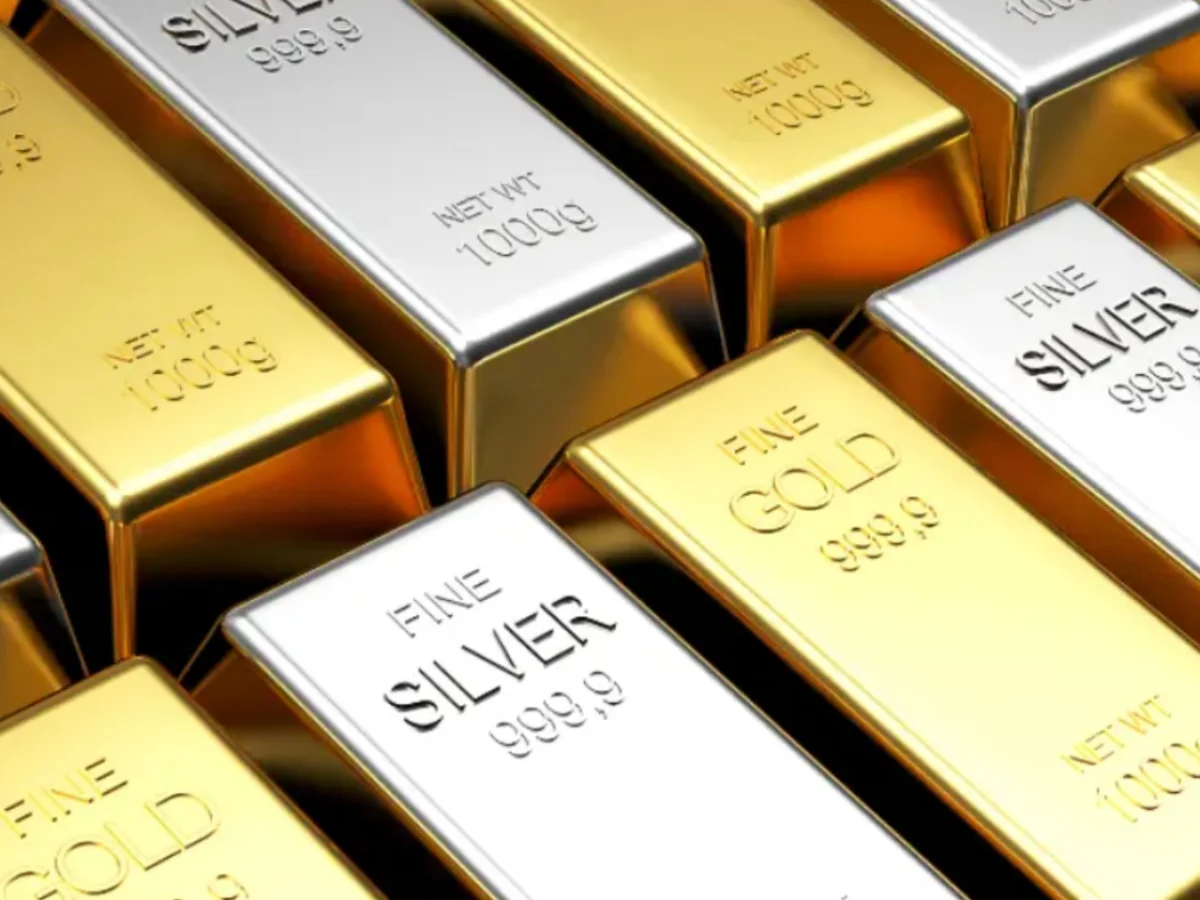
NEW DELHI, India – August 5, 2026 – India’s vibrant precious metals market continues its intricate dance with global economic forces, domestic demand, and currency dynamics. As of today, August 5, 2026, both gold and silver have witnessed nuanced movements, reflecting a complex interplay of international commodity trends, inflationary pressures, and the perennial allure of these metals as safe-haven assets. Gold prices have seen a marginal uptick, primarily driven by persistent global demand and concerns over inflation, while silver maintains its position as a versatile commodity influenced heavily by industrial consumption.
This daily snapshot of gold and silver rates across major Indian cities – Delhi, Mumbai, Chennai, and Kolkata – provides essential insights for investors, consumers, and the jewellery industry alike. The current scenario underscores India’s pivotal role in the global precious metals landscape, where local cultural significance and investment appetite meet the broader currents of international finance.
Understanding the Main Facts: A Snapshot of Today’s Market
As August 5, 2026 dawns, the Indian bullion market presents a mixed picture. Gold, traditionally a bedrock of financial security and cultural heritage in India, has edged slightly higher. The price for 24-karat gold (999 purity) stands at an average of ₹14,399 per gram, while its 22-karat counterpart (91.67% purity), preferred for jewellery, is priced at an average of ₹13,199 per gram. This slight appreciation is attributed by market analysts to a confluence of factors including sustained global inflationary concerns and a steady, albeit cautious, demand from international investors seeking hedges against economic uncertainties.
Silver, often considered the ‘poor man’s gold’ but with significant industrial utility, also exhibits its characteristic volatility. Today, 999 pure silver is priced at approximately ₹2,34,900 per kilogram, or ₹2,349 per 10 grams. Sterling silver (925 purity) is marginally lower at ₹2,34,000 per kilogram. Silver’s trajectory remains closely tied to both investment sentiment and the performance of global industrial sectors, which are major consumers of the white metal.
The variances in city-wise prices for both metals highlight localized factors such as transportation costs, state-specific taxes (like Goods and Services Tax – GST), and regional demand-supply dynamics. For instance, Delhi reports slightly higher gold rates compared to Mumbai, while silver prices show remarkable uniformity across the major metros today.
A Chronological Perspective: Tracing the Recent Trajectory of Precious Metals
The current prices on August 5, 2026, are not isolated figures but rather points in a longer, more intricate trend influenced by a series of events over the preceding months and years. The precious metals market has been particularly dynamic in the mid-2020s, reacting swiftly to geopolitical shifts, monetary policy changes, and evolving economic landscapes.
Early 2026: The year began with a degree of optimism following a period of global economic recovery in late 2025. However, underlying inflationary pressures, a hangover from extensive quantitative easing measures adopted during the post-pandemic recovery, began to resurface. Central banks, including the US Federal Reserve and the European Central Bank, had signalled a cautious approach to interest rate adjustments, attempting to balance economic growth with inflation control. This environment provided a supportive backdrop for gold, solidifying its role as an inflation hedge.
Q2 2026: Geopolitical tensions in Eastern Europe and parts of the Middle East escalated intermittently during the second quarter. Such developments invariably trigger a flight to safety, with investors flocking to traditional safe-haven assets like gold. Simultaneously, the US Dollar’s strength fluctuated, impacting the purchasing power of gold for international buyers. In India, the approaching festive season of Akshaya Tritiya, though not a major driver in Q2, provided early indications of robust consumer demand, setting a floor for domestic prices. Silver, during this period, benefited from renewed interest in renewable energy technologies and electric vehicle manufacturing, sectors that heavily rely on silver for conductivity and efficiency.
July 2026: The month of July saw a consolidation phase for gold, with prices holding relatively stable after the Q2 rally. Reports from major economies indicated a mixed bag of manufacturing output and consumer spending, preventing any significant breakout or breakdown. The Indian monsoon season, critical for rural income and thus rural gold demand, had progressed largely as expected, contributing to a sense of stability in local markets. Silver, however, experienced some minor corrections as industrial output reports showed slight deceleration in certain sectors.
Early August 2026: Leading up to today, August 5, the market has absorbed fresh economic data, including revised inflation figures and manufacturing PMIs from key global economies. These data points have largely reinforced the narrative of persistent, albeit contained, inflation, which continues to provide underlying support for gold. The Indian Rupee’s slight depreciation against the US Dollar in recent days has also made dollar-denominated gold imports more expensive, contributing to the domestic price increase. This chronological sequence highlights how global macroeconomic indicators and regional specifics converge to shape the daily price of precious metals in India.
Supporting Data: A Deep Dive into Price Drivers and Market Mechanics
The daily prices of gold and silver in India are a sophisticated equation, influenced by a multitude of factors, both global and domestic. A granular look at these drivers helps to understand the current rates and anticipate future movements.
Gold Prices on August 5, 2026: Detailed Breakdown and Influencing Factors
Today’s gold prices reflect a slight increase, a testament to its enduring appeal.
- National Average (Approximate):
- 24K Gold (999 purity): ₹14,399 per gram
- 22K Gold (91.67% purity): ₹13,199 per gram
City-Wise Gold Rates Today:
- Delhi:
- 24K Gold: ₹14,414 per gram
- 22K Gold: ₹13,214 per gram
- Mumbai:
- 24K Gold: ₹14,399 per gram
- 22K Gold: ₹13,199 per gram
- Kolkata:
- 24K Gold: ₹14,421 per gram
- 22K Gold: ₹13,199 per gram
- Chennai:
- 24K Gold: ₹14,399 per gram
- 22K Gold: ₹13,199 per gram
Key Influencing Factors for Gold:
- International Gold Price (COMEX/LBMA): India is a net importer of gold, making global prices the primary determinant. Benchmark prices set on exchanges like COMEX (New York) and the London Bullion Market Association (LBMA) directly impact the cost of imported gold. Factors like global interest rates, US dollar strength, and geopolitical stability heavily influence these international benchmarks.
- US Dollar Exchange Rate: As gold is globally priced in US dollars, a stronger dollar makes gold more expensive for buyers using other currencies, and vice-versa. The recent depreciation of the Indian Rupee against the Dollar has pushed up the landed cost of gold in India.
- Inflationary Pressures: Gold is a classic hedge against inflation. When the purchasing power of fiat currencies erodes, investors often turn to gold to preserve wealth. The sustained inflationary environment observed globally in 2026 has been a significant driver for gold’s upward trend.
- Interest Rates and Opportunity Cost: Higher interest rates increase the opportunity cost of holding gold, as it does not yield interest. Conversely, lower rates make gold more attractive. Central bank policies regarding interest rates are therefore closely watched.
- Geopolitical Tensions and Economic Uncertainty: In times of crisis, investors seek safe-haven assets. Gold’s historical role as a store of value makes it a preferred choice during periods of geopolitical instability or economic uncertainty.
- Domestic Jewellery Demand: India’s cultural affinity for gold, especially during festivals (Diwali, Akshaya Tritiya) and wedding seasons, drives substantial domestic demand. This inherent demand provides a strong floor for prices, often insulating them from sharper global downturns.
- Government Policies: Import duties on gold, taxation policies (like GST), and regulations governing the jewellery industry can significantly impact domestic prices and market dynamics.
Silver Prices on August 5, 2026: Detailed Breakdown and Influencing Factors
Silver, while sharing some characteristics with gold, has its own unique set of drivers, particularly its dual role as a precious metal and an industrial commodity.
- National Average (Approximate):
- Silver 999: ₹2,34,900 per kilogram (₹2,349 per 10 grams)
- Silver 925 (Sterling): ₹2,34,000 per kilogram
City-Wise Silver Rates Today:
- Delhi: Silver 999: ₹2,349 per 10 grams
- Mumbai: Silver 999: ₹2,349 per 10 grams
- Kolkata: Silver 999: ₹2,349 per 10 grams
- Chennai: Silver 999: ₹2,349 per 10 grams
Key Influencing Factors for Silver:
- Industrial Demand: This is perhaps the most significant differentiator for silver. It is crucial in electronics, solar panels, automotive industry (especially electric vehicles), medical applications, and photography. The health of the global manufacturing sector and technological advancements directly impact silver demand and, consequently, its price.
- Investment Demand: Like gold, silver is viewed as a store of value and an inflation hedge. However, its higher volatility compared to gold can attract more speculative investors.
- Precious Metal Status: Silver often moves in tandem with gold, reflecting broader market sentiment towards precious metals as a class.
- Supply Dynamics: Silver is often a by-product of mining other metals like copper, lead, and zinc. Fluctuations in the production of these primary metals can affect silver supply.
- Monetary Policies and US Dollar: Similar to gold, silver prices are sensitive to interest rate changes and the strength of the US dollar.
- Jewellery and Silverware Demand: While less dominant than industrial demand, traditional jewellery and silverware demand, particularly in certain regions of India, also plays a role.
The consistent city-wise silver prices today suggest that the primary drivers are global and national factors, with local taxes and logistics having a less pronounced immediate impact compared to gold, possibly due to different supply chain structures or lower value density.
Official Responses and Expert Outlook: Navigating the Future
While specific official responses on daily price movements are rare, economic pronouncements from central banks and government bodies, alongside insights from market analysts, provide a broader context and future outlook for precious metals.
Central Bank Perspectives:
The Reserve Bank of India (RBI) consistently monitors inflation and currency stability, both of which indirectly influence precious metal prices. While not directly commenting on daily bullion rates, the RBI’s stance on interest rates and its foreign exchange management policies are critical. Should the RBI signal further tightening of monetary policy to combat inflation, it could potentially temper gold’s upward trajectory by increasing the opportunity cost of holding non-yielding assets. Conversely, a dovish stance could provide further impetus. Globally, the actions of the US Federal Reserve remain paramount. Any hint of accelerated rate hikes or quantitative tightening from the Fed tends to strengthen the dollar and exert downward pressure on gold.
)
Market Analyst Consensus:
"The current environment of persistent inflation and lingering geopolitical uncertainties continues to bolster gold’s safe-haven appeal," commented Dr. Alok Gupta, a Senior Bullion Analyst at India Ratings & Research. "We are seeing a steady flow of investment into gold ETFs and physical bullion, suggesting that investors are hedging against potential economic shocks. While a strong US dollar could cap some gains, the overall sentiment for gold remains positive for the foreseeable future, especially with key festivals approaching in India."
Regarding silver, Ms. Priya Sharma, a Commodity Strategist at Edelweiss Broking, noted, "Silver’s dual nature makes it particularly interesting. While it benefits from the general precious metal rally, its industrial demand component adds a layer of volatility and opportunity. The global push towards green energy and electric vehicles will be a structural tailwind for silver demand in the long term. However, any slowdown in global manufacturing or a significant economic recession could see industrial demand wane temporarily, leading to price corrections."
Experts largely agree that the Indian market will continue to be influenced by global cues, but domestic demand, especially during the festive and wedding seasons, will act as a strong support. Government policies, particularly regarding import duties and taxation, will also be crucial in shaping local price trends and the competitiveness of the Indian jewellery industry.
Implications: Far-Reaching Effects on Economy, Consumers, and Industry
The fluctuations in gold and silver prices carry significant implications for various stakeholders, extending beyond mere financial figures.
For Consumers and Households:
For millions of Indian households, gold is not just an investment but an integral part of cultural identity, used for gifts, dowry, and as a primary form of savings. Rising gold prices mean higher costs for celebratory purchases during weddings and festivals, potentially impacting discretionary spending. However, for those who have invested in gold over time, an increase in prices translates into enhanced wealth. Silver, being more affordable, remains a popular choice for daily wear jewellery and ritualistic purposes, and its price movements directly affect these segments of consumption.
For Investors:
Both gold and silver serve as crucial diversification tools in an investment portfolio. In an inflationary environment like 2026, they offer a hedge against the erosion of purchasing power. Investors are increasingly looking at gold and silver as alternatives to traditional equity or fixed-income instruments, especially when market volatility is high. The choice between gold and silver often depends on an investor’s risk appetite – gold for stability, silver for higher potential returns but also higher volatility. The availability of digital gold, gold bonds, and silver ETFs has also made these metals more accessible to a broader range of investors.
For the Jewellery Industry:
The Indian jewellery industry, a major employer and contributor to the national economy, is highly sensitive to precious metal prices. Rising prices can lead to reduced sales volumes as consumers defer purchases or opt for lighter designs. This impacts jewellers’ inventory management, working capital requirements, and profitability. Conversely, stable or gradually increasing prices provide a more predictable environment for business. The industry constantly innovates, offering alternative materials or lower-karat options to cater to price-sensitive consumers.
For the Indian Economy:
India is one of the world’s largest importers of gold. Significant imports contribute to the country’s current account deficit, impacting the balance of payments. High import bills for precious metals can put pressure on the Indian Rupee, further exacerbating import costs. Therefore, the government closely monitors gold imports and has historically used import duties to manage demand. Silver’s industrial demand also has implications for domestic manufacturing sectors that rely on it as a raw material.
Global Context and Future Outlook:
Looking ahead, the trajectory of precious metals will continue to be shaped by global macroeconomic trends. Any significant shift in central bank policies, a resolution or escalation of geopolitical conflicts, or unexpected economic data from major economies will reverberate through the bullion markets. The increasing adoption of green technologies and electric vehicles suggests a sustained structural demand for silver, potentially leading to its outperformance relative to gold in the long run, provided industrial growth remains robust. For gold, its perennial status as a safe haven and an inflation hedge ensures its relevance, especially in an era marked by continued uncertainties. The interplay of these forces ensures that gold and silver will remain central to both financial markets and cultural traditions in India and beyond.
