Introduction: A New Contender in the Indian Automotive Arena
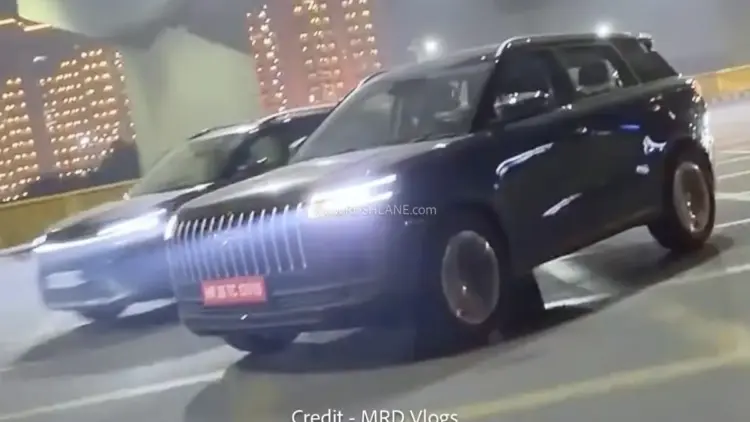
The Indian automotive landscape is on the cusp of a significant transformation as JSW Motors, the automotive arm of the multi-billion dollar JSW Group, prepares for its official brand debut. In a recent development that has sent ripples through the industry, the Jaecoo J5 hybrid SUV was spotted testing on Indian roads without a shred of camouflage. These latest sightings, credited to MRD Vlogs, offer a definitive look at the vehicle that is expected to lead JSW’s charge into the highly competitive mid-size SUV segment.
The spotting is particularly significant because it confirms the powertrain strategy for the upcoming model. While previous test mules were heavily veiled, the recent black test vehicle proudly displayed "Jaecoo" lettering, a "J5" model badge, and—most crucially—a prominent "HYBRID" emblem on the tailgate. This revelation confirms that JSW Motors is targeting the growing demand for strong-hybrid technology in India, positioning the J5 as a direct rival to established fuel-efficient heavyweights.
As the industry counts down to December 3, 2026—the date JSW Motors is expected to showcase its lineup alongside the rugged "Combat" SUV—the J5 stands as a testament to the partnership between JSW and the Chinese automotive giant Chery. While the final branding for the Indian market remains under wraps, the J5’s presence signals a new era of high-tech, electrified mobility for Indian consumers.

Chronology of Development: From Rumors to Undisguised Reality
The journey of the Jaecoo J5 to Indian shores has been a subject of intense speculation for several months. The timeline of its arrival reflects a calculated strategy by JSW to ensure the product is localized and tested for Indian conditions.
July 2026: Initial Sightings
The first murmurs of the J5’s arrival began in mid-2026 when camouflaged test mules were spotted near manufacturing hubs. At the time, industry experts were divided on whether JSW would introduce the Internal Combustion Engine (ICE) version, a Battery Electric Vehicle (BEV) variant, or a hybrid. The presence of a conventional grille on those early mules suggested a radiator-cooled powertrain, but the specific nature of the electrification remained a mystery.
August – October 2026: The JSW-Chery Synergy
During this period, the partnership between JSW Group and Chery (which owns the Omoda and Jaecoo brands) became more defined. Reports emerged that JSW would not merely be an importer but would look into significant localization to bypass high import duties. Testing intensified across varied terrains, from high-traffic urban corridors to highways, ensuring the hybrid system’s regenerative braking and cooling systems were optimized for India’s tropical climate.
November 2026: The "Hybrid" Confirmation
The most recent sighting in late November stripped away the mystery. By running the vehicle undisguised, JSW Motors indicated that the design phase and initial regulatory testing were nearing completion. The visible "Hybrid" badging served as a strategic "leak," generating consumer interest just weeks before the official brand launch scheduled for early December.
Design and Aesthetics: Sophistication Meets SUV Ruggedness
The undisguised spy shots reveal a vehicle that adheres to a "sophisticated-rugged" design language, a hallmark of the Jaecoo brand globally. The J5 possesses a commanding road presence characterized by its upright proportions and "boxy" silhouette.

Front Fascia
The face of the J5 is dominated by a large, imposing grille featuring closely spaced vertical slats, finished in what appears to be a premium chrome or metallic coating. This is flanked by slim, high-mounted LED Daytime Running Lights (DRLs), while the main headlamp clusters are positioned lower on the bumper, following the contemporary split-headlight trend. A wide lower air intake adds to the vehicle’s planted stance.
Side Profile and Rear
From the side, the J5 maintains a clean and functional aesthetic. It features a relatively flat roofline, which promises ample headroom for occupants—a critical factor for the Indian market. Blacked-out B and C-pillars create a "floating roof" effect, while conventional door handles and robust roof rails suggest a blend of style and utility. The test vehicle was seen riding on multi-spoke alloy wheels, likely 17 or 18 inches in diameter, housed under subtle black plastic cladding that runs along the wheel arches and side skirts.
At the rear, the J5 utilizes a horizontal lighting signature. The LED tail lamps are connected by a trim piece featuring "Jaecoo" branding, though this is expected to be replaced by "JSW" or a new sub-brand logo upon launch. The rear bumper is designed with a silver-finished faux skid plate, housing a clean setup that hides the exhaust tips, emphasizing its electrified nature.
Supporting Data: Technical Specifications and Interior Features
While the Indian specifications are yet to be officially codified, the J5’s global profile provides a robust blueprint of what Indian buyers can expect.
The Powertrain: A High-Performance Hybrid
The "Hybrid" badge on the spotted mule refers to a "Strong Hybrid" system, similar to the technology seen in the Toyota Innova Hycross or Maruti Suzuki Grand Vitara, but with a focus on higher performance.

- Engine: 1.5-litre turbocharged four-cylinder petrol engine.
- Electric Motor: Integrated with a dedicated hybrid transmission.
- Battery: A 1.83 kWh lithium-ion battery pack.
- Combined Output: A staggering 224 hp and 295 Nm of torque.
- Fuel Efficiency: Globally rated at approximately 18.9 km/l, a figure that would make it one of the most efficient SUVs in its power bracket in India.
Interior and Technology
The J5 is positioned as a premium offering. Global models feature a cabin that rivals luxury segments:
- Infotainment: A massive 13.2-inch portrait-oriented central touchscreen.
- Instrumentation: An 8.8-inch fully digital driver’s display.
- Comfort: Dual-zone automatic climate control, a large panoramic sunroof, and a premium 8-speaker Sony audio system.
- Safety: The J5 is expected to arrive with a Level 2 ADAS (Advanced Driver Assistance Systems) suite, including autonomous emergency braking, lane-keep assist, and adaptive cruise control. This is complemented by a 360-degree surround-view camera and at least six airbags as standard.
Official Responses and Market Position
As of late November 2026, JSW Motors has maintained a disciplined silence regarding the specific pricing and nomenclature of the J5. However, spokespersons for the JSW Group have previously emphasized that their entry into the automotive sector is driven by a vision to "democratize green mobility."
While the test vehicle retains Jaecoo branding, it is widely anticipated that JSW will utilize its own brand equity to market the vehicle. This strategy mirrors how MG Motor (owned by SAIC) entered India—leveraging a global platform while building a local brand identity.
Industry analysts suggest that JSW is currently in the process of finalizing its dealer network. The company is expected to leverage JSW Steel’s massive pan-India footprint to establish touchpoints, though the primary focus will initially be on Tier-1 and Tier-2 cities where the appetite for premium hybrid SUVs is highest.
Strategic Implications: Challenging the Status Quo
The entry of the J5 Hybrid into the Indian market has far-reaching implications for both competitors and consumers.

1. The "Hybrid vs. EV" Debate
By leading with a Strong Hybrid, JSW is playing a pragmatic hand. While the Indian government provides lower GST for EVs (5% vs 43% for hybrids), consumer "range anxiety" remains a hurdle. A strong hybrid offering 224 hp and nearly 19 km/l provides the "best of both worlds"—the performance of a luxury car with the running costs of a compact hatchback, without the need for charging infrastructure.
2. Competing in the Mid-Size SUV "Shark Tank"
The J5 enters a segment dominated by the Hyundai Creta and Kia Seltos. However, those models primarily rely on small-capacity turbo-petrol or diesel engines. The J5’s hybrid powertrain offers a unique selling proposition (USP) that neither the Koreans nor the Germans (Skoda/VW) currently provide in this specific power output range. Its closest competitors will be the Maruti Suzuki Grand Vitara and Toyota Urban Cruiser Hyryder, though the J5 is expected to offer a more premium interior and significantly higher power figures.
3. The "Make in India" Factor
For JSW Motors to be successful, pricing will be the ultimate decider. To compete with the Creta, which starts around ₹11 lakh and goes up to ₹20 lakh, JSW will need to localize the assembly of the hybrid battery and the 1.5L turbo engine. If JSW can price the J5 Hybrid in the ₹18–25 lakh bracket, it could potentially disrupt the segment.
4. Expanding the Portfolio
The J5 is just the beginning. The spotting of an electric version earlier in the year suggests that JSW is planning a multi-energy platform. This allows them to pivot based on market trends—offering hybrids for long-distance travelers and EVs for urban commuters.
Conclusion: A Date with Destiny
The undisguised spotting of the Jaecoo J5 Hybrid marks the end of the "testing" phase and the beginning of the "market assault" phase for JSW Motors. With its bold styling, high-output hybrid powertrain, and a tech-heavy cabin, the J5 is not just another SUV; it is a statement of intent from one of India’s largest industrial houses. All eyes now turn to December 3, 2026, where JSW is expected to pull the wraps off its final production-spec models and officially announce its arrival as a formidable force in the Indian automotive industry.