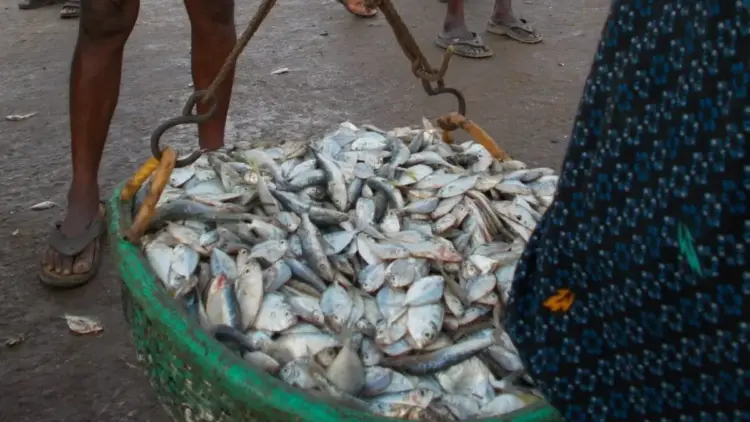
The vast expanse of the Indian Ocean is not a closed system. It is a dynamic stage where local biological cycles are dictated by atmospheric scripts written thousands of miles away in the Pacific and Atlantic Oceans. A groundbreaking study from the Indian Institute of Tropical Meteorology (IITM) has recently illuminated these complex "teleconnections," revealing how global climate drivers dictate the abundance of fish in Indian waters.
By analyzing nearly four decades of data, researchers have mapped the intricate dance between sea-surface temperatures, wind patterns, and the survival of species ranging from the humble oil sardine to the apex predatory shark. The findings suggest that while human fishing pressure remains a critical factor, the overarching pulse of the ocean is increasingly being driven by large-scale climate oscillations that are themselves being altered by anthropogenic warming.
Main Facts: Deciphering the Climate-Fishery Nexus
The study, published in Scientific Reports, represents one of the most comprehensive attempts to correlate long-term fish landing data with global climate indices. Led by researchers at the Indian Institute of Tropical Meteorology (IITM) in Pune, the team sought to understand why certain fish populations boom and bust in cycles that often baffle local fishing communities.
The Scope of the Study
The research focused on the Indian Exclusive Economic Zone (EEZ), a maritime territory extending 200 nautical miles from the coastline. Utilizing data from the Central Marine Fisheries Research Institute (CMFRI) spanning from 1981 to 2019, the researchers categorized marine life into three distinct groups:
- Small Pelagics: Including Indian oil sardine, Indian mackerel, and various anchovies (Stolephorus and Thryssa).
- Large Pelagics: Such as ribbonfish, tuna, and seer fish.
- Demersal Species: Bottom-dwelling organisms including sharks, snappers, silverbellies, and threadfin breams.
Key Climate Drivers
The study identified three primary global climate oscillations that act as "remote controllers" for Indian fisheries:

- El Niño-Southern Oscillation (ENSO): Interannual shifts in Pacific temperatures.
- Pacific Decadal Oscillation (PDO): Long-term temperature fluctuations in the North Pacific.
- Atlantic Multidecadal Oscillation (AMO): Variations in North Atlantic sea-surface temperatures.
The central discovery is that these distant phenomena alter wind patterns and upwelling (the process where nutrient-rich deep water rises to the surface) in the Indian Ocean, directly impacting the food availability and reproductive success of marine species.
Chronology: Four Decades of Fluctuating Harvests
The narrative of India’s fisheries over the last 40 years is one of shifting dominance. The IITM study breaks down this timeline into distinct periods of abundance and decline, particularly among small pelagic fish, which are the most sensitive to environmental shifts.
The 1980s to Late 1990s: The Rise of the Sardine
During the initial decades of the study, the Indian oil sardine—a staple of the Kerala and Karnataka coasts—showed a strong correlation with the negative phase of the Pacific Decadal Oscillation (PDO). When the Pacific was cooler, the resulting wind patterns over the Indian Ocean favored the retention of sardine larvae in coastal nursery grounds.
The 2000s: The Anchovy Shift
As the study progressed into the 21st century, researchers noticed a recurring "out-of-phase" relationship between sardines and anchovies. When sardine populations dipped, anchovy landings often surged three to four years later. This cyclical hand-off suggests that these species may occupy similar ecological niches but respond differently to the subtle shifts in water temperature and salinity brought about by decadal climate cycles.
2010–2019: Increased Volatility
The final decade of the study period highlights a trend toward greater unpredictability. While historical cycles lasted roughly 10 to 15 years, the acceleration of Indian Ocean warming has introduced "noise" into the data. Marine heatwaves and erratic monsoon winds have led to more frequent year-to-year variability, making it harder for traditional fishers to predict the coming season’s catch.

Supporting Data: Biological Responses and Statistical Realities
The IITM study provides granular data on how different biological groups respond to physical changes in the ocean. The sensitivity of a species to climate appears to be closely linked to its position in the food web and its life history.
The Vulnerability of Small Pelagics
Small pelagics, which feed directly on plankton, serve as the primary energy bridge between microscopic life and larger predators. The study found that:
- Oil Sardines: Showed the highest sensitivity to sea-surface temperatures and northward winds along the west coast. These winds prevent larvae from being swept into the deep ocean, where they would perish.
- Mackerel: Landings were more closely tied to the strength of the southwest monsoon, which drives the nutrient-rich upwelling essential for their growth.
The Demersal Decline: The Case of the Shark
In contrast to the climate-linked fluctuations of sardines, the data for sharks revealed a sobering and steady decline. Shark landings have dropped by approximately 0.4 kilotonnes annually throughout the study period.
- Ecological Factors: Unlike sardines, which reproduce quickly and in high numbers, sharks are slow-growing and have low reproductive rates.
- Conclusion: The researchers conclude that the shark decline is less a result of climate oscillations and more a direct consequence of sustained fishing pressure and habitat degradation.
CMFRI Landing Statistics (2024-2025)
To put the historical data in context, the CMFRI estimated India’s total marine fish landings at 3.57 million tonnes in 2025.
- Oil Sardine Contribution: 2,53,260 tonnes.
- Anchovy Contribution: 1,09,500 tonnes.
Despite being a "good" year for sardines, these figures remain highly volatile compared to the peaks seen in the 1990s, underscoring the long-term impact of the climate-fishery teleconnections.
Official Responses: Scientists and Analysts Weigh In
The complexity of these findings has prompted calls for a paradigm shift in how India manages its marine resources.

Faseela Hamza, Project Scientist at IITM, emphasizes that the relationship is not a simple "cause and effect" mechanism. "We must recognize that our analysis cannot quantify the relative contribution of every factor," she cautions. "Ecological characteristics, mobility, and trophic position must be considered alongside climate data. A single climate-fishery relationship cannot be applied to all species."
Roxy Mathew Koll, a leading scientist at the Centre for Climate Change Research, IITM, explains the physical pathway of these teleconnections. "Changes in the Pacific or Atlantic can alter winds over the Indian Ocean. These winds then dictate local ocean temperatures and nutrient supply. Fish are merely responding to the local conditions that these remote drivers have shaped."
Ishaan Khot, a doctoral candidate at the University of Manitoba, brings the focus to the human element. He notes that while the science is fascinating, the practical reality for fishing communities is one of growing hardship. "Small fishers are the hardest hit due to this livelihood uncertainty. Erratic weather events result in fewer productive fishing days, while storm surges damage the very infrastructure—boats and houses—that these communities rely on."
Implications: Food Security, Livelihoods, and Policy
The findings of the IITM study carry profound implications for India’s economy, food security, and social justice.
Socio-Economic Vulnerability
Small and dried fish are the primary protein source for millions of marginalized people in India. When climate oscillations drive sardine and anchovy populations down, the price of these "poor man’s proteins" spikes, leading to nutritional insecurity. For the artisanal fishing fleet—comprising thousands of small, non-mechanized boats—the inability to predict fish movements can mean the difference between a season of profit and a season of debt.

The Need for Climate-Ready Management
The study argues that current fisheries management, which often focuses solely on "fishing effort" (the number of boats and nets), is insufficient.
- Integrated Forecasting: Future management must combine satellite-derived climate signals with local ocean observations to provide fishers with "abundance forecasts."
- Species-Specific Strategies: Management cannot be "one-size-fits-all." Slow-reproducing species like sharks require strict protection from overfishing, while pelagic fisheries need flexible quotas that adjust based on climate cycles.
Policy Gaps and Climate Justice
India’s National Policy on Marine Fisheries (2017) was a landmark document that acknowledged climate change. However, as Ishaan Khot points out, there is a "long way to go in terms of tangible solutions."
The study suggests that "climate justice" must be integrated into maritime policy. This involves providing insurance for fishers against climate-induced catch failures and investing in coastal infrastructure that can withstand the increasingly violent storm surges associated with a warming Indian Ocean.
Conclusion
The IITM study serves as a vital reminder that the Indian Ocean is a mirror reflecting global atmospheric health. As the PDO, AMO, and ENSO cycles become more erratic due to global warming, the rhythmic "boom and bust" of India’s fisheries may lose its predictability. To protect the livelihoods of millions and the food security of a nation, India must move toward an integrated, climate-smart approach to ocean governance—one that respects the teleconnections between the distant horizons and the local shore.