DOHA, QATAR – The anticipation for the FIFA World Cup 2026 final between Spain and Argentina, already at a fever pitch, has been dramatically intensified by Spain’s formidable defender, Aymeric Laporte. Just days before football’s most coveted trophy is contested, Laporte has reignited the perennial debate surrounding refereeing consistency and the permissibility of aggressive play, casting a significant shadow over what promises to be an epic encounter. His pointed remarks, aimed squarely at the officiating of recent Argentina matches, have injected an additional layer of intrigue and tension into a clash already brimming with narratives of generational talent, tactical prowess, and national pride.
The final, pitting the reigning European champions against the defending World Cup holders, is a dream fixture for football purists and casual fans alike. However, Laporte’s comments threaten to shift the pre-match discourse from tactics and star players to the crucial role of the man in the middle, potentially influencing the atmosphere and the official’s approach on the grandest stage.
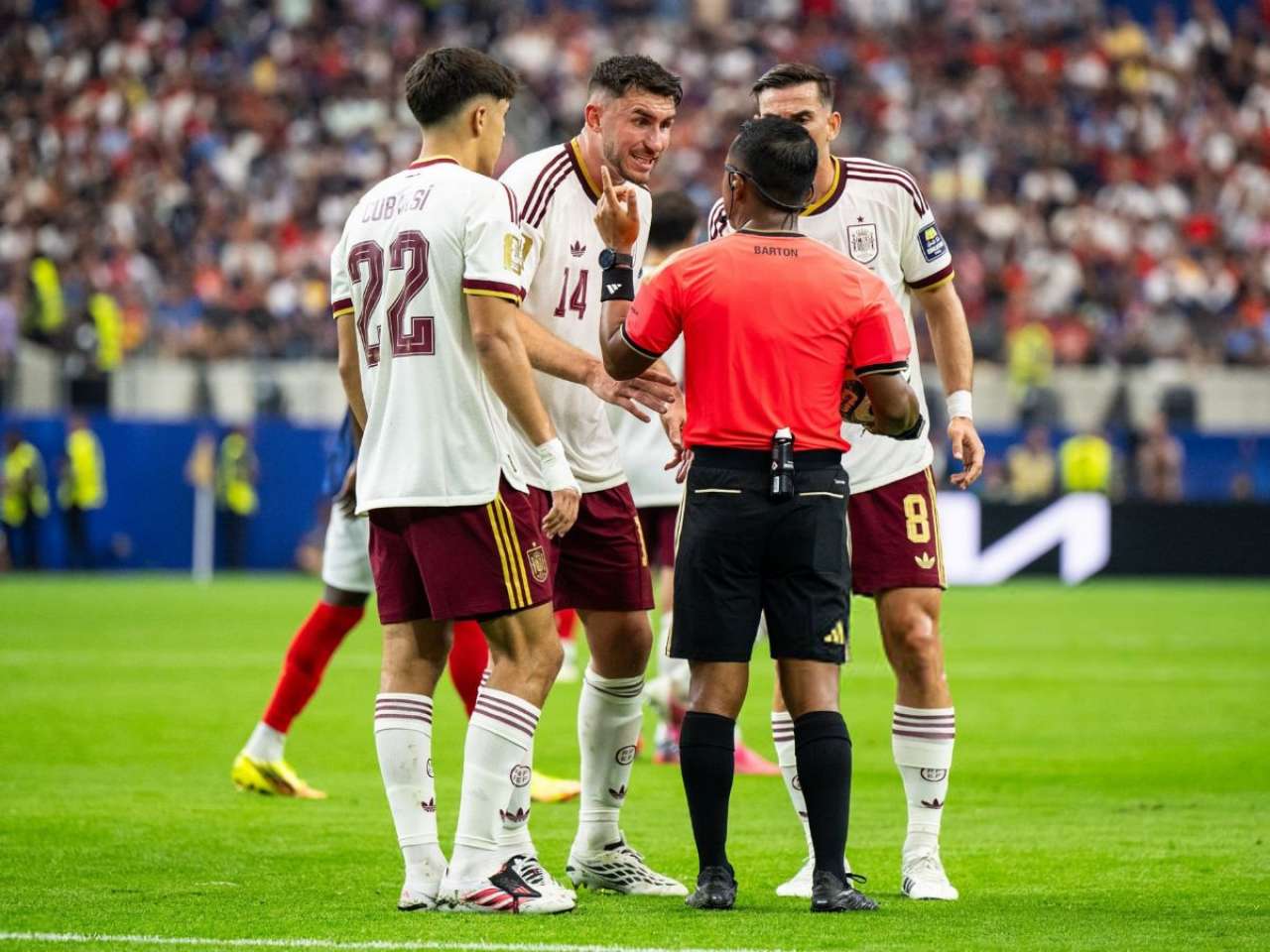
The Spark: Laporte’s Provocative Remarks
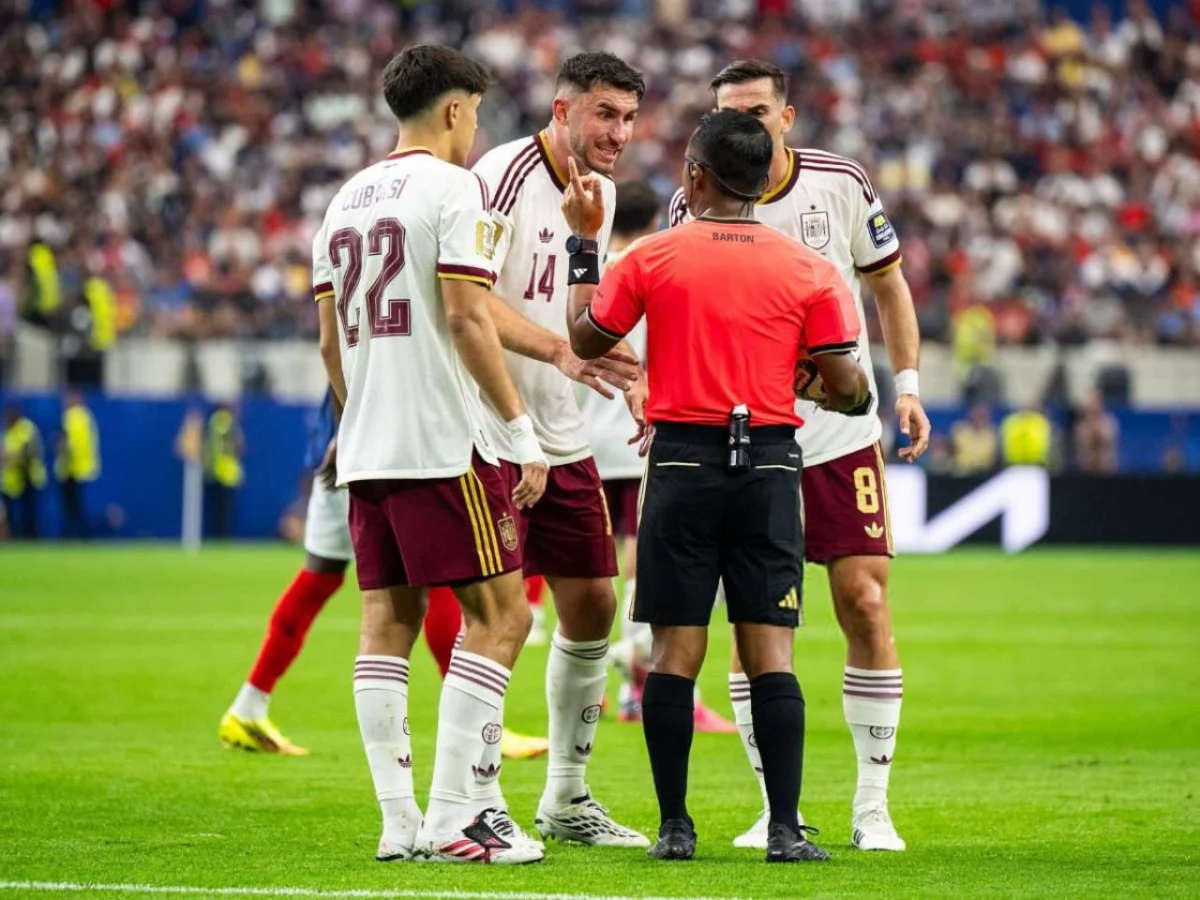
Aymeric Laporte, known for his robust defending and forthright opinions, held nothing back when addressing what he perceives as a double standard in officiating, particularly concerning Argentina’s physical approach. Speaking to Marca, as quoted by L’Equipe, the Spanish centre-back expressed his astonishment at how certain aggressive tactics employed by the Albiceleste appear to go unpunished, creating an uneven playing field.
"I’m not worried about aggression in football as long as the referee does his job," Laporte explained, articulating a sentiment shared by many players and coaches who seek clear boundaries. "If things are allowed to slide, that’s when it bothers me."
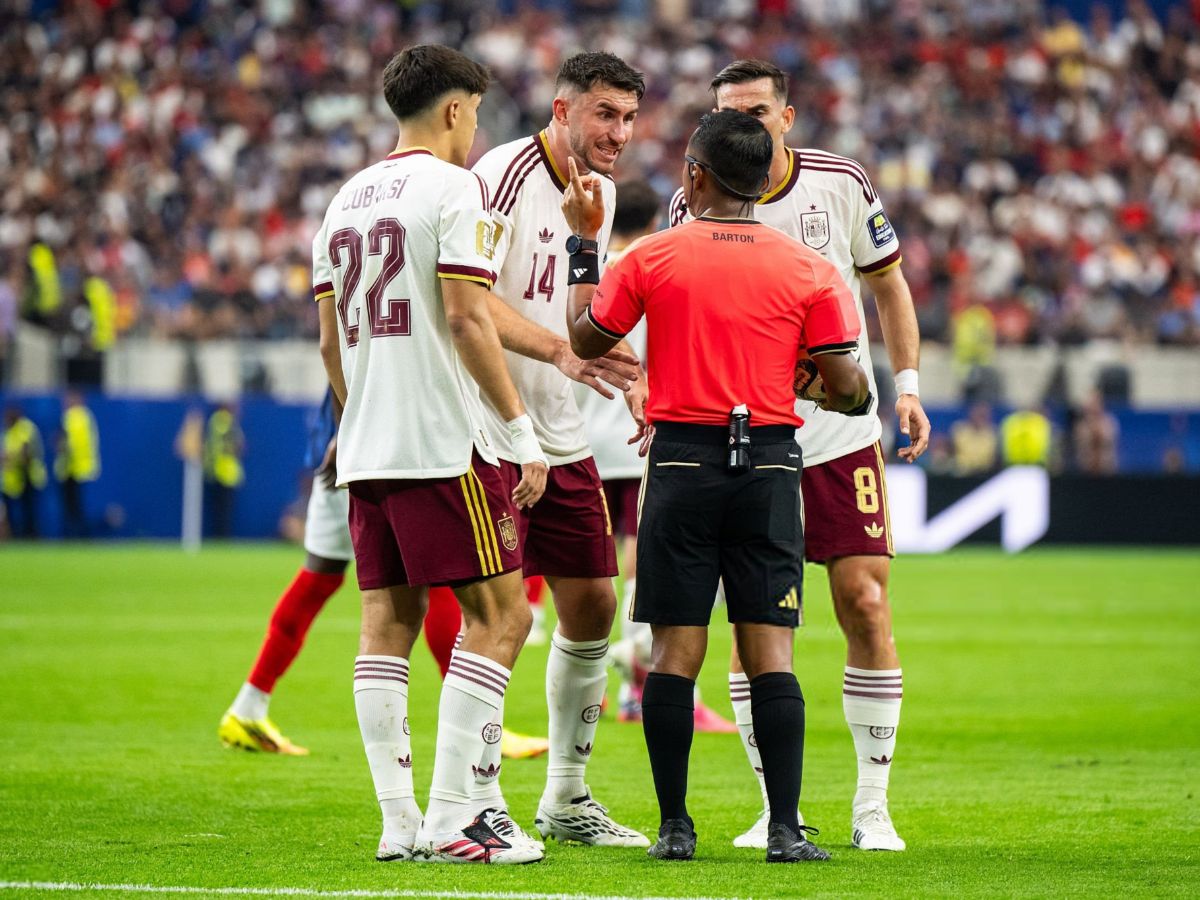)
His frustration stems from what he observed in Argentina’s recent fixtures leading up to the final, suggesting a pattern of leniency towards their physical style. "In these recent games, we’ve all noticed some incidents that really surprised us. Argentina is a tough team, but letting things go unsettles everyone and can throw teams off their game. That sort of thing shouldn’t happen, especially in matches this important," he asserted.
A Call for Consistency
Laporte’s core argument is a plea for consistency in applying the laws of the game. He implies that if referees allow a certain level of physicality from one team while penalizing another for similar actions, it undermines the integrity of the competition and creates an unfair advantage. This isn’t merely about individual fouls; it’s about the broader interpretation of what constitutes acceptable contact versus illegal aggression in the modern game.

The defender’s comments resonate with a long-standing debate in football about the balance between allowing the game to flow and protecting players from dangerous play. His observations suggest a perceived bias, or at least a significant disparity, in how officials have handled Argentina’s matches, leading to a build-up of unaddressed fouls that could accumulate into a tactical advantage.
Spain’s Stance on Fair Play
In stark contrast to his criticism of Argentina’s perceived leniency, Laporte took the opportunity to highlight Spain’s own disciplinary record throughout the tournament. He emphasized his squad’s commitment to fair play and their deliberate avoidance of reckless challenges.
)
"From the very beginning, we’ve kept things clean. We don’t go after our opponents with reckless fouls, and that’s the mentality we’ll keep in the final," Laporte stated, drawing a clear distinction between Spain’s approach and what he believes to be Argentina’s. However, he quickly tempered this by acknowledging the ultimate determinant: "But honestly, so much depends on how the referee handles it." This statement underscores the immense pressure now placed on the match officials, whose decisions could validate or refute Laporte’s pre-match assertions.
A Tournament of High Stakes: The Road to the Final
The FIFA World Cup 2026 final is a clash of titans, bringing together two footballing philosophies and two nations with rich World Cup histories. Spain, the reigning European champions, and Argentina, the defending World Cup holders, have navigated challenging paths to reach this pinnacle.
)
La Roja’s Dominant Campaign
Spain’s journey to the final has been marked by a blend of their traditional possession-based football and a newfound tactical pragmatism. Under their astute coach, they have demonstrated an impressive ability to control games, dictate tempo, and unleash moments of devastating individual brilliance, often spearheaded by the young sensation Lamine Yamal. Their semifinal victory over France, a commanding 2-0 win, showcased their defensive solidity and offensive efficiency, proving their mettle against another European giant. Throughout the tournament, Spain has been lauded for their technical skill, disciplined approach, and commitment to clean, attacking football, aligning perfectly with Laporte’s proud declaration of their fair play.
La Albiceleste’s Resilient Path
Argentina’s campaign has been a testament to their renowned grit, resilience, and the sheer genius of Lionel Messi. As defending champions, the pressure on them has been immense, yet they have consistently found ways to overcome adversity. Their semifinal clash against England was a dramatic affair, culminating in a thrilling 2-1 comeback victory sealed with a last-gasp winner. This victory, characteristic of Argentina’s fighting spirit, further solidified their reputation as a team that never gives up, often relying on their tenacity and physical presence to disrupt opponents. Laporte’s comments, however, suggest that this "tenacity" might, at times, cross the line into unpunished aggression, particularly in the eyes of their final opponents.
)
The Semifinal Showdowns
Spain’s decisive 2-0 triumph over France was a tactical masterclass, neutralizing the attacking threats of Kylian Mbappé and showcasing their depth. Goals from key players ensured a relatively comfortable passage, allowing them to conserve energy and focus on the final.
Argentina’s path was far more dramatic. Trailing England for much of their semifinal, they mounted a heroic comeback, with Messi orchestrating much of their attacking play and providing crucial assists. The late winner against a formidable English side underscored their mental fortitude and their ability to perform under extreme pressure. These contrasting semifinal experiences further highlight the different styles and temperaments of the two finalists, setting the stage for a fascinating tactical battle that will now be scrutinized even more closely for refereeing decisions.
)
The Referee Debate: A Recurring World Cup Narrative
Laporte’s comments, while specific to Argentina, tap into a much broader, evergreen discussion within football: the challenge of officiating in high-stakes matches and the subjective nature of what constitutes a foul. The World Cup, as the pinnacle of the sport, inevitably amplifies these debates, with every decision scrutinized and re-analyzed.
The Fine Line Between Physicality and Foul Play
Modern football is a highly physical game, demanding peak athletic performance and often involving robust challenges. Referees are tasked with distinguishing between legitimate physical contact – an essential part of the game – and illegal fouls that endanger players or disrupt play unfairly. This line is often blurry and subject to individual interpretation. Laporte’s concern is that this line has been consistently drawn in a way that benefits Argentina, allowing them to employ tactics that might otherwise be penalized. This perceived inconsistency can lead to frustration among players and fans, and, critically, can influence the outcome of matches.
)
The Shadow of VAR
The introduction of Video Assistant Referee (VAR) was intended to reduce controversial decisions and ensure fairness. However, VAR itself has become a source of debate, with criticisms ranging from its slow implementation to the inconsistency of its application and the continuing subjectivity in decisions even after review. While VAR is designed to catch clear and obvious errors, many "soft" fouls or borderline physical challenges still fall into a grey area, leaving room for human interpretation. Laporte’s remarks could be seen as an indirect criticism of VAR’s effectiveness in addressing the very issues he highlights, or perhaps a call for VAR to be more rigorously applied to the type of incidents he describes.
Historical Precedents of Controversy
World Cup history is replete with moments where refereeing decisions have become central to the narrative, sometimes overshadowing the football itself. From the "Hand of God" in 1986 to various controversial red cards and disallowed goals in subsequent tournaments, officials have always been under intense pressure. Laporte’s pre-match outburst evokes memories of such past controversies, reminding everyone that the referee’s performance can be as pivotal as that of the players. This history adds weight to his words, suggesting that the integrity of the final could hinge on the officials’ ability to manage the game fairly and firmly.
)
Psychological Warfare or Genuine Concern?
The timing of Laporte’s comments, just days before the biggest match of his career, inevitably raises questions about his motivations. Are these genuine concerns about fair play, or a calculated attempt at psychological warfare designed to influence the referee and subtly pressure Argentina?
Strategic Intent Behind the Comments
In the cutthroat world of elite football, mind games are a common tactic. By publicly airing his grievances, Laporte might be aiming to achieve several strategic objectives:
)
- Influence the Referee: The most direct impact would be to make the appointed referee for the final acutely aware of the scrutiny they will face regarding Argentina’s physicality. This could lead to a stricter interpretation of fouls against Argentina, potentially evening the playing field in Spain’s favor.
- Pressure Argentina: His comments could get under the skin of the Argentine players, forcing them to temper their aggressive approach or making them more self-conscious, thereby disrupting their natural game.
- Rally Support: Laporte’s statements might also be designed to rally public and media support for Spain, framing them as the "fair play" team against a perceived "dirty" opponent, thus building a narrative that could influence overall perception.
- Boost Team Morale: Internally, it could reinforce Spain’s belief in their own clean style of play and create a shared sense of injustice that fuels their determination.
The Argentine Response (Anticipated)
While there has been no official response from the Argentine camp at the time of this writing, it is highly probable that any reaction would be dismissive and defensive. Coach Lionel Scaloni or key players like Messi would likely downplay Laporte’s remarks, asserting their focus on their own game and defending their team’s style as passionate and competitive, not overly aggressive. They might frame Laporte’s comments as an attempt to distract them or as sour grapes, maintaining that their success is due to skill and teamwork, not illicit tactics. Such a response would be typical of high-stakes encounters, where teams try to project an image of unwavering confidence and focus.
Implications for the Grand Finale
Laporte’s intervention has undoubtedly added a fascinating, potentially volatile, dimension to the FIFA World Cup 2026 final. The implications could be far-reaching, affecting everything from the referee’s performance to player behavior and the overall legacy of the match.
)
The Referee’s Unenviable Task
The official appointed to oversee the final now faces an unenviable task. Laporte’s comments have placed an immense spotlight on their every decision, particularly concerning physical challenges. They will be under intense pressure to demonstrate absolute impartiality and consistency. Any contentious decision, especially one involving an Argentine player and a Spanish player, will be magnified and analyzed ad nauseam. The referee’s handling of the game could either validate Laporte’s concerns or emphatically refute them, potentially shaping the narrative of the entire final.
Impact on Player Conduct and Tactics
Argentina’s players might feel the need to be more cautious, perhaps toning down their characteristic aggression to avoid early bookings or a red card that could prove catastrophic. Conversely, Spain might try to exploit this potential newfound hesitancy, or even actively try to draw fouls, knowing the referee will be more sensitive to perceived aggression. The tactical battle will not just be about formations and passing, but also about managing emotions and adapting to the referee’s interpretation of the game’s physicality.
)
Fan Engagement and Media Scrutiny
Laporte’s remarks will undoubtedly heighten fan engagement, particularly among neutral supporters who might now watch the game with a keen eye for refereeing decisions. Media outlets worldwide will dissect every tackle, every yellow card, and every uncalled foul, contributing to a post-match analysis that could focus as much on the officiating as on the goals scored. This increased scrutiny could overshadow the pure footballing spectacle, a consequence no one desires for a World Cup final.
The Battle for the Golden Boot
Amidst the refereeing controversy, the individual brilliance of players like Lionel Messi and Lamine Yamal remains a central theme. Messi heads into the final leading the Golden Boot race, his two assists against England adding to his incredible tournament tally. France’s Kylian Mbappé, who will feature in the third-place playoff against England, remains a contender, but Messi’s position is strong. This personal race for individual glory adds another layer of excitement, ensuring that even with the focus on fairness, the attacking prowess on display will captivate audiences.
)
A Legacy on the Line
Ultimately, the FIFA World Cup 2026 final is about legacy. For Argentina, it’s a chance to defend their title and further cement Messi’s place as the undisputed greatest of all time. For Spain, it’s an opportunity to add a second star to their crest and establish a new era of dominance led by emerging talents. Laporte’s comments, however, raise the uncomfortable possibility that the legacy of this final could be tainted by controversy, rather than celebrated purely for its footballing spectacle. Everyone involved will be hoping that the focus remains firmly on the players, the skill, and the drama of the beautiful game, with the referee a silent, fair, and ultimately forgettable arbiter.
Beyond the Pitch: The Broadcast Details
For football fans in India eager to witness this historic clash, the FIFA World Cup 2026 final between Spain and Argentina will be readily accessible across multiple platforms.
)
How to Watch the FIFA World Cup 2026 Final in India
The much-anticipated final will be broadcast LIVE on Zee’s new Unite8 Sports network. Viewers can tune in to Unite8 Sports 1, Unite8 Sports 1 HD, Unite8 Sports 2, and Unite8 Sports 2 HD to catch all the action. Additionally, for those who prefer to stream the match on the go, the Spain vs. Argentina showdown will be available for live streaming on the Zee5 website and its dedicated mobile application.
Link: https://www.zee5.com/
)
This comprehensive coverage ensures that fans across India will not miss a single moment of what promises to be one of the most talked-about World Cup finals in recent memory, now with an added layer of drama thanks to Aymeric Laporte’s pre-match declaration. As the world tunes in, all eyes will be on the pitch, the players, and indeed, the referee, to see how this narrative unfolds.
Find your daily dose of All Latest News including Sports News, Entertainment News, Lifestyle News, explainers & more. Stay updated, Stay informed- Follow DNA on WhatsApp.