

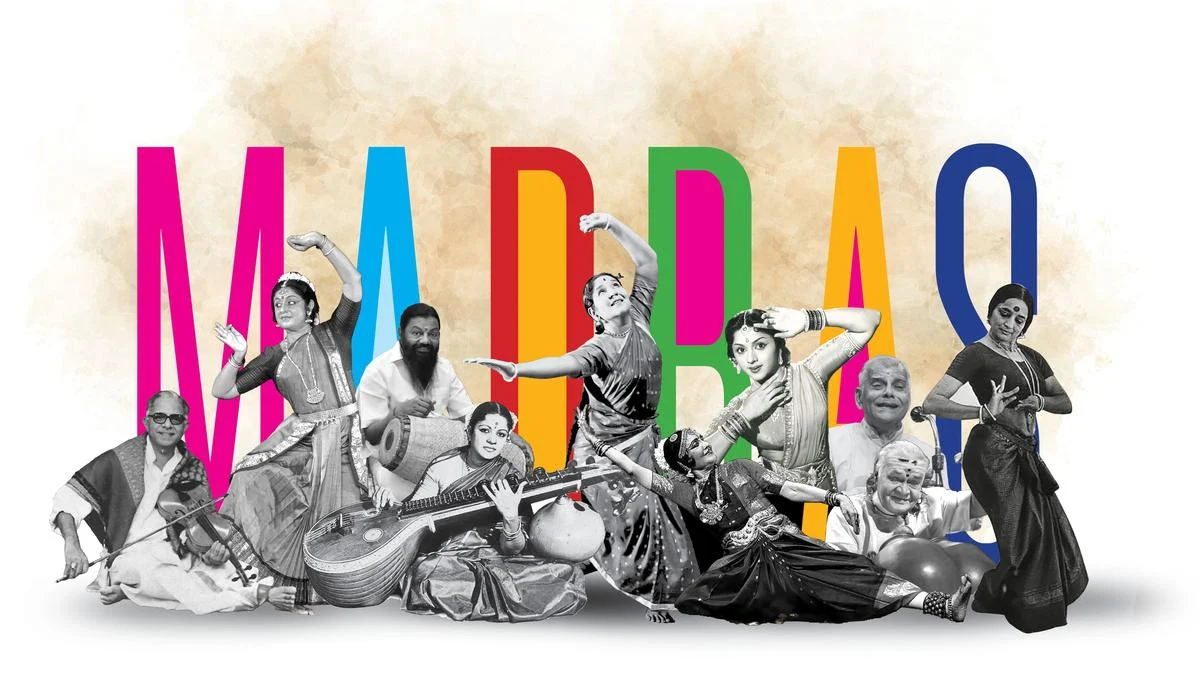
Chennai, India – As the city of Madras, now officially known as Chennai, approaches its 387th birthday on August 22nd, the air crackles with a unique blend of historical reverence and contemporary dynamism. Far from being a static relic of the past, this venerable metropolis is a vibrant, breathing entity, its identity intricately woven with a rich artistic heritage that continues to evolve and inspire. The annual celebrations, amplified by the reach of social media, have become a powerful testament to the deep affection residents hold for their city, transforming the days leading up to its birthday into a captivating exploration of its storied past and its forward-looking spirit. This outpouring of love manifests in a multitude of heritage walks, insightful talks, captivating exhibitions, and soul-stirring concerts, all designed to illuminate the lesser-known narratives of Madras, reminding us that it is far more than just a geographical marker on a map.
The Enduring Artistic Soul of Madras
Few cities in India, or indeed the world, wear their artistic identity with such unwavering pride as Madras. Its cultural landscape is a profound testament to the visionary creators who have shaped it across generations. From the intricate melodies of Carnatic music and the graceful movements of Bharatanatyam to the vibrant world of theatre, the eloquent prose of its literature, the captivating narratives of its cinema, and the expressive strokes of its fine art, Madras has cultivated a fertile ground for artistic expression. As the city embarks on another year of its existence, its deeply entrenched artistic traditions and its robust cultural institutions serve as a powerful lens through which to understand its enduring spirit.
The author’s personal journey with this spirit began in 1996, the pivotal year when Madras transitioned to become Chennai. Arriving from the North, where cautionary tales of a "social climb-down" were rife, the author soon discovered a city that offered something far more profound: a cultural milieu that, in many respects, felt immeasurably richer. The initial apprehension was quickly replaced by an awakening to a different rhythm of life, one deeply steeped in artistic pursuit.
A Personal Odyssey: From Northern Winters to Chennai’s Cultural Embrace
The allure of Chennai had been a long-held dream since the author’s school days. The yearning was to escape the biting, freezing winters of the North and immerse oneself in the effervescent warmth of music that defines Chennai’s famed Margazhi season. This period, typically spanning December and January, transforms the city into a surprisingly breezy and cool haven, a stark contrast to its usual tropical heat. It is also a time when the city’s sartorial elegance is on full display, with the finest silk pattu saris and impeccably draped veshtis becoming ubiquitous. While much of the rest of India gears up for the year-end festivities with pomp and grandeur, for Chennaiites, Margazhi marks the exhilarating commencement of a new artistic "Season."
What struck the author most profoundly about Chennai’s renowned kutcheri (classical music concert) culture was its inherent lack of pretension. The singular focus remained steadfastly on the music itself, fostering an environment where artistic merit took precedence over superficial adornments. Interestingly, conversations at family gatherings and informal get-togethers were not dominated by fleeting fashion trends or culinary novelties. Instead, the discourse vibrated with passionate debates about which artiste had rendered a particular raga, like Abheri or Kalyani, with unparalleled brilliance, or which dancer had captivated a sold-out audience. This cultural immersion underscored a fundamental truth: in Chennai, art was not merely a form of entertainment; it was an intrinsic, integral way of life.
This profound connection between the city and its performing arts was formally recognized in 2017 when Chennai was inducted into UNESCO’s Creative Cities Network, specifically for its significant contributions to the performing arts. This prestigious accolade served not as a revelation, but as an affirmation of what residents had long understood and cherished about their city.
Tradition Meets Innovation: The Dynamic Evolution of Chennai’s Artistic Landscape
While deeply protective of its rich artistic traditions, Chennai has consistently fostered an environment where artists are not only encouraged but empowered to question conventions, broaden their creative horizons, and engage with their art on their own terms. This inherent openness is not a recent phenomenon; it has been a defining characteristic of the city’s artistic temperament for decades, evident in the groundbreaking contributions of its pioneering artists.
A prime example of this progressive spirit is the establishment of Kalakshetra by the visionary Rukmini Devi Arundale. Founded at a time when Bharatanatyam was undergoing a significant transformation in its social perception, Kalakshetra was conceived with the dual purpose of preserving the form’s classical rigor while simultaneously situating it within a new, structured institutional framework. This ensured that the ancient art form could not only survive but thrive, adapting to changing societal norms without compromising its core essence.
A few kilometers away, nestled closer to the sea, Chandralekha established her own influential creative hub, Spaces. Here, she meticulously built an experimental practice firmly rooted in her own extensive Bharatanatyam training. Her approach was characterized by its boldness and radicalism, pushing the boundaries of choreography to explore the profound expressive possibilities of the human body. Through her innovative work, Chandralekha effectively redrew the accepted parameters of the dance form, demonstrating its capacity for profound artistic exploration.
Furthermore, the inimitable Balasaraswati stands as a powerful embodiment of the artistic legacy inherited from the hereditary devadasi tradition. This tradition, for centuries, had been the bedrock of Bharatanatyam, nurturing and enriching the dance form in ways that are immeasurable. Balasaraswati’s mastery and her dedication to her art form brought a profound depth and authenticity to Bharatanatyam, solidifying its place in the classical arts canon.
These pioneering artists, through their dedication and groundbreaking work, collectively set the stage for subsequent generations of dancers. They inspired them to reimagine the repertoire, to infuse new life into an ancient dance form, and to discover novel avenues for artistic expression within its established structure.
The Enduring Power of Kutcheri Culture in the Digital Age
The city’s remarkable ability to embrace seemingly divergent artistic impulses is not confined solely to the realm of dance. It has also been instrumental in fostering the continued thriving of the kutcheri tradition, even in the face of the digital revolution. Few other cities can boast such an extensive and vibrant network of sabhas (cultural organizations that host performances), a concert calendar that continues to expand year after year, and a steady influx of young, aspiring artists who are willing to embrace the inherent challenges of a complex and demanding classical tradition.
However, this enduring tradition has not remained static. The evolution is palpable. The duration of a kutcheri has seen a significant reduction, often shrinking from four hours to a more concise two hours, and sometimes even less. The era of mikeless concerts has largely given way to amplified performances, a concession to larger venues and changing audience expectations. Artistes themselves are increasingly finding innovative ways to assert their individuality. This manifests in various forms, such as incorporating modern poetry that engages with pressing social concerns, reinventing their presentation styles to be more dynamic and engaging, or performing in unconventional spaces that offer a fresh perspective. Some artists, in their pursuit of possibilities beyond the conventional concert format, have ventured into cross-genre collaborations, blending their classical training with other artistic disciplines. What remains truly remarkable is the unwavering acceptance and enthusiasm of the city’s rasikas (connoisseurs) who continue to throng the sabhas, demonstrating their enduring appreciation for these evolving forms of artistic expression.
The Rise of Instrumentalists and Global Recognition
As the art form itself has evolved, instrumentalists, who were once largely relegated to the supportive role of accompanists in kutcheris, have gained significantly greater visibility and recognition. Exclusive festivals dedicated to showcasing their artistry and celebrating their unique contributions have become increasingly common. A trailblazing figure in this regard is the Ghatam legend Vikku Vinayakram. Nearly five decades ago, he broke new ground by joining the iconic East-West band Shakti. His pioneering collaboration inspired generations of percussionists to explore the potential of collaborative music-making and to discover new avenues for creative exploration, transcending traditional boundaries.
The journey of these instrumentalists from the concert halls of Chennai to the global stage has been nothing short of extraordinary. Two Chennai-based instrumentalists, the prodigious violinist Ganesh Rajagopalan and the exceptionally talented kanjira exponent Selva Ganesh, have achieved the pinnacle of musical acclaim by winning Grammy Awards. Their success has not only brought international recognition to their individual talents but has also served to carry the rich sounds and nuanced sensibilities of Indian classical music to audiences across the globe, further solidifying Madras’s legacy as a global hub for artistic excellence.
As Madras celebrates another year, it stands not just as a city of historical significance, but as a testament to the enduring power of art to shape identity, foster community, and inspire innovation. Its artistic soul, continuously renewed and redefined, promises to captivate and inspire for generations to come.
