

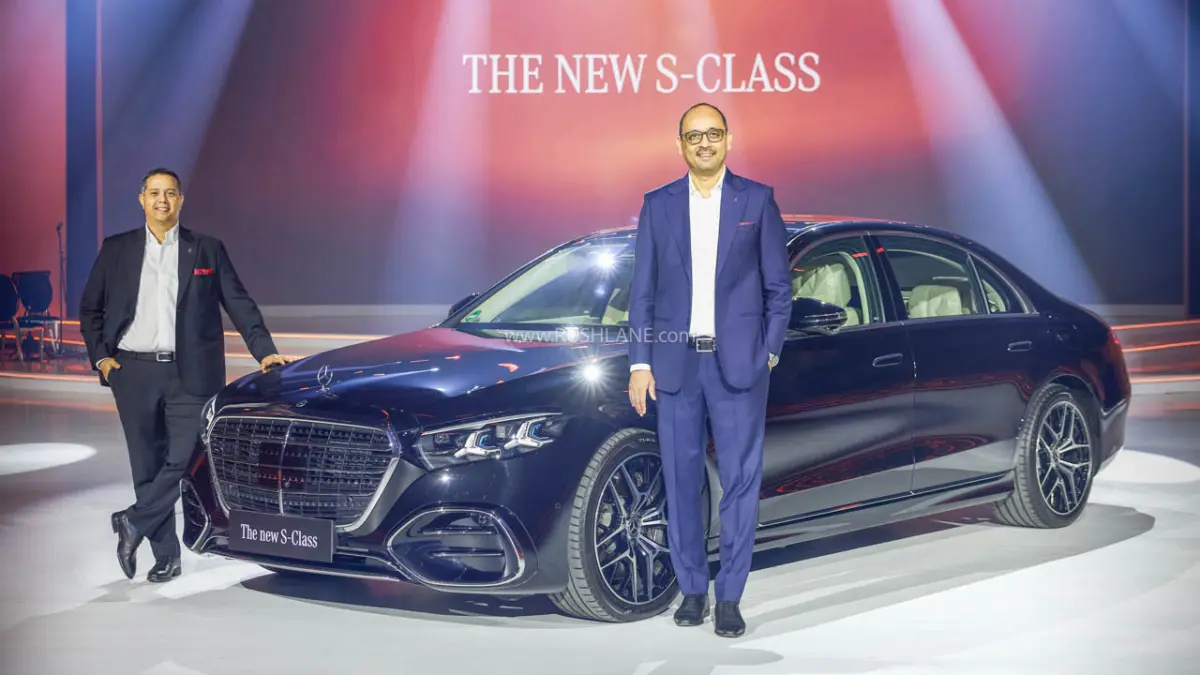
CHAKAN, PUNE – Mercedes-Benz India has once again solidified its position as the undisputed leader in the Indian luxury automotive landscape. According to the latest performance reports for the third quarter (July–September) and the cumulative nine-month period (January–September) of 2026, the German marque has achieved its highest-ever sales figures in the country.
The company reported a record-breaking delivery of 15,190 units in the first nine months of the year, marking a significant milestone in its Indian operations. This performance was bolstered by a stellar third quarter, where the company sold 5,422 vehicles, representing a 5.92% increase over the 5,119 units sold in Q3 2025. This growth trajectory is even more impressive when viewed sequentially, with Q3 2026 sales surging by 17% compared to the second quarter of the same year.
Main Facts: A Landmark Performance in a Competitive Market
The 2026 sales data reveals a brand in its prime, navigating a complex economic environment with a refined product strategy. The headline figure of 15,190 units for the January–September period is not just a company record; it is a testament to the deepening penetration of luxury goods in the Indian market.
Key Performance Indicators:
- Total Nine-Month Sales (Jan-Sep 2026): 15,190 units (Record High).
- Q3 2026 Sales: 5,422 units (Record Quarterly High).
- Year-on-Year (YoY) Q3 Growth: 5.92%.
- Quarter-on-Quarter (QoQ) Growth: 17% (vs Q2 2026).
- Top-End Luxury (TEL) Growth: 13%.
- Mercedes-AMG Growth: 18%.
- Battery Electric Vehicle (BEV) Growth: 16%.
The data underscores a "flight to quality" among Indian HNIs (High Net-Worth Individuals). Despite global supply chain fluctuations and varying interest rates, the demand for the Three-Pointed Star has remained resilient, driven primarily by the Top-End Luxury (TEL) and Core Luxury segments.
Chronology: The Journey to 15,000 Units
To understand the magnitude of the 2026 success, one must look at the historical context of Mercedes-Benz’s performance over the last three years. The journey has been one of steady ascent, punctuated by a brief period of consolidation.
2024: Setting the Benchmark
In the first nine months of 2024, Mercedes-Benz India set a then-record by delivering 14,379 units. This period was characterized by a post-pandemic surge in demand and the successful rollout of several key models in the SUV and sedan categories.
2025: A Year of Consolidation
The following year, 2025, saw a marginal correction. Sales for the January–September period dipped slightly by 1.72%, coming in at approximately 14,131 units. Market analysts attributed this to a high base effect from the previous year and temporary supply constraints for specific high-demand models. Quarterly growth during this period was also relatively flat, with Q3 2025 (5,119 units) barely moving the needle compared to Q3 2024 (5,117 units).
2026: Breaking the Ceiling
The current year has seen a vigorous rebound. By surpassing the previous 2024 high by 5.64%, Mercedes-Benz has effectively erased the stagnation of 2025. The momentum began building in Q2 and culminated in the record-breaking Q3, where the brand breached the 5,400-unit mark for the first time in a single quarter. This "V-shaped" recovery in growth rates suggests that the brand’s strategic pivots—focusing on electrification and ultra-luxury customization—are paying off.
Supporting Data: Segment-Wise Analysis
The success of Mercedes-Benz India is not attributed to a single model but rather a balanced performance across its three primary portfolios: Entry Luxury, Core Luxury, and Top-End Luxury (TEL).

Top-End Luxury (TEL) and the MANUFAKTUR Effect
The Top-End Luxury segment, which includes the S-Class, GLS, Mercedes-Maybach, and the iconic G-Wagon, grew by 13% during the nine-month period. This segment now accounts for more than 25% of the brand’s total sales volume.
A pivotal driver in this segment has been the MANUFAKTUR programme, Mercedes’ bespoke personalization service. In a staggering revelation, the company noted that approximately 75% of all TEL sales now involve some level of MANUFAKTUR customization. This indicates that Indian luxury car buyers are no longer satisfied with "off-the-shelf" luxury; they are seeking exclusivity and personal expression.
The Mercedes-AMG performance division also saw robust growth of 18%. Specifically, the AMG G 63 recorded its highest-ever monthly sales during this period, proving that the demand for high-performance, go-anywhere luxury remains insatiable.
Core Luxury: The Volume Powerhouse
While the TEL segment brings the prestige, the Core Luxury segment provides the volume. Accounting for 60% of total sales, this group includes the C-Class, E-Class Long Wheelbase (LWB), GLC, and GLE.
The long-wheelbase E-Class continues to hold its title as the highest-selling luxury car in India. Its blend of rear-seat comfort and executive prestige remains the gold standard for the Indian "chauffeur-driven" demographic. The GLC and GLE SUVs also maintained strong pull, benefiting from India’s ongoing preference for the upright driving position and ruggedness of luxury crossovers.
Entry Luxury and the EV Shift
The Entry Luxury segment, comprising the GLA and the newly introduced CLA BEV, contributed 15% of total volumes, growing at a steady 4%. While this segment is smaller in volume compared to Core Luxury, it serves as a critical "on-ramp" for younger buyers entering the brand.
In the realm of sustainability, Mercedes-Benz’s Battery Electric Vehicle (BEV) portfolio grew by 16%. The EQS Maybach SUV was a standout performer, recording 68% growth. Furthermore, the upcoming CLA BEV has already secured over 1,000 confirmed orders, with a waiting list stretching into March 2027.
Official Responses: Strategy and Vision
Santosh Iyer, Managing Director and CEO of Mercedes-Benz India, attributed these record-breaking results to a holistic approach that prioritizes customer experience as much as the product itself.
"Our highest-ever nine-month and quarterly sales underscore the deep trust our customers place in the Mercedes-Benz brand," Iyer stated. He emphasized that the success is a result of a "right product mix" and a relentless focus on the "Top-End Luxury" strategy.

Iyer also pointed toward the company’s retail network development and "Retail of the Future" model, which provides a transparent and seamless buying experience. "The significant growth in the TEL segment, particularly the adoption of the MANUFAKTUR programme, shows that our customers value personalization and exclusivity. We are not just selling cars; we are delivering a personalized luxury experience," he added.
Addressing the electric transition, Iyer noted that despite "limited vehicle availability" in some segments, the demand for BEVs is robust. The 1,000+ orders for the CLA BEV suggest that the Indian luxury buyer is ready to embrace electric mobility provided the product offers the right mix of technology and brand prestige.
Implications: What Lies Ahead for the Luxury Market?
The record-breaking performance of Mercedes-Benz India has several broader implications for the Indian automotive industry and the economy at large.
1. The Resilience of the Luxury Economy
The 5.64% growth over the previous record suggests that the luxury segment is decoupled from some of the headwinds affecting the mass-market automotive sector. While entry-level car sales in India have seen fluctuations, the "Top-End" remains buoyant, indicating strong wealth creation and consumer confidence among India’s affluent classes.
2. Customization as the New Standard
The fact that 75% of TEL buyers opted for MANUFAKTUR customization signals a shift in consumer behavior. Mercedes-Benz has successfully tapped into the "luxury of one" trend. Competitors will likely need to bolster their own personalization departments to keep pace with this demand for bespoke interiors and paint finishes.
3. The Electric Tipping Point
With over 1,000 orders for the CLA BEV and 68% growth for the EQS Maybach SUV, Mercedes-Benz is proving that the luxury segment will lead India’s EV charge. The company’s decision to launch the GLC BEV on November 4, 2026, is a strategic move to capture the heart of the luxury SUV market with an electric drivetrain.
4. Future Product Pipeline
The immediate future looks equally busy for the German automaker. Deliveries of the new electrified S-Class (Plug-in Hybrid) are set to commence in mid-October 2026. The high demand for this model is evident, with the "MANUFAKTUR Edition" already sold out for the remainder of the year.
As the festive season reaches its peak, Mercedes-Benz India is well-positioned to end 2026 with an all-time high annual sales figure. The combination of a strong order bank, a flurry of new launches (including the GLC BEV), and a dominant position in the "Top-End" segment suggests that the Three-Pointed Star will continue to shine brightly over the Indian luxury landscape for the foreseeable future.
