

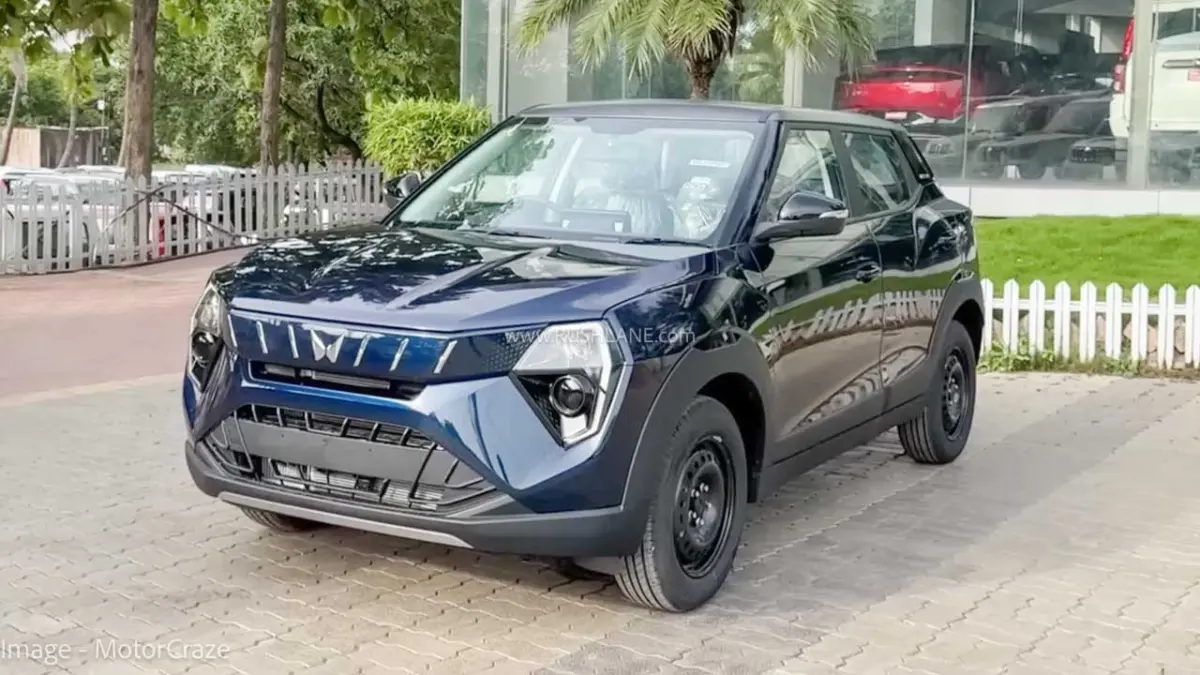
The Indian automotive landscape is currently witnessing a paradigm shift as manufacturers scramble to offer a diverse array of powertrain options to cater to a demanding and cost-conscious consumer base. Mahindra & Mahindra, a titan in the SUV segment, is now poised to bridge a significant gap in its portfolio. On October 15, the company is expected to officially launch the CNG variant of its popular sub-compact SUV, the XUV3XO. This move marks Mahindra’s definitive re-entry into the passenger vehicle (PV) CNG market, directly challenging established rivals like Tata Motors and Maruti Suzuki.
Main Facts: A New Contender in the "Green" SUV Space
The Mahindra XUV3XO, which was launched earlier this year as a heavily refreshed and rebranded version of the XUV300, has already made waves with its bold design, segment-first features like a panoramic sunroof, and Level 2 ADAS. However, the absence of a factory-fitted CNG option was a notable omission in a market where fuel prices remain volatile and the demand for economical running costs is at an all-time high.
The upcoming XUV3XO CNG is expected to be powered by the same 1.2-liter mStallion MPFI (Multi-Point Fuel Injection) turbocharged petrol engine. This is a significant technical detail, as turbo-CNG vehicles are still a rarity in India. Currently, the Tata Nexon i-CNG is the primary competitor offering a turbocharged CNG powertrain. By choosing the turbo-petrol unit as the base for its CNG kit, Mahindra is signaling that it does not want to compromise on the "fun-to-drive" factor that has become a hallmark of its brand identity.
Key expectations for the XUV3XO CNG include:
- Launch Date: October 15, 2024.
- Engine: 1.2L Turbo Petrol (MPFI).
- Transmission: Likely a 6-speed manual, with the possibility of an AMT (Automated Manual Transmission) later.
- Primary Rivals: Tata Nexon i-CNG and Maruti Suzuki Brezza S-CNG.
- Target Audience: Urban commuters seeking a premium SUV experience with lower running costs.
Chronology: Mahindra’s Path to the CNG Frontier
Mahindra’s journey with CNG has been somewhat conservative compared to its peers. To understand the significance of the XUV3XO CNG, one must look at the company’s recent trajectory:
- The Commercial Roots: For years, Mahindra’s CNG expertise was largely confined to its commercial vehicle lineup and the KUV100 Trip, which was aimed primarily at the fleet and taxi segment.
- The XUV300 Era: When the XUV300 was the flagship sub-4m offering, rumors of a CNG variant floated for years, but the company focused its resources on the XUV400 EV and the development of the "Twin Peaks" brand identity.
- The "Big SUV" Strategy: Mahindra spent the last three years dominating the mid-size and lifestyle SUV segments with the XUV700, Scorpio-N, and the Thar. During this time, Maruti Suzuki and Tata Motors capitalized on the CNG boom.
- The XUV3XO Transformation (April 2024): Mahindra launched the XUV3XO, introducing a world-class cabin and sophisticated tech. This set the stage for a multi-fuel strategy.
- The Multi-Pronged Expansion (Q3 2024): With the recent launch of the BE 6 Sporteq (EV) and updates to the Thar and Scorpio-N, the XUV3XO CNG represents the final piece of the puzzle for Mahindra’s sub-compact SUV dominance.
Supporting Data: Performance, Engineering, and Competition
The technical specifications of the XUV3XO CNG will be scrutinized by enthusiasts and buyers alike. The standard 1.2L MPFI petrol engine produces a robust 110 bhp and 200 Nm of torque.
Performance Expectations
When running on CNG, internal combustion engines typically experience a performance drop ranging from 10% to 15%. This is due to the lower calorific value of CNG compared to petrol. However, because Mahindra is using a turbocharged engine, the "torque dip" often associated with naturally aspirated CNG cars (like the Maruti Brezza) may be less perceptible. Drivers can expect the XUV3XO CNG to offer approximately 95-100 bhp and around 170-180 Nm of torque, which would still make it one of the most powerful CNG SUVs in its class.
The Boot Space Conundrum
One of the most debated aspects of the XUV3XO is its luggage capacity. The standard model offers roughly 295 liters of boot space—already among the smallest in the segment. The integration of a CNG tank presents a major engineering challenge.
- Option A: The Traditional Tank. A single large cylinder placed in the boot would effectively eliminate most usable luggage space.
- Option B: The Dual-Cylinder Layout. Pioneered by Tata Motors, this tech involves two smaller tanks placed under the load floor, preserving a significant portion of the boot. Market analysts speculate that if Mahindra wants to remain competitive against the Nexon i-CNG, they must adopt a similar dual-cylinder or space-saving layout.
Competitive Benchmarking
| Feature | Mahindra XUV3XO CNG (Expected) | Tata Nexon i-CNG | Maruti Brezza S-CNG |
|---|---|---|---|
| Engine | 1.2L Turbo Petrol | 1.2L Turbo Petrol | 1.5L Naturally Aspirated |
| Power (CNG) | ~98 bhp | 99 bhp | 87 bhp |
| Torque (CNG) | ~175 Nm | 170 Nm | 121.5 Nm |
| Tank Tech | TBD (Likely Dual) | Twin Cylinder | Single Cylinder |
| Key Features | ADAS, Sunroof, Dual-zone CC | Ventilated Seats, 360 Cam | Sunroof, SmartPlay Pro+ |
Official Context and Market Dynamics
While Mahindra has remained tight-lipped regarding the exact trim levels that will receive the CNG treatment, industry insiders suggest that the company will follow Tata’s lead by offering CNG in mid-to-high-spec variants. Historically, CNG was reserved for base "budget" models, but the trend has shifted toward "Premium Green" motoring.

The move is also a strategic response to the shifting regulatory environment in India. With the government pushing for cleaner fuels and the potential for stricter emission norms in the future, having a robust CNG portfolio allows Mahindra to lower its corporate average fuel efficiency (CAFE) scores.
Furthermore, the "retrofitment" market, currently occupied by brands like Renault and Nissan (offering after-sales CNG kits for the Kiger and Magnite), does not offer the same level of safety, warranty, and engine tuning as a factory-fitted kit. Mahindra’s entry into this space provides a "safe" alternative for buyers who want the reliability of an OEM-fitted system.
Implications: What This Means for the Indian Buyer
The launch of the XUV3XO CNG has several far-reaching implications for the Indian automotive market:
1. The Democratization of Turbo-CNG
Until recently, choosing CNG meant sacrificing the punchy performance of a turbocharger. With both Tata and now Mahindra offering Turbo-CNG, the "slow and sluggish" stigma of CNG vehicles is rapidly disappearing. This will likely attract a younger demographic that prioritizes performance but is mindful of fuel expenses.
2. Pricing Wars
Mahindra is known for aggressive introductory pricing. The Tata Nexon i-CNG is priced between ₹8.35 lakh and ₹13.42 lakh (ex-showroom). The Maruti Brezza S-CNG occupies the ₹9.4 lakh to ₹11.76 lakh bracket. To make a significant dent, Mahindra is expected to price the XUV3XO CNG at a slight premium (approx. ₹80,000 to ₹95,000) over its corresponding petrol variants.
3. Feature-Rich Efficiency
The XUV3XO is currently the most feature-packed SUV in its segment. If Mahindra offers the CNG kit in the AX5 or AX7 trims, it will be the only vehicle in India to offer the combination of a Panoramic Sunroof, Level 2 ADAS, and CNG economy. This "no-compromise" approach could redefine what a "budget-friendly" car looks like.
4. Pressure on Competitors
The arrival of the 3XO CNG puts immense pressure on Maruti Suzuki to modernize its CNG tech. While the Brezza is a sales leader due to its reliability and mileage, it lacks the performance figures of its turbocharged rivals. Similarly, it may force Hyundai and Kia to reconsider their "No-CNG" stance for the Venue and Sonet, respectively.
Conclusion
The October 15 launch of the Mahindra XUV3XO CNG is more than just the addition of a new variant; it is a statement of intent. Mahindra is signaling that it is no longer content with being a niche player in the "green" space. By combining its most technologically advanced sub-4m platform with a cost-effective fuel solution, Mahindra is aiming for the heart of the Indian middle-class market.
As the automotive world gathers more details on the tank layout and official mileage figures, one thing is certain: the competition in the sub-4m SUV segment is about to get much more intense. For the consumer, this means more choices, better technology, and the ability to drive a premium SUV without the sting of high petrol bills. Mahindra’s "multi-pronged approach" is finally coming full circle, and the XUV3XO CNG is the torchbearer for this new era.
