

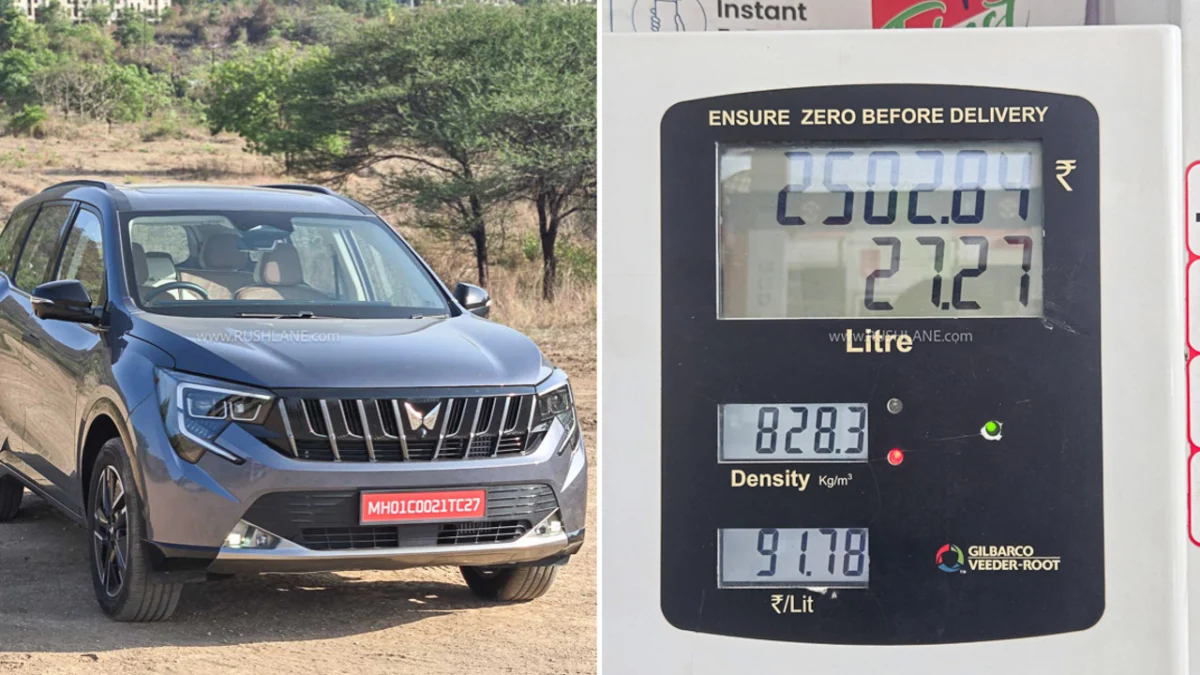
The 2026 Mahindra XUV7XO represents a significant evolution in the Indian SUV landscape, blending premium aesthetics with rugged performance. However, for long-distance tourers, the ultimate metric remains fuel efficiency and tank range. A comprehensive 1,500-kilometer test reveals whether the flagship Diesel Automatic AWD variant can truly conquer the highway without frequent fuel stops.
1. Main Facts: The XUV7XO in the 2026 Automotive Context
The launch of the Mahindra XUV7XO earlier this year marked a pivotal moment for Mahindra Auto. As the first major mainstream release of the 2026 calendar year, the XUV7XO was tasked with succeeding the immensely popular XUV700. While the "XO" suffix brought a comprehensive interior overhaul—featuring higher-quality materials, updated infotainment, and a revised exterior design language—the mechanical heart of the vehicle remained largely familiar.
Under the hood, the XUV7XO retains the tried-and-tested 2.2L mHawk Turbo Diesel engine, a powerhouse capable of producing up to 450 Nm of peak torque. In its top-tier avatar, this engine is mated to a 6-speed torque converter automatic transmission and an All-Wheel Drive (AWD) system. While these specifications promise effortless cruising and off-road capability, they often come at the cost of fuel economy.

The central question of this 1,500-km evaluation was simple: Can the Mahindra XUV7XO Diesel Automatic AWD achieve a 1,000-km range on a single 65-liter tank of diesel? The results highlight a complex relationship between engine mapping, gearbox tuning, and real-world driving dynamics.
2. Chronology of the 1,500-KM Mileage Evaluation
The Setup: Pune to the Karnataka Border
The testing began in Pune, Maharashtra, a city known for its challenging stop-and-go traffic. The vehicle was filled to the brim (auto-cut followed by slow filling to the neck) to ensure the most accurate "tank-to-tank" measurement. Upon ignition, the XUV7XO’s digital instrument cluster displayed a tantalizing "Distance to Empty" (DTE) of 999 km—the maximum the system can project.
Phase 1: The Standard Automatic Run (D Mode)
The first leg of the journey covered 383.9 kilometers. The route encompassed the congested streets of Pune, followed by the winding climbs of the Khambatki Ghat and the open stretches of the National Highway (NH48) towards Satara and onwards to Karnataka. During this phase, the 6-speed torque converter was left entirely in ‘D’ (Drive) mode, allowing Mahindra’s software to dictate gear shifts based on pre-set algorithms.

Phase 2: The Hypermiling Experiment (Manual Mode)
After the first refuel, the strategy shifted. To see if the 1,000-km goal was attainable through driver intervention, the second leg was conducted using the ‘Manual’ tiptronic mode. The objective was "hypermiling"—upshifting as early as the system would allow to keep the engine RPMs at their lowest possible point, thereby minimizing fuel consumption. This test covered a variety of terrains, including Maharashtra State highways, PWD rural roads, and farm tracks in Karnataka.
3. Supporting Data: The Numbers Behind the Drive
The results of the two-phase test provide a clear look at the XUV7XO’s efficiency ceiling.
Test Result Summary
| Metric | Run 1: Automatic (D) | Run 2: Manual Mode |
|---|---|---|
| Distance Covered | 383.9 km | ~400 km |
| Fuel Consumed | 27.27 Liters | N/A (Proportional) |
| MID Efficiency | 14.2 km/l | 14.4 km/l |
| Actual Mileage (Tank-to-Tank) | 14.08 km/l | 14.20 km/l |
| Projected Range (65L Tank) | 915 km | 923 km |
The Gearbox Bottleneck: Minimum Speed Thresholds
One of the most critical findings of this test was the restrictive nature of the 6-speed torque converter’s programming. Even in Manual mode, the driver cannot "force" an upshift if the vehicle has not met a specific speed threshold.

Minimum Upshift Speeds Observed:
- 2nd to 3rd Gear: 30 km/h
- 3rd to 4th Gear: 45 km/h
- 4th to 5th Gear: 67 km/h
- 5th to 6th Gear: 83 km/h
These thresholds are notably high for a diesel engine with 450 Nm of torque. For comparison, many European diesel engines (such as the Renault K9K) allow for 6th-gear cruising at speeds as low as 60-65 km/h. In the XUV7XO, the gearbox forces the engine to stay in 5th gear until 83 km/h, meaning the engine is "boiling" (running at higher RPMs) more than necessary on state highways where speeds often fluctuate between 60 and 80 km/h.
4. Analysis: Why the 1,000-KM Goal Remained Elusive
The failure to hit the 1,000-km range mark can be attributed to three primary factors:

I. The Weight of AWD Hardware
The All-Wheel Drive system adds significant mechanical complexity and weight to the XUV7XO. Even when the system is not actively sending power to the rear wheels, the parasitic drag of the drivetrain components and the sheer mass of the SUV (approaching 2 tonnes) require more energy to move than the Front-Wheel Drive (FWD) version.
II. Conservative Gearbox Tuning
As noted in the speed thresholds, the 6-speed torque converter is tuned for responsiveness and engine protection rather than absolute economy. By preventing early upshifts, Mahindra ensures the engine is always in the "meat" of its power band, ready to accelerate. However, this means the engine rarely gets to "sip" fuel at low RPMs in 6th gear unless the driver maintains a steady speed well above 85 km/h.
III. The Real-World Factor
On Indian highways, maintaining a constant speed is nearly impossible. Frequent braking for speed breakers, slow-moving trucks, and cattle requires constant downshifting. Every time the XUV7XO drops below 81 km/h, it automatically shifts back to 5th gear. This constant cycling between gears prevents the vehicle from settling into an ultra-efficient rhythm.

5. Official Context and Manufacturer Positioning
While Mahindra Auto has not issued a direct response to this specific mileage test, the company’s engineering philosophy for the XUV series has traditionally prioritized "performance and presence" over "frugality."
Mahindra positions the XUV7XO as a premium, "go-anywhere" luxury SUV. In their marketing materials, the focus is often on the 200 PS power figure of the petrol and the class-leading torque of the diesel. From a manufacturer’s standpoint, the 14 km/l figure is likely viewed as a respectable trade-off for a vehicle that offers Level 2 ADAS, a panoramic sunroof, and AWD capabilities.
Industry experts suggest that the gearbox tuning is intentional to avoid "engine lugging"—a condition where an engine struggles at too low an RPM in a high gear, which can cause long-term damage to the turbocharger and crankshaft. Mahindra’s calibration ensures the 2.2L mHawk engine remains within its most reliable operating window, even if it costs the driver a few kilometers of range.

6. Implications for the Consumer
The results of this 1,500-km test have several implications for prospective buyers of the 2026 Mahindra XUV7XO.
The "Manual vs. Automatic" Dilemma
For those who prioritize the 1,000-km range, the Diesel Manual FWD remains the superior choice. Previous tests of the manual variant in the XUV700/XUV7XO platform have shown that a skilled driver can extract 17-18 km/l on the highway, comfortably crossing the four-digit range mark. The manual allows for much earlier upshifts, utilizing the 450 Nm of torque to cruise at low RPMs.
Refinement vs. Gruffness
The test revealed that because the automatic gearbox keeps the engine at higher RPMs, the diesel "clatter" is more audible inside the cabin. While the XUV7XO features excellent sound insulation, the "boiling" nature of the engine in lower gears introduces a level of gruffness that detracts from the otherwise premium experience.

Who Should Buy the Diesel AWD AT?
The Diesel Automatic AWD variant is best suited for the "Driver-Owner" who frequently traverses diverse terrains and values convenience over fuel costs.
- City Drivers: Will likely see mileage drop into the 9-11 km/l range.
- Highway Cruisers: Can expect 13-15 km/l depending on speed.
- Range Seekers: Should be prepared for a realistic tank range of 750-850 km in mixed conditions, falling short of the 1,000-km dream.
Final Verdict
The Mahindra XUV7XO is a masterclass in SUV packaging and power. However, the 6-speed torque converter acts as a double-edged sword—providing smooth shifts and reliable power delivery while simultaneously acting as a barrier to record-breaking fuel efficiency. For the 2026 model year, the XUV7XO remains a "thirsty" beast that rewards the driver with performance, provided they are willing to make more frequent stops at the diesel pump.
