

The Indian automotive industry has reached a significant landmark in its quest for global dominance. In the fiscal year 2026 (FY2026), India’s two-wheeler exports witnessed a robust resurgence, cementing the country’s position as a premier global manufacturing hub. Driven by a combination of recovery in emerging markets, strategic product positioning, and the relentless expansion of home-grown brands, total export volumes surged past the 5-million-unit mark. This growth trajectory not only highlights the resilience of Indian Original Equipment Manufacturers (OEMs) but also underscores the increasing global preference for "Made in India" engineering.
Main Facts: A Year of Record-Breaking Shipments
The data for FY2026 reveals an industry in high gear. Total two-wheeler exports from India reached a staggering 5,180,395 units, representing a 23.44% year-on-year (YoY) growth compared to the 4,196,605 units recorded in FY2025. This absolute increase of nearly 9.83 lakh units suggests that Indian manufacturers have successfully navigated the post-pandemic supply chain disruptions and geopolitical volatilities that previously hampered international trade.
The market remains heavily skewed toward commuter motorcycles, which are the lifeblood of transport in developing economies. Six major players—Bajaj Auto, TVS Motor Company, Honda Motorcycle & Scooter India (HMSI), Hero MotoCorp, Yamaha, and Suzuki—accounted for the lion’s share of these volumes.
Key Highlights:
- Bajaj Auto remains the undisputed export leader, though its market share is being closely trailed by a rapidly expanding TVS.
- TVS Motor Company emerged as the "Volume Gainer of the Year," adding over 3.41 lakh units to its previous year’s tally.
- The TVS Star City 125 claimed the title of India’s most exported two-wheeler, dethroning long-standing rivals.
- Premium and EV segments, while smaller in volume, showed the highest percentage growth rates, signaling a shift in global consumer preferences.
Chronology of Growth: From Recovery to Expansion
To understand the FY2026 boom, one must look at the timeline of the preceding 24 months.
In FY2025, the industry was grappling with fluctuating currency values in African nations and high inflation in Latin America, which led to a conservative export figure of 4.19 million units. However, by the second half of FY2025, Indian OEMs began diversifying their portfolios and entering new territories in Southeast Asia and the Middle East.
By the start of FY2026 (Q1), a softening of commodity prices and a stabilization of the US Dollar against local currencies in key export markets provided the necessary economic cushion for distributors to restock.
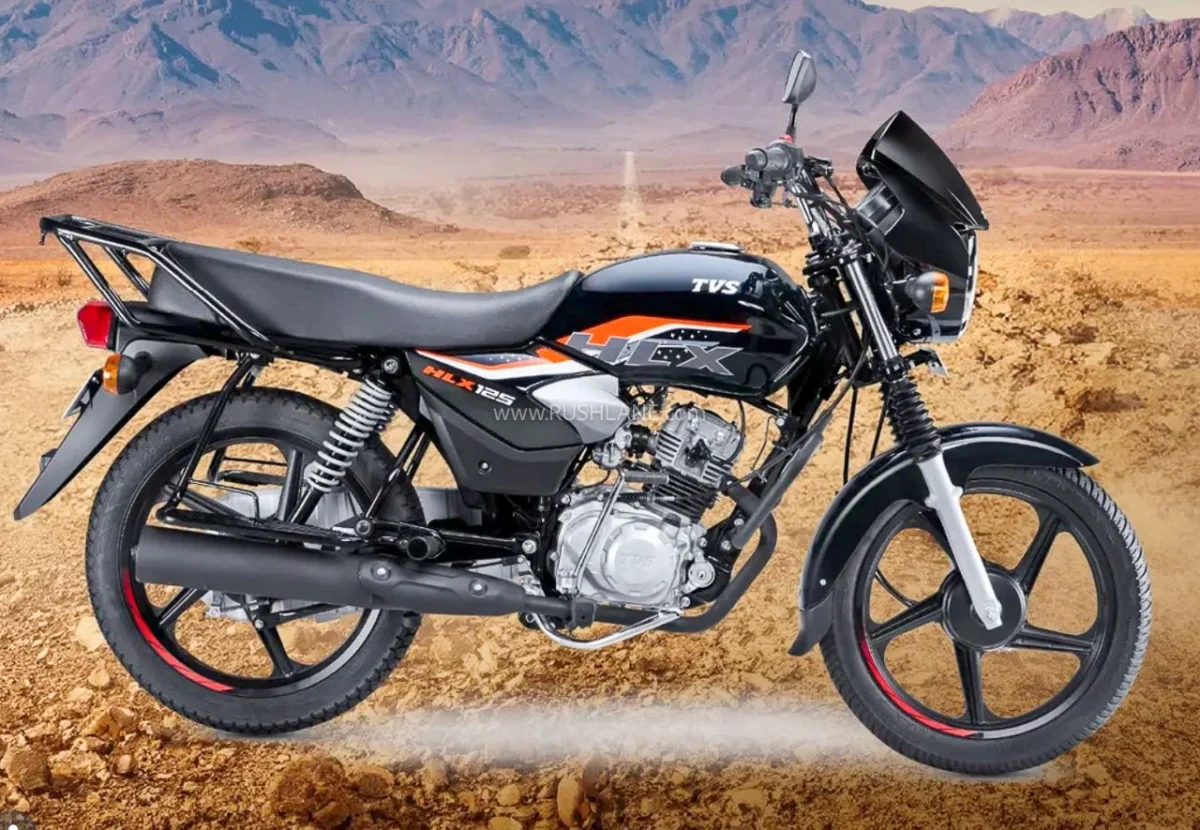
In Q3 FY2026, the launch of several India-exclusive models for international markets—such as the TVS HLX series updates and Bajaj’s new Pulsar variants—acted as a catalyst. The final quarter of the fiscal year saw a massive push in shipments to meet the rising demand for affordable personal mobility in urbanizing regions of Africa and South Asia.
Supporting Data: OEM and Model Performance
The Titan Tussle: Bajaj vs. TVS
Bajaj Auto continues to be the heavyweight champion of Indian exports. In FY2026, the company shipped 18.80 lakh units, commanding a 36.29% market share. Bajaj’s success is built on the legendary reliability of the Boxer brand, which has become a household name in East Africa.

However, TVS Motor Company is closing the gap. With 14.13 lakh units exported and a growth rate of 31.81%, TVS has leveraged its technical prowess and design language to capture younger demographics abroad. Together, Bajaj and TVS control 63.57% of India’s total two-wheeler exports, creating a formidable duopoly in the international commuter space.
The Rise of Hero and the Japanese Trio
Hero MotoCorp, the world’s largest two-wheeler manufacturer by volume, is finally finding its rhythm in the export market. Posting a 39.19% rise to 4.03 lakh units, Hero’s aggressive expansion into Central America and Africa is yielding results.
The Japanese brands operating out of India—Honda, Yamaha, and Suzuki—also posted healthy gains. Honda’s exports grew by 23.16% (6.20 lakh units), while Suzuki’s 25.68% growth was spearheaded by the Gixxer series, which has found a cult following in Latin America.
Top Models: The Global Favorites
The individual model rankings provide a fascinating look at what the world wants from India:
- TVS Star City 125: 720,258 units (+41.38%). Its dominance is attributed to its fuel efficiency and suitability for "Boda Boda" (motorcycle taxi) operations.
- Bajaj Boxer 110: 549,940 units. It remains the "workhorse of Africa."
- Bajaj Pulsar (160-200cc): 236,951 units. This represents the aspirational performance segment in developing markets.
- Honda Navi: 172,790 units. In a surprising twist, the Navi—discontinued in India due to poor domestic sales—has become a lifestyle icon in Latin American markets like Mexico and Guatemala.
The Premium Shift
The premium segment (300cc and above) is no longer a niche. KTM 390 exports skyrocketed by 262.75%, reaching 32,212 units. Similarly, Royal Enfield continues its global "mid-size" crusade, with the Classic 350 and the new Himalayan 450 leading the charge. The newly launched Guerrilla 450 also made a notable debut with over 11,000 units shipped in its first partial year.
Official Responses and Industry Sentiment
While formal press releases from all OEMs are pending final annual report filings, industry analysts and spokespeople have offered insights into this phenomenal growth.
Society of Indian Automobile Manufacturers (SIAM) representatives noted that the "Made in India" brand is currently at its zenith. "The focus on quality, combined with the cost-competitiveness of Indian manufacturing, has made our products the first choice for emerging economies," a SIAM analyst stated.
TVS Motor Company executives have previously attributed their export success to "localized product development." By setting up assembly lines in key regions and tailoring bikes to local terrain, TVS has managed to outpace competitors in volume growth.

Bajaj Auto leadership continues to emphasize their "Global First" strategy. A company spokesperson recently hinted that their focus remains on maintaining the "Boxer" legacy while aggressively pushing the "Pulsar" brand into premium commuter slots in Southeast Asia.
Implications: What This Means for the Future
The FY2026 export data carries profound implications for the Indian economy and the global automotive landscape.
1. Macroeconomic Impact
With over 5 million units exported, the two-wheeler sector has become a vital contributor to India’s trade balance. The foreign exchange inflows from these exports provide a significant cushion against the country’s oil import bills. Furthermore, this growth supports thousands of jobs within the domestic component manufacturing ecosystem.
2. The Electric Transition
While Internal Combustion Engine (ICE) vehicles dominate today, the growth in EV exports is a harbinger of things to come. Bajaj Chetak’s jump from 125 units to nearly 2,000 units and TVS iQube’s steady climb indicate that Indian OEMs are preparing for a "Green Export" future. As European and Southeast Asian nations tighten emission norms, India is well-positioned to supply affordable electric scooters globally.
3. Diversification of Risk
By expanding into dozens of countries, Indian OEMs are no longer beholden to the vagaries of the Indian monsoon or domestic policy changes. A slowdown in rural India can now be offset by a boom in Nigeria or Colombia, providing these companies with a more stable revenue profile.
4. Pressure on Premium European Brands
The decline in export volumes for brands like Triumph, Aprilia, and Husqvarna (as noted in the data) suggests that as Indian brands like Royal Enfield and KTM move up the value chain, they are beginning to eat into the market share of traditional European marques in the mid-capacity segment.
5. Supply Chain Maturation
To sustain a 23% growth rate, the underlying logistics—from port efficiency to container availability—must be world-class. The FY2026 figures suggest that India’s infrastructure is finally catching up with its manufacturing ambitions.
Conclusion
The fiscal year 2026 will be remembered as the year India’s two-wheeler industry truly went global. It is no longer just about high volumes; it is about brand recognition, technological acceptance, and market leadership. As the TVS Star City and Bajaj Boxer continue to mobilize millions across continents, and as the KTM 390 and Royal Enfield Himalayan 450 redefine performance for the global enthusiast, India’s status as the "Two-Wheeler Factory of the World" is not just a title—it is a reality. The challenge for FY2027 will be to maintain this momentum amidst a shifting landscape toward electrification, but if the current data is any indication, the Indian dragon is ready to fly.
