NEW DELHI, INDIA – In a significant development set to reshape the landscape of digital business communication in India, Meta, the parent company of WhatsApp, has announced a comprehensive revision of its WhatsApp Business Platform pricing model. Effective October 1, businesses leveraging the platform will no longer enjoy unlimited free messaging within certain categories, marking a pivotal shift towards a usage-based charging system. This move is poised to have far-reaching implications for enterprises, customer service operations, and the broader digital commerce ecosystem across the subcontinent.
The announcement signals Meta’s strategic intent to further monetize its immensely popular messaging service, particularly its business-centric offerings. For years, the WhatsApp Business Platform (formerly WhatsApp Business API) has been a vital tool for businesses to engage with customers, offering functionalities like automated responses, notifications, and customer support. The upcoming changes, however, will introduce a more granular billing structure, compelling businesses to re-evaluate their communication strategies and budget allocations.
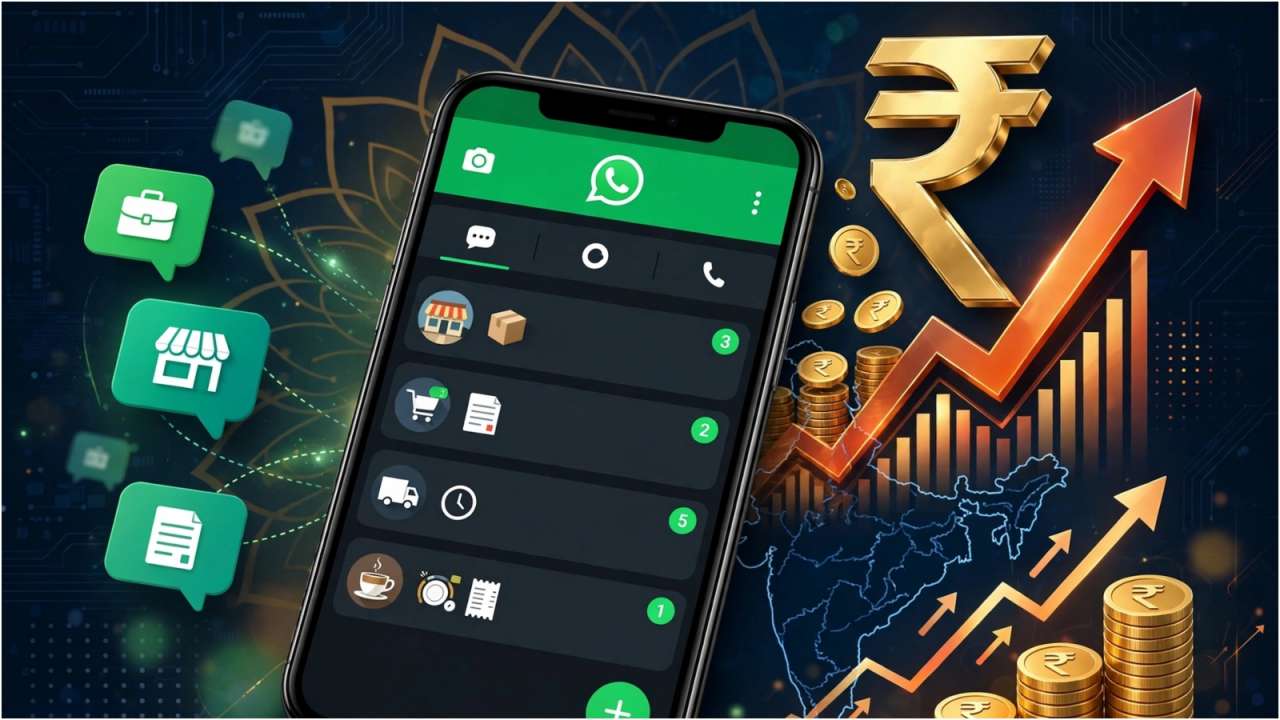
Main Facts: The New Pricing Paradigm
At the heart of Meta’s revised policy is the introduction of charges for "utility messages" sent by businesses, particularly those initiated within what was previously a free 24-hour customer service window. Until now, businesses could respond to customer inquiries and send various types of utility messages – such as order confirmations, shipping updates, or appointment reminders – without incurring a cost, provided these interactions occurred within 24 hours of the last customer message. This complimentary period was a cornerstone of the platform’s appeal, enabling seamless and cost-effective customer engagement.
Under the new regime, this operational flexibility will be curtailed. While replies to customer-initiated conversations will largely remain free, certain business-initiated "utility messages" will now carry a charge. Each business phone number using the WhatsApp Business Platform will be allocated a monthly allowance of 1,000 free service replies. Beyond this threshold, every subsequent utility message will be chargeable.

The new pricing structure for the Indian market has been set at Rs 0.115 per delivered message, exclusive of an 18% Goods and Services Tax (GST). This means that for every message sent over the free limit, businesses will incur a direct cost, plus the applicable tax, significantly altering their operational expenditure for customer communication.
It is crucial to emphasize that these changes do not affect individual WhatsApp users or businesses that utilize the standard, free WhatsApp Business App. The revised pricing specifically targets businesses integrated with the WhatsApp Business Platform, which typically caters to larger enterprises, e-commerce giants, financial institutions, and customer support centers requiring high-volume, automated, and programmatic messaging capabilities.

Chronology of Changes: From Free Flow to Measured Communication
To fully grasp the impact of Meta’s decision, it’s essential to understand the "before and after" scenario for businesses operating on the WhatsApp Business Platform.
Before October 1, 2026 (or relevant year based on image date):
Businesses enjoyed considerable freedom in their communication strategy.

- 24-Hour Free Window: When a customer initiated a conversation, businesses could send an unlimited number of messages within a 24-hour period, completely free of charge. This included a mix of human-agent replies and automated utility messages like order updates, delivery notifications, and payment confirmations.
- Utility Message Freedom: Within this 24-hour window, messages categorized as "utility" (e.g., confirmations, alerts, updates related to an existing transaction) were implicitly part of the free interaction. This fostered a highly responsive and customer-friendly environment, as businesses could provide timely and relevant information without cost concerns.
- No Per-Message Charge (within window): The primary cost consideration for businesses was typically for "template messages" (pre-approved messages for proactive outreach, outside the 24-hour window, or for initiating conversations) or for the platform providers (ISVs) integrating with WhatsApp. Day-to-day customer service replies within the defined window were not directly billed by Meta on a per-message basis.
From October 1, 2026 (or relevant year):
The operational paradigm shifts significantly.
- Introduction of Free Service Replies: Each unique business phone number will receive a monthly allowance of 1,000 free "service replies." This implies that even within the 24-hour window, there’s now a cap on the number of business-initiated utility messages that can be sent for free.
- Charge for Utility Messages Beyond Limit: Once the 1,000 free service replies are exhausted, any subsequent utility message sent by the business (even if it’s a response within the 24-hour window) will be charged at the specified rate of Rs 0.115 per message, plus GST.
- Continued Free Replies to Customer Queries: Crucially, direct replies to customer queries or conversations initiated by the customer will continue to remain free. This distinction is vital: Meta is incentivizing businesses to respond to genuine customer outreach, while simultaneously seeking to monetize business-initiated communication, particularly automated utility notifications.
- No Change for Standard WhatsApp Users/App: Regular individual users and businesses utilizing the free WhatsApp Business App will remain unaffected by these pricing revisions. Their usage will continue to be free, underscoring Meta’s strategy to segment its offerings and monetize its enterprise-grade platform.
This chronological breakdown highlights a clear strategic pivot by Meta to differentiate between reactive customer service (which largely remains free) and proactive, automated business communication (which is now subject to charges).

Supporting Data: The Cost Breakdown and Market Context
Understanding the financial implications requires a closer look at the numbers and WhatsApp’s dominant position in India.
Pricing Structure:

- Base Rate: Rs 0.115 per delivered message.
- GST: 18% applicable on the base rate.
- Free Limit: 1,000 service replies per business phone number per month.
Illustrative Examples:
-
Scenario 1: Business stays within free limit.
If a business sends 1,000 service replies or fewer in a month, the total cost would be Rs 0.
-
Scenario 2: Business slightly exceeds free limit.
If a business sends 1,500 service replies in a month:- Free messages: 1,000
- Chargeable messages: 1,500 – 1,000 = 500 messages
- Cost (pre-GST): 500 messages * Rs 0.115/message = Rs 57.50
- GST (18% of Rs 57.50): Rs 10.35
- Total Cost: Rs 57.50 + Rs 10.35 = Rs 67.85
-
Scenario 3: Business significantly exceeds free limit.
If a business sends 10,000 service replies in a month:
- Free messages: 1,000
- Chargeable messages: 10,000 – 1,000 = 9,000 messages
- Cost (pre-GST): 9,000 messages * Rs 0.115/message = Rs 1,035
- GST (18% of Rs 1,035): Rs 186.30
- Total Cost: Rs 1,035 + Rs 186.30 = Rs 1,221.30
These figures demonstrate that for businesses with high volumes of automated utility messages, the costs can quickly accumulate. Enterprises managing thousands, if not millions, of customer interactions monthly will need to factor these new charges into their operational budgets.
WhatsApp’s Dominance in India:
India represents WhatsApp’s largest market globally, boasting over 500 million users. Its pervasive reach has made it an indispensable communication channel, not just for personal interactions but also for a rapidly growing number of businesses. The WhatsApp Business Platform has been instrumental in enabling conversational commerce, customer support, and direct marketing for countless companies, from burgeoning startups to established conglomerates. Its high open rates and immediate delivery make it a more effective channel for critical notifications compared to traditional SMS or email for many businesses. This deep penetration and reliance on the platform give Meta significant leverage in introducing monetization strategies.

Official Responses and Meta’s Strategic Rationale
While Meta has not issued an elaborate public statement detailing the nuances of this specific pricing revision for India beyond the direct announcement to businesses, its broader strategy for the WhatsApp Business Platform has been clear for some time: monetization and sustainable growth.
Meta’s implicit rationale behind such pricing adjustments typically revolves around several key objectives:

- Platform Sustainability and Investment: Running a global communication platform with billions of users and an expanding suite of business tools requires substantial investment in infrastructure, security, R&D, and maintenance. Monetizing the business platform allows Meta to generate revenue to cover these costs and fund future innovations.
- Differentiating Conversation Types: By charging for business-initiated utility messages while keeping customer-initiated replies free, Meta is subtly guiding businesses towards more efficient and customer-centric communication. It aims to reduce unsolicited or excessive automated messages, fostering a higher quality of interaction on the platform. The goal is to ensure that businesses use the platform responsibly, providing value rather than merely broadcasting messages.
- Alignment with Global Monetization Trends: Other messaging platforms globally also employ varying pricing models for business usage. Meta has been steadily evolving its WhatsApp Business Platform pricing since its inception, moving towards a more sophisticated, conversation-based billing system that distinguishes between different types of interactions (e.g., utility, authentication, marketing, service). This Indian revision is likely a localized adaptation or continuation of that global strategy.
- Enhancing Value Proposition for Developers and ISVs: A robust monetization model also provides a clearer revenue stream for the ecosystem of Independent Software Vendors (ISVs) and developers who build solutions on top of the WhatsApp Business Platform. This can encourage further innovation and development of advanced tools for businesses.
- Encouraging Efficiency: By introducing a cost, businesses are incentivized to optimize their messaging, ensuring that only necessary and high-value communications are sent. This can lead to more targeted messaging and potentially better customer engagement outcomes, as users are less likely to be overwhelmed by irrelevant notifications.
In essence, Meta is moving beyond a purely growth-focused strategy to one that balances user experience with the financial realities of operating a powerful, enterprise-grade communication tool. The company has consistently stated its long-term vision for WhatsApp to be a profitable business unit, and the Business Platform is a key pillar in achieving that goal.
Implications: Reshaping Business Communication in India
The revised pricing model will have multifaceted implications for businesses, consumers, and the broader digital ecosystem in India.

For Businesses: Strategic Rethink and Operational Adjustments
-
Financial Impact and Budgeting: The most immediate impact will be on the operational budgets of businesses heavily reliant on the WhatsApp Business Platform for automated notifications. Enterprises in e-commerce, banking, logistics, healthcare, and education that send high volumes of order confirmations, delivery updates, OTPs, or appointment reminders will see a direct increase in their communication costs. Financial controllers will need to factor these new expenses into their planning, potentially leading to a reallocation of resources or a re-evaluation of overall customer communication spend.
-
Optimization of Messaging Strategy: Businesses will be compelled to scrutinize their messaging workflows. This could involve:

- Reducing Redundancy: Eliminating duplicate or unnecessary messages.
- Consolidating Information: Combining multiple pieces of information into a single, comprehensive message to minimize message count.
- Leveraging Free Channels: Maximizing the use of the 1,000 free service replies and focusing on customer-initiated conversations that remain free.
- Prioritizing High-Value Messages: Ensuring that only critical and high-impact utility messages are sent via WhatsApp, potentially shifting less urgent notifications to other, cheaper channels like email or in-app notifications.
-
Increased Focus on Customer-Initiated Conversations: The fact that replies to customer queries remain free provides a strong incentive for businesses to encourage customers to initiate contact. This could lead to a shift in customer service strategies, promoting self-service options or FAQs that allow customers to find answers and then initiate a conversation only when necessary, keeping the interaction free for the business.
-
Impact on Different Business Sizes:

- Large Enterprises: While they have larger budgets, the sheer volume of their transactions means the costs can be substantial. They will likely invest in sophisticated analytics to optimize message flows and integrate WhatsApp more tightly with CRM systems to ensure targeted communication.
- Mid-Sized Businesses: These might feel the pinch more acutely. They may need to be particularly judicious with their message volumes and explore hybrid models, using the WhatsApp Business App for smaller-scale interactions and the Platform for critical, high-volume needs.
- Startups/SMBs: Many smaller businesses might already be using the free WhatsApp Business App, so they will be unaffected. However, those scaling up to the Platform will need to build these costs into their growth models from the outset.
-
Exploration of Alternative Channels: While WhatsApp’s reach in India is unparalleled, the new pricing might encourage some businesses to re-evaluate their communication mix. Channels like SMS (for critical alerts), email (for less time-sensitive information), or even in-app notifications could see renewed interest, especially for messages that don’t absolutely require WhatsApp’s instant delivery and high engagement rates.
For Consumers: Potential Indirect Effects
- More Targeted Communication: Ideally, the pricing changes should lead to businesses sending fewer, but more relevant and valuable messages. This could improve the customer experience by reducing spam and ensuring that messages received are genuinely useful.
- Potential for Cost Pass-Through: In some sectors, businesses might subtly pass on increased operational costs to consumers through marginal price adjustments for products or services. While unlikely to be a direct, visible charge for WhatsApp messages, it’s a possibility in a competitive market.
- Shift in Service Experience: Consumers might notice a slight shift in how businesses communicate. There might be a greater emphasis on self-service or a push towards initiating conversations themselves to ensure free interaction for the business.
For the Digital Ecosystem: Competition and Innovation
- Increased Competition for Messaging Platforms: The revised pricing could create opportunities for alternative business messaging platforms or aggregators to gain market share, especially if they can offer more competitive rates or unique features.
- Innovation in Conversational AI: Businesses will be incentivized to invest further in sophisticated conversational AI and chatbots to handle customer queries efficiently and reduce the need for human intervention, thereby optimizing message counts and costs. The goal would be to resolve queries within the free interaction window as much as possible.
- Data Analytics and Personalization: Expect an increased focus on data analytics to understand customer behavior and preferences better, allowing businesses to send highly personalized and relevant messages, maximizing the ROI on each chargeable message.
Expert Perspectives and Future Outlook
Industry analysts have long anticipated Meta’s move towards more aggressive monetization of its business platforms. Given WhatsApp’s dominance, especially in emerging markets like India, the introduction of charges for previously free services is a natural progression for a platform seeking profitability.

"This is a clear signal that Meta is maturing its business model for WhatsApp," says a leading tech analyst. "The initial phase was about user acquisition and platform adoption. Now, it’s about creating sustainable revenue streams. Businesses in India have grown heavily reliant on WhatsApp for critical communication, and Meta is leveraging that stickiness."
Some experts suggest that while the immediate reaction from businesses might be concern over increased costs, the long-term effect could be a more efficient and effective use of the platform. "When something is free, there’s less incentive to optimize," notes a digital marketing consultant. "With a per-message cost, businesses will be forced to be more strategic, leading to better quality interactions for the end-user."

The future of business communication on WhatsApp in India will likely be characterized by:
- Smarter Integrations: Deeper integration of WhatsApp Business Platform with CRM, ERP, and marketing automation systems to ensure intelligent message delivery.
- AI-Driven Personalization: Advanced AI models to predict customer needs and deliver highly personalized, timely, and concise messages.
- Omnichannel Strategies: A more balanced approach, where WhatsApp is part of a broader communication strategy that includes email, SMS, and in-app notifications, each optimized for specific types of interactions and cost efficiencies.
- Continuous Evolution: Meta is likely to continue refining its pricing models based on market feedback and competitive landscape. Businesses will need to stay agile and adapt to these evolving dynamics.
Conclusion: Navigating the New Era of WhatsApp Business
Meta’s decision to revise its WhatsApp Business Platform pricing in India from October 1 marks a significant turning point for digital business communication in the country. While it introduces new cost considerations for businesses, particularly those with high volumes of automated utility messages, it also presents an opportunity for strategic re-evaluation and optimization.

Businesses must proactively analyze their current WhatsApp usage, identify areas for efficiency, and adapt their communication strategies to align with the new cost structure. The emphasis will shift from simply sending messages to sending smart, essential, and high-value messages. For the vast majority of individual WhatsApp users and small businesses utilizing the free WhatsApp Business App, the core experience remains unchanged, reinforcing WhatsApp’s role as a pervasive and accessible communication tool.
As India’s digital economy continues its rapid expansion, the evolution of platforms like WhatsApp Business will play a critical role. This pricing adjustment is not merely a financial change; it’s a catalyst for businesses to innovate, optimize, and ultimately, deliver more meaningful and efficient customer experiences in the increasingly competitive digital landscape. The onus is now on businesses to transform this challenge into an opportunity for smarter, more strategic customer engagement.