By Senior Correspondent
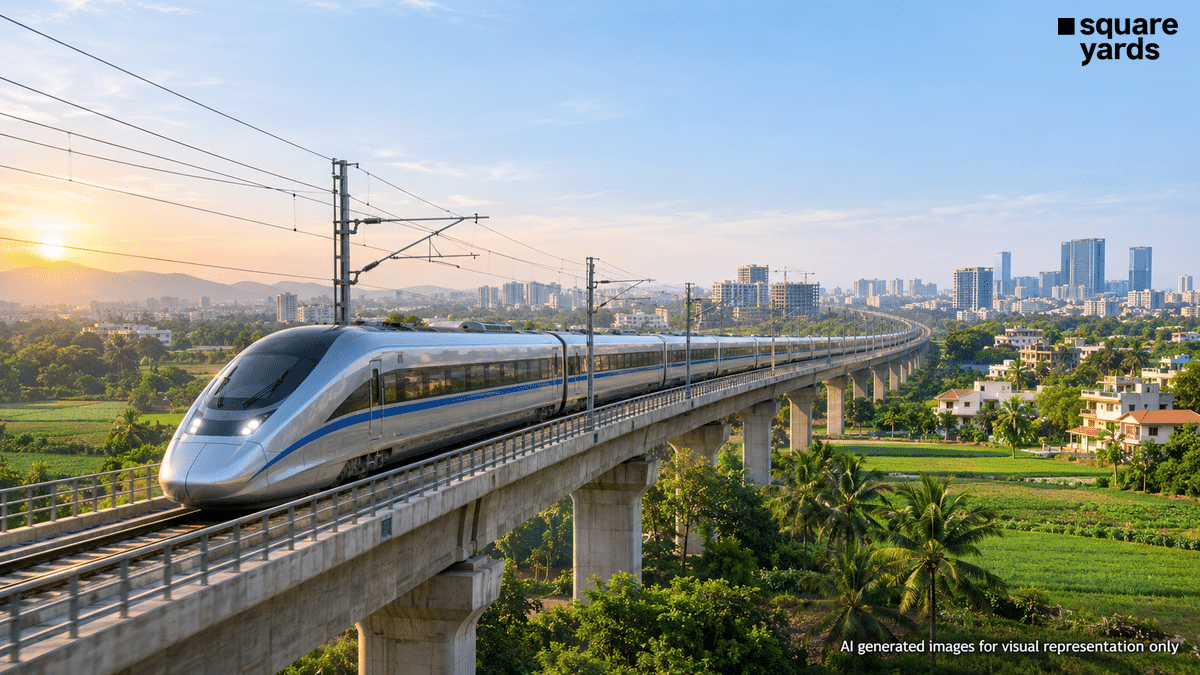
BENGALURU – In what promises to be a paradigm shift for India’s southern economic corridor, the proposed Bengaluru–Chennai High-Speed Rail (HSR) project is moving from a conceptual vision toward a technical reality. Railway Minister Ashwini Vaishnaw recently underscored the transformative potential of this corridor, revealing that the journey between the two primary tech and industrial hubs of South India could be slashed to a mere 73 minutes.
This ambitious project is not an isolated endeavor but a critical component of a broader southern high-speed rail network designed to interlink Bengaluru, Hyderabad, Amaravati, and Chennai. As the National High Speed Rail Corporation Limited (NHSRCL) accelerates its administrative and technical groundwork, the project stands as a testament to India’s aspirations to join the global elite of high-speed transit nations.
1. Main Facts: Redefining Inter-City Mobility
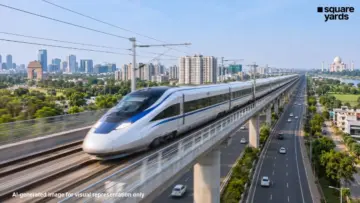
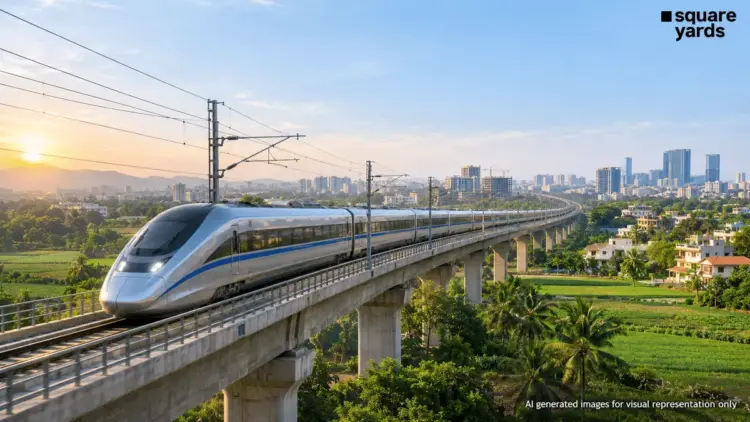
The Bengaluru–Chennai Bullet Train project is one of the seven high-speed rail corridors identified by the Government of India to modernize the nation’s aging railway infrastructure. Currently, the fastest trains between the two cities—the Vande Bharat Express and the Shatabdi Express—take between 4.5 to 5 hours to cover the distance. The proposed HSR corridor aims to reduce this by nearly 75%, effectively turning the 300-plus kilometer stretch into a "commutable" distance for daily business and leisure.
Key Project Parameters:
- Indicative Travel Time: Approximately 73 minutes.
- Estimated Length: Roughly 306 kilometers (subject to final alignment).
- Operating Agency: National High Speed Rail Corporation Limited (NHSRCL).
- Proposed Route: Connecting the tech-heavy eastern periphery of Bengaluru to the western industrial gateways of Chennai.
- Strategic Integration: The corridor is designed to eventually merge into a larger network connecting Hyderabad and the new capital of Andhra Pradesh, Amaravati.
The project is currently in the pre-construction phase, with the NHSRCL actively seeking bids for an updated Detailed Project Report (DPR) and comprehensive alignment surveys. While the 73-minute figure serves as a technical benchmark, officials emphasize that the final schedule will depend on the number of intermediate stops and the finalized track geometry.
2. Chronology: The Evolution of a Mega-Project
The journey of the Bengaluru–Chennai HSR has been one of meticulous planning and shifting priorities within the Ministry of Railways.
- 2019-2020: Conceptualization: Following the initiation of the Mumbai–Ahmedabad High-Speed Rail (MAHSR), the Ministry of Railways identified seven additional corridors across India. The Chennai–Bengaluru–Mysuru stretch was earmarked as a high-priority route due to the high density of passenger traffic and the economic synergy between the two cities.
- 2021-2022: Initial Feasibility: Preliminary studies were conducted to assess the viability of the terrain. The NHSRCL began the process of mapping potential alignments, weighing the pros and cons of elevated versus at-grade tracks.
- 2023-2024: Formal Bidding and DPR Updates: The project gained significant momentum as the NHSRCL invited bids for pre-construction activities. This included the crucial task of updating the DPR to reflect post-pandemic economic shifts and new urban developments, such as the proposed Parandur Greenfield Airport in Tamil Nadu.
- Late 2024 – 2026: Technical Refinement: As of November 2026, the project has entered a stage of intensive alignment review. Tenders have been floated for LIDAR surveys and environmental impact assessments. This phase is critical for determining the exact coordinates of stations and the extent of land acquisition required.
3. Supporting Data: Technical Specifications and Route Mapping
The success of a high-speed rail project hinges on technical precision and the strategic placement of stations. The proposed 306-km route is being designed for a maximum design speed of 320–350 km/h, with an operational speed likely hovering around 250–300 km/h.
Comparative Travel Metrics:
| Mode of Transport | Current Travel Time | Proposed HSR Time |
|---|---|---|
| Standard Express Train | 6.5 – 7.5 Hours | N/A |
| Vande Bharat Express | 4.5 – 5 Hours | N/A |
| Road (NH 48) | 6 – 7 Hours | N/A |
| Proposed Bullet Train | N/A | 73 Minutes |
Provisional Station Identification
While the final list of stations is subject to the updated DPR, the NHSRCL has identified several "corridor areas" that are likely to host stations or serve as major transit hubs:
- Bengaluru (Baiyappanahalli/Whitefield): Serving the IT heartland and eastern residential clusters.
- Kodihalli/Hoskote: A strategic entry point for the Bengaluru Metropolitan Region.
- Kolar: An emerging industrial and warehousing hub in Karnataka.
- Chittoor & Bangarupalem: Critical nodes in Andhra Pradesh that provide regional connectivity.
- Parandur: Poised to serve the upcoming Chennai Second Airport, creating a multi-modal transport hub.
- Poonamallee: The western gateway to Chennai, offering seamless integration with the Chennai Metro.
4. Official Responses: The Government’s Stance
The Union Government has maintained a stance of "cautious optimism" regarding the timeline of the project. Railway Minister Ashwini Vaishnaw has repeatedly stated that while the technical feasibility is high, the "sanctioning of a corridor depends on the Detailed Project Report (DPR), feasibility studies, and the availability of funding."
Ministry of Railways Insights:
Officials from the Ministry have noted that the Bengaluru–Chennai corridor is particularly attractive because of the "existing demand-supply gap." Unlike some other proposed routes, the southern corridor connects two established "Tier-1" cities with massive daily migration.
The NHSRCL has also clarified the nature of the current tenders. "The invitation for bids for pre-construction activities is a standard procedure to ensure that once the project is sanctioned, we can hit the ground running," an NHSRCL spokesperson stated. "The 73-minute travel time is a projection based on the most efficient alignment; however, we must balance speed with accessibility for intermediate regions."
Furthermore, the government has emphasized that the project will likely require a "Special Purpose Vehicle" (SPV) involving the state governments of Karnataka, Andhra Pradesh, and Tamil Nadu to facilitate land acquisition—a historically challenging aspect of Indian infrastructure.
5. Implications: Economic, Social, and Real Estate Impact
The introduction of a bullet train is rarely just about transport; it is a catalyst for regional re-engineering. The Bengaluru–Chennai HSR is expected to have far-reaching implications.
The "Dual-City" Economic Model
With a 73-minute travel time, the concept of "living in Bengaluru and working in Chennai" (or vice-versa) becomes a tangible reality. This could lead to a unified labor market between the two cities, allowing companies to tap into a broader talent pool without requiring employees to relocate. The synergy between Bengaluru’s software prowess and Chennai’s manufacturing and SaaS strengths could create a mega-economic zone.
Real Estate and Urban Decentralization
The "Bullet Train Effect" is expected to reshape the real estate landscape in the following ways:
- Emergence of Satellite Towns: Areas like Kolar, Hoskote, and Chittoor, which were previously considered "peripheral," could see a surge in demand for residential and commercial development. If a worker can reach Bengaluru’s CBD in 20 minutes from Kolar via HSR, Kolar becomes a viable residential alternative.
- Whitefield’s Transformation: Already a congested tech hub, Whitefield could see even higher property valuations as it becomes the primary terminal for the HSR, necessitating massive upgrades in local feeder infrastructure.
- Parandur and Poonamallee Growth: In Chennai, the proximity of the HSR to the new airport at Parandur will likely trigger a massive industrial and hospitality boom in the western corridor, drawing investment away from the saturated southern OMR belt.
Infrastructure Challenges
Despite the optimism, the project faces significant hurdles:
- Land Acquisition: Traversing three states involves navigating three different sets of land compensation laws and local political sentiments.
- Feeder Connectivity: The 73-minute journey is only useful if the "last-mile" connectivity at both ends is efficient. Without seamless integration with the Bengaluru Metro (Namma Metro) and the Chennai Metro, the time saved on the bullet train could be lost in city traffic.
- Environmental Impact: The route passes through ecologically sensitive areas and agricultural belts, necessitating stringent environmental clearances.
Conclusion: A Vision for 2030 and Beyond
The Bengaluru–Chennai Bullet Train is more than a high-speed rail project; it is a blueprint for the future of South Indian urbanization. While the 73-minute journey remains an "indicative" goal for now, the administrative momentum suggested by the NHSRCL’s recent tenders indicates that the project is a high priority for the Center.
For residents and investors, the message is clear: the corridor between Bengaluru and Chennai is poised for a massive technological upgrade. However, as the Ministry of Railways correctly notes, the path from a Detailed Project Report to the first high-speed whistle is paved with complex financial, technical, and social challenges. As the DPR updates progress through 2026, all eyes will be on the final alignment, which will ultimately determine which sleepy towns become the next booming suburbs of the South.