The landscape of the Mumbai Metropolitan Region (MMR) is on the cusp of a tectonic shift in urban mobility. As the city of Mumbai continues to expand its boundaries, the satellite cities of Thane and Bhiwandi are emerging as critical economic engines. Central to this transformation is the Mumbai Metro Line 5, popularly known as the Orange Line. With the recent arrival of its first train set and the commencement of track electrification, this ambitious infrastructure project is transitioning from a blueprint to a reality that promises to redefine the daily lives of lakhs of commuters.
1. Main Facts: The Blueprint of Phase 1
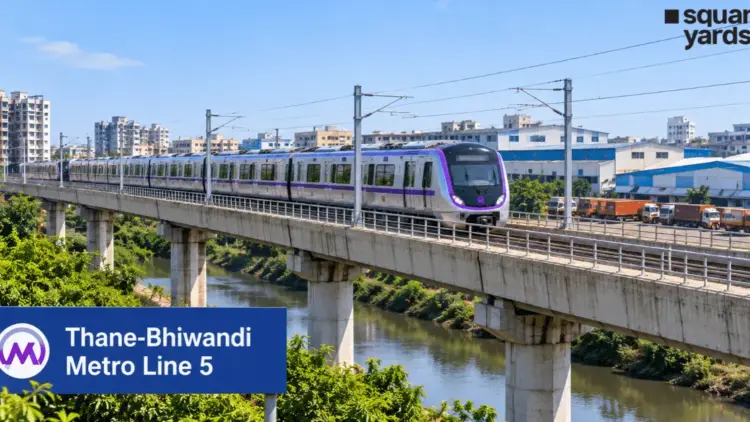
Mumbai Metro Line 5 is an ambitious 24.9-km elevated corridor designed to bridge the connectivity gap between Thane, Bhiwandi, and Kalyan. However, the immediate focus of the Mumbai Metropolitan Region Development Authority (MMRDA) is the completion and commissioning of Phase 1.
The Route and Reach
Phase 1 of the project spans 11.9 km, stretching from Balkum Naka in Thane to Dhamankar Naka in Bhiwandi. This segment is strategically designed to traverse some of the most congested corridors in the region. The six key stations included in this phase are:
- Balkum Naka (Thane)
- Kasheli
- Kalher
- Purna
- Anjurphata
- Dhamankar Naka (Bhiwandi)
Financial and Technical Specifications
With an estimated investment of Rs 6,741 crore for the first phase, the project is a high-stakes endeavor aimed at modernizing the region’s transit system. The corridor is designed as an elevated rapid transit system, allowing it to bypass the heavy ground-level traffic that currently plagues the Thane-Bhiwandi road link.
A critical component of this infrastructure is the Kasheli Depot, which will serve as the primary maintenance and stabling yard for the rolling stock. The depot is essential for the operational readiness of the line, ensuring that the fleet of modern metro trains remains in peak condition for daily service.
2. Chronology: From Vision to Trial Runs
The journey of Metro Line 5 has been one of meticulous planning and overcoming logistical hurdles. The timeline for Phase 1 is currently entering its most critical window.
- October 2026 (Milestone): The project reached a significant milestone with the delivery of the first six-coach train set. This arrival signaled the transition from civil construction to the operational testing phase.
- Late 2026 (Energization): Earlier this month, the MMRDA successfully energized the tracks and overhead electrical equipment (OHE). This process is vital for providing the necessary power to the rolling stock for movement.
- Imminent Future (Trial Runs): With the tracks powered and the first train on-site, trial runs are expected to begin shortly. These trials will test the signaling systems, braking mechanisms, and overall synchronization of the trains with the platform screen doors and electrical grids.
- December 2026 (Tentative Opening): The MMRDA has set a tentative target of December 2026 for the commencement of passenger operations for Phase 1. This timeline is subject to safety clearances from the Commissioner of Metro Rail Safety (CMRS).
3. Supporting Data: Impact on Commuting and Ridership
The primary objective of Metro Line 5 is the drastic reduction of travel time and the easing of road congestion. Currently, the journey between Thane and Bhiwandi by road—typically via shared autorickshaws or state transport buses—takes upwards of 45 to 60 minutes during peak hours. The heavy influx of logistics trucks and containers frequently leads to gridlock at junctions like Anjurphata.
Travel Time Efficiency
Once operational, the metro is expected to slash this travel time to approximately 25 minutes. This 50% reduction in commuting time represents a significant "time dividend" for the workforce, particularly those employed in Bhiwandi’s massive warehousing sector.
Ridership Projections
Data suggests that the demand for this corridor is substantial. By the year 2031, the projected daily ridership for Metro Line 5 is estimated to reach 3.025 lakh passengers. This volume underscores the necessity of a high-capacity rail-based system to supplement the overburdened road network.
4. Official Context and Vision: Integrating the MMR
While the MMRDA continues to push for the completion of Phase 1, the broader vision for Metro Line 5 involves its integration into a multi-modal transit web. The project is not an isolated line but a vital thread in the "Metro Master Plan" for the Mumbai region.
The Power of Interchanges
The long-term utility of Metro Line 5 is amplified by its planned interchanges:
- Kasarvadavali Interchange: This will connect Line 5 with Metro Line 4 (Wadala-Kasarvadavali). This connection is a game-changer, as it will allow residents of Bhiwandi to travel seamlessly toward Central Mumbai and the eastern suburbs without ever leaving the metro network.
- Kalyan Interchange: The extended corridor will eventually link with Metro Line 12 (Kalyan-Taloja), providing a direct gateway to Navi Mumbai and the upcoming international airport.
- Central Railway Integration: By connecting to the Kalyan railway station, the metro will provide a reliable "last-mile" or "first-mile" link for suburban railway commuters, reducing the reliance on congested road transport.
The Extension to Line 5A
The revised development plan now includes Metro Line 5A, an 11.83-km extension that will connect Durgadi with Kalyan via Khadakpada and Bhoirwadi, with a further spur toward Ulhasnagar. This ensures that the benefits of rapid transit extend deep into the residential heartlands of the eastern MMR.
5. Economic and Real Estate Implications: A Locality Analysis
The "Metro Effect" is already being felt across the real estate markets of Thane and Bhiwandi. As connectivity improves, property values and demand for organized housing are witnessing a steady uptick.
Market Insights by Locality
Based on research data, the price points along the Phase 1 corridor vary significantly, reflecting the diverse nature of these neighborhoods:
| Locality | Average Price per Sq. Ft. (INR) | Primary Character |
|---|---|---|
| Balkum | 18,000 – 21,000 | Premium Residential |
| Kalher | 11,000 – 13,000 | Emerging Residential/Logistics |
| Purna | 7,500 – 9,500 | Industrial/Warehousing |
| Anjurphata | 6,500 – 7,000 | Commercial/Transport Hub |
| Kasheli | 4,000 – 9,000 | Industrial/Affordable Housing |
The Residential Boom in Balkum
Balkum has evolved into a residential hotspot within Thane. Its proximity to the Majiwada junction and the Ghodbunder Road corridor makes it a preferred choice for white-collar professionals. The presence of the Metro Line 5 starting point, combined with the Line 4 interchange, positions Balkum as a "super-connected" hub, likely driving further premiumization of its real estate.
The Logistics Transformation in Bhiwandi
Bhiwandi is widely recognized as India’s warehousing capital, hosting giants like Amazon, Flipkart, and various third-party logistics (3PL) providers. Historically, the "white-collar" staff of these companies preferred living in Thane or Mulund due to poor local infrastructure in Bhiwandi.
The introduction of the metro changes this dynamic. Localities like Kalher and Purna, which are currently dominated by warehouses, are expected to see a rise in demand for "employee housing" and organized commercial spaces. The ease of access will likely encourage more corporate offices to set up shop closer to their logistics hubs.
Commercial Vitality at Dhamankar Naka and Anjurphata
Anjurphata is a critical junction for traffic entering from the Gujarat side (NH-48). The metro will provide a much-needed alternative for commuters who currently navigate through heavy truck traffic. Similarly, Dhamankar Naka, a bustling wholesale and trading center, will benefit from increased footfall, providing a boost to local businesses and retail establishments.
6. Conclusion: A New Era for the Eastern MMR
The Mumbai Metro Line 5 is more than just a transportation project; it is a catalyst for regional de-centralization. For decades, the growth of Thane and Bhiwandi was hampered by the "bottleneck" of road connectivity. By providing a reliable, air-conditioned, and high-speed alternative, the MMRDA is effectively shrinking the distance between these economic hubs.
As Phase 1 nears its December 2026 launch, the focus will inevitably shift toward the Kalyan extension. However, the immediate impact of the Thane-Bhiwandi link cannot be overstated. It promises to improve the quality of life for daily wage earners, logistics professionals, and students alike, while simultaneously unlocking billions in real estate and commercial value.
The energization of the tracks this month is a symbolic "powering up" of the region’s future. When the first passenger boards the train at Balkum Naka in late 2026, it will mark the beginning of a new chapter in the urban history of the Mumbai Metropolitan Region.