By Newswire Services | Published: November 3, 2026
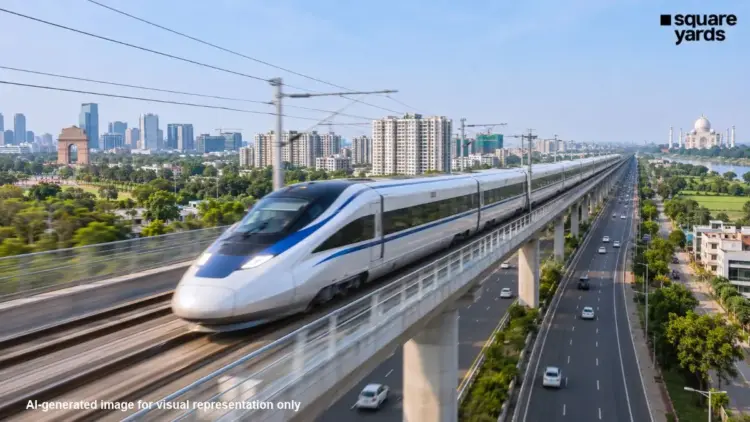
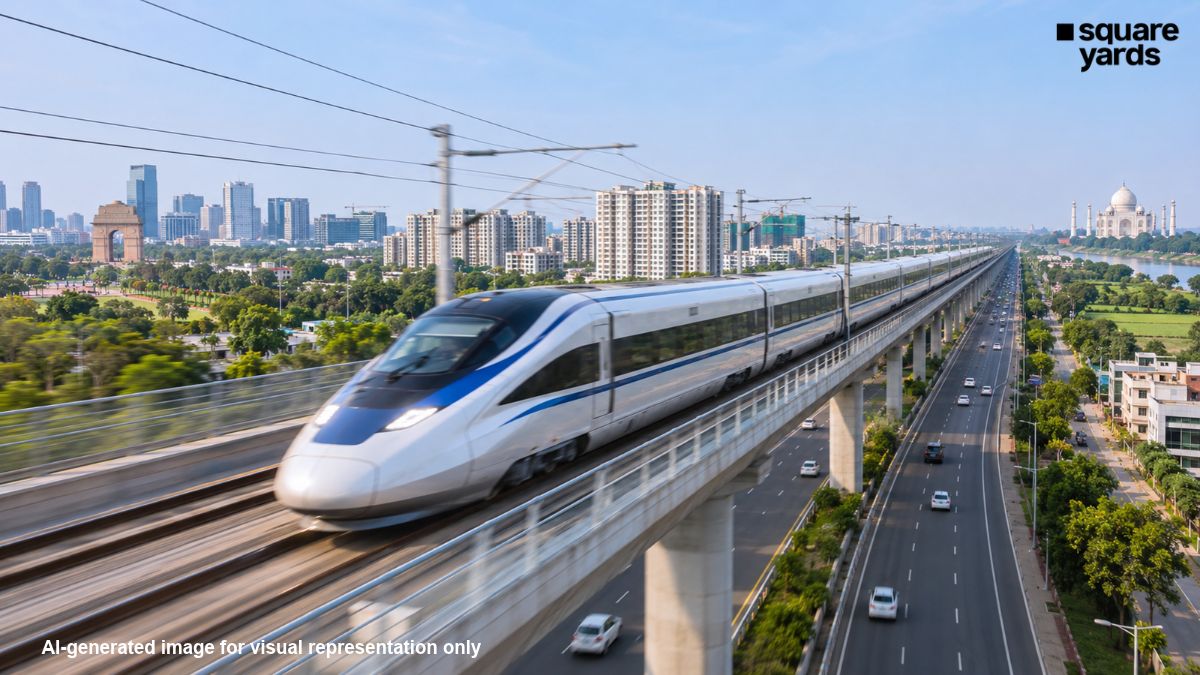
In a move set to redefine the socio-economic landscape of North India, Prime Minister Narendra Modi has officially greenlit the ambitious Northern Bullet Train Corridor. This high-speed rail (HSR) project, which will bridge the gap between the national capital and the historic city of Agra in under an hour, marks a pivotal moment in India’s journey toward becoming a global leader in modern infrastructure.
The announcement, made by the Union Railway Minister during a high-profile event in Varanasi on Saturday, signals a transformative shift in intercity connectivity. By slashing travel times, fostering "Make in India" manufacturing, and catalyzing a real estate boom across the National Capital Region (NCR) and Uttar Pradesh, the project is poised to become the backbone of the region’s economic engine.
I. Main Facts: The Blueprint of Speed and Sovereignty
The Northern Bullet Train Corridor is not merely a transportation project; it is a technological marvel designed to integrate major urban hubs into a single, seamless economic zone.
Key Route Specifications
The corridor is designed to originate from Delhi, weaving through a network of strategically significant cities including Agra, Kanpur, Lucknow, and Ayodhya, eventually extending toward Varanasi. The primary highlight of the project is the drastic reduction in transit times:
- Delhi to Agra: 59 minutes (Current time: ~2–3 hours via expressways/trains).
- Delhi to Kanpur: 1 hour and 45 minutes.
- Delhi to Lucknow: 2 hours and 12 minutes.
The "Make in India" Mandate
Staying true to the vision of Atmanirbhar Bharat (Self-Reliant India), the project will be executed using indigenous engineering prowess. The Union Railway Minister emphasized that the high-speed rakes, track components, and signaling systems will be manufactured using Indian-made materials and local labor. This approach is expected to generate tens of thousands of specialized jobs in the manufacturing and construction sectors.
Accessibility and Pricing
While high-speed rail is often perceived as a luxury, the government has signaled a commitment to "democratized speed." While exact fare structures remain under wraps, officials have confirmed that ticket prices will be significantly lower than airfares, making it a viable option for middle-class commuters, students, and business professionals.
II. Chronology: From Vision to Approval
The journey of the Northern Bullet Train Corridor has been one of meticulous planning and strategic patience.
- Early Feasibility Studies (2020-2023): Following the commencement of the Mumbai-Ahmedabad High-Speed Rail (MAHSR) project, the Ministry of Railways commissioned feasibility reports for several other corridors, with the Delhi-Varanasi route (passing through Agra and Lucknow) identified as a high-priority "High-Traffic" sector.
- Detailed Project Report (DPR) Finalization (2024-2025): Technical surveys, including LiDAR (Light Detection and Ranging) aerial surveys, were conducted to finalize the alignment, ensuring minimal land acquisition hurdles and environmental impact.
- The Varanasi Declaration (November 2026): On the banks of the Ganges, the Union Railway Minister formally announced the Prime Minister’s approval. This approval marks the transition from the planning phase to the execution phase, with tenders for civil works expected to be floated in the coming fiscal quarter.
- Operational Outlook: While the full corridor to Varanasi will be completed in phases, the Delhi-Agra segment is being fast-tracked as the pilot stretch for the Northern network.
III. Supporting Data: The Real Estate Ripple Effect
One of the most immediate impacts of the Bullet Train approval is being felt in the property markets along the Delhi-Agra belt. Data from Square Yards highlights a surge in interest as investors look to capitalize on the "proximity premium."
The NCR Powerhouse: Noida and Greater Noida
The proximity of the high-speed rail to existing infrastructure like the Noida Expressway and the upcoming Noida International Airport in Jewar has created a "Golden Triangle" of investment.
- Noida Expressway: Currently, average apartment asking prices hover around Rs 12,800 per sq. ft. Sectors 147 and 148 are expected to see a significant uptick in demand as they serve as feeder points for the HSR network.
- Greater Noida: With an average price of Rs 8,500 per sq. ft., this region offers a more accessible entry point for middle-income families who may now consider living in Greater Noida while working in central Delhi or Agra.
- Yamuna Expressway: As of September 2026, apartment prices averaged Rs 9,800 per sq. ft. The integration of the Bullet Train with this corridor is expected to drive demand for commercial hubs and integrated townships.
The Jewar Connection
Jewar is perhaps the most strategically positioned node. Already bolstered by the Noida International Airport, villa prices in Jewar were recorded at Rs 2,200 per sq. ft. in early 2026. The addition of a Bullet Train station would make Jewar one of the most well-connected logistical and residential hubs in South Asia.
The Spiritual and Tourism Corridor: Mathura, Vrindavan, and Agra
The Bullet Train is set to revolutionize "weekend tourism" and pilgrimage-based real estate.
- Mathura & Vrindavan: Apartment prices in Mathura stood at Rs 9,050 per sq. ft. (March 2026), while Vrindavan reached Rs 10,850 per sq. ft. (September 2026). The ability to reach these cities from Delhi in under 45 minutes will likely turn these into "suburbs" for affluent Delhiites seeking second homes.
- Agra: Long considered a tourist destination but a secondary real estate market, Agra’s average apartment prices of Rs 3,750 per sq. ft. represent a massive growth opportunity. The 59-minute commute to Delhi effectively integrates Agra into the NCR’s daily economic circle.
IV. Official Responses: A Vision for Integrated Growth
The approval has drawn praise from various government quarters and industry experts.
The Union Railway Minister stated, "This corridor is a testament to the Prime Minister’s vision of Gati Shakti. We are not just building tracks; we are building a future where a person can live in Agra and work in Delhi without the stress of a three-hour commute. This is about giving time back to our citizens."
Infrastructure Analysts suggest that the Northern Bullet Train Corridor will act as a "force multiplier" for the Uttar Pradesh economy. By connecting the political capital (Delhi) with the industrial hub (Kanpur), the administrative capital (Lucknow), and the spiritual capital (Ayodhya/Varanasi), the government is creating a corridor of unprecedented economic density.
Real Estate Experts at Square Yards noted, "Connectivity is the single biggest driver of property value. When you reduce a two-hour journey to 59 minutes, you aren’t just improving transport; you are fundamentally changing the utility of land. We expect to see a 15-20% appreciation in land values near proposed station sites over the next 24 months."
V. Implications: Beyond the Tracks
The Northern Bullet Train Corridor carries implications that extend far beyond simple transportation.
1. The Rise of the "Mega-Commuter"
The 59-minute Delhi-Agra link will likely give rise to a new class of commuters. Similar to the Shinkansen in Japan, professionals will be able to reside in more affordable, less congested cities like Agra or Mathura while maintaining high-paying jobs in Delhi or Noida. This could alleviate the immense housing pressure and pollution levels currently seen in the national capital.
2. Tourism and the "Ayodhya Factor"
With the inclusion of Ayodhya in the corridor, the government is tapping into the massive surge in religious tourism. A high-speed link will allow international tourists landing in Delhi to visit the Taj Mahal in Agra and the Ram Mandir in Ayodhya within the same day, significantly boosting the hospitality and service sectors in Uttar Pradesh.
3. De-congestion of Traditional Rail
The current Delhi-Howrah and Delhi-Mumbai rail lines are among the most congested in the world. By shifting high-end passenger traffic to the Bullet Train corridor, the existing Indian Railways tracks can be freed up for faster freight movement and more frequent "Jan Shatabdi" style affordable trains, improving overall logistics efficiency.
4. Environmental Impact
High-speed rail is significantly more energy-efficient per passenger-kilometer than air travel or private car journeys. By shifting commuters from the Yamuna Expressway to the electric-powered Bullet Train, the project will contribute to India’s Net Zero carbon goals.
VI. Conclusion: A New Era for North India
The approval of the Northern Bullet Train Corridor is a defining milestone for the 2020s. While challenges remain—specifically regarding the finalization of station locations and the integration of "last-mile" connectivity—the roadmap is clear.
As the project moves into the construction phase, the eyes of the nation will be on the Delhi-Agra belt. For homebuyers, it is a time of opportunity; for businesses, a time for expansion; and for the nation, a step closer to a future where distance is no longer a barrier to progress. The 59-minute journey from Delhi to Agra is not just a feat of engineering—it is the sound of India moving into the fast lane.