

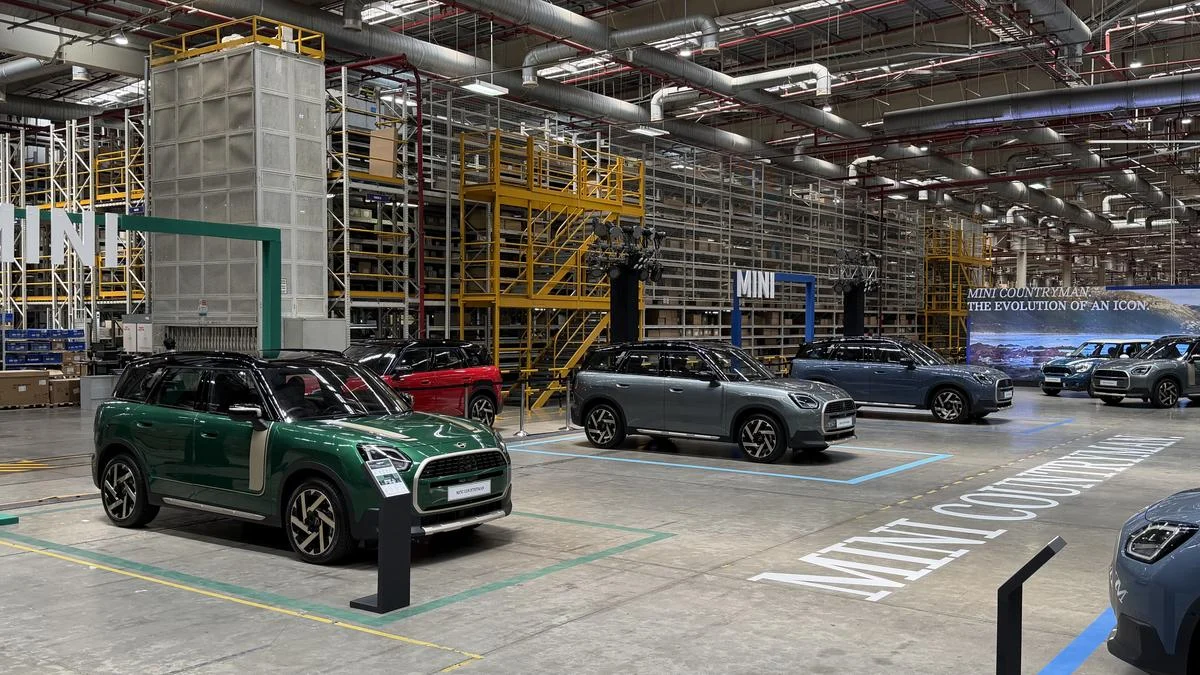
CHENNAI – In a move that underscores the growing importance of the Indian market in the global automotive landscape, MINI, the iconic British-born marque under the BMW Group, has officially launched the all-new Countryman C in Chennai. This launch is far more than a routine product update; it represents a watershed moment for the brand as the Countryman C becomes the first-ever petrol variant of the model to be locally manufactured at the BMW Group Plant in Chennai.
Priced at ₹47.50 lakhs (ex-showroom), the new Countryman C aims to redefine the premium compact SUV segment by blending MINI’s legendary "go-kart" handling with unprecedented levels of space, technology, and local manufacturing efficiency.
Main Facts: The Evolution of an Icon
The MINI Countryman has always been the "outlier" in the MINI family—the model that traded diminutive dimensions for family-friendly utility. However, the latest iteration, the Countryman C, takes this concept further. By shifting to local production, MINI India is not only optimizing its supply chain but also positioning the vehicle more competitively against established rivals in the luxury compact SUV space.
Key Specifications at a Glance:
- Price: ₹47.50 Lakhs (Ex-showroom India).
- Engine: 1.5-liter MINI TwinPower Turbo Petrol.
- Output: 156 hp and 240 Nm of torque.
- Transmission: 7-speed dual-clutch Steptronic Sport.
- Cargo Capacity: 505 liters, expandable to 1,450 liters.
- Manufacturing: Locally produced at BMW Group Plant Chennai.
- Color Palette: Available in five distinct variants, allowing for high levels of personalization.
The "C" designation marks the entry point into the petrol lineup, focusing on a balance between spirited performance and urban efficiency. While the vehicle has grown in size, the brand maintains that the core DNA—the tactile, responsive driving experience—remains fully intact.
Chronology: From Import to Local Mainstay
The journey of the MINI Countryman in India has been one of steady progression. When MINI first entered the Indian market over a decade ago, it was perceived primarily as a niche lifestyle brand for enthusiasts. The Countryman was the vehicle that helped the brand transition into a more practical, everyday choice for Indian families.
- The Initial Phase (CBU): For years, the Countryman was brought into India as a Completely Built Unit (CBU), which subjected it to high import duties and limited its market penetration to a very specific demographic.
- The Shift to Assembly: Recognizing the potential for growth in the premium SUV segment, BMW Group began exploring local assembly (CKD – Completely Knocked Down) for specific models.
- The 2026 Milestone: The launch of the Countryman C in June 2026 marks the culmination of this localization strategy. By producing the petrol variant in Chennai, MINI is able to offer a technologically superior vehicle while managing the price point more effectively in a price-sensitive luxury market.
This chronological shift reflects a broader trend in the Indian automotive industry where luxury manufacturers are increasingly "de-risking" their portfolios by investing in local production facilities to hedge against global supply chain fluctuations and high taxation on imports.

Supporting Data: Technical Innovation and Design Philosophy
The all-new Countryman C is not merely a facelift; it is a ground-up reimagining of what a MINI SUV should be. The design philosophy, termed "Charismatic Simplicity," focuses on removing unnecessary clutter to highlight the vehicle’s rugged yet sophisticated proportions.
Exterior Aesthetics and Aerodynamics
The vehicle features a more commanding road presence, characterized by a taller silhouette and increased ground clearance. The front end is dominated by a new octagonal grille, flanked by LED headlamps that offer selectable light signatures. This allows owners to choose between three different DRL (Daytime Running Light) patterns, adding a layer of digital personalization to the physical hardware.
The wider wheel arches and short overhangs—a classic MINI trait—ensure that despite its growth, the car looks athletic. The aerodynamic efficiency has also been improved, contributing to better fuel economy and reduced wind noise at highway speeds.
The Digital Cockpit: A Leap Forward
The interior of the Countryman C is where the most radical changes have occurred. MINI has moved away from traditional instrument clusters, gravitating toward a fully digital, immersive experience.
- Circular OLED Display: The centerpiece is a high-resolution, 240mm diameter circular OLED touchscreen. This industry-first display runs on the MINI Operating System 9, developed in-house by the BMW Group. It controls everything from navigation and climate to the "Experience Modes."
- MINI Experience Modes: Drivers can transform the cabin’s atmosphere through various modes (Core, Green, Go-Kart, etc.), which change the ambient lighting, display graphics, and even the "earcons" (acoustic signals).
- Intelligent Personal Assistant: By saying "Hey MINI," drivers can control various functions via voice, minimizing distractions. The system learns from the driver’s habits over time, offering a more bespoke interface.
Utility and Comfort
The "C" in Countryman could easily stand for "Comfort." The rear seats can be adjusted longitudinally by up to 13 centimeters, providing either extra legroom for passengers or additional cargo space. The backrests are also individually adjustable, ensuring long-distance comfort for rear-seat occupants. The use of sustainable materials, including recycled polyester for the dashboard and door panels, aligns the vehicle with modern environmental sensibilities.
Official Responses: "A New Kind of BIG"
During the launch event in Chennai, leadership from BMW Group India emphasized that the Countryman C is designed to cater to a "new age" Indian consumer—one who values heritage but demands cutting-edge technology.

Hardeep Singh Brar, President and CEO of BMW Group India, was vocal about the vehicle’s strategic importance. He described the model as "a new kind of BIG," a slogan that highlights the vehicle’s growth in dimensions and its outsized impact on the brand’s Indian portfolio.
"The all-new MINI Countryman C is a testament to our commitment to the Indian market," Brar stated. "By producing this petrol variant locally at our Chennai plant, we are not just delivering a car; we are delivering a value proposition that combines British flair, German engineering, and Indian manufacturing excellence. This model is designed for those who want to navigate the urban jungle during the week and explore the great outdoors on the weekend."
Company officials also noted that the local production of the Countryman C is expected to significantly reduce waiting periods for customers, a common pain point in the luxury car segment.
Implications: Impact on the Indian Luxury Market
The launch of the locally produced Countryman C has several far-reaching implications for the Indian automotive sector and the premium compact SUV segment.
1. Competitive Pressure on Rivals
At ₹47.50 lakhs, the Countryman C sits in a highly competitive bracket. It directly challenges the Audi Q3, the Mercedes-Benz GLA, and its own cousin, the BMW X1. While the X1 offers a more traditional luxury experience, the Countryman C leans into its "lifestyle" identity, appealing to younger buyers or those who find the standard German luxury trio too conventional.
2. Strengthening the "Make in India" Narrative
MINI’s decision to localize the petrol Countryman is a significant win for the Indian government’s "Make in India" initiative. It signals to other global manufacturers that the infrastructure and skill sets available in hubs like Chennai are capable of producing world-class luxury vehicles. This localization also helps in stabilizing the price point against currency devaluations.

3. The Shift Toward Petrol
With the Indian market’s gradual shift away from diesel in the small and mid-size luxury segments, the focus on a high-tech petrol variant is timely. The 156 hp TwinPower Turbo engine is designed to meet stringent emission norms while providing the torque necessary for Indian driving conditions, which often involve a mix of stop-and-go traffic and high-speed tollways.
4. Digitalization as a Differentiator
By integrating the MINI Operating System 9 and the circular OLED display, MINI is betting that the next generation of luxury buyers prioritizes "tech-luxury" over traditional "material-luxury." The inclusion of an in-cabin fisheye camera for "selfies" and travel vlogs is a clear nod to the social-media-savvy demographic that MINI aims to capture.
Conclusion
The launch of the MINI Countryman C in Chennai is a bold statement of intent. By combining the brand’s iconic design language with the practical benefits of local production and a heavy dose of digital innovation, MINI is no longer just selling a car; it is selling a versatile tool for modern living.
As the first locally produced petrol variant of its kind in India, the Countryman C is poised to become the cornerstone of MINI’s growth strategy in the subcontinent. It offers a compelling argument that one does not need to sacrifice personality for practicality, or heritage for high technology. For the Indian consumer, the "New Kind of BIG" might just be the perfect fit.
