

By [Your News Desk]
The landscape of Indian real estate and social welfare is witnessing a historic pivot as the Government of India transitions into the second phase of its flagship housing program. The Pradhan Mantri Awas Yojana (PMAY), initially launched in 2015, has entered a sophisticated new era—PMAY-U 2.0. Designed to address the persistent housing shortage in both urban and rural corridors, this initiative continues to serve as the bedrock for the "Housing for All" vision, targeting the economically weaker and middle-income segments of society.
As the official portal undergoes a significant revamp to accommodate the 2025–2029 roadmap, this report provides an exhaustive analysis of the scheme’s current status, application protocols, and the socio-economic implications of the latest policy updates.

1. Main Facts: The Scope of PMAY-U 2.0
The Pradhan Mantri Awas Yojana is a multi-modal government initiative providing affordable housing through interest subsidies and direct financial assistance. With the conclusion of the first phase, the Union Cabinet, led by Prime Minister Narendra Modi, has authorized the second iteration of the scheme to meet the remaining demand.
Key Pillars of the Scheme:
- Target Demographics: The scheme is specifically tailored for the Economically Weaker Section (EWS), Low-Income Group (LIG), and Middle-Income Group (MIG).
- Financial Assistance: Beneficiaries can avail themselves of interest subsidies on home loans, effectively reducing the Equated Monthly Installment (EMI) burden.
- PMAY-U 2.0 Vision: Unlike its predecessor, the 2.0 version integrates advanced digital tracking and a renewed focus on "Interest Subsidy Scheme" (ISS) for urban areas, while expanding the "Awaas Plus" survey for rural regions.
- The 3-Crore Goal: In the 2024 Union Budget, the government committed to the construction of an additional 3 crore houses—1 crore for urban areas and 2 crore for rural areas.
2. Chronology: From Inception to the 2029 Roadmap
Understanding the trajectory of PMAY is essential for prospective applicants, as the rules for Phase 1 and Phase 2 differ significantly.
- June 2015: PMAY launched with a target to provide pucca houses with basic amenities by 2022.
- 2015–2024 (Phase 1): Over 118.64 lakh houses were sanctioned. To date, approximately 92 lakh houses have been constructed and delivered to beneficiaries.
- March 31, 2022: The original deadline for Phase 1. Due to the pandemic and evolving demand, the completion deadline for houses sanctioned by this date was extended to December 31, 2025.
- August 2024: The Union Cabinet approved PMAY-Urban 2.0, earmarking an investment of ₹10 lakh crore.
- 2025–2029 (Phase 2): The operational window for PMAY-U 2.0 and PMAY-Gramin, focusing on the newly identified target of 3 crore additional units.
- October 2025: Launch of the "PM Awas Mela Shehri" and "Angikaar 2025" campaign to drive on-the-spot registration and scheme convergence.
3. Supporting Data: Eligibility, Income Groups, and Sanctions
Eligibility for PMAY is strictly governed by annual household income. Applicants must identify their category accurately to ensure their application is not rejected during the verification stage.

Income-Based Beneficiary Categories
- Economically Weaker Section (EWS): Households with an annual income up to ₹3 Lakh.
- Low Income Group (LIG): Households with an annual income between ₹3 Lakh and ₹6 Lakh.
- Middle Income Group (MIG): Households with an annual income between ₹6 Lakh and ₹18 Lakh.
Recent Approval Statistics
As of the latest Ministry of Housing and Urban Affairs (MoHUA) update, an additional 1.47 lakh houses have been approved under PMAY-U 2.0 across 14 States and Union Territories. This brings the total sanctioned units under the 2.0 phase to 8.56 lakh.
- Leading States in New Approvals: Gujarat, Maharashtra, Uttar Pradesh, Tamil Nadu, and Madhya Pradesh.
- Total Financial Outlay: The government has structured the subsidy to be disbursed in five yearly installments, with the maximum subsidy capped at ₹1.80 lakh for PMAY-U 2.0, a strategic adjustment from the previous cap of ₹2.67 lakh.
4. Official Process: How to Apply in 2025
The application process has been digitized to ensure transparency and minimize the influence of intermediaries.
Online Application via the Revamped Portal
- Visit the Official Website: Navigate to pmaymis.gov.in.
- Eligibility Check: Click on ‘Apply for PMAY-U 2.0’. The system will prompt you to enter the state, annual income, and the preferred "vertical" (e.g., Beneficiary Led Construction or Interest Subsidy). Note: Once a vertical is selected, it cannot be changed.
- Mandatory Declarations: Applicants must confirm they do not own a pucca house anywhere in India and have not received benefits from any government housing scheme in the last 20 years.
- Aadhaar Authentication: Enter Aadhaar details exactly as they appear on the card. Consent for Aadhaar-based OTP authentication is mandatory.
- Form Submission: Fill in personal details, income proof, and bank information. Upload scanned copies of the required documents.
Offline and Bank-Led Routes
For those without digital access, the Common Service Centres (CSCs) remain the primary offline touchpoint. A nominal fee of ₹25 is charged for the form. Additionally, beneficiaries can apply directly through empaneled banks for the Credit-Linked Subsidy Scheme (CLSS). Existing home loan borrowers who meet the criteria can request their bank to submit a claim to the National Housing Bank (NHB).

The Mobile Ecosystem
The PMAY(U) Mobile App has become a central tool for beneficiaries. It includes:
- CLSS Tracker: Real-time monitoring of interest subsidy status.
- Angikaar Module: A social behavior change initiative focusing on environmental conservation and health.
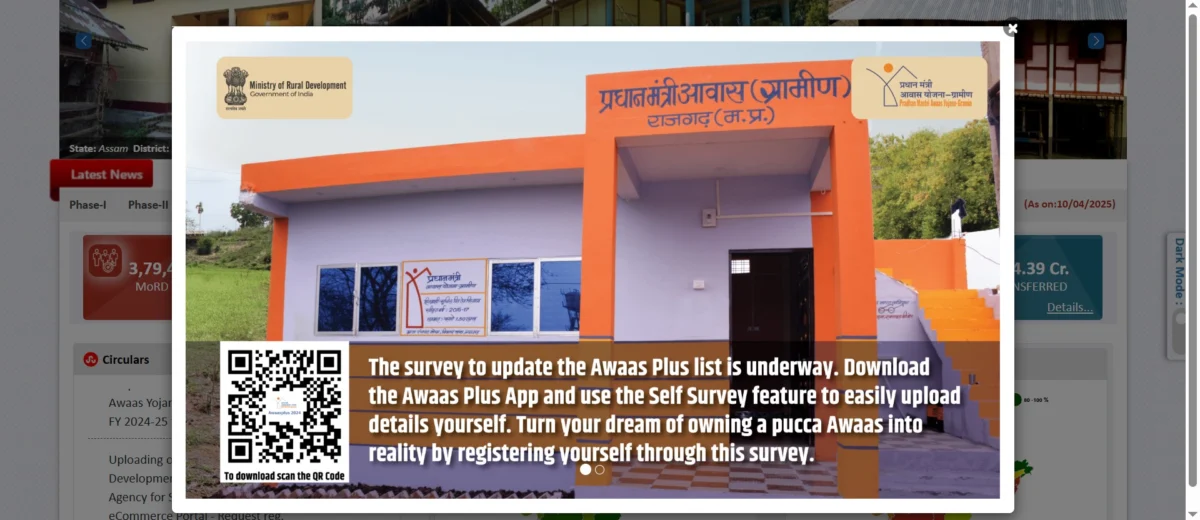
- Self-Survey: PMAY-Gramin applicants can use the Awaas Plus app for self-surveys.
5. Official Responses and Grievance Redressal
The Ministry of Housing and Urban Affairs (MoHUA) has emphasized that "simply filling out the form does not guarantee allotment." Verification is a rigorous multi-stage process involving:
- Aadhaar and de-duplication checks.
- Field verification by Urban Local Bodies (ULBs) or Gram Sabhas.
- Final approval by the State Level Sanctioning and Monitoring Committee (SLSMC).
Grievance Redressal:
If applicants face delays or technical hurdles, the government has provided a dedicated portal at pmay-urban.gov.in/pgrams/login.

Official Contact for Assistance:
- Deputy Secretary, Housing for All: Manish Joon, Nirman Bhavan, New Delhi.
- Toll-Free Numbers: NHB (1800-11-3377), HUDCO (1800-11-6163), SBI (1800-11-2018).
6. Implications: Economic Impact and Social Benefits
The expansion of PMAY into Phase 2 carries profound implications for the Indian economy and the quality of life for its citizens.
Tax Benefits and Wealth Creation
Beyond the direct subsidy, PMAY houses offer significant tax advantages under the Income Tax Act:

- Section 24(b): Deductions on home loan interest up to ₹2 lakh.
- Section 80EEA: Additional deductions for first-time homebuyers (subject to prevailing budget rules).
- Women Empowerment: The scheme encourages joint ownership with the female head of the household, promoting financial inclusivity.
Convergence with Other Welfare Schemes
PMAY-U 2.0 is no longer a standalone housing project. Through the PM Awas Mela, the government is integrating other flagship programs:
- PM Surya Ghar (Muft Bijli Yojana): Equipping PMAY houses with solar panels for free electricity.
- PM Ujjwala: Providing clean cooking gas connections.
- Ayushman Bharat: Linking housing beneficiaries to health insurance.
Economic Stimulus
The construction of 3 crore houses is expected to provide a massive boost to the core sectors—cement, steel, and labor. By extending the deadline for Phase 1 houses to December 2025, the government is ensuring that no sanctioned project is left incomplete, maintaining the momentum of the urban construction cycle.
7. Common Pitfalls to Avoid
Journalistic investigation into previous application cycles reveals common errors that lead to rejection:

- Inconsistent Data: Differences between the Aadhaar name and the application form.
- Income Misreporting: Failing to include the total household income (including spouse and unmarried children).
- Property Ownership: Applicants are often rejected if they own ancestral pucca property, even if it is in a different state.
- Mobile Connectivity: Since the process is OTP-driven, an outdated mobile number linked to Aadhaar is the most frequent cause of technical failure.
Conclusion: The Path Forward
The transition to PMAY-U 2.0 represents a maturing of India’s social housing policy. By shifting from a purely construction-based model to one that integrates solar energy, health insurance, and digital transparency, the government is not just building houses but creating sustainable urban ecosystems. For the millions of EWS and LIG families still waiting for a home, the 2025–2029 window offers a renewed opportunity to achieve permanent housing security.
As the "PM Awas Mela" kicks off its next phase in late 2025, the focus will remain squarely on reaching the "last mile"—ensuring that the most vulnerable sections of society can navigate the digital shift and claim their place in India’s urban future.
Quick Reference: PMAY Phase Comparison
| Feature | Phase 1 (2015-2024) | Phase 2 (2025-2029) |
|---|---|---|
| Sanction Target | ~1.2 Crore (Urban) | 3 Crore (1Cr Urban, 2Cr Rural) |
| Max Subsidy | ₹2.67 Lakh | ₹1.80 Lakh |
| Subsidy Model | Upfront Credit | 5 Yearly Installments |
| Focus | Construction/CLSS | Convergence (Solar/Health/ISS) |
| Verification | Manual/Digital | Aadhaar-mandatory/App-based |
For further inquiries or to share your experience with the PMAY application process, contact the editorial team at [email protected].
