

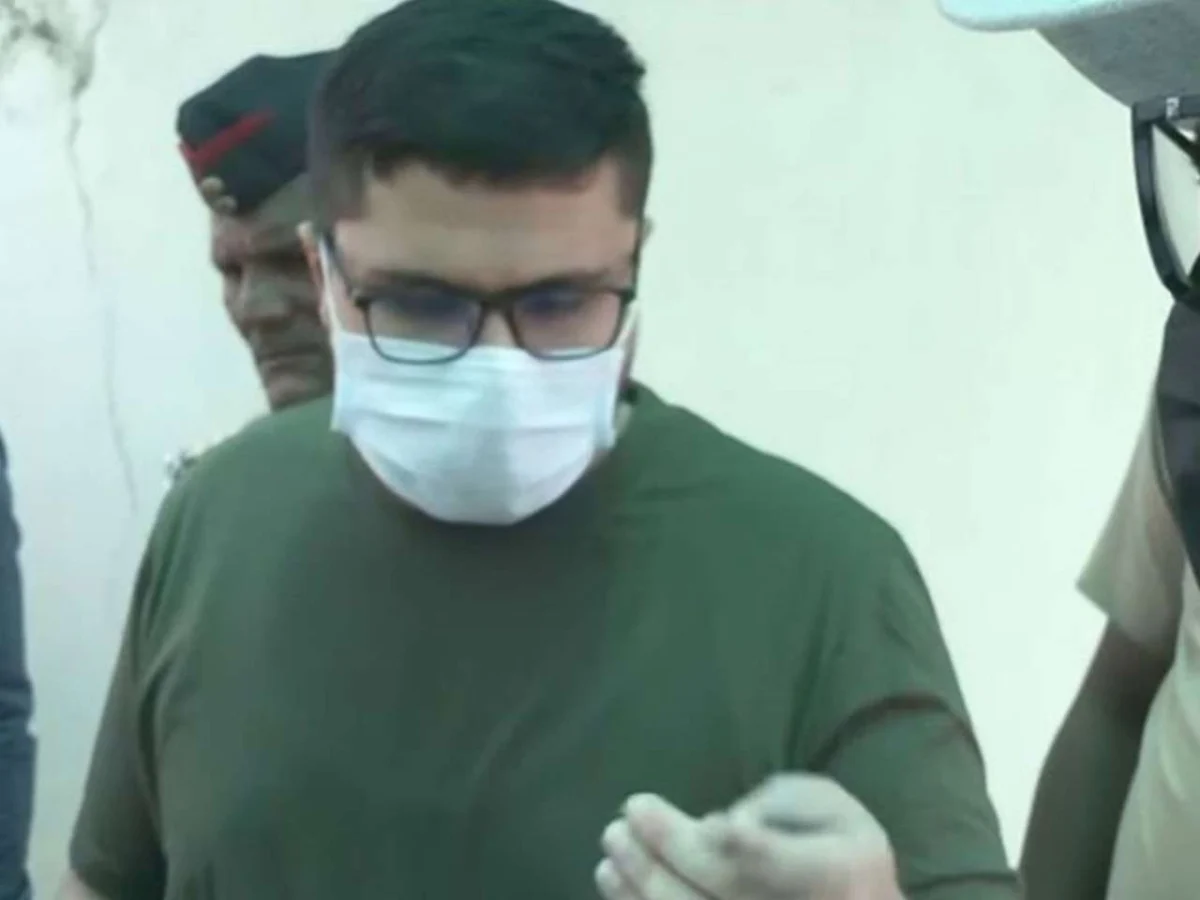
Nagpur, India – June 23, 2026 – A dramatic U-turn in the National Eligibility cum Entrance Test (NEET-UG) 2026 re-examination saw a student, initially assigned an examination centre in Abu Dhabi, United Arab Emirates, successfully appear for the crucial medical entrance test at a newly allotted centre in Nagpur, Maharashtra, on Sunday. This resolution came just a day after widespread shock and criticism erupted following the discovery of the seemingly inexplicable geographical misallocation, highlighting significant concerns about the operational integrity and student support mechanisms of the National Testing Agency (NTA).
The incident, which quickly garnered national attention and ignited a political firestorm, began when the Nagpur-based aspirant, whose identity has been withheld, downloaded his admit card on Saturday, only to find his examination venue listed as a school in Abu Dhabi. This discovery, made a mere day before the scheduled re-examination, plunged the student and his family into a state of profound distress and confusion, raising immediate logistical and emotional hurdles.
The Abu Dhabi Predicament: A Candidate’s Nightmare
The extraordinary circumstances of the Abu Dhabi allocation surfaced prominently on Saturday, sending ripples of disbelief through the academic and political spheres. The candidate, having opted for examination centres within his home state of Maharashtra, was utterly bewildered by the international assignment. His father recounted the harrowing experience, stating, "After the admit card was downloaded at 4 pm yesterday, we found the Centre mentioned to be a school in Abu Dhabi. We were really shocked as we had not given anything as such in our options."
The immediate challenge was not merely the inconvenience but the sheer impossibility of reaching Abu Dhabi within the allotted timeframe, especially considering the student’s lack of a passport. "He cried a lot yesterday and did not even want to write the exam," his father revealed, underscoring the immense psychological toll the situation had taken. "His mother tried to convince him. If he is convinced, he will appear for the exam. He does not even have a passport…"
)
The gravity of the situation was amplified by the fact that the NEET-UG is a highly competitive examination, critical for aspiring medical students in India. A misplaced centre, especially one thousands of kilometers away, could effectively deny a deserving candidate their chance to pursue higher education in medicine.
A Day of High Drama: From Social Media Outcry to NTA Intervention
The news of the Abu Dhabi centre quickly spread across social media platforms, eliciting widespread criticism and drawing sharp commentary from various stakeholders. Political leaders, including the Leader of Opposition in the Lok Sabha, Rahul Gandhi, seized upon the incident to question the NTA’s competence and the perceived mishandling of student concerns. Mr. Gandhi publicly voiced his dismay, demanding accountability and a thorough investigation into the examination system’s flaws.

The mounting pressure and public scrutiny seemingly spurred the NTA into action. On Saturday, the agency acknowledged the issue, posting on X (formerly Twitter) that the grievance was being addressed and that the candidate would be allocated a centre in Nagpur after due verification. This assurance provided a glimmer of hope to the distressed family.
The NTA’s official statement read: "The grievance is being addressed. The candidate will be allocated a centre in Nagpur after due verification." This was followed by a verification process, which ultimately led to the revised allocation.
)
Resolution and Relief: Nagpur Beckons
By Sunday morning, the NTA had issued a fresh admit card to the candidate, this time designating PM SHRI Kendriya Vidyalaya, Ajni, Nagpur as his examination centre. This swift resolution brought immense relief to the family, who had been grappling with uncertainty and the immense logistical and emotional burden of the initial allocation.
The candidate’s father expressed his profound gratitude and satisfaction with the prompt action taken by the authorities. "Just 5 minutes ago, we received the fresh admit card with the exam centre in Nagpur. We are very thankful to the Agency for this prompt action. We are also thankful to the media for raising this issue," he stated. He further added, "Now that he has the fresh admit card, we will speak with him again. I can’t express in words how tense we were…"
)
The family emphasized the need for stricter checks and balances to prevent such incidents from recurring. "They should ensure that nothing like this occurs in the future. No one else should go through what we had to," he urged.
NTA’s Clarification: A Twist in the Tale
However, in a subsequent clarification posted on X, the NTA presented a different perspective, stating that the city of Abu Dhabi was "chosen by the student himself." The agency provided details from its web-activity records, indicating that the city change was made through the candidate’s own registered login during the open correction window, with a consistent single-user access pattern.
)
"On the ‘Abu Dhabi’ query: NTA’s web-activity records indicate that the city change in this case was made through the candidate’s own registered login during the open correction window, with a consistent single-user access pattern," the NTA stated.
This revelation introduced a layer of complexity to the narrative, shifting the focus from a potential NTA error to a possible action by the candidate or an external entity with access to their login credentials. This clarification, while offering an explanation from the NTA’s standpoint, did little to allay the broader concerns about the security and integrity of the examination process.
)
Implications and Lingering Questions
The NEET-UG Abu Dhabi mix-up, regardless of the precise cause, has significant implications for the NTA and the broader landscape of national-level examinations in India.
Systemic Vulnerabilities Exposed
The incident starkly exposed potential vulnerabilities within the NTA’s examination management system. The fact that such a glaring geographical misallocation could occur, even if initiated through a candidate’s login, raises questions about:
)
- Data Validation Protocols: Were there robust checks and balances in place to flag or prevent such an improbable centre allocation, especially when the candidate had not expressed any preference for international locations?
- Security of Candidate Logins: If the NTA’s records indicate a "consistent single-user access pattern," it points to the possibility of unauthorized access to candidate accounts, highlighting potential security loopholes.
- Helpline and Grievance Redressal: While the NTA did eventually address the issue, the initial shock and distress experienced by the candidate and his family underscore the need for more proactive and immediate grievance redressal mechanisms. The reliance on email and phone calls, followed by a wait for a "fresh admit card," is a stressful process for students on the cusp of a critical exam.
Political Ramifications and Public Trust
The incident has become a rallying point for political opposition, with parties leveraging it to criticize the government’s handling of educational matters. Such high-profile errors erode public trust in the institutions responsible for conducting these vital examinations. Students and parents rely on the NTA for a fair and transparent process, and instances like these cast a shadow of doubt over the system’s reliability. The demand for accountability and a thorough review of the NTA’s operational framework is likely to persist.
The Burden on Students
The incident serves as a grim reminder of the immense pressure and anxiety faced by students preparing for competitive examinations. The emotional and psychological toll of such administrative blunders can be devastating, potentially impacting their performance. The story of the student who "cried a lot" and questioned his ability to even write the exam is a poignant illustration of this burden.
)
Future Safeguards and Reforms
Moving forward, the NTA and relevant authorities will need to undertake a comprehensive review of their processes. This should include:
- Enhanced Security Measures: Strengthening the security of candidate portals and login credentials to prevent unauthorized access.
- AI-Powered Anomaly Detection: Implementing advanced algorithms and artificial intelligence to detect and flag statistically improbable or erroneous data entries, such as international centre allocations for candidates without prior indication.
- Streamlined Grievance Redressal: Establishing a more efficient and responsive system for addressing student grievances, with clear escalation pathways and time-bound resolutions.
- Independent Audits: Conducting regular independent audits of the NTA’s operational procedures and IT infrastructure to identify and rectify potential flaws.
- Transparency in Data Handling: Ensuring greater transparency in how candidate data is managed and processed, while strictly adhering to privacy regulations.
The NEET-UG re-examination in Nagpur, while ultimately a success for the individual candidate, has undeniably cast a long shadow, prompting a critical re-evaluation of the systems governing national entrance examinations. The NTA faces the urgent task of rebuilding confidence and demonstrating its commitment to ensuring a seamless and equitable experience for all aspiring students across India and, as this incident highlighted, potentially beyond.
