

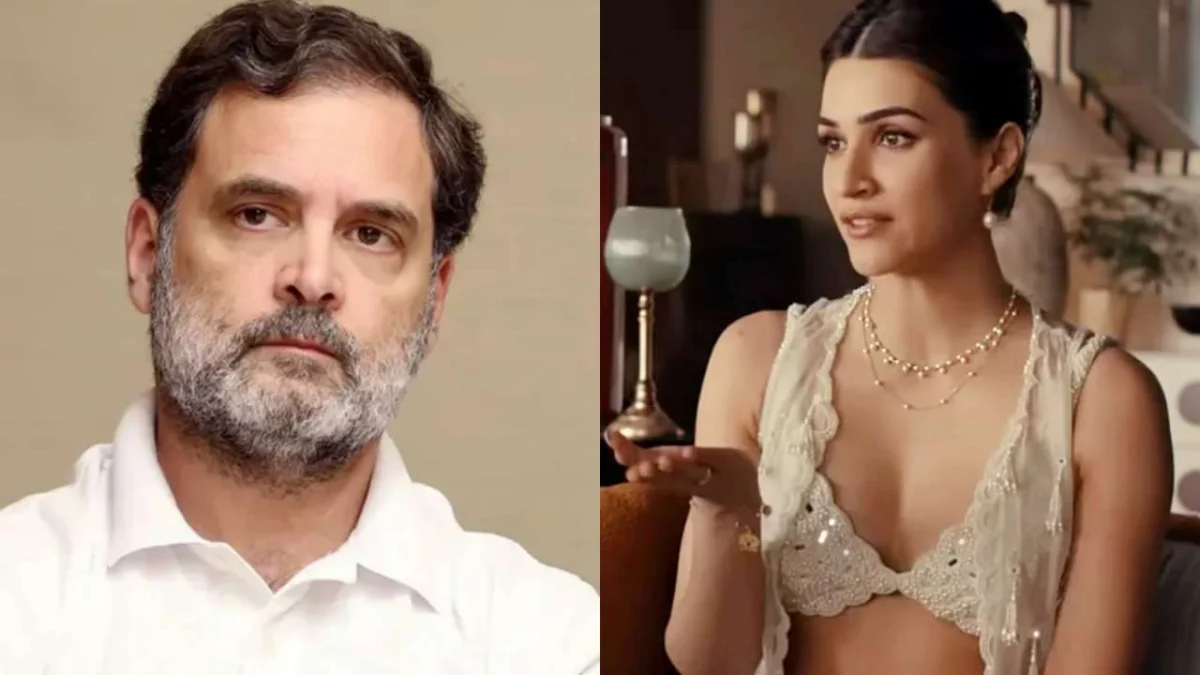
New Delhi, India – August 25, 2026 – A recent advertisement featuring Bollywood actress Kriti Sanon for a jewellery brand’s Raksha Bandhan campaign has ignited a firestorm of online criticism, drawing sharp reactions from various quarters. In a significant intervention, Congress MP and Leader of the Opposition in the Lok Sabha, Rahul Gandhi, has publicly condemned the online trolling, unequivocally asserting a woman’s autonomy over her choices in attire, actions, and movement. The controversy, which has spilled beyond the entertainment industry and into the political arena, underscores a persistent societal debate surrounding traditional values, individual freedom, and the evolving role of women in contemporary India.
The Spark of Controversy: A Festive Ad Under Fire
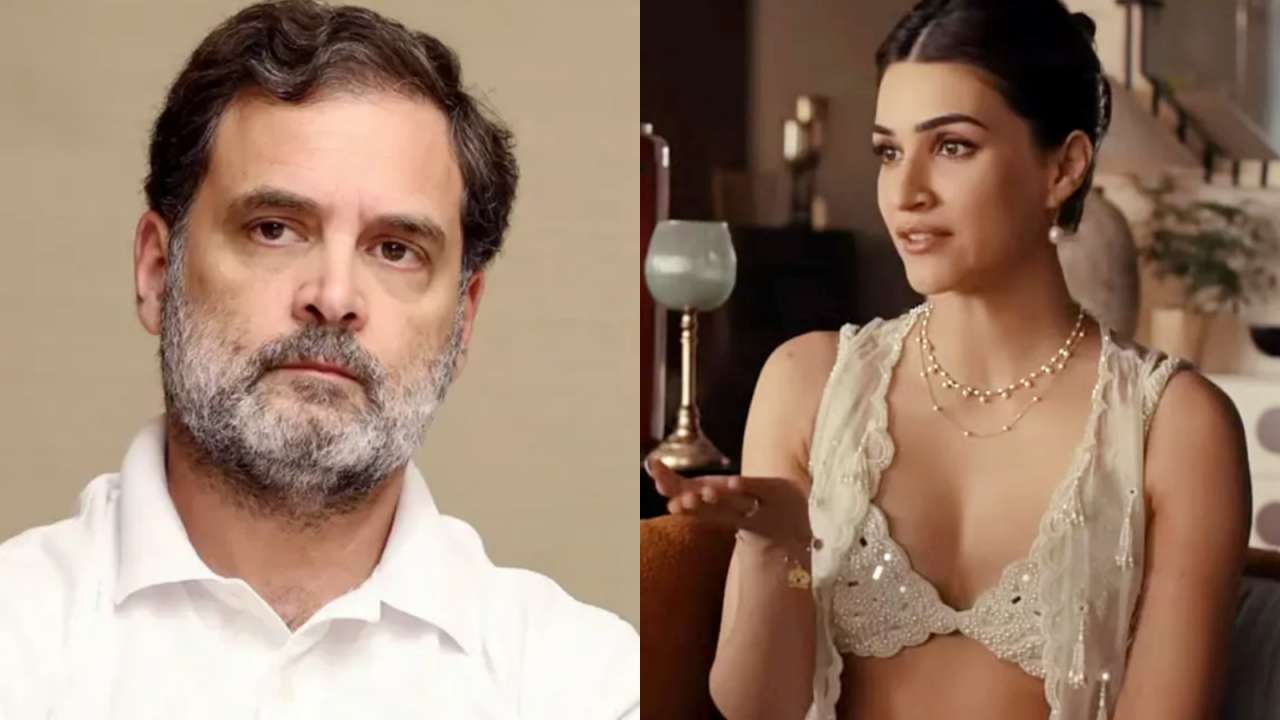
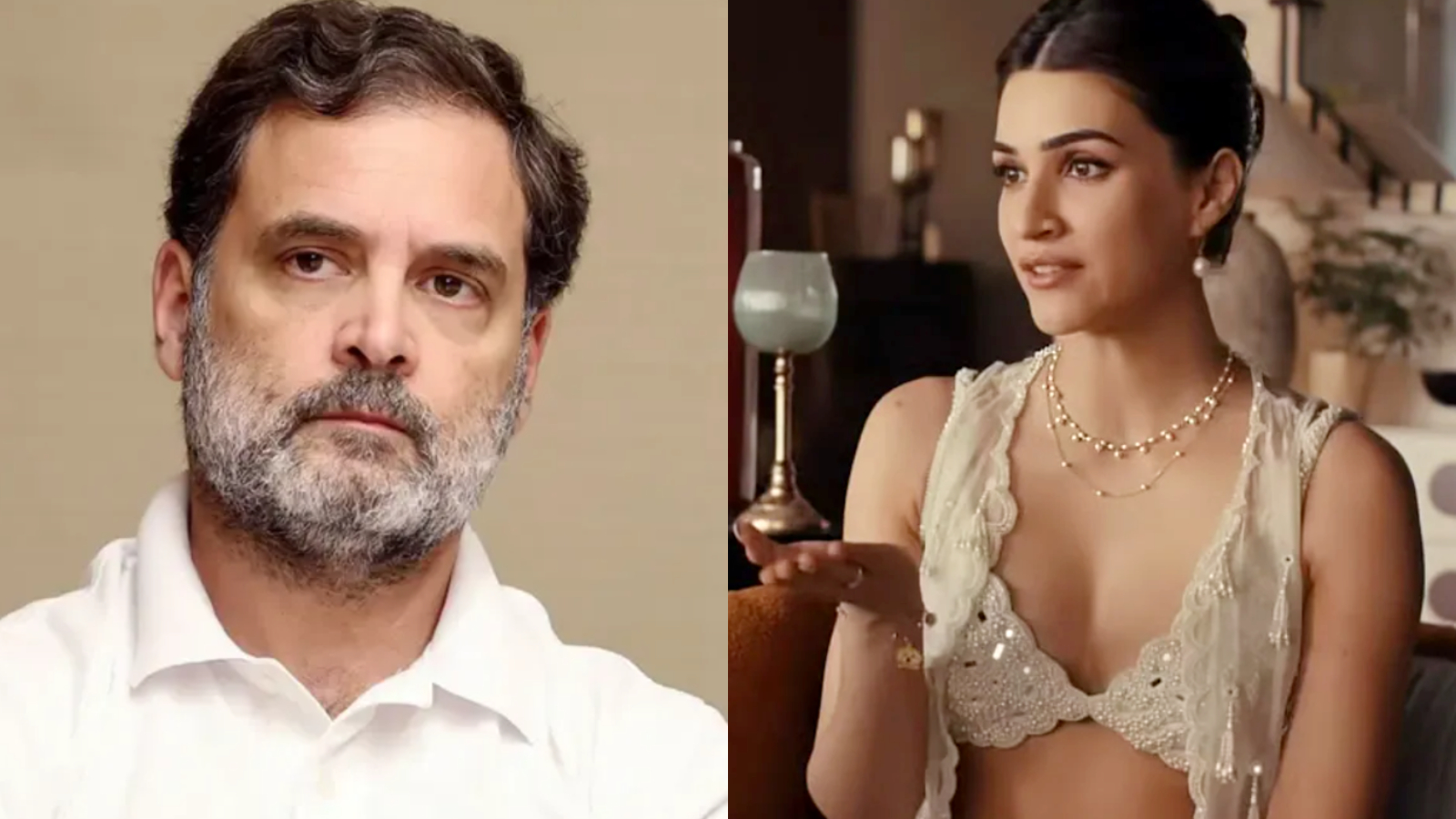
The advertisement in question features Kriti Sanon adorned in an ivory lehenga, characterized by a deep-neck blouse and an accompanying cape, for a jewellery brand’s Raksha Bandhan collection. While many lauded the actress’s elegant portrayal and the modern aesthetic of the ensemble, a segment of online users deemed the outfit "inappropriate" for the culturally significant festival of Raksha Bandhan. Critics, invoking notions of tradition and cultural sanctity, questioned the suitability of Sanon’s attire, sparking a wave of vitriolic comments and accusations of disrespect.
)
The backlash, amplified across social media platforms, quickly escalated from commentary on fashion choices to broader implications regarding cultural norms and female modesty. This public outcry compelled both the actress and prominent political figures to weigh in on the matter, transforming a commercial campaign into a national discourse on freedom of expression and societal expectations.

Chronology of Reactions: From Actress to Opposition Leader
The controversy began to gain traction following the release of the advertisement. Kriti Sanon, initially the subject of the online furore, was among the first to address the criticism directly.
)
Kriti Sanon’s Candid Response: Redefining Tradition
On August 25, 2026, Kriti Sanon took to her Instagram Stories to share her perspective, directly confronting the accusations leveled against her. She questioned the persistent societal tendency to use a woman’s clothing as a yardstick for her respect towards culture and tradition. Sanon articulated her understanding of Raksha Bandhan not merely as a sartorial observance but as an emotional bond of protection and mutual well-being.
)
"The essence of festivals is not in the clothes you wear; it is in the emotions and meaning you hold for the traditions," Sanon wrote. She further elaborated on the inclusive nature of the festival for her family, mentioning that she and her sister tie rakhis to each other, symbolizing their equal capacity for protection. Her message extended to include their pets, emphasizing that "they are family!" Sanon’s statement powerfully challenged the narrow interpretation of culture, asserting, "Culture & Traditions are in her heart, not in her neckline." This direct engagement aimed to shift the focus from superficial judgments to the underlying spirit of the festival and women’s agency.
)
Rahul Gandhi’s Strong Stance: A Champion for Women’s Freedom
Hours after Sanon’s statement, Rahul Gandhi, a prominent figure in Indian politics, voiced his support for the actress and unequivocally condemned the online harassment. In a post on his Instagram Stories, he stated, "What a woman wears, what she does, and where she goes – is her choice. Stop trolling women for exercising their freedom." This intervention by the Leader of the Opposition injected a significant political dimension into the debate, framing the issue as one of fundamental rights and freedoms. Gandhi’s endorsement lent considerable weight to the argument for individual autonomy and pushed back against what he perceived as regressive societal pressures.
)
Kangana Ranaut’s Contrasting Viewpoint: A Provocative Critique
Adding another layer to the unfolding narrative, actor and BJP MP Kangana Ranaut also shared her perspective on her Instagram Stories, offering a viewpoint that sharply contrasted with both Sanon and Gandhi. Ranaut, known for her outspoken nature, appeared to mock the premise of Sanon’s attire in the context of the festival.
)
"It’s a wonderful time to be a woman. Our closets are full of variety of clothes, today’s woman is a global woman. From cocktail dresses to lehenga cholis, jeans to saris, bikinis to salwar kameez, from all the options that are available to us today why would you tie your brother a rakhi in your bikini/undergarments? Where are all your styling options? Ha ha the advert looks intentionally creepy," Ranaut wrote. Her commentary, while acknowledging the diversity of modern women’s wardrobes, implicitly questioned the brand’s creative choices and Sanon’s participation, suggesting a perceived disconnect between the outfit and the sanctity of the occasion. This stance further highlighted the polarization of opinions surrounding the advertisement.
)
Supporting Data and Societal Context: The Evolving Landscape of Festivals and Fashion
The controversy surrounding Kriti Sanon’s Raksha Bandhan advertisement is not an isolated incident but reflects a broader societal discourse in India concerning the modernization of traditions and the evolving status of women.
)
- Evolving Interpretations of Festivals: Traditional festivals in India are increasingly being reinterpreted by younger generations. While the core values of familial bonds and cultural heritage remain, the expression of these traditions is often adapted to contemporary lifestyles and aesthetics. This includes embracing modern fashion choices that resonate with personal style, even during culturally significant events.
- The Rise of Social Media as a Platform for Scrutiny and Discourse: Social media has become a potent tool for both celebrating and scrutinizing public figures and their choices. While it allows for immediate feedback and engagement, it also fosters environments where public shaming and "cancel culture" can take root. The rapid dissemination of opinions, often without context or nuance, can amplify criticism disproportionately.
- The "What Women Wear" Debate: The debate over women’s clothing has a long and often contentious history in India. From concerns about "Westernization" to judgments based on perceived modesty, women’s attire has frequently been subjected to public scrutiny and moral policing. The Sanon advertisement tapped into this existing societal sensitivity.
- The Commercialization of Festivals: Raksha Bandhan, like many other festivals, has also seen increased commercialization. Brands leverage these occasions to promote their products, leading to advertisements that sometimes push creative boundaries. This can, in turn, spark debates about the appropriateness of such marketing strategies in relation to cultural sensitivities.
Official Responses and Political Ramifications
The involvement of a prominent political figure like Rahul Gandhi elevates the issue beyond a simple celebrity controversy.
)
- Congress’s Stance: A Defense of Individual Liberties: The Congress party, through Rahul Gandhi’s statement, has positioned itself as a defender of individual freedoms and a progressive force against what it terms "trolling" and regressive societal pressures. This aligns with the party’s broader narrative of advocating for women’s rights and secular values. The endorsement by a national opposition leader ensures that the issue receives wider attention and potentially influences public discourse on a larger scale.
- The BJP’s Position (Implied): While Kangana Ranaut is a Member of Parliament from the BJP, her personal statement on social media does not necessarily represent the official stance of the party. However, her commentary, which leans towards a more conservative interpretation of cultural appropriateness, reflects a segment of public opinion that often aligns with the BJP’s broader ideological leanings. The differing responses from figures associated with both major political parties highlight the polarized nature of the debate.
- Potential for Broader Political Engagement: The issue could potentially be leveraged by political parties to mobilize their respective support bases. For parties advocating for progressive social reforms, defending individual freedoms against what they perceive as cultural conservatism can be a potent rallying cry. Conversely, parties that emphasize traditional values might find support by aligning with sentiments that prioritize cultural sanctity.
Implications and Future Outlook
The Raksha Bandhan ad controversy and the subsequent political interventions have several significant implications:
)
- Reinforcing the Debate on Women’s Agency: The strong stance taken by Rahul Gandhi, coupled with Kriti Sanon’s articulate defense, reinforces the ongoing national conversation about women’s autonomy and their right to make personal choices without facing undue societal judgment or online harassment. It underscores the need to challenge patriarchal norms that seek to control women’s lives based on their attire or actions.
- The Power of Celebrity Endorsement and Political Backing: The involvement of a major Bollywood star and a national political leader amplifies the reach and impact of the debate. It demonstrates how public figures can influence public opinion and lend legitimacy to certain viewpoints.
- Navigating the Intersection of Culture, Commerce, and Individual Freedom: The controversy highlights the complex interplay between deeply ingrained cultural traditions, the commercial interests of brands, and the individual freedoms of people in a democratic society. Finding a balance that respects all these facets remains a persistent challenge.
- The Evolving Nature of Social Media Discourse: The incident serves as another reminder of the double-edged sword of social media – its capacity to connect and empower, but also to incite and divide. The need for responsible online engagement and the development of mechanisms to curb online abuse remains critical.
As India continues its journey of modernization and social evolution, such controversies, though sometimes sparked by seemingly minor events, often serve as crucial catalysts for introspection and dialogue. The debate ignited by Kriti Sanon’s Raksha Bandhan ad, and amplified by the intervention of figures like Rahul Gandhi, is likely to resonate, pushing the boundaries of societal norms and reaffirming the persistent struggle for individual liberty in the digital age. The coming days will reveal the extent to which this political endorsement and public discourse influence broader perceptions of women’s rights and cultural expression in India.
