

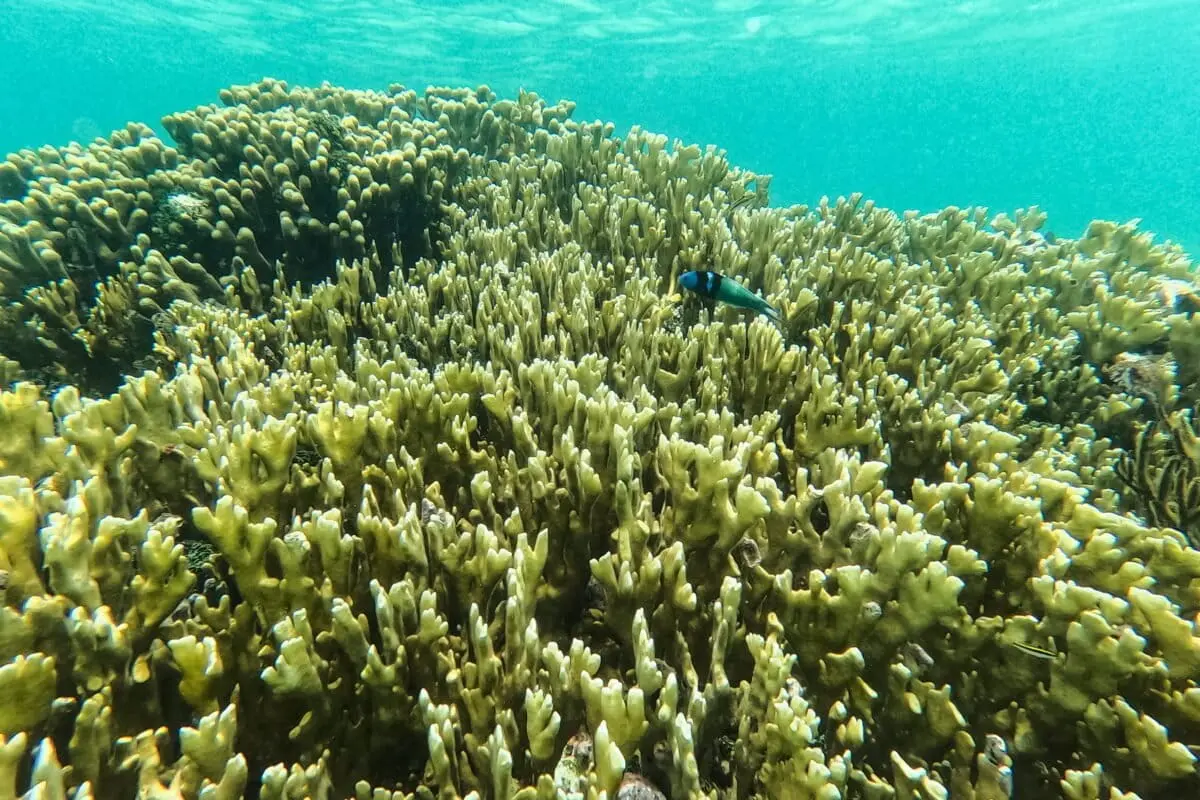
The world’s coral reefs, often described as the "rainforests of the sea," are currently locked in a desperate battle for survival. As global temperatures continue their upward trajectory, the natural phenomenon known as El Niño is being "supersized," according to United Nations Secretary-General António Guterres. This intensification of climate patterns is creating a relentless cycle of marine heatwaves that leave coral ecosystems with insufficient time to recover, threatening to wipe out the vast majority of tropical reefs within the coming decades.
Main Facts: A Crisis of Frequency and Intensity
The fundamental crisis facing coral reefs today is not merely the intensity of heatwaves, but their increasing frequency. Traditionally, coral reefs required decades of stable conditions to recover from a major bleaching event. However, a new report from the Global Coral Reef Monitoring Network (GCRMN) and the International Coral Reef Initiative (ICRI) suggests that this window of recovery has been slashed to just five or six years. In the most extreme cases, such as those seen in 2024, reefs may have little more than a single year to begin the healing process before the next thermal strike occurs.
Coral bleaching is a stress response. When water temperatures remain too high for too long, corals expel the microscopic, colorful algae (zooxanthellae) living in their tissues. These algae provide the coral with up to 90% of its energy through photosynthesis. Without them, the coral turns white, begins to starve, and becomes highly susceptible to disease. While bleaching does not always mean immediate death, the "supersized" nature of modern El Niño events—superimposed on a background of steadily warming oceans—is pushing corals beyond their biological tipping points.
The Intergovernmental Panel on Climate Change (IPCC) has issued a stark warning: even if global warming is successfully limited to 1.5°C above pre-industrial levels, between 70% and 90% of the world’s warm-water coral reefs are expected to disappear. If warming reaches 2°C, the loss is projected to be virtually total (over 99%).
Chronology: The Evolution of Global Bleaching Events
To understand the current crisis, one must look at the timeline of how El Niño has evolved from a natural weather cycle into a catalyst for ecological catastrophe.

1982–1983: The First Warning Shot
The first recorded large-scale mass coral bleaching event occurred in the eastern tropical Pacific during the record-breaking El Niño of 1982–83. This event served as a "harbinger of the future," according to Derek Manzello, Coordinator of NOAA’s Coral Reef Watch. In the Galapagos Islands, coral mortality reached a staggering 95% to 99%, effectively eliminating reefs from the southern part of the archipelago.
1998: The First Global Event (GCBE1)
The 1998 El Niño marked the first Global Coral Bleaching Event (GCBE1). It was a watershed moment for marine biology, as it became clear that bleaching was no longer a localized issue but a planetary one. It is estimated that 8% of the world’s total coral cover died during this single year.
2014–2017: The Longest Siege
The third global event was the longest and most damaging on record, lasting over three years. During this period, more than 75% of the world’s tropical reefs experienced bleaching-level heat stress, and nearly 30% reached mortality-level stress.
2023–2026: The Current "Supersized" Era
We are currently navigating the fourth Global Coral Bleaching Event (GCBE4). The 2023–2024 period saw a global coral cover decline of approximately 8.9%. With the World Meteorological Organization (WMO) predicting that El Niño conditions will persist and potentially peak toward the end of 2026, experts fear this event could surpass all previous records in terms of reef mortality.
Supporting Data: Regional Impact and the Six-Year Recovery Rule
The data emerging from localized studies provides a granular look at the devastation. India’s reef systems, particularly those in the Lakshadweep archipelago, serve as a grim case study for the global trend.

The Indian Subcontinent Experience
A 24-year longitudinal study in Lakshadweep, cited by marine biologist Amruth P. of CHRIST University, Bengaluru, reveals that coral cover has plummeted from 37% in 1998 to under 20% today. This decline is attributed to repeated marine heatwaves that hit the region before the ecosystem could stabilize.
Research led by Wenzel Pinto of the Nature Conservation Foundation (NCF) highlights a critical finding: The Six-Year Window. The study found that reefs only show significant recovery when they are granted at least six consecutive bleaching-free years. Today, such windows are becoming a statistical rarity.
In the 2023-2025 period, over 80% of India’s tropical reefs faced extreme heat stress. However, the damage was not uniform, revealing a complex picture of "winners and losers" in the climate struggle:
- Lakshadweep: The hardest hit, with up to 37% of coral cover bleached or dead.
- Andaman Islands: Experienced a lower mortality rate of roughly 11.5% in the Mahatma Gandhi Marine National Park.
- Palk Bay: Showed surprising results where typically resilient Porites (boulder corals) suffered 61.8% mortality, while the more fragile Acropora (branching corals) fared better at 13.6% loss. This suggests that local oceanographic conditions—such as turbidity, depth, and water flow—can sometimes override general species vulnerability.
Global Statistical Trends
- 1998-2018: A total of 14% of the world’s corals were lost during this decade, primarily due to rising sea surface temperatures.
- 2019-2023: The global mean sea surface temperature during this period was equal to the maximum recorded during the 1998 El Niño. Essentially, a "normal" year today is as hot as the most extreme year of the late 20th century.
- La Niña Warming: Perhaps most alarming is that sea surface temperatures during recent La Niña (cooling) phases are now warmer than they were during El Niño (warming) phases 30 to 40 years ago.
Official Responses: International Alarm and Calls to Action
The escalating crisis has prompted a flurry of responses from global scientific and political bodies.
The United Nations Environment Programme (UNEP):
UNEP has likened the world’s reefs to an "overmatched boxer" taking repeated blows. Their reports emphasize that the sheer pace of climate change is outstripping the evolutionary ability of corals to adapt.

The World Meteorological Organization (WMO):
The WMO has confirmed that El Niño is now "firmly established" and is being amplified by human-induced climate change. They warn that the heat stored in the ocean will continue to influence global weather patterns and reef health well into 2027.
The Scientific Community in India:
In a significant move, 188 ecologists and conservationists across India have signed a "Call to Action." This document, published via Zenodo, demands stronger research frameworks and long-term monitoring of the 2026-27 El Niño. They argue that without a dedicated, nationwide monitoring system, the nuances of reef recovery and adaptation will be lost, making conservation efforts less effective.
NOAA’s Coral Reef Watch:
Derek Manzello and his team continue to refine satellite monitoring. They have noted that the Eastern Tropical Pacific remains "ground zero" for the El Niño-Southern Oscillation (ENSO), and the fate of these reefs remains uncertain as they enter uncharted thermal territory.
Implications: More Than Just "Pretty Rocks"
The disappearance of coral reefs carries profound implications for the planet’s health, human economy, and coastal security.
1. Biodiversity Collapse
Coral reefs occupy less than 0.1% of the ocean floor but support more than 25% of all marine life. The collapse of these structures would trigger a domino effect throughout the marine food web, leading to the extinction of countless species that depend on reefs for nurseries, protection, and hunting grounds.

2. Economic Devastation
The "Blue Economy" relies heavily on healthy reefs. Globally, reefs provide an estimated $2.7 trillion annually in goods and services. This includes:
- Fisheries: Reefs provide protein for over a billion people. As reefs die, fish populations decline, threatening food security in developing coastal nations.
- Tourism: Millions of livelihoods in the Caribbean, Southeast Asia, and the Pacific depend on reef-related tourism.
3. Loss of Coastal Protection
Coral reefs act as natural breakwaters, absorbing up to 97% of wave energy. Without them, coastal communities will be increasingly vulnerable to storm surges, erosion, and rising sea levels. The cost of building artificial sea walls to replace the protection offered by reefs would be astronomical.
4. The Race for Adaptation
The current crisis is forcing scientists to look toward radical solutions, such as "assisted evolution"—breeding heat-tolerant corals in labs and outplanting them. However, experts warn that these interventions are "band-aids" that cannot succeed unless the underlying cause—carbon emissions—is addressed.
As we approach the peak of the 2026-27 El Niño, the global community stands at a crossroads. The data from Lakshadweep to the Galapagos tells a consistent story: the window for recovery is closing. The "supersized" El Niño is no longer a rare natural event; it is a recurring climate weapon that is systematically dismantling one of the Earth’s most vital ecosystems. The survival of coral reefs now depends on a global commitment to rapid decarbonization and a renewed focus on local reef resilience. Without both, the next generation may only know coral reefs through history books and digital archives.
