

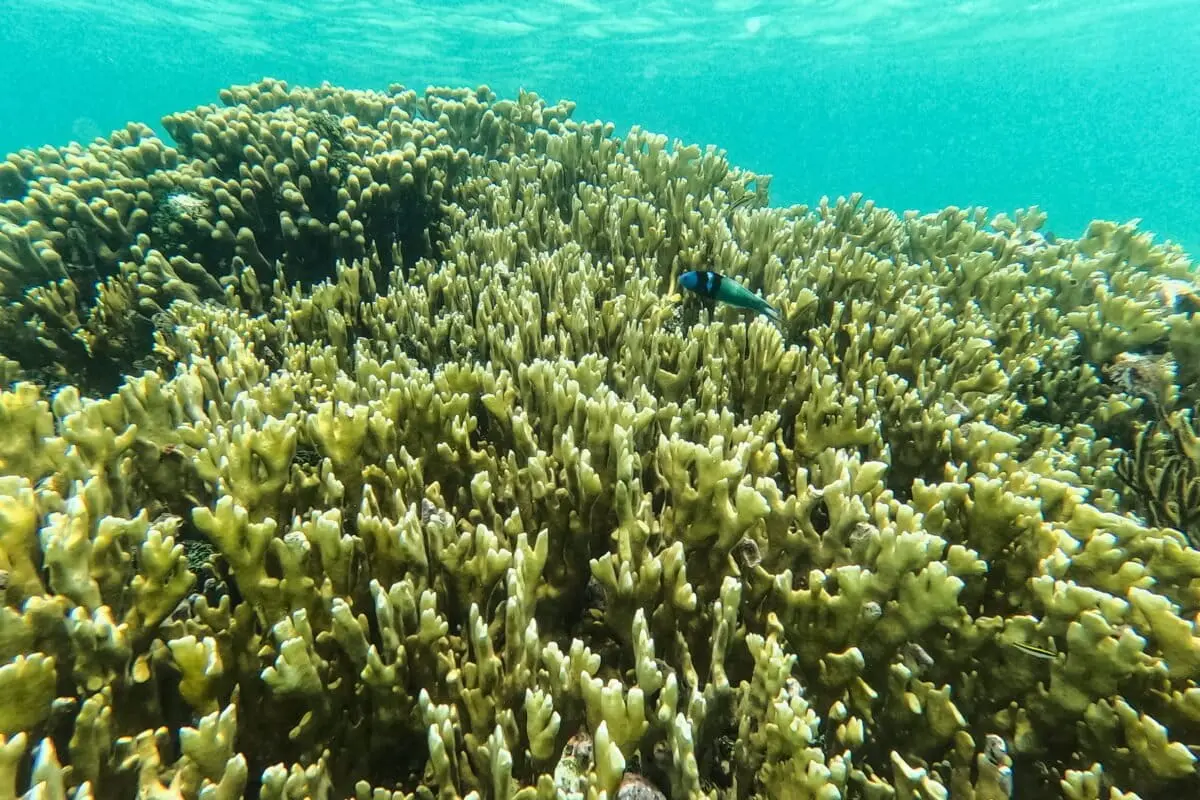
Introduction: The Overmatched Boxer
The world’s coral reefs, often described as the "rainforests of the sea," are currently locked in a desperate fight for survival against a relentless opponent: climate change. United Nations Secretary-General António Guterres has recently sounded a dire alarm, stating that the natural climate phenomenon known as El Niño is being "supersized" by a rapidly warming planet. This synergy between natural oscillations and man-made global warming is creating a "perfect storm" of marine heatwaves that threatens to dismantle some of the most biodiverse ecosystems on Earth.
The United Nations Environment Programme (UNEP) has starkly likened the current state of coral reefs to an "overmatched boxer" taking repeated, heavy blows. Before these fragile organisms can recover from one bleaching event, the next one arrives, often with greater intensity. According to the Global Coral Reef Monitoring Network (GCRMN) and the International Coral Reef Initiative (ICRI), the frequency of these thermal stress events has reached a point where the natural resilience of the ocean’s "blue lungs" is being pushed past its breaking point.
Main Facts: The Narrowing Window of Recovery
The fundamental crisis facing coral reefs today is not just the heat itself, but the lack of time between heatwaves. Historically, coral reefs had decades to recover after a major bleaching event. Corals are colonial organisms that rely on a symbiotic relationship with microscopic algae called zooxanthellae. When water temperatures rise too high, corals expel these algae, turning white—a process known as bleaching. While bleached corals are not dead, they are severely stressed and vulnerable. If temperatures return to normal quickly, the algae can return; however, if the heat persists or recurs too soon, the corals starve and die.

Current data suggests a catastrophic narrowing of the recovery window. Manuel González Rivero, a reef expert at the Australian Institute of Marine Science (AIMS) and lead author of the recent GCRMN report, notes that while reefs once had twenty-year intervals to rebound, they are now "lucky to get five or six years." For many reefs impacted by the unprecedented marine heatwaves of 2023 and 2024, the "supersized" El Niño means they may have had less than a single year to begin the recovery process before being struck again.
The Intergovernmental Panel on Climate Change (IPCC) provides a stark outlook: even if global warming is successfully constrained to 1.5°C above pre-industrial levels, it is estimated that 70% to 90% of all warm-water tropical coral reefs will disappear. If warming reaches 2°C, the loss is projected to be virtually total—exceeding 99%.
Chronology of a Crisis: From 1982 to the 2027 Forecast
The history of mass coral bleaching is a relatively short but accelerating timeline that mirrors the curve of global carbon emissions:
- 1982-1983: The first large-scale mass coral bleaching event was recorded in the eastern tropical Pacific. Triggered by a record-breaking El Niño, it served as a "harbinger of the future." In the Galapagos Islands, coral mortality reached a staggering 95% to 99%, effectively eliminating reefs from the southern part of the archipelago.
- 1998 (GCBE1): The first Global Coral Bleaching Event (GCBE1) occurred. An estimated 8% of the world’s total coral cover died in a single year as a massive El Niño gripped the oceans.
- 2009-2018 (GCBE2 & GCBE3): This decade saw a further 14% loss of global coral cover. The third global event was particularly prolonged, lasting from 2014 to 2017, and impacted more reefs than any previous event.
- 2023-2024 (GCBE4): A fourth global mass bleaching event was confirmed as global coral cover declined by another 8.9%. This period was marked by the highest sea surface temperatures ever recorded.
- 2026-2027 (The Current Threat): The World Meteorological Organization (WMO) reports that El Niño is now "firmly established." WMO-designated centers indicate a near 100% probability that El Niño will persist through the end of 2026, peaking in late 2026 and continuing into early 2027.
Derek Manzello, Coordinator of the National Oceanic and Atmospheric Administration’s (NOAA) Coral Reef Watch, emphasizes that the "background" temperature of the ocean has risen so much that even La Niña years (the cooler phase of the cycle) are now warmer than El Niño years were forty years ago.
Supporting Data: Regional Impacts and the Indian Context

While the crisis is global, the impacts are felt with varying intensity across different marine provinces. India, with its extensive coastline and island territories, serves as a critical case study for these shifting dynamics.
The Lakshadweep Collapse
In the Lakshadweep archipelago, a 24-year study has documented a heartbreaking decline. Marine biologist Amruth P. of CHRIST University, Bengaluru, notes that coral cover in this region has plummeted from approximately 37% in 1998 to under 20% today. The study, conducted by the Nature Conservation Foundation (NCF), revealed that these reefs only show signs of robust recovery when they are granted at least six bleaching-free years. With the current frequency of El Niño events, such a window has become a rare luxury.
Regional Variations: Andaman vs. Palk Bay
The NCF’s Wenzel Pinto led a nationwide study between 2023 and 2025, finding that over 80% of India’s tropical reefs experienced extreme heat stress. However, the response was not uniform:
- Lakshadweep: Emerged as the hardest-hit, with up to 37% of coral bleached or dead.
- Andaman Islands: The Mahatma Gandhi Marine National Park showed more resilience, with only 11.5% mortality.
- Palk Bay: In a surprising reversal of biological norms, the usually fragile Acropora (branching corals) saw only 13.6% mortality, while the "hardier" Porites (boulder corals) suffered a 61.8% loss.
This data suggests that local oceanographic conditions—such as upwelling, turbidity, and water flow—play a massive role in determining which reefs might survive the coming decades.
Official Responses: A Call to Action
The international community and the scientific establishment are shifting from "monitoring" to "emergency response." The WMO and UNEP are calling for an immediate escalation in global climate ambition, noting that current mitigation efforts are insufficient to save these ecosystems.

In India, the scientific community has taken a proactive stance. Recently, 188 ecologists and conservationists across the country signed a formal "Call to Action." This document seeks:
- Enhanced Funding: For long-term monitoring of the ecological impacts of the 2026-2027 El Niño.
- Strategic Research: To identify "thermal refugia"—areas where local conditions keep waters cooler—which can be prioritized for strict protection.
- Community Engagement: Strengthening the role of local fishing communities in reef management, as their livelihoods are the first to be compromised when reefs fail.
UN Secretary-General Guterres has used the "supersized" El Niño to push for a more rapid phase-out of fossil fuels, arguing that the "ocean’s fever" is a direct symptom of human carbon dependency.
Implications: Beyond the Beauty of the Reef
The disappearance of coral reefs is not merely an aesthetic or environmental tragedy; it is a socio-economic catastrophe in the making. The implications of losing 70-90% of the world’s reefs are profound:
1. Biodiversity Loss
Coral reefs occupy less than 0.1% of the ocean floor but support more than 25% of all marine life. Their collapse would trigger a "domino effect" of extinctions among fish, crustaceans, and mollusks that depend on the reef structure for nurseries and protection.
2. Food Security and Livelihoods
Hundreds of millions of people globally depend on reefs for protein and income. In India alone, thousands of artisanal fishers rely on reef-associated species. As reefs turn into rubble, these fisheries collapse, threatening the food security of coastal populations.

3. Coastal Protection
Coral reefs act as natural breakwaters, absorbing up to 97% of wave energy. In an era of rising sea levels and more intense cyclones, the loss of reefs leaves coastal villages and cities—including major hubs like Mumbai and Chennai—vulnerable to devastating storm surges and erosion.
4. The "New Normal" of Adaptation
The findings by Wenzel Pinto and his team suggest that the future of reefs will be one of "winners and losers." Some reefs may collapse entirely, while others may adapt by shifting their species composition. The challenge for conservationists in the 2026-2027 window is to identify these resilient "pockets of hope" and protect them from local stressors like pollution and overfishing, giving them the best possible chance to weather the "supersized" heat.
Conclusion
As the 2026-2027 El Niño looms, the window for action is closing as fast as the window for coral recovery. The "supersized" nature of modern climate events means that nature’s ability to bounce back is no longer a given. The fate of the world’s coral reefs now rests on a dual track: the global success of carbon mitigation and the local success of intensive, science-based conservation. Without both, the "overmatched boxer" may soon face a final knockout.
