

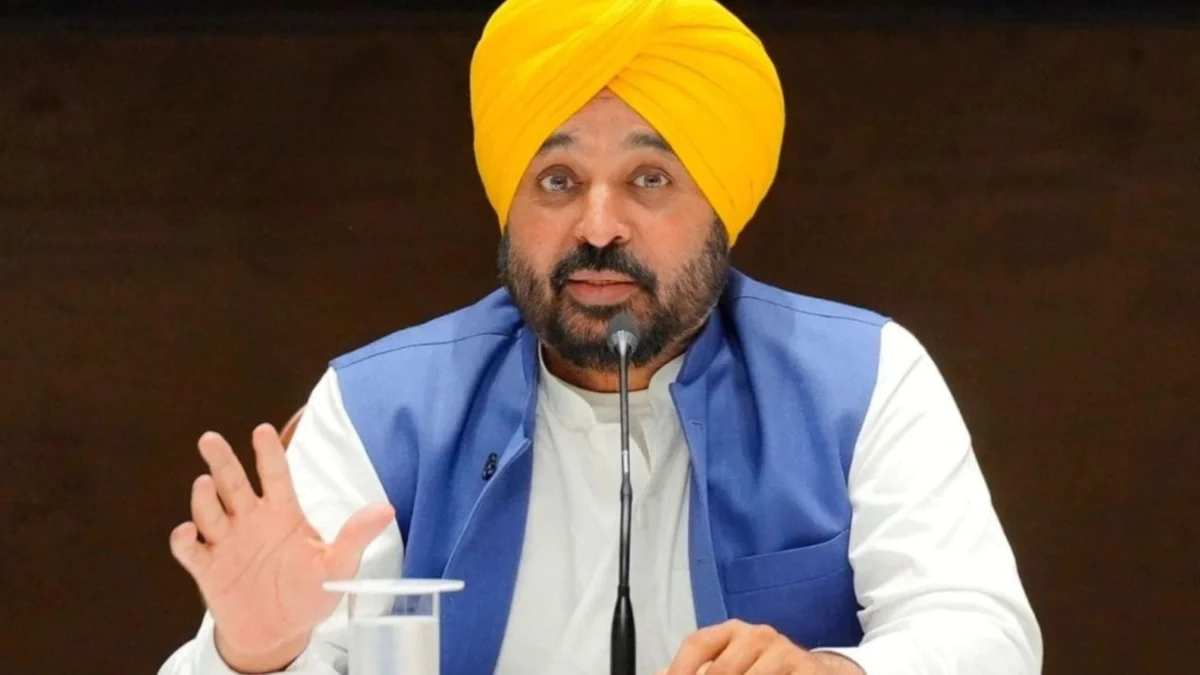
Chandigarh, Punjab – The ruling Aam Aadmi Party (AAP) in Punjab has clinched a decisive victory in the state’s urban local body (ULB) elections, securing a significant majority of wards across municipal councils and nagar panchayats. However, this resounding mandate, declared on Friday, May 29, 2026, comes heavily wrapped in a thick shroud of controversy, with the Opposition alleging widespread malpractice, violence, and manipulation from the nomination process to the final ballot count. The electoral exercise, which saw citizens cast their votes on May 26, was marked by fierce political battles, claims of procedural irregularities, and a contentious debate over the use of ballot papers instead of Electronic Voting Machines (EVMs).
The civic polls, encompassing elections to eight municipal corporations, 75 municipal councils, and 20 nagar panchayats, covering a total of 1,977 wards, have underscored the AAP’s strengthening grassroots presence in Punjab. Yet, the Opposition’s sustained allegations threaten to cast a long shadow over the legitimacy of the results, raising critical questions about the fairness and transparency of the democratic process in the state.
The Electoral Outcome: A Resounding Victory for the Ruling AAP
As counting for the extensive civic polls continued, preliminary results declared by 3 PM on the day of reckoning painted a clear picture of AAP’s dominance. The ruling party had successfully secured a formidable lead, winning 675 wards. The Indian National Congress trailed significantly with 270 wards, followed by Independent candidates who managed to win 211 wards, indicating the presence of local strongmen or disillusioned party workers. The Shiromani Akali Dal (SAD) secured 150 wards, while the Bharatiya Janata Party (BJP) found limited success with only 67 wards. The Bahujan Samaj Party (BSP) registered a minimal presence with 6 wards.
Further solidifying its advantage, the AAP demonstrated its organizational strength by having 63 of its candidates elected unopposed out of a total of 80 such instances across the state, showcasing a strategic deployment of resources and, as alleged by the Opposition, a potential stifling of democratic competition.
The AAP’s victory was particularly pronounced in key constituencies, signaling a powerful consolidation of support in areas of political significance. In Dhuri, the home turf of Chief Minister Bhagwant Mann, the party demonstrated overwhelming control, winning an impressive 20 out of 21 wards in the municipal council. This local triumph is a significant personal endorsement for the Chief Minister and a clear indicator of his continued influence within his constituency.
Similarly, in Anandpur Sahib, the constituency of state Education Minister Harjot Bains, the AAP secured 11 out of 13 municipal council wards, reinforcing the party’s grip on areas represented by its prominent leaders. Even in the Gidderbaha Municipal Council, the home turf of Punjab Congress president Amarinder Singh Raja Warring, the AAP managed to make significant inroads, sweeping 17 of 19 wards. This particular win in an opposition stalwart’s stronghold serves as a symbolic blow to the Congress and highlights the challenges it faces even in its traditional bastions.
While these results provided a substantial snapshot of the electoral landscape, the complete outcomes for the eight municipal corporations were still pending, leaving a degree of suspense regarding the final composition of urban governance in Punjab’s largest cities.
Chronology of Controversy: A Campaign Fraught with Allegations
The journey to these election results was anything but smooth, characterized by a series of contentious events and accusations that have fueled a bitter political discourse.
Pre-Election Phase: Nomination Challenges and Allegations of Pressure
The first cracks in the electoral process appeared even before voting day, during the nomination stage. Opposition parties, particularly the Congress and the BJP, vehemently alleged that their candidates were systematically prevented from filing their nomination papers in several places. These claims ranged from administrative hurdles deliberately placed in their path to outright intimidation and coercion, forcing candidates to either abandon their intentions or withdraw their candidatures. Such allegations, if substantiated, point to a serious subversion of democratic principles, where the very act of participation is obstructed, thereby limiting voter choice and fair competition.
The Ballot Paper vs. EVM Debate: A Legal and Political Showdown
Perhaps the most significant and divisive controversy revolved around the Punjab State Election Commission’s decision to conduct the elections using ballot papers instead of Electronic Voting Machines (EVMs). The Commission cited "non-availability" of EVMs as the reason for this crucial shift. However, the BJP immediately seized upon this decision, making it the centerpiece of its campaign and launching a frontal assault on the AAP. BJP leaders accused the ruling party of intentionally creating conditions ripe for manipulation during the counting process, suggesting a deliberate attempt to undermine the integrity of the elections.
The matter quickly escalated into a high-stakes legal battle. It first went before the Punjab and Haryana High Court, and subsequently reached the Supreme Court of India. Both judicial bodies, after hearing the arguments, ultimately refused to halt the election process, allowing the polls to proceed with ballot papers. While the legal challenges did not succeed in changing the mode of voting, they significantly amplified the controversy, eroding public trust and casting a shadow of doubt over the fairness of the electoral machinery even before a single vote was cast. The BJP’s persistent narrative was that the shift to ballot papers was a calculated move by the AAP to facilitate "vote chori" – a direct accusation of electoral fraud.
Voting Day Unrest: Clashes and Sporadic Violence
Voting day itself, May 26, was not without its share of turbulence. Reports of clashes and sporadic violence emerged from various parts of the state, further adding to the bitterness surrounding the elections. These incidents, ranging from minor skirmishes to more serious confrontations between rival party workers, served to underscore the highly charged atmosphere. The violence not only disrupted the polling process in affected areas but also created an environment of fear, potentially influencing voter turnout and choices. Opposition parties quickly linked these incidents to the ruling party, accusing them of using strong-arm tactics to suppress dissent and ensure a favorable outcome.
Counting Day Allegations: Persistent "Vote Chori" Claims
Even after the ballots were cast and the counting began, the BJP’s allegations of "vote chori" persisted and intensified. BJP spokesperson Vineet Joshi, a vocal critic of the process, continued to level serious charges against the ruling party. He alleged that the AAP had "indulged in all kinds of excesses" throughout the electoral cycle. Joshi provided a specific example from his Nayagaon area, in Ward No. 6, where he claimed the counting process for BJP candidate Surinder Kaushish, who was leading by a margin of 15 votes, was being repeatedly subjected to recounts. "They cannot digest it. Hence, they will count, recount and count once again," Joshi stated, highlighting what he perceived as a desperate attempt to overturn a BJP victory. He further added that in Nayagaon, out of 11 declared results, eight had gone the BJP’s way, suggesting that where fair counting was allowed, the BJP performed well. These ongoing allegations of manipulation during the counting process have cast a long shadow over the credibility of the results, despite the AAP’s clear numerical advantage.
Official Responses and Party Reactions
The diverse outcomes and the contentious nature of the elections elicited varied responses from Punjab’s political stakeholders, each interpreting the results through their own strategic lens.
The Aam Aadmi Party’s Stance: A Mandate for Governance
While no direct quote from an AAP leader explicitly addressing the controversies was provided in the initial reports, the party’s implied stance is one of triumphant vindication. Their dominant performance, especially in key constituencies, would naturally be presented as a clear mandate from the people of Punjab for their governance and policies. The AAP would likely dismiss the opposition’s allegations as mere "sour grapes" – the predictable complaints of parties defeated at the polls – and attempts to discredit a democratically achieved victory. Their focus would shift towards leveraging this grassroots consolidation to implement local development agendas and reinforce their commitment to effective urban administration. The absence of an immediate counter-narrative to the "vote chori" claims from the AAP suggests either a confidence in the process or a strategic decision to let the results speak for themselves, focusing instead on the magnitude of their win.
Bharatiya Janata Party (BJP): Accusations of Malpractice and Strategic Miscalculations
For the BJP, the elections were a significant disappointment, falling well short of their ambitious expectations. Spokesperson Vineet Joshi articulated the party’s deep frustration, alleging that the ruling party had "indulged in all kinds of excesses, from rejecting papers to demolishing people’s houses, intimidating them to choose ballot boxes over EVMs." He unequivocally labeled the entire process as "vote chori," underscoring the party’s belief that the outcome was engineered rather than genuinely earned.
Joshi also dismissed the notion that these civic polls could serve as a "semi-final" for the 2027 Assembly elections, drawing a parallel to the 2022 Assembly elections where the Congress, despite winning municipal elections prior, was subsequently routed. This argument highlights the BJP’s attempt to de-legitimize the AAP’s victory as a predictor of future state-level success.
The BJP had entered these elections with high hopes, aiming to make significant gains in urban Punjab after its strategic break from the Shiromani Akali Dal (SAD) in 2020. The party envisioned these polls as an opportunity to expand its independent base, buoyed by its recent resounding victory in the West Bengal Assembly elections and hoping to capitalize on the exodus of seven AAP Rajya Sabha MPs. However, the results clearly indicate that the BJP’s strategy failed to resonate with urban voters, and its performance fell significantly short of its self-projected targets, signaling a need for serious introspection and recalibration of its Punjab strategy.
Indian National Congress: Factionalism and Expected Outcomes
The Congress party’s performance, while better than the BJP’s, still highlighted persistent internal challenges. Leader of the Opposition in the Assembly, Partap Singh Bajwa, acknowledged that the results were "on expected lines" because civic polls in Punjab have traditionally favored the ruling party. This pragmatic assessment, however, also implicitly acknowledged the party’s inability to challenge the ruling establishment effectively at the grassroots level.
Bajwa also articulated the party’s belief that the real contest in Punjab remains between the AAP and Congress, a dynamic he expects to continue into the 2027 Assembly elections. Yet, the elections also exposed the Congress’s Achilles’ heel: its inability to convert the momentum gained from the 2024 Lok Sabha elections into a robust grassroots-level organization. Pervasive factional rivalries within the party continued to weaken its campaign efforts across several towns, hindering its ability to present a united front and capitalize on anti-incumbency sentiments where they might exist. The results underscore the urgent need for the Congress to address its internal divisions if it hopes to mount a credible challenge in future state elections.
Shiromani Akali Dal (SAD): A Glimmer of Revival
For the Shiromani Akali Dal, which has been grappling with years of political decline and a struggle to regain its footing, the election results brought a much-needed, albeit modest, glimmer of relief. SAD spokesperson Parambans Singh Romana interpreted the party’s performance as an indication that the Akalis still retained support in urban Punjab, a segment of the electorate often perceived to be drifting towards other parties.
Romana framed the results as a "message" to both the BJP and Congress, suggesting that these parties had "overestimated their own strength" in urban centers. He asserted that the Akalis had performed better than both the BJP and Congress in certain urban areas, presenting this as "an indication of times to come." While the SAD’s overall ward count remained modest, this relative success in urban areas, particularly when compared to its recent electoral struggles, offers a potential foundation for rebuilding and re-engaging with a crucial segment of the electorate. It suggests that the party might be slowly arresting its decline and could potentially emerge as a more significant force in the future.
Implications and Future Political Landscape
The Punjab urban local body election results carry profound implications for the state’s political landscape, impacting the trajectory of all major parties and raising broader questions about democratic health.
Consolidation of Power for AAP and Grassroots Penetration
For the Aam Aadmi Party, this dominant victory signifies a crucial consolidation of power at the grassroots level. Having secured a strong majority in numerous municipal bodies, the AAP is now better positioned to implement its development agendas directly in urban areas, translate its state-level policies into tangible local improvements, and deepen its connection with the electorate. This widespread local representation will provide the party with a robust organizational structure and a network of elected representatives who can act as direct conduits between the government and the citizens, potentially strengthening its hold ahead of the 2027 Assembly elections. The victory, despite the controversies, empowers the AAP with a renewed sense of confidence and a mandate to govern at multiple levels.
Challenges for the Opposition: Introspection and Re-strategizing
The elections present significant challenges and necessitate deep introspection for the opposition parties.
-
BJP: The party’s urban expansion plans have clearly hit a roadblock. The low ward count, coupled with allegations of "vote chori," demands a critical re-evaluation of its strategy in Punjab. The BJP needs to address its credibility issues, rebuild its grassroots connect, and develop a more effective narrative that resonates with the diverse urban electorate, particularly after its split from the SAD. Its reliance on national issues and the appeal of its central leadership proved insufficient to overcome local dynamics and the ruling party’s influence.
-
Congress: Despite its relatively better performance in the 2024 Lok Sabha elections, the Congress’s inability to translate that momentum into grassroots organizational strength remains a glaring weakness. The pervasive factionalism continues to hobble the party, preventing it from mounting a cohesive and effective challenge. An urgent and decisive effort to resolve internal disputes and build a unified, strong local leadership structure is paramount if the Congress is to emerge as a viable alternative to the AAP in 2027.
-
SAD: While the results offered a glimmer of hope, the SAD still has a long road ahead to reclaim its past dominance. Its modest gains in urban areas provide an opportunity to build upon, but the party must focus on re-engaging with a broader base, addressing the issues that led to its decline, and presenting a compelling vision for urban development. The challenge for SAD is to convert this small relief into sustained growth and a credible resurgence.
The "Semi-Final" Debate Revisited and Broader Democratic Concerns
The debate over whether these civic polls serve as a "semi-final" for the 2027 Assembly elections is complex. Historically, civic elections in Punjab have often favored the incumbent state government due to its control over resources, administrative machinery, and local patronage networks. The Congress’s rout in 2022 despite winning prior municipal elections serves as a potent reminder that local body results do not automatically guarantee state-level success. Assembly elections are often fought on broader state-wide issues, leadership appeal, and different electoral narratives.
However, the controversies surrounding these elections raise deeper concerns about the health of democracy in Punjab. Allegations of violence, prevention of nominations, and particularly the persistent claims of "vote chori" related to the ballot paper decision, if not thoroughly addressed and investigated, risk eroding public trust in the electoral process. The role of the State Election Commission in ensuring impartiality and perceived fairness is crucial. A sustained narrative of electoral malfeasance could lead to voter apathy or disillusionment, ultimately weakening democratic institutions. The need for transparent electoral processes and robust mechanisms to address grievances is paramount to uphold the sanctity of the ballot and ensure that future elections are seen as free and fair by all stakeholders.
