

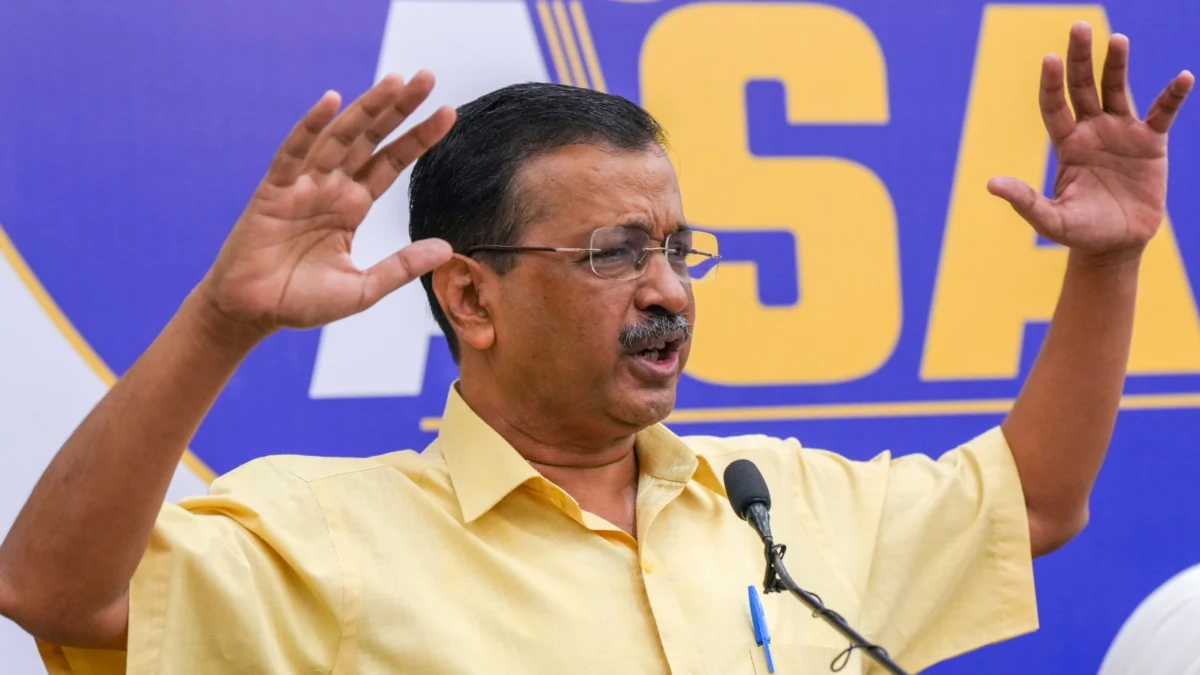
NEW DELHI, India – In a significant political development echoing across Punjab, the Aam Aadmi Party (AAP) has achieved a commanding victory in the state’s urban local body elections. The results, declared on Friday, May 29, 2026, saw AAP secure a decisive majority, prompting party convener and Delhi Chief Minister Arvind Kejriwal to declare that the "ED party has been wiped out," a pointed reference to the Bharatiya Janata Party (BJP) and its alleged misuse of central agencies.
The triumph has been hailed by AAP leaders as a clear public endorsement of the Bhagwant Mann-led government’s performance and development agenda since coming to power in 2022. With results still trickling in for some wards, the initial data underscores a palpable shift in urban voter sentiment, firmly establishing AAP as the dominant political force in the state and setting a formidable precedent for the upcoming 2027 Assembly elections.
A Mandate for Governance: AAP Dominates Punjab Civic Polls
The Aam Aadmi Party’s comprehensive victory in the Punjab civic polls marks a pivotal moment in the state’s political landscape, signaling a strong reaffirmation of public trust in its governance model. The urban local body elections, often considered a crucial barometer of local sentiment and administrative efficiency, have delivered an unequivocal mandate in favour of the ruling party. This electoral success comes at a critical juncture, providing a significant morale booster to the Bhagwant Mann government and bolstering AAP’s strategic positioning ahead of future electoral contests.
The sheer scale of AAP’s triumph has not only solidified its base but also sent a powerful message to the traditional political heavyweights of Punjab – the Indian National Congress and the Shiromani Akali Dal (SAD) – both of whom have historically held sway over the state’s urban centers. The results suggest a growing disillusionment among urban voters with established parties and a pronounced inclination towards AAP’s promises of clean governance, welfare schemes, and grassroots development. Political analysts are quick to interpret this as a continuing wave of anti-incumbency against the old guard, further amplified by AAP’s consistent narrative of progressive change and accountability. The party’s ability to translate its legislative majority into widespread local support underscores its deep penetration into urban electorates, challenging long-held assumptions about regional political dynamics.
Kejriwal’s Triumphant Declaration
AAP Convener Arvind Kejriwal, ever the astute political strategist, wasted no time in capitalizing on the victory, taking to X (formerly Twitter) to express his gratitude and deliver a stinging critique of the opposition. He lauded the "spectacular victory" and stated unequivocally, "Congratulations to everyone. By casting this historic vote, the people have applauded the work of the Bhagwant Mann government. We will continue to do good work in the same way in the future." His message resonated with the party’s core agenda of development and public service.
However, it was Kejriwal’s audacious pronouncement regarding the "ED party" that truly captured headlines. "The ED party, which harassed people by conducting so many raids on small traders in Punjab, has today been avenged by the people," he declared, directly targeting the Bharatiya Janata Party (BJP) and implicitly, the central government’s use of the Enforcement Directorate (ED). This statement is a calculated political maneuver, framing the civic poll results not merely as a local victory but as a popular rebuke against what AAP perceives as political vendetta and harassment by central agencies. The reference to the "ED party" is a direct jab at the BJP, which has often been accused by opposition parties of weaponizing investigative agencies like the ED against political rivals and dissenting voices. Kejriwal’s narrative suggests that Punjab’s voters have collectively risen to defend local businesses and democratic principles, thereby "wiping out" the influence of those who allegedly wield such power unfairly. This rhetorical framing serves to rally his base, portray AAP as a bulwark against authoritarian tactics, and reinforce the party’s image as a champion of the common person against perceived governmental overreach.
Chief Minister Mann Echoes Public Trust
Chief Minister Bhagwant Mann, the face of AAP’s governance in Punjab, echoed Kejriwal’s sentiments, emphasizing the democratic validation of his administration’s efforts. Mann stated that the election results unequivocally reflected widespread public support for his government’s comprehensive development agenda. He highlighted that voters had consciously rejected what he termed "politics of hatred," opting instead for a progressive and inclusive vision for the state. This assertion aligns with AAP’s consistent campaign messaging, which has often focused on tangible improvements in public services, infrastructure, and socio-economic welfare, contrasting it with what they portray as the divisive and often confrontational politics of their opponents.
Mann’s remarks also served to underline the public’s endorsement of AAP’s governance record since it assumed power in March 2022. Having completed a significant tenure, the government faced these civic polls as its first major electoral test at the local level. The positive outcome is, therefore, a crucial validation of its policies and administrative actions, particularly in urban areas where direct public interface with local governance is often most keenly felt. "The people of Punjab have spoken, and they have spoken decisively," Mann asserted in a press conference later in the day. "This victory is not just for AAP; it is for every resident of Punjab who believes in honest governance, equitable development, and a future free from the shadows of corruption and divisive ideologies. We promised change, and the people have acknowledged our efforts to deliver on that promise." This strong affirmation from the Chief Minister underscores the party’s confidence and its commitment to further accelerate its developmental initiatives, armed with a fresh mandate from the urban electorate.
The Chronology of Electoral Battle
The Punjab civic polls were not merely a one-day event but the culmination of an extended period of political maneuvering, intense campaigning, and careful voter engagement. The entire process, from the initial notification to the final declaration of results, unfolded with strategic precision and high stakes.
Campaign Trail and Pre-Poll Dynamics
The run-up to the urban local body elections was characterized by a fervent campaign trail, with all major political parties – AAP, Congress, Shiromani Akali Dal (SAD), and Bharatiya Janata Party (BJP) – deploying their top leaders and grassroots workers to woo voters. For AAP, the campaign was largely centered on showcasing the achievements of the Bhagwant Mann government since 2022. They highlighted initiatives in education, healthcare (with the establishment of Mohalla Clinics), efforts against corruption, and promises of further urban development, including improved sanitation, road infrastructure, and public services. Chief Minister Mann himself led numerous rallies, emphasizing the continuity of state-level policies at the local governance level.
The Congress, attempting to regain lost ground after its devastating defeat in the 2022 Assembly elections, focused on local issues and alleged failures of the AAP government, such as concerns over law and order, drug menace, and unfulfilled promises. Their campaign sought to remind voters of their past contributions and project themselves as a viable alternative, often relying on the traditional loyalties of specific communities. The SAD, aiming to rebuild its cadre and reassert its influence, particularly in its traditional strongholds, campaigned on issues of regional identity, agricultural concerns, and the alleged neglect of rural and semi-urban areas by the current administration. They often criticized AAP for centralizing power and neglecting local decision-making. The BJP, still striving to establish a stronger independent base in Punjab after its long alliance with SAD, concentrated its efforts on urban pockets, appealing to nationalist sentiments and Prime Minister Narendra Modi’s development agenda. They also sought to highlight perceived shortcomings of the state government.
Pre-poll surveys and political pundits had largely predicted a strong showing for AAP, given its dominant position in the Assembly. However, the exact extent of its urban penetration remained a subject of speculation. Many analysts pointed to the underlying anti-incumbency sentiment against the older parties as a significant factor, coupled with AAP’s fresh image and its consistent outreach to urban middle-class and working-class populations.
Polling Day and Voter Engagement
The polling for the 102 municipal bodies across Punjab was held with stringent security arrangements in place to ensure a free and fair election. Voters turned out in significant numbers, with the state recording a voter turnout of 63.94 per cent. This figure, while respectable for local body elections, indicated a strong engagement from the electorate, reflecting the high stakes involved for all political parties. Local authorities, in coordination with the Punjab State Election Commission, had deployed thousands of police and paramilitary personnel to prevent any untoward incidents. Polling stations were equipped with CCTV cameras, and strict protocols were followed to ensure the integrity of the electoral process.
Observers noted a mixed bag of enthusiasm across different urban centers. While some areas saw long queues and brisk voting, others witnessed a more moderate pace. Issues such as local infrastructure, sanitation, water supply, and public safety were frequently cited by voters as key determinants of their choices. The relatively peaceful conduct of the elections was lauded by officials, with only minor skirmishes reported in a few isolated incidents, which were promptly contained. The voting process concluded smoothly, paving the way for the eagerly anticipated counting of votes.
Counting Day Unfolds
The counting of votes commenced promptly at 8 AM on Friday morning amid tight security at various counting centers across the state. Initial trends, available within the first hour, quickly indicated a strong lead for the Aam Aadmi Party. As the morning progressed, these trends solidified into clear leads, showcasing AAP’s dominance in a majority of the wards. The atmosphere in AAP offices across Punjab was one of growing jubilation, with party workers beginning early celebrations. In contrast, the mood in the camps of the Congress, SAD, and BJP was visibly subdued, as their candidates struggled to keep pace with AAP’s surge.
The counting process involved meticulous verification of ballot papers (or EVM results, depending on the specific municipal body’s election method) and was overseen by election officials and party representatives. By Friday evening, the Punjab State Election Commission had declared results for 1,977 out of the total wards. While results for more than 130 wards were still pending at the time of reporting, the overall picture was unequivocally clear: AAP had secured a decisive victory, far outperforming its rivals. The rapid pace of counting and the clear early leads left little doubt about the eventual outcome, allowing for early analysis of the political implications.
Deeper Dive into the Numbers: Supporting Data and Analysis
The official data released by the Punjab State Election Commission provides a comprehensive picture of the electoral landscape, detailing the extent of each party’s performance and highlighting key trends.
AAP’s Landslide Performance
The Aam Aadmi Party’s victory was nothing short of a landslide. Of the 1,977 wards for which results were declared by Friday evening, AAP secured an impressive 886 wards. This constitutes approximately 44.8% of the declared wards, a dominant share that underscores its widespread acceptance in urban Punjab. Geographically, AAP demonstrated strength across diverse regions, not just limited to central Punjab. While specific breakdowns for each municipal body were still being compiled, early reports indicated strong performances in major cities and towns.
A prime example of this dominance was Dhuri, Chief Minister Bhagwant Mann’s home constituency, where AAP won a remarkable 19 out of 21 wards. This particular victory holds significant symbolic value, demonstrating Mann’s strong grassroots connect and the public’s confidence in his leadership in his own backyard. Similar strong showings were reported in other key urban centers like Gidderbaha, where the party swept a majority of the wards. Even in areas traditionally considered strongholds of the Congress or SAD, AAP managed to make significant inroads, indicating a broader appeal beyond its established voter base. Political analysts suggest that AAP’s focus on tangible improvements in local infrastructure, such as road repair, sanitation, and street lighting, combined with its anti-corruption stance, resonated deeply with urban voters who often face immediate issues related to municipal governance. The party’s ability to mobilize its volunteer network also played a crucial role in converting popular sentiment into votes.
Opposition’s Performance: A Mixed Bag
While AAP celebrated its historic win, the performance of the opposition parties presented a mixed and often challenging picture.
-
Indian National Congress: The Congress managed to secure 358 wards, making it the second-largest party in terms of ward victories. While this number is substantial, it pales in comparison to AAP’s tally and represents a continued struggle for the grand old party to reclaim its dominant position in Punjab. Many of its wins were scattered, indicating localized strengths rather than a cohesive statewide urban appeal. For the Congress, these results necessitate a deep introspection into its organizational structure and messaging, as it continues to grapple with leadership challenges and a perceived lack of a clear vision for the state.
-
Shiromani Akali Dal (SAD): The SAD’s performance was particularly concerning for the regional party, which secured only 178 wards. This further solidifies the narrative of its continued decline, a trend observed since the 2017 Assembly elections. The party, which once commanded immense loyalty in both rural and urban Punjab, appears to be struggling to adapt to the changing political dynamics. Its inability to make a significant impact in urban local bodies raises serious questions about its relevance outside its core rural base and traditional religious constituencies.
-
Bharatiya Janata Party (BJP): The BJP, despite its national prominence, continued its uphill battle in Punjab, winning 153 wards. While this is an improvement over its past performances when it was often seen as a junior partner to SAD, it still signifies limited success in establishing a strong independent urban presence. The party’s efforts to expand its footprint in the state have been hampered by various factors, including the lingering resentment from the farmers’ protests and its perceived disconnect with local Punjabi issues. The BJP’s urban strategy needs significant recalibration if it hopes to become a formidable force in the state.
-
Independent Candidates: A significant aspect of these elections was the strong showing of independent candidates, who collectively won 246 wards. This highlights the importance of local factors and individual candidate popularity in civic polls, often transcending party lines. These independents will play a crucial role in forming local councils and could become kingmakers in hung corporations, potentially aligning with different parties based on local interests and power-sharing agreements.
-
Bahujan Samaj Party (BSP): The BSP secured a minimal six wards, indicating its continued marginal presence in Punjab’s urban politics.
Voter Turnout and Demographics
The overall voter turnout of 63.94 per cent suggests a healthy democratic engagement. While not exceptionally high, it indicates that a significant portion of the urban electorate participated in shaping their local governance. Political analysts will now dissect which demographic groups turned out in larger numbers and which parties they favored. It is often speculated that AAP’s support base includes a significant segment of young voters, first-time voters, and the urban poor and middle class who are drawn to its promises of free utilities and improved public services. The results suggest that these segments indeed turned out to vote for change and stability. Conversely, the traditional voter bases of Congress and SAD may have either stayed home or shifted their allegiance, contributing to the dominant performance of AAP.
Official Responses and Political Reactions
The aftermath of such a significant electoral outcome naturally brings forth a flurry of reactions from political leaders and experts, offering insights into the evolving political narrative.
AAP’s Celebration and Future Outlook
The mood within the Aam Aadmi Party was understandably ebullient. Beyond Kejriwal and Mann’s initial statements, senior AAP leaders across Punjab and Delhi celebrated the victory as a testament to the party’s growing acceptance beyond the national capital. Harpal Singh Cheema, Punjab Finance Minister, lauded the results, stating, "This is a vote for development and against corruption. The people have reaffirmed their faith in the honest politics of Arvind Kejriwal and the dedicated leadership of Bhagwant Mann." Party spokesperson Malvinder Singh Kang emphasized the party’s commitment to fulfilling its promises at the grassroots level. "This victory empowers our local representatives to work even harder for the welfare of their wards. We will continue our mission of transforming Punjab, ward by ward, city by city," Kang affirmed.
The victory is expected to embolden AAP’s national aspirations. Having established a strong foothold in Delhi and now Punjab, the party views such local body successes as crucial stepping stones for its expansion into other states. This outcome will likely fuel discussions within AAP about replicating its governance model and political strategy in upcoming state elections, particularly in neighboring regions where it seeks to challenge established political formations. The party’s strategy will now focus on consolidating its urban base, ensuring effective local governance, and using these municipal bodies as showcases for its administrative capabilities.
Opposition’s Introspection and Reassessment
For the opposition parties, the results necessitated a period of introspection and strategic reassessment.
-
Congress: Punjab Congress President Amarinder Singh Raja Warring acknowledged the party’s shortcomings but also pointed to the challenges of facing a ruling state government in local polls. "We accept the people’s verdict with humility," Warring stated. "While we have secured a respectable number of wards, it is clear that we need to connect more effectively with the urban electorate. We will analyze these results thoroughly and work to strengthen our organization from the ground up." Other Congress leaders hinted at a need for greater unity within the party and a more aggressive stance against the AAP government’s policies.
-
Shiromani Akali Dal (SAD): SAD President Sukhbir Singh Badal expressed disappointment but reiterated his party’s commitment to the people of Punjab. "The results are not what we had hoped for," Badal conceded. "We will review our strategies and understand where we fell short. The Akali Dal remains dedicated to safeguarding Punjab’s interests, and we will continue to raise our voice against any injustice." The poor showing for SAD fuels ongoing discussions about leadership changes and the need for a radical shift in its approach to regain its lost prestige.
-
Bharatiya Janata Party (BJP): Punjab BJP President Sunil Jakhar called for a detailed analysis of the results. "While we have made some gains, the overall outcome is a challenge," Jakhar admitted. "The BJP is committed to expanding its base in Punjab, and we will continue to work tirelessly. We will scrutinize the reasons behind this mandate and formulate a more effective strategy for the future." The BJP’s performance indicates that despite its national strength, it still struggles to carve out a distinct and appealing identity for itself in the unique political landscape of Punjab.
Expert Analysis and Media Commentary
Political analysts have widely concurred that the Punjab civic poll results are a significant win for AAP, solidifying its hold over the state. Dr. Preeti Sharma, a prominent political scientist, observed, "This victory is not just about numbers; it’s about legitimacy. It gives the Mann government a robust mandate to push through its agenda and demonstrates that its anti-corruption and welfare-oriented policies are resonating with urban voters."
Pollster Ramesh Kumar noted, "The ‘ED party’ jibe by Kejriwal is a classic move to frame the narrative. It taps into a public sentiment that is often wary of central agencies being used for political ends. By linking the BJP to this perceived harassment, AAP successfully positioned itself as the defender of local businesses and ordinary citizens." Media commentaries across national and regional outlets highlighted the continued marginalization of traditional parties and the emergence of a clear two-horse race in Punjab between AAP and the remnants of the opposition. Many pointed out that these results would inevitably influence the strategies of all parties leading up to the 2027 Assembly elections.
Far-Reaching Implications: Road to 2027 Assembly Elections
The decisive victory in the Punjab civic polls carries far-reaching implications, extending beyond the immediate context of local governance. It serves as a crucial prelude and a significant indicator for the highly anticipated 2027 Punjab Assembly elections, reshaping the political calculations for all major players.
A Litmus Test for the Mann Government
For the Bhagwant Mann government, this electoral triumph is more than just a win; it is a powerful litmus test passed with flying colours. It solidifies Chief Minister Mann’s position within the party and the state, reaffirming the public’s confidence in his leadership and the direction of his administration. The mandate provides the government with renewed legitimacy and political capital, empowering it to accelerate the implementation of its promised policies and development projects without fear of immediate electoral backlash. This confidence boost could lead to more assertive governance, allowing the AAP government to tackle complex issues such as economic reforms, law and order, and social welfare programs with greater legislative and public support. The victory can also deter potential internal dissent, presenting a united front ahead of future challenges. Moreover, it creates a favorable environment for attracting investments and pushing forward with urban development initiatives, as local bodies will now largely align with the state government’s vision.
Reshaping Punjab’s Political Landscape
The results have irrevocably reshaped Punjab’s political landscape, reinforcing AAP as the state’s dominant political force. The comprehensive nature of this victory suggests a significant erosion of the traditional support bases of the Congress and the Shiromani Akali Dal, particularly in urban areas. For decades, these parties alternated in power, but AAP’s meteoric rise in 2022, now consolidated by these civic poll results, signals a paradigm shift. The Congress and SAD face the daunting task of reinventing themselves and rebuilding their grassroots connections to remain relevant. Their continued marginalization in urban centers means they must devise strategies to appeal to a younger, more aspirational, and often more demanding urban electorate that seems to have gravitated towards AAP’s progressive agenda. The BJP, despite its national might, continues to struggle to establish a strong independent identity in Punjab, suggesting that its efforts to capitalize on a fragmented opposition are yet to bear fruit convincingly. The political arena in Punjab now appears to be firmly centered around AAP, with other parties scrambling to find their footing.
National Aspirations of AAP
The victory in Punjab’s urban bodies is a significant boost to the Aam Aadmi Party’s national ambitions. Having successfully established a governance model in Delhi and now demonstrating electoral dominance in a full-fledged state like Punjab, AAP can credibly project itself as a viable national alternative. This success will undoubtedly empower the party to intensify its expansion efforts into other states, particularly those where it seeks to challenge existing political establishments. The narrative of "clean governance" and "welfare politics" that resonated with voters in Punjab can now be leveraged more effectively in other regions. This victory also strengthens AAP’s position within the I.N.D.I.A. bloc, the national opposition alliance. While local elections often have different dynamics than national ones, a strong state performance enhances a party’s bargaining power and influence within such alliances, potentially allowing AAP to play a more significant role in shaping the national opposition narrative leading up to the 2029 General Elections.
Challenges Ahead
Despite the celebratory mood, significant challenges lie ahead for the Aam Aadmi Party. While the urban mandate is strong, the government must continue to address pressing issues such as the state’s economic woes, the persistent problem of drug abuse, and concerns over law and order. The rural-urban divide, though less pronounced in these civic polls, remains a critical aspect of Punjab’s political and socio-economic fabric. AAP must ensure that its development agenda benefits all sections of society, including the often-neglected rural areas. Furthermore, the party must guard against complacency and manage internal expectations and potential dissent that can arise with increased power. The promises made during the campaign must be translated into tangible improvements in local governance, which will be the ultimate test of its enduring appeal. This victory, while grand, is merely one step in a longer political journey, and the party’s ability to sustain this momentum will depend on its continued performance and adaptability.
Conclusion
The Aam Aadmi Party’s resounding victory in the Punjab civic polls on May 29, 2026, marks a watershed moment in the state’s political history. By securing a dominant share of urban local bodies, AAP has not only reaffirmed its strong mandate from the 2022 Assembly elections but also showcased its increasing penetration into the urban electorate. Arvind Kejriwal’s bold declaration of the "ED party" being "wiped out" encapsulates the victorious mood and the party’s confidence in its narrative against political adversaries.
This triumph serves as a crucial validation for the Bhagwant Mann government’s development agenda and its commitment to anti-corruption efforts, providing it with renewed vigor to pursue its policy objectives. For the traditional political powerhouses of Punjab—the Congress and the Shiromani Akali Dal—the results underscore a pressing need for deep introspection and strategic recalibration to avoid further marginalization. The BJP, too, faces an uphill battle in establishing a significant independent presence in the state.
As Punjab looks towards the 2027 Assembly elections, these civic poll results stand as a powerful indicator of shifting voter preferences and the consolidation of AAP’s position as the dominant political force. The victory not only strengthens AAP’s hold on Punjab but also bolsters its national aspirations, allowing it to project itself as a credible alternative on the broader Indian political stage. However, the true test of this mandate will lie in the party’s ability to translate its electoral success into sustained, effective governance and address the multifaceted challenges that lie ahead for the state. The road to 2027 has officially begun, with AAP firmly in the lead, but the political landscape of Punjab remains dynamic, promising an intriguing electoral journey.
