

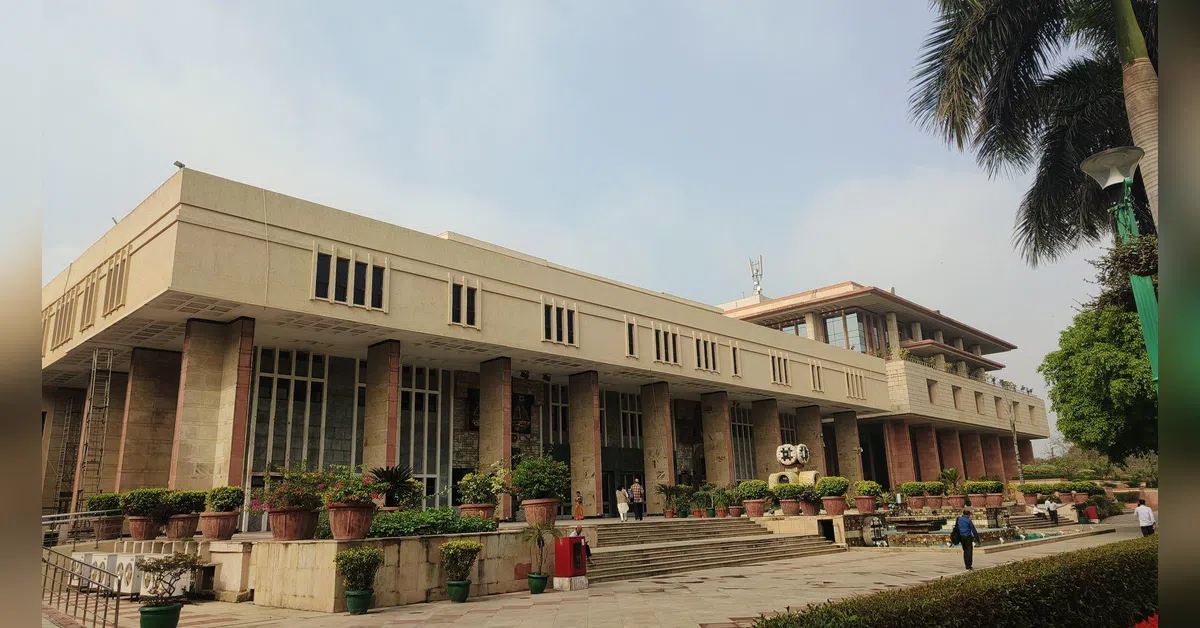
NEW DELHI, India – In a significant ruling that further entrenches the legal challenges facing a global spirits behemoth, the Delhi High Court on Friday, June 14, 2024, dismissed a petition filed by French liquor giant Pernod Ricard. The company had sought to overturn the Delhi government’s refusal to grant it an L-1 wholesale liquor licence, a crucial permit for operating in the national capital’s lucrative alcohol market.
The court, presided over by Justice Purushaindra Kumar Kaurav, unequivocally held that Pernod Ricard was ineligible for the licence under the applicable excise rules, citing pending criminal proceedings against the company. This decision marks a substantial setback for Pernod Ricard, which owns an impressive portfolio of globally recognized brands including Absolut vodka, Chivas Regal Scotch whisky, and Glenlivet single malt. The detailed judgment from the High Court is keenly awaited, expected to shed further light on the specific legal interpretations that underpinned this pivotal verdict.
Pernod Ricard had approached the High Court challenging an earlier order by the Delhi excise department. The department had rejected the company’s applications for an L-1 wholesale licence on the explicit ground that it was facing prosecution by the Enforcement Directorate (ED) in connection with the alleged Delhi excise policy scam. This long-running controversy has cast a wide shadow over the capital’s liquor trade and implicated numerous entities and individuals.
The company, a stalwart of the global spirits industry, had argued that the authorities had mechanically relied on the mere pendency of proceedings, disregarding a previous directive from the financial commissioner in March 2025. This earlier order had instructed the excise department to reconsider Pernod Ricard’s licence application, stipulating that a licence could not be denied solely on the basis of ongoing investigations or proceedings without a conclusive finding of guilt. However, the Delhi excise department firmly maintained its stance, asserting that the prosecution initiated by the ED and the gravity of the allegations levelled against Pernod Ricard rendered it ineligible under the stringent provisions of the Delhi Excise Rules. The authorities emphasized that the rules explicitly bar the grant of licences to persons or entities with a criminal background, contending that the pending prosecution was sufficient to trigger such a disqualification.
Accepting the government’s position, the High Court declined to intervene with the excise department’s decision to reject the licence application, thereby affirming the state’s discretionary power in matters of liquor licensing, particularly when questions of integrity and regulatory compliance are at stake.
A Chronology of Controversy and Legal Battles
The High Court’s ruling is the latest chapter in a protracted and complex saga that began with the introduction of a new excise policy in Delhi and quickly spiraled into a full-blown political and legal controversy. To fully grasp the significance of Friday’s judgment, it is essential to trace the timeline of events that have led to Pernod Ricard’s current predicament.
2021: The Genesis of the New Excise Policy
In November 2021, the Delhi government unveiled its new Excise Policy 2021-22, a radical departure from the previous regime. The policy aimed to revolutionize the capital’s liquor trade by privatizing retail operations, introducing market-driven competition, and significantly boosting state revenues. It promised a more streamlined and transparent system, replacing the existing state-run and private vending model with a fully private retail network. This shift was intended to eliminate cartels, improve consumer experience, and ensure a more equitable distribution of licences.
2022: Allegations, Scrapping, and Investigations Begin
Barely eight months after its implementation, the new excise policy became mired in controversy. Allegations of irregularities, corruption, and undue favouritism towards specific licensees began to surface. It was claimed that the policy had been designed to benefit certain private players, leading to cartelization and a loss of revenue for the state exchequer. Amidst mounting political pressure and public outcry, the Delhi government withdrew the policy in July 2022, reverting to the old excise regime.
Following the policy’s withdrawal, multiple investigative agencies, including the Central Bureau of Investigation (CBI) and the Enforcement Directorate (ED), launched extensive probes into the alleged scam. The ED, in particular, focused on money laundering aspects, tracing alleged kickbacks, illicit gains, and the roles of various individuals and entities, including prominent liquor manufacturers and distributors. Pernod Ricard India became one of the key entities under the ED’s scanner.
Allegations Against Pernod Ricard
The Enforcement Directorate’s investigation alleged that Pernod Ricard India played a role in the purported scam. Specifically, the ED claimed that the company benefited from the new policy and engaged in arrangements that effectively allowed it to influence retail operations in violation of regulatory restrictions designed to prevent monopolies and ensure fair competition. The ED’s charge sheet detailed alleged payment of kickbacks and other illicit activities aimed at securing market dominance. Pernod Ricard has consistently and vehemently denied all allegations of wrongdoing, asserting that it has always operated within the bounds of the law.
Pernod Ricard’s Licensing Attempts and Prior Appeals
With the scrapping of the 2021-22 policy and the re-establishment of the older system, Pernod Ricard, like other players, sought to secure the necessary L-1 wholesale licences to resume its operations in Delhi. However, given the ongoing investigations and the ED’s prosecution, the Delhi excise department repeatedly rejected the company’s applications.
In an attempt to circumvent these rejections, Pernod Ricard appealed to the financial commissioner. In March 2025 (as per the original article, likely a typo for March 2024 or earlier), the financial commissioner issued an order directing the excise department to reconsider Pernod Ricard’s application. The commissioner’s directive was premised on the principle that a licence could not be denied solely because investigations or proceedings were pending, implying that a conclusive finding of guilt was necessary for outright denial.
Despite this directive, the excise department, after reconsideration, once again refused to grant the licence, maintaining that the pending criminal proceedings by the ED were a sufficient basis for disqualification under the existing rules. This led Pernod Ricard to directly challenge the department’s decision before the Delhi High Court, culminating in Friday’s adverse ruling.
Supporting Data: A Market of Immense Stakes
The repeated denial of an L-1 wholesale licence in Delhi is not merely a bureaucratic hurdle for Pernod Ricard; it represents a substantial commercial blow with far-reaching implications. The context of the company’s global and Indian operations underscores the gravity of the situation.
Pernod Ricard’s Global Footprint:
Pernod Ricard stands as one of the world’s largest spirits and wine producers, second only to Diageo. Its portfolio boasts an enviable array of premium and ultra-premium brands across various categories: whiskies (Chivas Regal, Royal Salute, Ballantine’s, Jameson, Glenlivet, Aberlour), vodkas (Absolut, Our/Vodka), gins (Beefeater, Malfy), rums (Havana Club, Kahlua), cognacs (Martell), and various other spirits and wines. The company operates in over 160 countries, employing thousands globally.
India: A Pivotal Growth Engine:
For Pernod Ricard, India is not just another market; it is arguably its most critical growth engine. According to company reports and industry analyses, India is reportedly the company’s largest market globally by volume, a testament to the country’s burgeoning middle class and increasing consumption of premium spirits. The Indian market contributes nearly $3 billion in annual sales to Pernod Ricard, making it a cornerstone of its global revenue strategy. The company has invested heavily in local manufacturing, distribution networks, and brand-building initiatives across the subcontinent.
Delhi: A Gateway to India’s Premium Market:
Within India, Delhi holds a uniquely significant position for the liquor industry. As the national capital, it is a trendsetter for consumer preferences, a hub for tourism and business, and a market with a high concentration of affluent consumers. Its demographic profile and purchasing power make it a crucial testing ground for new products and a significant contributor to overall sales, particularly in the premium and imported spirits segments where Pernod Ricard excels. Being shut out of the Delhi market, therefore, means losing access to a high-value consumer base and a critical platform for brand visibility and sales penetration.
The company has been effectively locked out of the Delhi market for nearly three years following the controversy surrounding the now-scrapped Delhi excise policy. This prolonged absence translates into considerable financial losses, market share erosion, and a severe disruption to its distribution network within the capital. The direct and indirect costs associated with this exclusion are substantial, impacting not only sales figures but also brand equity and competitive positioning.
A Web of Legal Challenges:
The excise policy scam is not the only legal battlefront for Pernod Ricard in India. The company is simultaneously contesting a massive tax demand from Indian authorities. This demand, reportedly running into hundreds of millions of dollars, stems from allegations of undervaluation of imported liquor products over several years. Media reports suggest that tax authorities have asked Pernod Ricard to pay nearly $314 million, or approximately ₹3,000 crore, in back taxes. With penalties, the total liability could reportedly cross ₹5,700 crore if the company ultimately loses this case.
Furthermore, Pernod Ricard is also facing scrutiny from India’s competition regulators over alleged exclusive arrangements with retailers. These investigations aim to determine if the company engaged in anti-competitive practices that stifle fair competition in the market. The company has consistently denied all allegations in these proceedings as well, reiterating its commitment to ethical business practices. This multi-pronged legal assault paints a challenging picture for the French spirits giant in one of its most important global markets.
Official Responses and Legal Arguments
The High Court’s proceedings saw robust arguments from both Pernod Ricard and the Delhi government, each side presenting its interpretation of the law and the facts.
Pernod Ricard’s Stance: Presumption of Innocence and Business Rights
Pernod Ricard’s legal counsel vigorously argued that the Delhi excise department’s decision was arbitrary and unsustainable in law. Their primary contention revolved around the principle of the "presumption of innocence." They highlighted that merely because criminal proceedings were pending, it did not equate to a finding of guilt. The company emphasized that no court had, as yet, convicted Pernod Ricard of any wrongdoing in the alleged excise policy scam. Therefore, denying a licence solely on the basis of an ongoing investigation or prosecution amounted to a pre-judgment, effectively punishing the company before due process had run its course.
The company further asserted that the authorities had mechanically relied on the pendency of proceedings, ignoring the nuanced directive from the financial commissioner. This earlier order, Pernod Ricard argued, clearly mandated a reconsideration and implied that a blanket denial based solely on pending cases was inappropriate. Repeated refusals to grant a wholesale licence, despite no finding of guilt, effectively prevented the company from conducting legitimate business in the national capital, which it contended was a violation of its right to trade and commerce. The company’s legal team stressed that it was being unfairly targeted and deprived of access to a crucial market without any definitive legal conclusion of culpability.
Delhi Government’s Counter-Argument: Regulatory Discretion and Public Interest
The Delhi government and the excise department, represented by their legal teams, staunchly defended their decision to deny the L-1 licence. Their arguments centered on the statutory framework governing liquor licensing and the inherent powers of regulatory authorities to assess the suitability and eligibility of applicants.
The government maintained that the Delhi Excise Rules contain clear provisions regarding the disqualification of entities with a "criminal background." They argued that the prosecution launched by the Enforcement Directorate, and the serious allegations of economic offences levelled against Pernod Ricard in connection with a large-scale alleged scam, were sufficient grounds to attract this disqualification. The excise department asserted that it was not obligated to await a final conviction, especially when the integrity of the liquor trade and public interest were at stake.
Authorities emphasized that the statutory framework empowers them with significant discretion to assess the suitability of licence applicants. This discretion, they contended, is crucial for maintaining order, preventing illicit trade, and upholding the integrity of the regulatory regime. Granting a licence to an entity facing such serious criminal charges, even if unproven, could send a wrong signal and potentially compromise the very objectives of the excise policy. The government’s counsel underscored that the allegations were not trivial but involved a complex web of alleged financial irregularities, making the company ineligible to hold a licence that demands a high degree of probity.
Implications and Future Outlook
The Delhi High Court’s ruling carries significant implications, not only for Pernod Ricard but also for the broader regulatory landscape in India and other businesses operating under similar scrutiny.
For Pernod Ricard:
The immediate consequence for Pernod Ricard is its continued exclusion from the vital Delhi market. This translates into ongoing revenue losses, diminished market share, and a persistent challenge to its distribution network. The absence from Delhi, a key urban centre, can also impact brand visibility and consumer recall, potentially benefiting competitors. The company now faces a critical decision: whether to appeal this High Court verdict to the Supreme Court of India. A prolonged legal battle at the apex court would entail further costs and uncertainty, even as the criminal proceedings by the ED continue their course. This judgment, combined with the other significant tax and competition cases, paints a challenging and complex operational environment for Pernod Ricard in India, forcing it to reassess its strategic approach to this crucial market.
For the Delhi Liquor Market:
The decision reaffirms the Delhi government’s stringent stance on regulatory compliance and its willingness to use the full extent of its powers in matters of licensing, especially in industries that have historically been prone to irregularities. While Pernod Ricard’s absence might lead to reduced competition in certain premium segments, it also signals the government’s commitment to clean business practices. The market will continue to operate with the existing players, and consumers might see shifts in brand availability and promotional activities depending on how other manufacturers fill the void left by a major player.
For Other Businesses and the Regulatory Environment:
The ruling sets a precedent for how pending investigations and prosecutions can impact licensing decisions for other businesses, particularly those in highly regulated sectors. It underscores that regulatory authorities may not always wait for a final conviction to exercise their discretion in denying licences, especially when allegations pertain to serious economic offences or compromise public interest. This could lead to a more cautious approach by companies in navigating India’s complex regulatory environment and might prompt greater scrutiny from authorities on the background and compliance records of licence applicants. The case highlights the increasing emphasis by Indian regulators on corporate governance and the integrity of business operations, especially for foreign entities operating within the country. It reinforces the notion that "ease of doing business" must be balanced with robust regulatory oversight and accountability.
In conclusion, the Delhi High Court’s dismissal of Pernod Ricard’s plea is a powerful affirmation of the state’s prerogative in liquor licensing and a stark reminder that even global giants are subject to the rigours of local laws and regulatory scrutiny, particularly when facing serious allegations of financial misconduct. The path forward for Pernod Ricard in India appears fraught with challenges, necessitating a comprehensive legal and strategic response to regain its footing in one of the world’s most dynamic spirits markets.
