

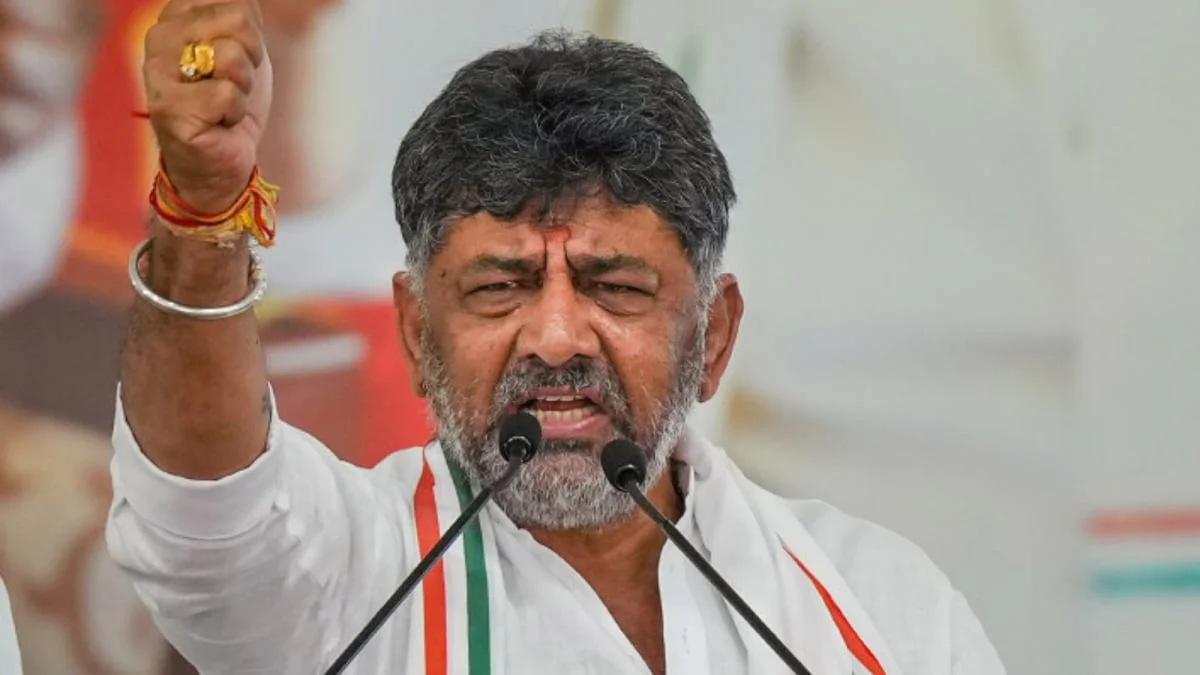
Bengaluru, Karnataka – May 30, 2026 – The Congress high command has orchestrated a significant leadership transition in Karnataka, culminating in the imminent swearing-in of Deputy Chief Minister D.K. Shivakumar as the state’s new Chief Minister. The move, anticipated to take place on June 3, marks a pivotal "reset" for the party, aiming to inject fresh vigour into governance and strengthen its electoral machinery ahead of the 2028 Assembly elections. The transition follows the resignation of Chief Minister Siddaramaiah, who reportedly stepped down to pave the way for a new leadership paradigm as per an internal party understanding.
The formal announcement is expected to follow a crucial Congress Legislature Party (CLP) meeting scheduled for Saturday at 4 pm in Bengaluru. This meeting will see MLAs formally elect their new leader, a procedural step that will officially confirm Shivakumar’s elevation. Senior All India Congress Committee (AICC) observers, including General Secretary K.C. Venugopal and Randeep Surjewala, are slated to oversee the proceedings, underscoring the high command’s close involvement in this strategic shift.
The Path to Leadership: D.K. Shivakumar’s Ascent
D.K. Shivakumar, a formidable figure in Karnataka politics, is widely recognized for his organizational prowess, financial acumen, and ability to navigate complex political landscapes. His journey to the Chief Minister’s office has been one of resilience and strategic maneuvering. Often dubbed the "troubleshooter" for the Congress, Shivakumar has played a critical role in safeguarding the party’s interests during various political crises, including deftly managing resort politics to prevent defections. His elevation reflects a clear decision by the Congress high command to entrust the state’s leadership to a leader known for his strong administrative capabilities and deep connections across various sections of society.
Sources within the Congress indicate that the decision to transition leadership was a carefully considered one, part of a broader strategy to rejuvenate the party’s image and consolidate its base. Shivakumar’s experience as Deputy Chief Minister and his long tenure in state politics, coupled with his strong support base among the Vokkaliga community, are seen as crucial assets for the party’s future. His appointment is expected to bring a new dynamic to the state’s governance, focusing on effective implementation of welfare schemes and development initiatives.
Initial Cabinet Formation and Future Expansion
The initial swearing-in ceremony on June 3 is expected to be a concise affair, with approximately eight to ten ministers taking the oath alongside Shivakumar. This measured approach to cabinet formation is a strategic decision, allowing the party to ensure a smooth transition and undertake detailed consultations for a more comprehensive cabinet expansion later.
The full cabinet expansion is anticipated to occur after June 18, following the conclusion of the Rajya Sabha election process. This timing is critical; by delaying the full cabinet formation, the Congress leadership aims to maintain party unity and prevent any potential dissent or horse-trading that could jeopardize its prospects in the Rajya Sabha polls. The high command is meticulously balancing regional, caste, and social representation while also factoring in performance and loyalty, making the post-Rajya Sabha expansion a complex but essential exercise.
Siddaramaiah’s Resignation and Delhi Deliberations
The leadership transition gained momentum after Chief Minister Siddaramaiah tendered his resignation. This move, according to party insiders, was in line with a pre-agreed understanding within the party leadership to facilitate a rotational leadership or a strategic change at a crucial juncture. Siddaramaiah, a veteran leader and popular figure, reportedly conveyed to the high command that he had fulfilled his commitment, thereby clearing the path for Shivakumar.
The days leading up to this announcement were marked by intense deliberations in New Delhi. Both Siddaramaiah and Shivakumar were in the national capital on Friday, engaging in crucial meetings with Congress president Mallikarjun Kharge and senior leader Rahul Gandhi. A particularly significant meeting took place at Rahul Gandhi’s residence, where Siddaramaiah is understood to have formally communicated his decision to step down. Sources indicate that during these discussions, Siddaramaiah also advocated for cabinet positions for his son and other loyalists in the new government, including the possibility of a Deputy Chief Minister post for one of his confidantes. These negotiations highlight the intricate balance of power and influence within the party, as the high command seeks to accommodate various factions while ensuring overall stability.
The Congress Legislature Party Meeting: A Formal Endorsement
The upcoming Congress Legislature Party meeting on Saturday at 4 pm in Bengaluru is more than just a formality; it is a crucial step in legitimizing the high command’s decision. While the leadership choice has been made, the CLP meeting provides a democratic platform for the elected representatives to formally endorse their new leader. The presence of senior AICC observers, K.C. Venugopal and Randeep Surjewala, underscores the party’s commitment to adhering to internal democratic processes, even as it manages a critical leadership change.
Following the formal election of the new legislature party leader, the exact date and details of the swearing-in ceremony will be officially confirmed. This public endorsement by the MLAs will send a strong message of unity and resolve, essential for the new government to hit the ground running.
Strategic Cabinet Reshuffle: New Faces and the "Kamaraj Plan"
Beyond the Chief Minister’s position, the Congress leadership is planning a comprehensive overhaul of the state cabinet. This reshuffle is not merely about assigning portfolios but is a strategic exercise aimed at invigorating the party and preparing it for future electoral battles.
Senior party leaders have publicly advocated for a significant induction of new faces. Chief Whip Saleem Ahmed and former minister M. Veerappa Moily have suggested that nearly half of the ministerial positions should be allocated to fresh talent. Ahmed emphasized that the party intends to introduce new leadership as part of its long-term preparations for the 2028 Assembly elections. This strategy aims to create a pool of experienced, young leaders who can connect with a broader electorate and address contemporary challenges.
Adding another layer to this strategic revamp, Congress leaders are reportedly discussing a modified version of the "Kamaraj Plan." Historically, the Kamaraj Plan, implemented by then-Tamil Nadu Chief Minister K. Kamaraj in the 1960s, involved senior leaders resigning from ministerial posts to take up organizational responsibilities within the party. The current adaptation proposes that ministers who have completed three years in office could be transitioned out of the cabinet and assigned crucial organizational roles. Saleem Ahmed elaborated on this, stating that experienced ministers would be encouraged to strengthen the party structure at the grassroots level. This move aims to leverage the experience of senior leaders for party building while simultaneously opening up ministerial berths for newer, younger blood, ensuring a dynamic balance between experience and fresh perspectives.
The Quadruple Deputy CM Model: Balancing Act for Unity
To effectively address the complex tapestry of Karnataka’s regional, social, and caste dynamics, Congress sources indicate that the high command is seriously considering appointing up to four Deputy Chief Ministers under Shivakumar’s leadership. This multi-DCM model is a strategic move designed to ensure comprehensive representation and maintain equilibrium within the party’s diverse factions.
The rationale behind this approach is multifaceted:
- Regional Balance: Karnataka is a large state with distinct regional identities (North Karnataka, South Karnataka, Coastal Karnataka, Central Karnataka). Appointing DCMs from different regions can ensure that all geographical areas feel represented in the state’s highest executive body.
- Caste and Social Representation: The state’s political landscape is heavily influenced by caste equations, particularly involving dominant communities like Vokkaligas and Lingayats, alongside Scheduled Castes/Tribes, Other Backward Classes, and minorities. Having multiple DCMs allows the party to accommodate leaders from these key communities, thereby broadening its appeal and consolidating its vote bank. For instance, a Lingayat leader, an SC/ST representative, and a leader from North Karnataka could potentially fill these roles, alongside a Vokkaliga Chief Minister.
- Factional Harmony: With the exit of Siddaramaiah from the CM post, and Shivakumar’s ascent, the party needs to ensure that all powerful factions and influential leaders are adequately accommodated to prevent internal dissent and maintain unity. The DCM posts offer a high-profile way to do this.
- Administrative Efficiency: Multiple DCMs could potentially be assigned specific zones or clusters of departments, streamlining administration and ensuring focused attention on various developmental aspects across the state.
While the exact individuals to be appointed as DCMs are yet to be finalized, this strategy underscores the Congress’s commitment to inclusive governance and its pragmatic approach to managing intra-party dynamics.
Y.S. Sharmila’s Potential Rajya Sabha Entry
In a development that could have wider implications beyond Karnataka, sources also indicated that Y.S. Sharmila is being considered for a Rajya Sabha berth from the state. Y.S. Sharmila, sister of Andhra Pradesh Chief Minister Jagan Mohan Reddy and leader of the YSR Telangana Party (YSRTP), recently merged her party with the Congress.
Her potential nomination from Karnataka is a strategic move by the Congress high command. It could be seen as an effort to strengthen the party’s presence and influence in the Telugu-speaking states of Andhra Pradesh and Telangana, leveraging Sharmila’s political lineage and existing support base. Furthermore, it could be a gesture to solidify the alliance and integration of her political cadre into the Congress fold. While the final decision remains pending, her entry into the Upper House from Karnataka would mark a significant national political step for Sharmila and signal the Congress’s intent to utilize its newly acquired political assets strategically across state borders.
Implications for Karnataka’s Future and the Congress Party
The "Karnataka Reset" orchestrated by the Congress high command carries profound implications for the state’s governance and the party’s future trajectory.
For Karnataka:
- Stable Governance: The clear delineation of leadership is expected to bring stability, allowing the government to focus on implementing its manifesto promises, particularly the welfare schemes that resonated with voters.
- Development Agenda: Shivakumar’s known administrative drive suggests a renewed focus on infrastructure development and attracting investments.
- Political Equilibrium: The multi-DCM model, if implemented, will be a crucial test of the Congress’s ability to manage diverse political aspirations and ensure equitable representation across the state.
For the Congress Party:
- Rejuvenation Strategy: The infusion of new faces and the modified "Kamaraj Plan" signal a long-term strategy to rebuild and strengthen the party organization from the grassroots up, with an eye on the 2028 Assembly elections.
- National Narrative: Karnataka, being one of the few major states where the Congress holds power independently, serves as a crucial benchmark for the party’s national resurgence. A successful and stable government under Shivakumar could bolster the party’s confidence and provide a positive narrative for upcoming national elections.
- Internal Cohesion: The challenge for the new leadership will be to maintain unity among various factions, especially given the complex cabinet formation process and the accommodation of multiple powerful leaders. The high command’s firm hand will be essential in navigating these internal dynamics.
- Opposition Response: The opposition, primarily the BJP and JD(S), will be closely watching for any signs of internal discord within the Congress, ready to capitalize on any perceived instability or missteps by the new government.
As D.K. Shivakumar prepares to take the helm, the Congress in Karnataka stands at a critical juncture. The strategic "reset" is a bold gamble, aiming to harness new energy while balancing the interests of seasoned leaders. The coming months will reveal whether this meticulously planned transition paves the way for a robust and enduring Congress rule in the southern state, setting a precedent for its broader national aspirations.
