

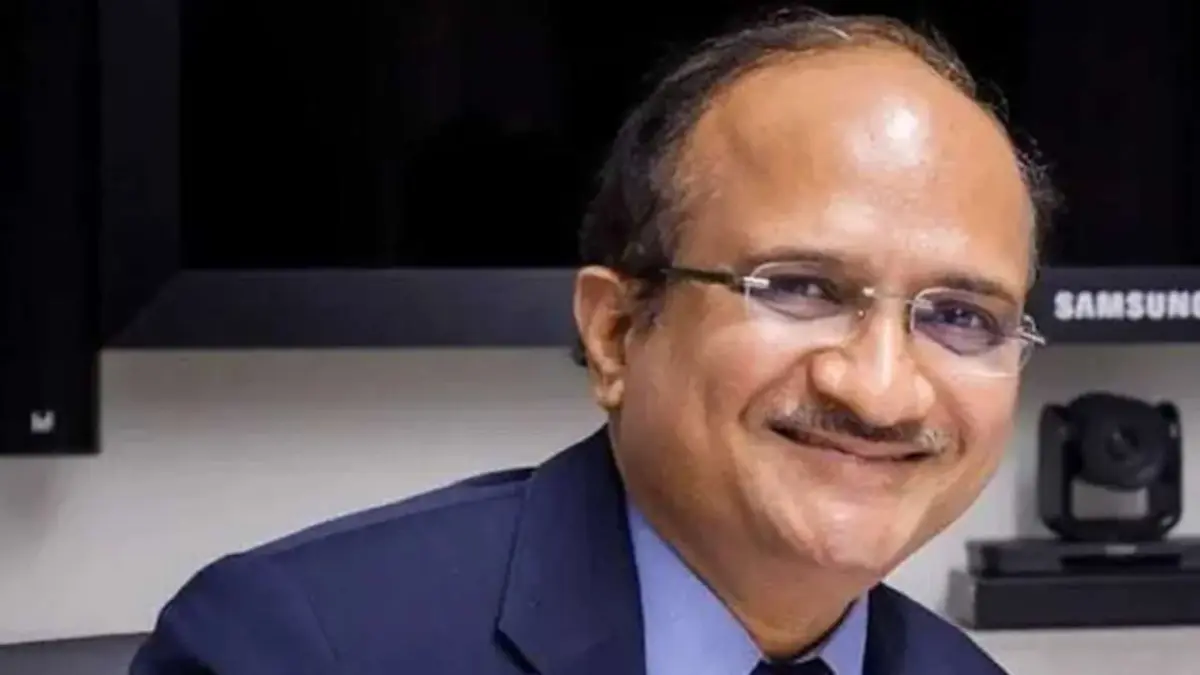
New Delhi, India – In the wake of recent controversies and persistent challenges within India’s premier Indian Institutes of Technology (IITs), a prominent voice from within the academic leadership has called for a fundamental re-evaluation of the B.Tech program structure. V. Ramgopal Rao, Group Vice-Chancellor of BITS Pilani Campuses and former Director of IIT Delhi (2016-2021), has proposed a significant shift: the adoption of five-year B.Tech programs across all IITs. This proposal, articulated in response to the public scrutiny surrounding IIT Bombay professor Suryanarayana Doola, addresses the growing chasm between the diverse academic backgrounds of students entering the elite institutions and the current "one-size-fits-all" pedagogical approach.
Rao, a seasoned academic with over 25 years of experience at IIT Bombay and IIT Delhi, argues that the current four-year B.Tech model is increasingly inadequate for accommodating the vast spectrum of learning paces and preparedness among students admitted through the highly competitive Joint Entrance Examination (JEE) Advanced. He contends that the existing system, while striving for excellence, inadvertently leaves many students struggling to keep pace, leading to academic distress and potentially contributing to the very issues that have recently cast a shadow over IITs.
)
The Catalyst for Change: Addressing Heterogeneity and Recent Controversies
The immediate impetus for Rao’s proposal appears to be the recent public outcry against Professor Suryanarayana Doola of IIT Bombay. While the specifics of the controversy remain a subject of ongoing examination, Rao has publicly voiced his concern over the "vilification" of Doola, whom he personally knows and vouches for as "one of the finest faculty members I have known in the IIT system, and a gentleman of the highest integrity." Rao stressed the importance of a fair and unbiased examination of any raised concerns, asserting that "A public campaign against an individual serves no one."

However, Rao’s commentary extends far beyond a defense of an individual. It delves into a systemic issue that he believes is at the heart of many challenges faced by students and faculty within the IIT ecosystem. He points to the stark reality of the JEE Advanced admission process, which results in a classroom populated by students with vastly divergent levels of preparedness. "Students now come from an intensive coaching ecosystem, with JEE Advanced ranks in the same classroom ranging from single digits to five digits," Rao observed.
)
The "One-Size-Fits-All" Dilemma: A Widening Chasm in Learning Paces
Rao vividly illustrates this heterogeneity by citing the example of Computer Science and Engineering (CSE) at IIT Delhi. He notes that students with vastly different JEE ranks often find themselves in the same lecture hall. This creates what he terms "highly heterogeneous classrooms," a challenge further exacerbated by language barriers.
)
"The question to ask therefore is, with such heterogeneity, can we expect every student to learn at the same pace?" Rao posed rhetorically. He firmly believes that while opening the doors of prestigious institutions to students from diverse backgrounds is a laudable objective, the current teaching-learning methodologies within IITs have not adequately accounted for this diversity.
)
The pedagogical dilemma, as described by Rao, is profound: "A faculty member cannot pitch every class at several levels at once. Move too slowly, and some students lose interest. Move too quickly, and others are left behind." This creates a situation where a significant portion of the student body may not be optimally engaged or supported.
)
The Coaching Paradox: Familiarity vs. Independent Learning
Rao further elaborates on the impact of the prevalent coaching culture. He recalls instances where students with top JEE Advanced ranks, who excel at solving familiar problem types quickly due to extensive coaching, struggle when presented with novel challenges. "Coaching had prepared them to solve familiar types of questions quickly. Many are lost when they see a question which they haven’t solved before," he stated. This highlights a critical disconnect between the skills honed in preparatory classes and the independent, critical thinking required for higher academic pursuits.
)
Crucially, Rao emphasizes that this challenge is not confined to any specific admission category. "This is not a difficulty confined to any admission category. The move from coaching to independent learning can be hard for anyone," he clarified, dispelling any notion that the issue is solely linked to affirmative action policies. The transition from a structured, exam-focused preparatory environment to the more exploratory and demanding academic landscape of an IIT presents a significant hurdle for all students, regardless of their entry point.
)
The Proposed Solution: A Flexible Five-Year B.Tech Framework
To address these deeply ingrained challenges, Rao proposes a radical yet potentially transformative solution: a shift to a five-year B.Tech program for all students at IITs. This proposal is not about extending the duration of study for everyone out of necessity, but rather about creating a more flexible and accommodating academic structure.
)
Under Rao’s envisioned model, students who demonstrate exceptional academic progress and fulfill all credit requirements would have the option to graduate in four years, or even three-and-a-half years. This caters to the high achievers who are well-prepared and can accelerate their learning.
)
Conversely, students who require additional time and support to grasp the curriculum would be able to extend their coursework to five years. This extended period would provide them with opportunities for more in-depth learning, including access to recorded lectures, supplementary online materials, and targeted language support where needed.
)
The Psychological and Pedagogical Benefits of Flexibility
Rao believes that designating the program as a five-year structure would offer significant psychological benefits. "Students who need more time would simply be following the programme as designed, while those who are ready could complete it sooner. No one would be singled out for taking a fifth year," he explained. This would de-stigmatize the need for additional academic support, fostering a more inclusive and less anxiety-inducing learning environment.
)
The fundamental principle behind this proposal is to shift the determinant of academic pace from admission rank or category to individual performance within the IIT system. "The pace would be decided by performance within the IIT, not by a student’s admission category or entrance rank," Rao asserted. This would ensure that academic progression is based on mastery of the subject matter, not on pre-existing disparities in preparation.
)
Rao underscores that this proposed flexibility does not imply a compromise on academic rigor. "Academic standards must be maintained, while acknowledging that students do not all start at the same level or learn at the same pace. Giving them the time and support to meet those standards is a responsibility of the system," he concluded. This emphasizes that the goal is to equip all students with the necessary knowledge and skills, recognizing that the path to achieving this may vary.
)
Implications and Future Considerations
Rao’s proposal, if adopted, would represent a significant departure from the long-standing four-year B.Tech model prevalent in Indian engineering institutions. It necessitates a comprehensive re-evaluation of curriculum design, faculty workload, and resource allocation within IITs. The implementation would require careful planning to ensure that the extended duration does not lead to increased financial burdens for students or prolonged timelines for entering the workforce.
)
However, the potential benefits are substantial. A more adaptable learning environment could lead to reduced academic stress, improved student well-being, and a higher rate of successful course completion. It could also foster a more nuanced understanding of complex subjects and better equip graduates with the critical thinking and problem-solving skills required to navigate an ever-evolving technological landscape.
)
The debate initiated by V. Ramgopal Rao highlights a critical juncture for the IIT system. As these institutions continue to strive for global excellence, they must also grapple with the complex realities of their student demographic. The proposal for a five-year B.Tech program offers a compelling framework for fostering a more equitable, supportive, and ultimately more effective educational experience for all aspiring engineers in India. The coming months will likely see further discussion and debate as the academic community weighs this significant proposition.
