

Amethi, Uttar Pradesh – March 30, 2026 – The Rajiv Gandhi Institute of Petroleum Technology (RGIPT) is no longer merely an academic institution; it has emerged as a beacon of practical sustainability, transforming the philosophical dream of waste conversion into a tangible, campus-wide reality. Under the visionary leadership of Professor Harish Hirani, RGIPT has established a groundbreaking integrated zero-waste technology framework, setting a precedent for higher education institutions to function as "living laboratories" for sustainable development. This comprehensive system systematically transforms diverse waste streams – from organic refuse and wastewater to plastics and mixed waste – into valuable energy, materials, and reusable resources, championing the principles of a true circular economy.
The institute’s pioneering efforts, building upon Prof. Hirani’s extensive experience in sustainable technologies and waste management, including his previous impactful work at CSIR-CMERI, demonstrate a robust integration of cutting-edge research, technological implementation, and practical application. This initiative culminates on International Zero Waste Day, March 30th, when RGIPT will proudly showcase its innovative systems, offering a replicable model that extends far beyond academic boundaries to address pressing national and global environmental challenges.
The Dawn of a Circular Future at RGIPT
For decades, the concept of a circular economy – where resources are kept in use for as long as possible, extracting the maximum value from them whilst in use, then recovering and regenerating products and materials at the end of each service life – has been a critical topic in environmental discourse. However, its widespread practical implementation has often faced hurdles. RGIPT’s achievement marks a significant departure from this theoretical landscape, presenting a robust, practice-based ecosystem that challenges traditional linear consumption models.
The institute’s journey towards this integrated framework began with a clear understanding that waste is not an end product, but rather a misplaced resource. This fundamental shift in perception, spearheaded by Prof. Hirani, laid the groundwork for designing a campus where every output from one process could serve as an input for another. This integrated design, a cornerstone of the closed-loop approach to resource recovery, stands in stark contrast to conventional waste management systems that often treat waste streams in isolation, leading to inefficiencies and environmental burdens.
)
A Visionary Leader’s Imprint
Professor Harish Hirani’s influence has been instrumental in shaping RGIPT’s sustainable trajectory. His profound expertise in sustainable technologies and extensive experience in managing large-scale waste initiatives have provided the strategic direction and technical acumen necessary to build such a complex, yet harmonized, system. His previous work at CSIR-CMERI offered invaluable insights into scalable and effective waste valorization techniques, which he has meticulously adapted and expanded within the RGIPT campus. His leadership underscores the critical role that dedicated researchers and institutional commitment play in translating ambitious environmental goals into actionable, impactful programs.
"The conversion of waste into useful products is no longer a philosophical dream but an actual fact in the Rajiv Gandhi Institute of Petroleum Technology," the institute proudly asserts, highlighting the tangible success born from this visionary leadership. This sentiment encapsulates the ethos driving RGIPT’s transformation into a living laboratory – a dynamic environment where sustainability research is not confined to theoretical studies but is actively deployed and refined for real-world impact.

The Integrated Zero-Waste Ecosystem: A Blueprint for Sustainability
The RGIPT model is distinguished by its holistic approach, where various waste streams are interconnected to maximize resource efficiency and drastically reduce environmental impact. Rather than merely disposing of waste, the institute has engineered a symbiotic network that transforms potential pollutants into valuable assets.
Closing the Loops: Energy, Water, and Materials
At the core of this ecosystem is the principle of closing resource loops:
)
- Sustainable Water Cycle: Wastewater generated on campus is meticulously treated through advanced sewage treatment systems. The reclaimed water is then repurposed for non-potable uses, such as irrigation for campus greenery and even aquaculture, thereby creating a self-sustaining water cycle that significantly reduces reliance on fresh water sources.
- Renewable Energy Generation: Organic waste, a ubiquitous byproduct of any residential campus, undergoes anaerobic digestion. This biological process yields biogas, a renewable energy source that contributes to the campus’s energy needs, simultaneously diverting organic matter from landfills and mitigating methane emissions.
- Plastic Waste Valorization: Plastic waste, often a major environmental contaminant, is systematically processed and reused to create durable and practical items. This initiative not only minimizes landfill dependency but also transforms non-recyclable plastics into economically useful products, showcasing a tangible application of material recovery.
These interconnected initiatives collectively represent a viable and replicable model for transitioning towards a resource-efficient and circular campus, demonstrating how seemingly disparate waste streams can be integrated for synergistic benefits.
Advanced Technologies: Driving Efficiency and Innovation
RGIPT’s commitment to innovation extends beyond fundamental waste-to-resource pathways, incorporating sophisticated technologies to enhance overall efficiency and address broader environmental concerns:
)
- Biochar Manufacturing: To complement carbon management efforts, the institute has introduced biochar manufacturing. Biochar, a stable form of carbon produced from biomass pyrolysis, serves as an excellent soil amendment, improving soil fertility, water retention, and most importantly, sequestering atmospheric carbon, thus providing a climate-responsive dimension to the waste management strategy.
- Membrane-Based Treatment Systems: These advanced systems are utilized for water purification, further enhancing the quality of treated wastewater and ensuring its suitability for diverse reuse applications. Such innovations underscore RGIPT’s dedication to employing state-of-the-art solutions for environmental stewardship.
By integrating these advanced technologies, RGIPT’s system moves beyond traditional waste management, proactively addressing larger environmental issues such as emission reduction and resource preservation, thereby establishing itself as a holistic environmental steward.
The Circular Bioeconomy: From Organic Waste to Renewable Energy and Soil Enrichment
A central pillar of RGIPT’s framework is its robust circular bioeconomy system, which ingeniously links organic waste management to both energy generation and agricultural purposes. This model exemplifies how biological resources can be efficiently utilized and regenerated within a closed loop.
)
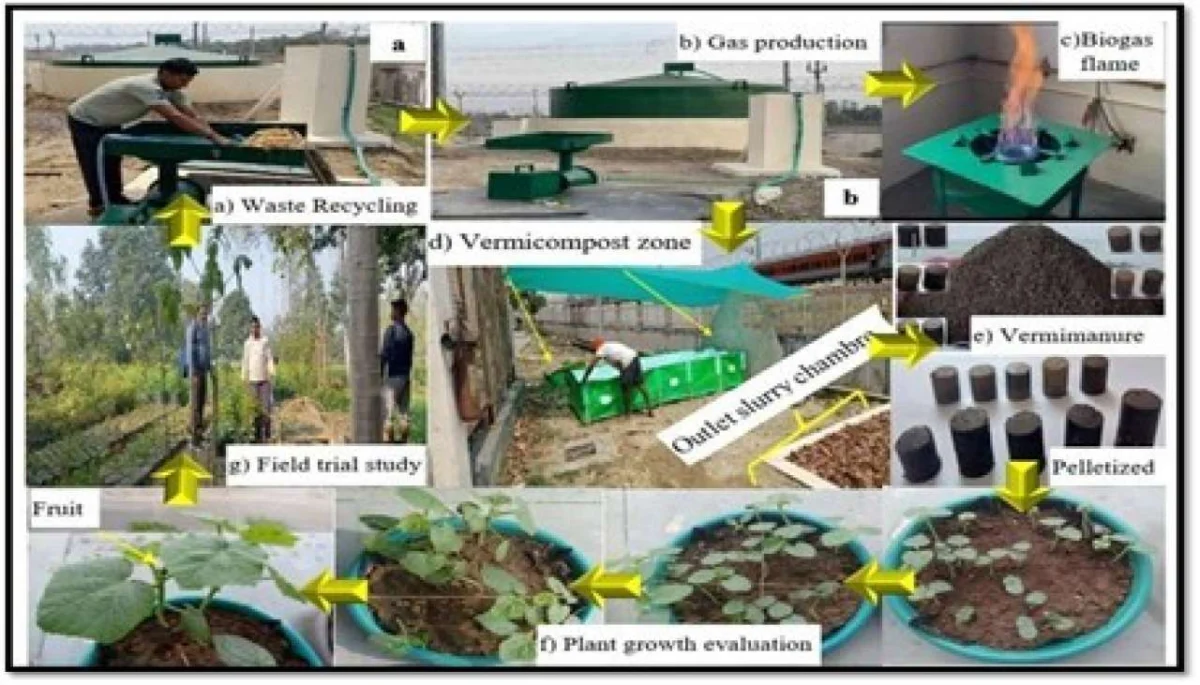
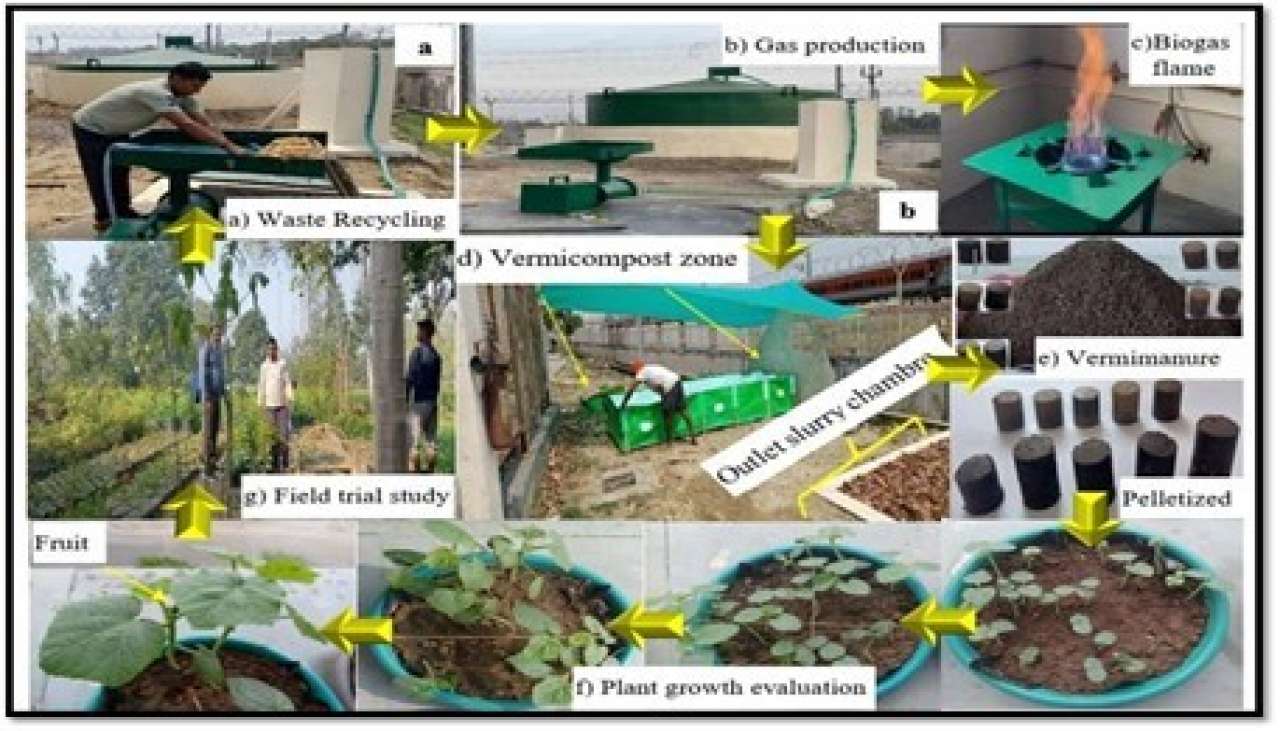
Organic and food waste generated across the campus – from hostels to cafeterias – is systematically collected and directed to the anaerobic digestion plant. Here, microorganisms break down the organic matter in the absence of oxygen, producing biogas rich in methane. This biogas serves as a vital renewable energy source, contributing to the campus’s power requirements and reducing its carbon footprint.
Crucially, the process doesn’t end with energy generation. The residual material, known as digestate, is far from waste. RGIPT further processes this nutrient-rich digestate into value-added products, including high-quality vermicompost, particle manure, and nutrient-rich soil conditioners. These organic amendments are then utilized in campus landscaping and agricultural activities, significantly improving soil fertility and supporting sustainable crop production. This integrated approach not only optimizes the utilization of organic waste but also effectively recycles the nutrient cycle, diminishing reliance on external fertilizers and enhancing the resilience and sustainability of the entire campus ecosystem.
)
Revolutionizing Biogas Quality: Nanofluid-Assisted Upgrading
While biogas is a valuable renewable energy source, raw biogas contains impurities such as carbon dioxide (CO2) and hydrogen sulfide, which lower its calorific value and efficiency. RGIPT has tackled this challenge head-on by developing a sophisticated membrane-based biogas upgrading system, ingeniously supplemented with nanofluid-assisted separation.
This multi-stage system is designed for highly efficient removal of CO2 and other trace impurities, while simultaneously enriching the methane content. The introduction of nanofluids significantly enhances mass transfer and separation efficiency, allowing for a more effective purification process. Furthermore, a multi-pass operation amplifies the separation efficiency and methane concentration, yielding bio-methane with a high energy content and superior fuel quality. This advanced purification method represents a substantial leap beyond traditional techniques, contributing not only to energy efficiency but also to carbon capture, rendering the entire process more environmentally sensitive and economically viable.
)
Transforming Mixed Waste into Biocrude: The Power of Hydrothermal Liquefaction
One of the most intractable problems in modern waste management is the disposal of mixed and low-value waste, particularly heterogeneous blends of plastic and organic matter that are difficult to recycle through conventional means. These often end up in landfills or incinerators, posing significant environmental burdens. RGIPT has embraced Hydrothermal Liquefaction (HTL) as a powerful solution to this challenge.
HTL is a thermochemical conversion process that transforms mixed wastes into valuable biocrude oil, along with hydrochar and gaseous byproducts, under optimized conditions of high temperature and pressure. The institute’s successful implementation of HTL demonstrates its capacity to convert what would otherwise be considered non-recyclable waste into a substitute source of energy. With yields of approximately 10 wt.% biocrude, this technology highlights a sustainable and feasible pathway to divert substantial amounts of waste from landfills, thereby promoting resource efficiency and bolstering the principles of a circular economy. HTL stands as a testament to RGIPT’s commitment to addressing the most complex waste streams with innovative engineering solutions.
)
Valorizing Plastic Waste: Crafting Durability from Discarded Materials
The pervasive issue of plastic waste demands creative solutions beyond conventional recycling. RGIPT has implemented a robust plastic waste valorization program that transforms non-recyclable plastics into durable and functional utility products. Through carefully controlled thermal and mechanical processing, discarded plastics are repurposed into items such as mats, tables, and stools. These products are engineered to exhibit superior strength, durability, and resistance to environmental degradation, making them ideal for both campus use and broader applications.
This initiative not only offers a pragmatic solution to plastic waste disposal but also creates economically useful materials with tangible applications, both within the institute and potentially in surrounding communities. By demonstrating a cost-effective and decentralized model for plastic waste management, this program provides a scalable blueprint, particularly relevant for urban and semi-urban settings where traditional recycling infrastructure may be limited or inadequate.
)
Sustainable Water Management: The Nano-Bio Treatment System
Water scarcity and pollution are critical global concerns, and RGIPT’s framework directly addresses these through its integrated nano-bio wastewater treatment system. This innovative hybrid approach combines advanced biological processes with nanofluid-assisted interactions and plant-based extracts to achieve exceptional pollutant removal efficiencies.
The system is highly effective in removing a wide range of contaminants, including turbidity, dissolved solids, and organic pollutants. It boasts impressive reductions of over 95% in Chemical Oxygen Demand (COD) and Biochemical Oxygen Demand (BOD) levels, signifying a drastic improvement in water quality. The treated water is rendered suitable for various non-potable campus applications, such as irrigation, aquaculture, and industrial uses, thereby substantially reducing the demand for fresh water. Furthermore, the biomass generated during the treatment process is not discarded but is valorized, either for energy recovery or as a soil amendment, ensuring minimal waste generation and maximizing resource utility. This system exemplifies an effective and resource-efficient strategy for achieving water sustainability and closing the water loop within a self-reliant campus ecosystem.
)
Beyond the Campus: National Implications and Replicability
RGIPT’s integrated framework is designed with a broader vision: to serve as a national prototype for the implementation of a circular economy. The model’s uniqueness lies not only in its comprehensive technological deployment but also in its seamless integration of research, technology implementation, and institutional practice. This holistic approach effectively bridges the gap between laboratory innovation and real-world application, demonstrating how academic campuses can function as vital testbeds for scalable sustainable solutions.
The implications of this model are profound. As India grapples with increasing urbanization, industrial growth, and the escalating challenge of waste management, RGIPT offers a tangible pathway forward. Its replicability across other academic institutions, urban communities, and industrial sectors could significantly contribute to India’s national sustainability goals, including waste reduction, renewable energy generation, water conservation, and climate action. The model provides a practical guide for policymakers and urban planners seeking to transition towards more circular and resilient systems nationwide.
)
A Future of Self-Sufficiency: Scaling Up the Vision
Looking ahead, RGIPT is committed to further expanding and streamlining its integrated zero-waste systems, with the ultimate goal of achieving an entirely self-sustainable campus. This ambitious future vision encompasses several key areas:
- Expanded Waste-to-Energy Pathways: Developing additional routes for converting various waste streams into energy, diversifying the energy portfolio, and enhancing campus energy independence.
- Reinforced Material Recovery Systems: Investing in more sophisticated technologies for material sorting, processing, and valorization to recover an even broader spectrum of resources.
- Growth of Water Reuse Systems: Expanding the capacity and applications of treated wastewater, aiming for near-total water recycling within the campus.
- Integration of Effective Carbon Management Technology: Enhancing biochar production and exploring other carbon capture and utilization technologies to further mitigate greenhouse gas emissions.
The overarching objective is to continuously improve the system’s efficiency, maximize resource recovery, and build a resilient infrastructure that is not only self-sufficient but also readily replicable in diverse contexts across India and beyond.
)
Celebrating Innovation: International Zero Waste Day
The culmination of these extraordinary efforts will be celebrated on March 30th, International Zero Waste Day. RGIPT will leverage this global platform to demonstrate its various integrated waste management technologies and highlight its unwavering commitment to sustainable practices and circular economy principles. The event will feature live exhibitions of the operational systems on campus, providing visitors, researchers, policymakers, and industry stakeholders with a firsthand look at how waste is transformed into valuable resources. This public showcase aims to inspire wider adoption of similar sustainable solutions, fostering a collective movement towards a zero-waste future.
Conclusion: A Model for a Sustainable Tomorrow
In summary, the integrated zero-waste technology framework developed at the Rajiv Gandhi Institute of Petroleum Technology stands as a coherent and scalable pathway for transforming waste into valuable resources through scientifically designed and interconnected processes. By systematically converting waste streams into energy, materials, and reusable inputs, the RGIPT model not only addresses critical waste management challenges but also makes substantial contributions to climate action, resource conservation, and sustainable development.
)
Its strength lies in its pragmatic implementation and inherent replicability, offering a robust blueprint for other academic institutions, urban communities, and policy initiatives striving to transition toward circular and resilient systems. As environmental pressures continue to intensify globally, such integrated and technology-driven approaches, exemplified by RGIPT, will undoubtedly play a crucial role in shaping a more sustainable and prosperous future for all.
For more information about the program, visit: https://rgipt.ac.in/IDZW-2026/
