

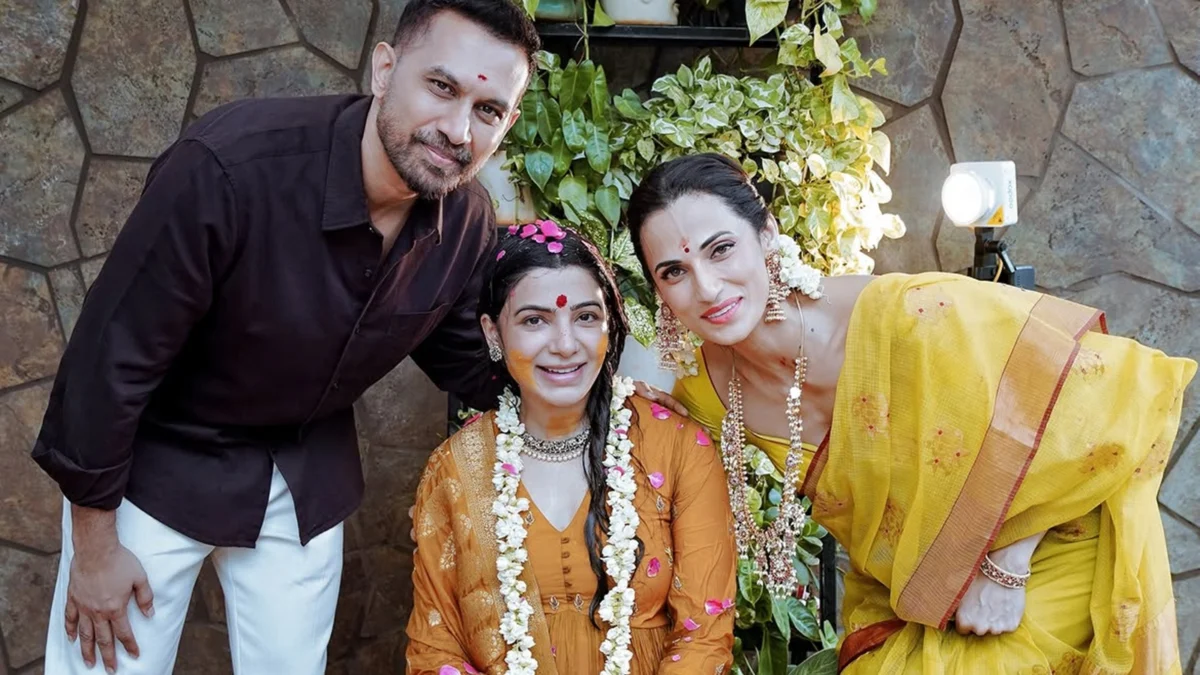
Coimbatore, India – In a deeply spiritual and culturally rich ceremony, acclaimed actress Samantha Ruth Prabhu recently observed a traditional godh bharai (baby shower) at the serene Linga Bhairavi temple within Coimbatore’s Isha Yoga Centre. The celebration, a precursor to welcoming her first child with filmmaker Raj Nidimoru, was a profound immersion into ancient Indian traditions, emphasizing the sanctity of motherhood and the nascent bond between mother and child. Samantha, known for her discerning approach to life and her craft, shared her profound experience, highlighting the intricate beauty and deep meaning embedded within the ritual.
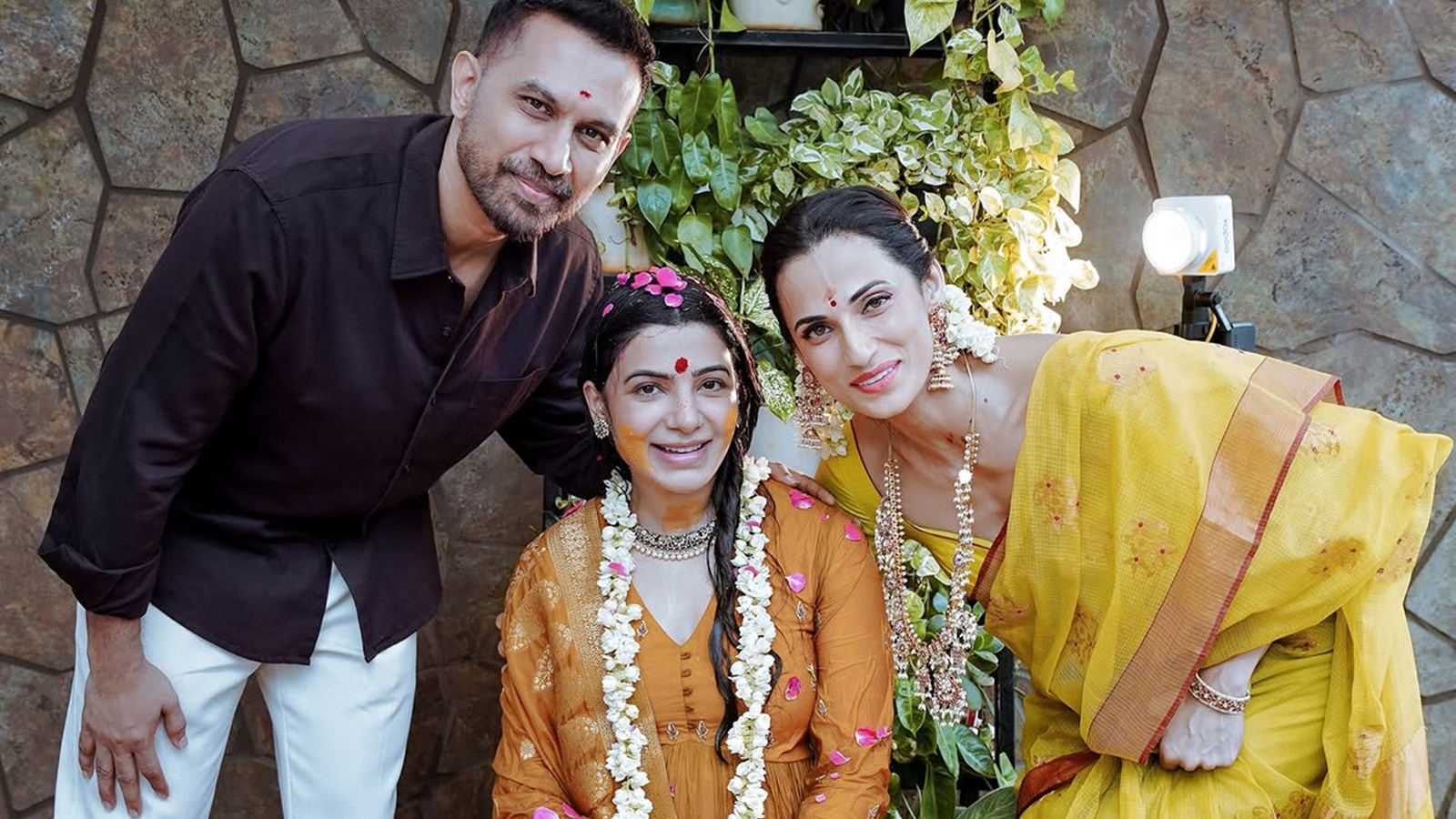
The actress, who has openly embraced her journey into motherhood, took to Instagram to offer followers an intimate glimpse into the ceremony. Dressed in a simple yet elegant mustard-hued salwar suit, adorned with a delicate choker and matching earrings, Samantha exuded a radiant glow. Her minimal festive makeup, featuring dewy skin and soft waves, perfectly complemented the serene ambiance.
Embracing Tradition: A Deep-Rooted Reverence
Samantha’s decision to celebrate her godh bharai at the Isha Yoga Centre, a globally recognized spiritual hub, underscores her profound respect for ancient customs. In her heartfelt Instagram caption, she articulated a sentiment that resonates deeply with many who seek meaning beyond the surface. "I may not understand the meaning behind every ritual," she confessed, "but I have always believed that there is something deeper at work… in the sound of a mantra, the energy created through chanting, and the careful way the ancient practices have been passed down through generations." This statement reflects a universal human yearning to connect with ancestral wisdom and the spiritual underpinnings of life’s significant milestones.
The actress’s words serve as a powerful reminder that traditions, while sometimes appearing complex, often carry profound philosophical and energetic significance. Her journey through the ceremony, guided by an understanding priest, allowed her to move beyond mere participation to a deeper appreciation of its purpose.
A Ceremony Steeped in Srividya Tradition: Kalaa Aavarana and the Devi’s Embrace
The godh bharai ceremony observed by Samantha was not a conventional celebration but a specialized ritual known as Kalaa Aavarana, rooted in the ancient Srividya tradition. This esoteric practice, often explained by practitioners as a deep dive into the worship of the Divine Feminine, holds immense significance for expectant mothers. Samantha’s explanation of the ritual illuminated its intricate beauty and spiritual depth.
“As the priest, a Srividya Upaasaka, began explaining each step, I slowly understood how thoughtful and meaningful the ceremony was,” Samantha shared, her voice imbued with awe. “Every mantra had a purpose. Every offering had a meaning. Every step had its place.” This realization marked a pivotal shift from passive observance to active engagement with the spiritual essence of the ceremony.
The Kalaa Aavarana ritual, as described by Samantha, is dedicated to honoring the 94 kalas (arts or divine qualities) of Devi, the primordial goddess. These divine attributes are conceptually aligned with the seven chakras of the mother-to-be. The ritual involves the use of sacred water and potent mantras, meticulously employed to ritually cleanse and energize these energy centers. The ultimate aim is to invoke the living presence of consciousness to flow through the mother, symbolizing her role as a conduit for new life.
This detailed explanation provides a unique insight into a tradition that goes far beyond symbolic gestures. It highlights a profound understanding of the female body as a sacred vessel and the spiritual energies that are believed to surround and nurture the developing life within. The ritual’s focus on the mother’s chakras suggests a holistic approach, acknowledging the interconnectedness of physical, emotional, and spiritual well-being during pregnancy.
The Mother as Devi: A Profound Spiritual Affirmation
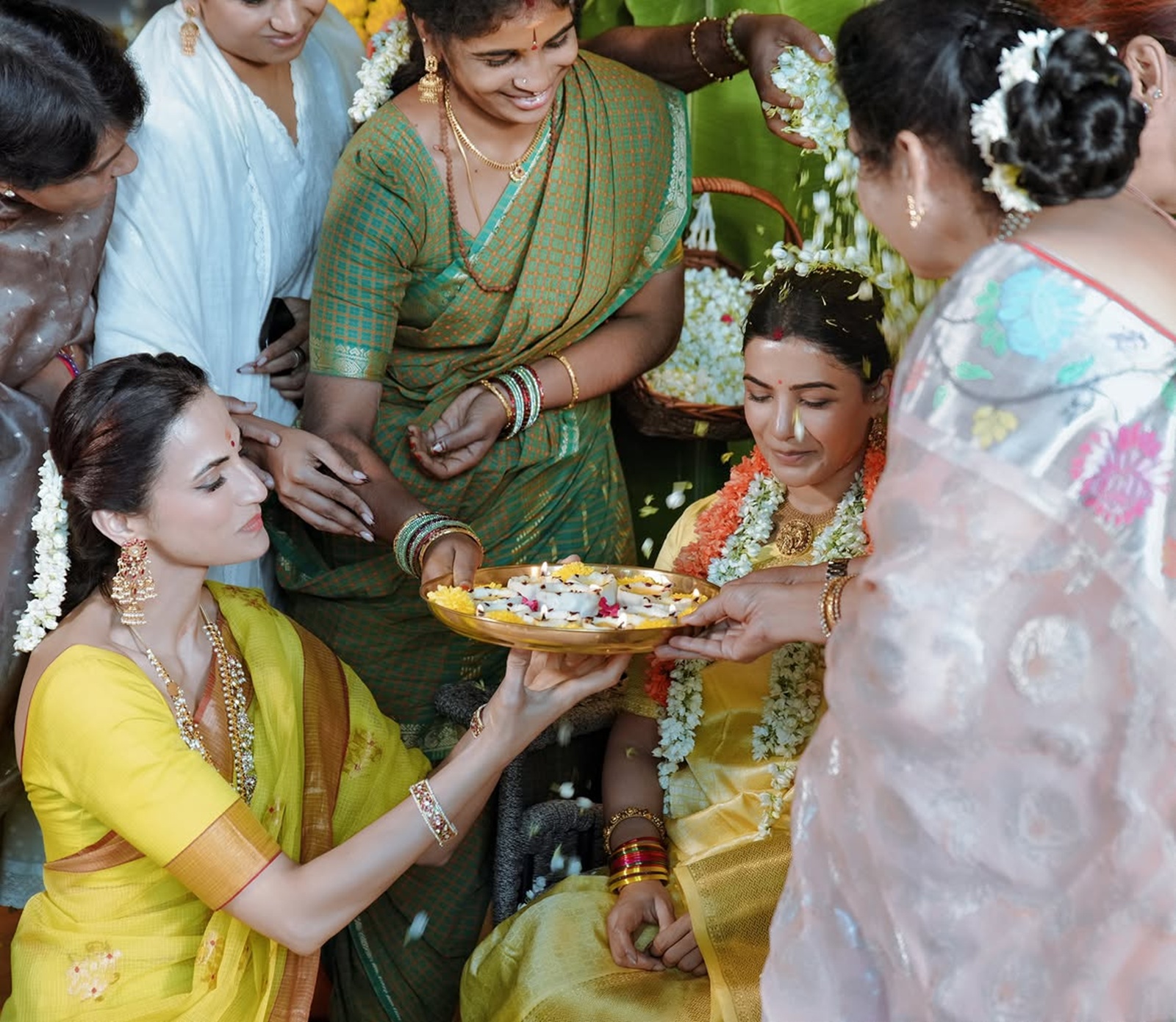
What resonated most deeply with Samantha during the ceremony was the profound way in which the ritual elevates and honors the expectant mother. “She is honoured as Devi herself, as the sacred creator through whom another life is taking form,” Samantha expressed, her words carrying a weight of spiritual recognition. “It is a blessing for the child growing within her and also for the woman who is being born into a new version of herself.”
This perspective is transformative. It shifts the narrative from simply preparing for a baby to recognizing the profound spiritual metamorphosis occurring within the woman. The ceremony, in this light, is not just about the child but also about the woman’s own spiritual evolution into motherhood.
Samantha further elaborated on the symbolic placement of the mother-to-be at the heart of the Sri Chakra Yantram. This sacred geometric diagram, composed of nine aavaranas (enclosures), represents various stages of a spiritual journey. At its innermost point lies the bindu, a single dot symbolizing the source of creation and the blessings of Lalita Tripurasundari, a prominent form of the Divine Mother in Hindu tantric traditions.
During the recitation of the Devi Khadgamaala, a powerful mantra sequence that enumerates the names of deities and divine energies associated with these nine enclosures, the focus is directed inward. The chanting symbolically moves from the outer layers towards the center, guiding the mind towards introspection and invoking protection and blessings. This aspect of the ritual underscores the importance of mental and spiritual preparation for both the mother and the unborn child.
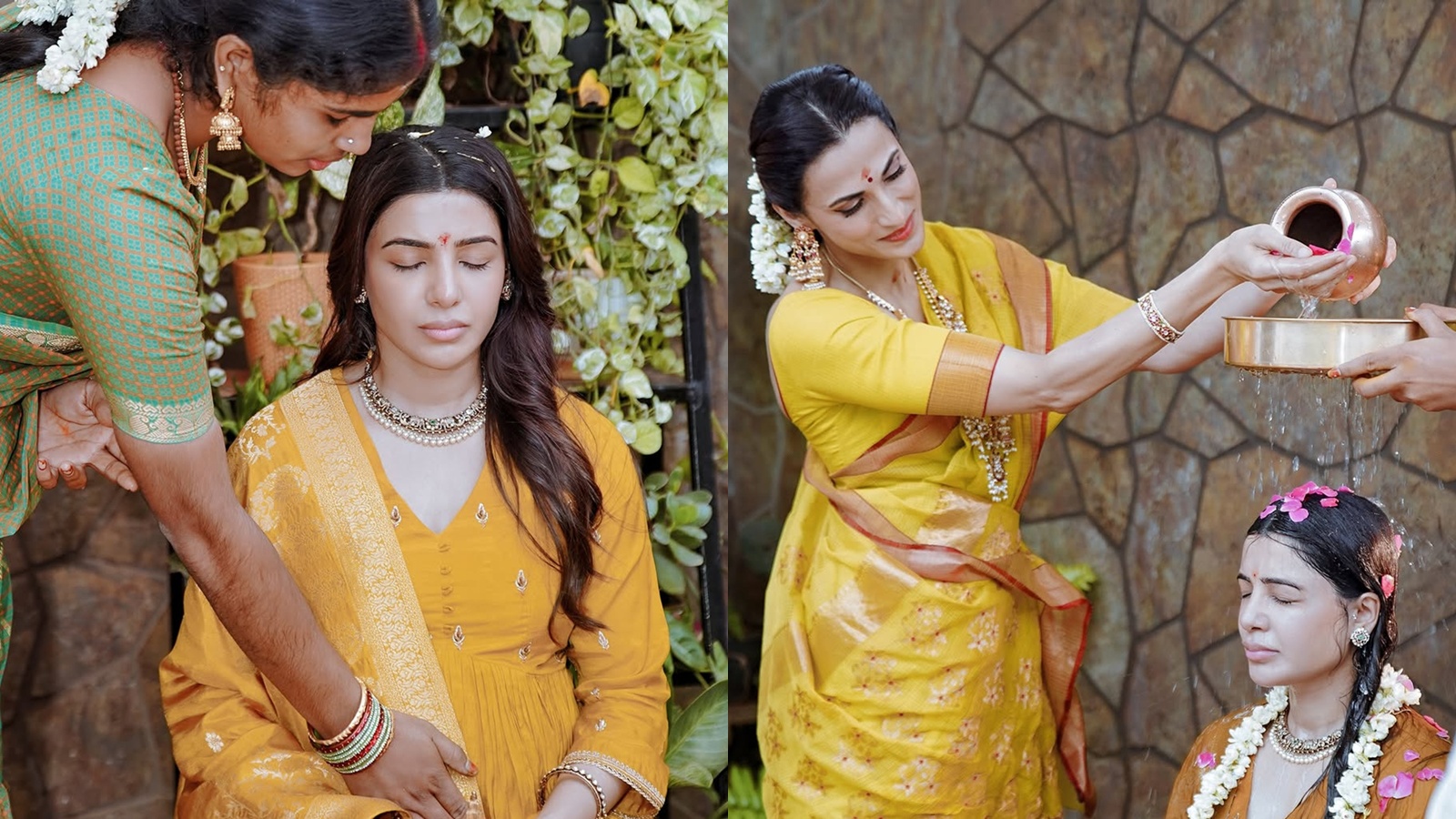
The chanting, Samantha explained, is believed to create a protective field around the mother and child, offering the unborn child a sacred samskaara – a spiritual imprint formed through mantra even before birth. This concept of imprinting spiritual energies onto a developing consciousness before birth is a cornerstone of many ancient spiritual practices and highlights the profound impact of the prenatal environment.
The Role of Friendship and Support: Shilpa Reddy’s Embrace
The godh bharai was hosted by Samantha’s dear friend, Shilpa Reddy, a prominent figure in the Telugu film industry and a close confidante. Shilpa, radiating warmth and joy, was herself adorned in a vibrant yellow silk sari with a broad golden border, complemented by traditional gold jewelry and floral adornments in her hair. Her presence underscored the importance of community and familial support in celebrating such a significant life event.
Samantha’s gratitude towards Shilpa was evident. “Grateful to my dearest @shilpareddy.official, who offered me the opportunity to experience this beautiful ceremony,” she concluded her post, acknowledging the pivotal role her friend played in facilitating this deeply meaningful experience. The shared moments between the two friends, captured in the photographs, speak volumes about their bond and mutual support.
Expert Insights: The Prenatal Connection and its Significance
Dr. Rimpa Sarkar, a clinical psychologist and founder of Sentier Wellness in Mumbai, provided valuable insights into the psychological and emotional dimensions of pregnancy and rituals like the godh bharai. She emphasized that the bond between a mother and her child often begins long before birth. "Emotionally, many women start connecting with their baby the moment they become aware of the pregnancy," Dr. Sarkar stated. "Research in prenatal psychology suggests that a mother’s emotional state influences her nervous system, which in turn affects the developing fetus."
This scientific understanding lends credence to the power of rituals designed to foster a positive and nurturing prenatal environment. When a mother experiences feelings of calm, reassurance, and emotional grounding through practices like the Kalaa Aavarana, these positive signals are transmitted to the baby. Dr. Sarkar explained that this kind of emotional attunement transcends mere physical care, representing an early form of parenting built on compassion, presence, and self-awareness.
"When mothers allow themselves emotional gentleness and self-compassion during pregnancy, it not only supports their mental health but also nurtures a deeper sense of safety and bonding that continues well beyond birth," she concluded. This perspective highlights the dual benefit of such ceremonies: they are not only a celebration of the impending arrival but also a profound act of self-care and conscious parenting for the mother.
Implications and the Enduring Power of Tradition
Samantha Ruth Prabhu’s godh bharai ceremony serves as a powerful testament to the enduring relevance of ancient Indian traditions in contemporary life. In an era often dominated by rapid change and technological advancements, her deliberate engagement with a deeply spiritual ritual signifies a yearning for connection to heritage, meaning, and the profound mysteries of life.
The Kalaa Aavarana ritual, with its intricate symbolism and spiritual depth, offers a unique perspective on pregnancy as a sacred journey of transformation. By honoring the mother as Devi and imprinting the child with protective energies, the ceremony underscores the holistic approach to prenatal care that has been passed down through generations.
Samantha’s candid sharing of her experience encourages a broader appreciation for these traditions, prompting introspection on their underlying principles and their potential to foster well-being. As she prepares to welcome her child, her journey through this sacred ritual offers a beautiful narrative of embracing motherhood with spiritual reverence, deep connection, and profound gratitude. The ceremony, far from being a mere social event, stands as a powerful affirmation of the sacred bond between mother, child, and the universe.
