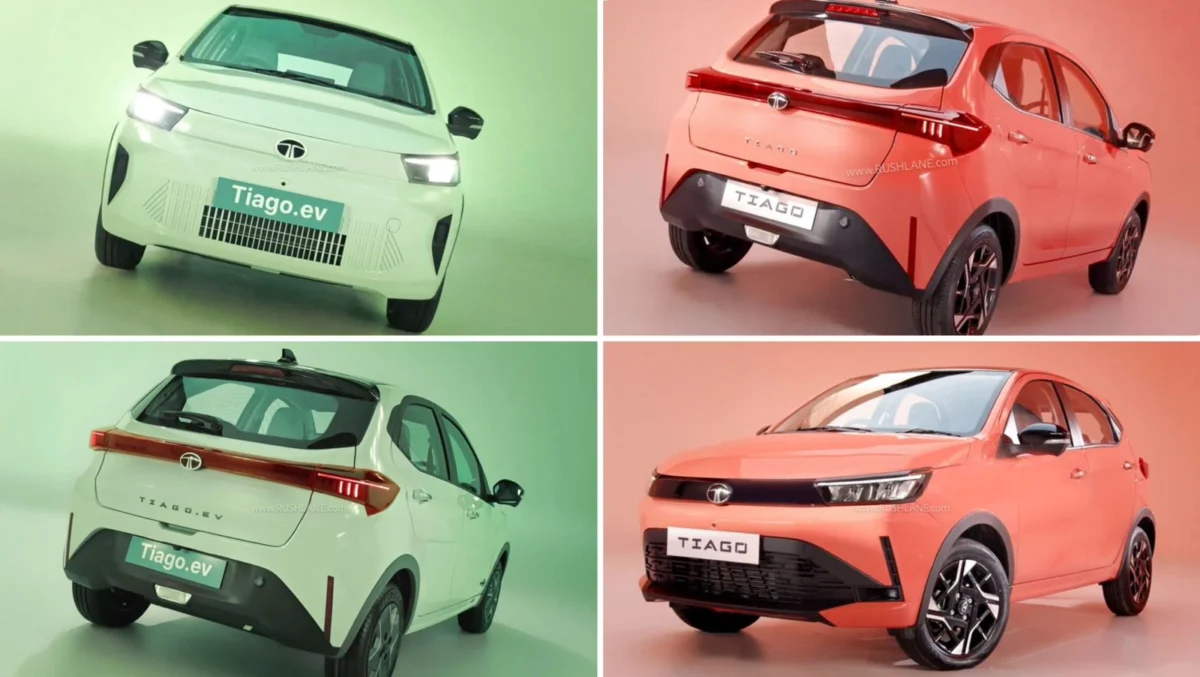
MUMBAI, India – In a move to consolidate its dominance in the entry-level hatchback segment and further accelerate its electrification journey, Tata Motors has officially pulled the wraps off the 2026 Tiago facelift. Spanning both the Internal Combustion Engine (ICE) and Electric Vehicle (EV) versions, the updated Tiago is scheduled for a formal market launch on May 28, 2026.
The reveal marks a significant milestone for Tata’s "New Forever" philosophy, introducing a sharper design language, segment-first technological integrations, and a refined aesthetic intended to appeal to a younger, more tech-savvy demographic. As the competition in the compact car segment intensifies with the arrival of the new-generation Maruti Suzuki Swift and the steady performance of the Hyundai Grand i10 Nios, Tata’s 2026 update is a calculated strike to retain its market share.
I. The Main Facts: Aesthetic and Technological Evolution
The 2026 Tata Tiago range undergoes its most radical visual transformation since its initial launch. The facelift is not merely a "bumper-and-grille" update; it represents a fundamental shift toward a more premium and futuristic identity.
Exterior Styling: Sharper and More Sophisticated
The most striking change is at the front. Both the ICE and EV models now sport a significantly slimmer LED headlamp setup, moving away from the bulkier halogen units of the previous iteration. These headlamps are underscored by integrated LED Daytime Running Lights (DRLs) that flow seamlessly into the front fascia.
The Tiago EV: To distinguish its green credentials, the EV version features a fully closed-off front grille panel, finished in high-gloss black with the signature "EV" badging. The bumper has been redesigned with vertically stacked elements and a wide lower air intake to improve aerodynamics and cooling for the battery thermal management system.
The Tiago ICE: The petrol and CNG variants maintain a more traditional grille with a honeycomb pattern, though it has been refined with a more geometric, cleaner layout.
Lighting and Rear Design: For the first time, the Tiago adopts "connected-style" LED tail lamps at the rear. While not a single light bar, the lamps feature a smoked treatment and a design that visually bridges the tailgate, giving the car a wider, more planted stance.
New Color Palettes and Personalization
Tata Motors has introduced two "hero colors" for the 2026 launch. The Tiago EV was showcased in a serene Mint Green, emphasizing its eco-friendly nature. Conversely, the ICE version debuted a high-energy Coral Orange, aimed at a youthful, urban audience. New alloy wheel designs were also spotted—the ICE version features diamond-cut alloys, while the EV adopts high-efficiency aero-wheels designed to minimize drag and maximize range.
Segment-First Features
Perhaps the most significant revelation from the official images is the inclusion of ORVM-mounted cameras. This confirms that the 2026 Tiago will feature a 360-degree camera system, a feature previously reserved for cars in two or three segments above. This move sets a new benchmark for the entry-level hatchback category in India.
II. Chronology: The Journey of the Tiago (2016–2026)
To understand the importance of the 2026 facelift, one must look at the decade-long evolution of the Tiago platform, which has been a cornerstone of Tata Motors’ passenger vehicle turnaround.
2016 – The Birth (The Zica to Tiago Transition): Originally intended to be called the "Zica," the car was renamed "Tiago" due to the unfortunate timing of the Zika virus outbreak. Launched in April 2016, it replaced the aging Indica and Bolt, offering a 4-star Global NCAP safety rating that changed the narrative of Indian small cars.
2020 – The BS6 Facelift: As India transitioned to stricter emission norms, Tata updated the Tiago with a sharper "Impact 2.0" design, introducing the 1.2L Revotron engine and eliminating the diesel variant.
2022 – The EV Revolution: Tata Motors launched the Tiago EV, making it the most affordable electric car in India at the time. It democratized EV ownership and quickly became the best-selling EV hatchback in the country.
2024 – Feature Enhancements: Tata introduced the "Twin Cylinder" i-CNG technology, solving the perennial problem of zero luggage space in CNG cars. This innovation solidified the Tiago’s position as a multi-fuel champion.
2026 – The Modern Era Facelift: The current update serves as the pinnacle of the Tiago’s lifecycle, integrating high-end tech (360-degree cameras, 10.25-inch screens) to compete with the rising tide of premium features in the budget segment.
III. Supporting Data: Powertrains and Specifications
While the 2026 facelift focuses heavily on design and features, the mechanical underpinnings remain robust, with expected incremental improvements in efficiency.
Internal Combustion Engine (ICE) Specs
The Tiago ICE will continue to be powered by the reliable 1.2-liter, 3-cylinder Revotron petrol engine.
Power: 86 PS @ 6000 rpm.
Torque: 113 Nm @ 3300 rpm.
Transmission: 5-speed Manual and 5-speed AMT (Automated Manual Transmission).
CNG Variant: The i-CNG version will produce approximately 73 PS and 95 Nm in CNG mode, featuring the patented twin-cylinder tank setup that leaves ample room for luggage.
Electric Vehicle (EV) Specs
The 2026 Tiago EV is expected to benefit from updated battery chemistry and faster charging software, mirroring the upgrades recently seen in the Punch.ev.
Range: The current certified range of 250 km to 315 km may see a slight bump due to improved aero-efficiency from the new front-end design.
Performance: 0-60 km/h in under 6 seconds for the Long Range variant.
Feature Comparison Table
Feature
2024 Tiago (Previous)
2026 Tiago (Facelift)
Infotainment
7-inch Touchscreen
10.25-inch High-Res Screen
Connectivity
Wired Android Auto/Apple CarPlay
Wireless Android Auto/Apple CarPlay
Safety Tech
Dual Airbags, ABS, EBD
6 Airbags (Standard), 360-degree Camera
Instrument Cluster
Semi-Digital
Fully Digital (Persona-based)
Headlamps
Projector Halogen
Slim LED with DRLs
IV. Official Responses and Corporate Strategy
Tata Motors has been vocal about its "Persona-based" strategy, moving away from traditional trim levels (XE, XM, XT, XZ) toward lifestyle-oriented variants like Smart, Pure, Adventure, and Empowered.
A spokesperson for Tata Motors, during the preliminary reveal, noted:
"The Tiago has always been a disruptor. With the 2026 facelift, we are not just updating a car; we are redefining what an entry-level buyer should expect. By bringing features like a 360-degree camera and advanced LED lighting to this segment, we are ensuring that ‘premium’ is no longer a word reserved for expensive SUVs."
Industry analysts suggest that this facelift is a critical part of Tata’s goal to achieve 50% EV penetration in its portfolio by 2030. By keeping the Tiago EV fresh and visually aligned with the high-tech Punch.ev and Nexon.ev, Tata maintains a cohesive brand identity that eases the transition for first-time car buyers into the electric ecosystem.
V. Implications: Market Impact and Competition
The 2026 Tata Tiago launch has far-reaching implications for the Indian automotive landscape.
Challenging the Status Quo
For decades, Maruti Suzuki has held an iron grip on the hatchback segment with the Swift and WagonR. However, the Tiago’s focus on Safety (4-star GNCAP) and Feature Richness has slowly chipped away at this dominance. The 2026 facelift’s inclusion of a 360-degree camera and 10.25-inch screen directly targets the perceived "premiumness" of the Hyundai Grand i10 Nios, potentially forcing competitors to accelerate their own feature updates.
The EV Dominance
The Tiago EV remains largely unchallenged in its price bracket. While MG offers the Comet EV, the Tiago’s traditional hatchback form factor appeals more to conventional buyers. The 2026 updates ensure that as more affordable EVs enter the market from rivals like Citroën or Renault, Tata remains the "benchmark" choice.
Residual Value and Brand Perception
By consistently updating the Tiago rather than replacing it with a new nameplate, Tata Motors is building long-term brand equity. This strategy mimics global giants like Volkswagen with the Golf or Honda with the Civic. It stabilizes residual values for existing owners and builds a legacy of reliability.
Economic and Environmental Impact
The continued push for the i-CNG and EV variants reflects the Indian consumer’s shift away from pure petrol vehicles in the face of fluctuating fuel prices. The Tiago’s multi-fuel strategy (Petrol, CNG, EV) makes it a "future-proof" platform, capable of catering to diverse regional infrastructures across India—from metro cities with EV chargers to smaller towns with growing CNG networks.
Conclusion
The 2026 Tata Tiago ICE and EV facelifts represent more than a mid-life refresh; they are a statement of intent. On May 28, 2026, when the official pricing is announced, the industry expects Tata to maintain its aggressive value-for-money positioning. By blending cutting-edge safety, segment-leading technology, and a striking new aesthetic, Tata Motors is ensuring that the Tiago remains not just a choice, but a leader in the evolution of the Indian small car.