

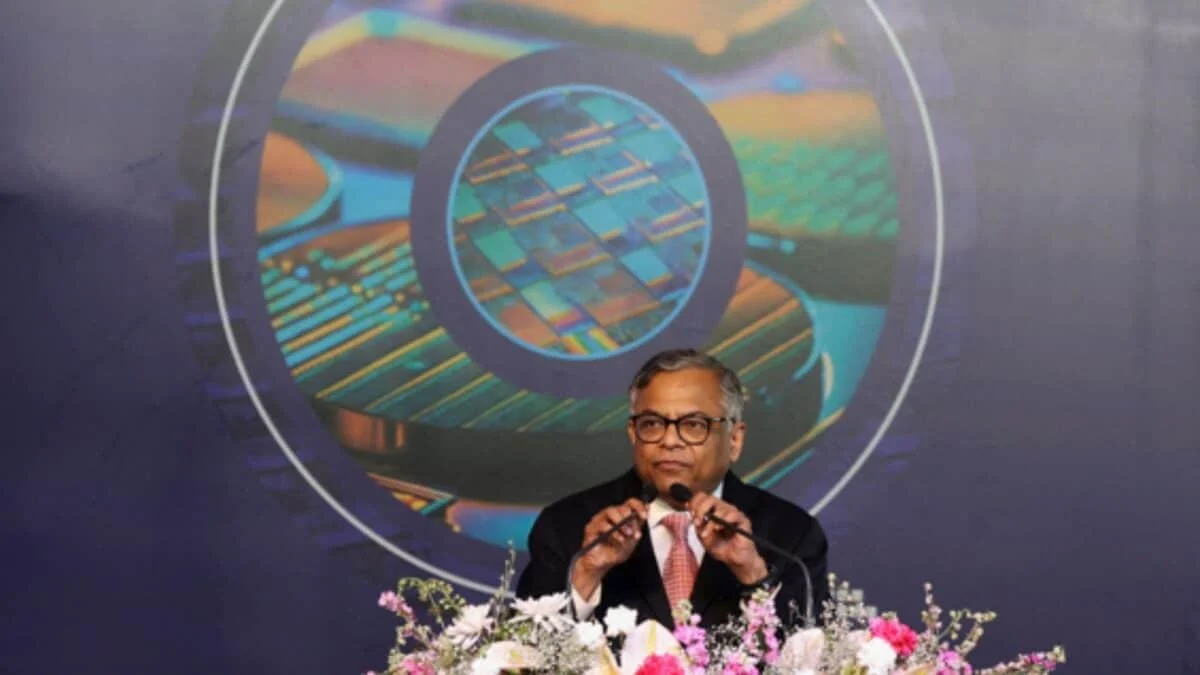
Mumbai, India – May 25, 2026 – The venerable Tata Sons, the principal holding company of India’s sprawling Tata Group, is set to convene a critical board meeting on Tuesday, May 27, 2026. The agenda, as revealed by sources close to the development, will primarily focus on the performance and future strategies of several loss-making entities within the diversified conglomerate. Conspicuously absent from the discussions, however, will be the highly anticipated reappointment of Tata Sons chairman, N. Chandrasekaran, a development that signals deeper internal currents within the group’s top echelons.
The impending meeting underscores a period of intense scrutiny and strategic recalibration for the over $100 billion conglomerate, which spans sectors from steel to software, automobiles to aviation. With significant reported losses from unlisted ventures and an ongoing mandate from the Reserve Bank of India (RBI) for Tata Sons to list publicly, the board’s deliberations are poised to set the course for the group’s immediate future and potentially reshape its leadership landscape.
Main Facts: A Board Meeting Under Pressure
The core of Tuesday’s board meeting revolves around a candid assessment of the Tata Group’s financially struggling companies. Individual loss-making entities are expected to present detailed reports on their current business state and outline their respective roadmaps for achieving profitability and sustainable growth. This directive reflects a renewed focus on fiscal discipline and performance accountability across the diverse portfolio.
While the board prepares to delve into the financial health of its subsidiaries, sources have emphatically stated that the reappointment of current chairman N. Chandrasekaran will not be on the agenda. This omission is particularly significant given the backdrop of reported "top-level friction" within the group and concerns raised by key stakeholders regarding the performance of new businesses launched under Chandrasekaran’s stewardship.
Adding another layer of complexity, Tata Sons finds itself under regulatory pressure from the RBI, which has classified it among the top-15 non-bank finance companies (NBFCs). This classification mandates a public listing, a prospect that has reportedly met with reluctance from some influential figures within the Tata ecosystem.
Chronology: Leading Up to a Pivotal Board Meeting
The path to this critical board meeting has been paved with a series of internal discussions and mounting financial data points, painting a picture of a conglomerate grappling with both legacy challenges and the teething troubles of ambitious new ventures.
Weekend Discussions Set the Stage: The immediate precursor to Tuesday’s meeting was a private discussion held over the past weekend between N. Chandrasekaran and Noel Tata, chairman of Tata Trusts and a nominee director on the Tata Sons board. This meeting, reportedly focused on the performance of various group companies, is understood to have been instrumental in shaping the agenda for the formal board gathering. The specific nature of their discussions, particularly concerning the underperforming assets, remains undisclosed but is believed to have highlighted areas requiring urgent strategic intervention.
Escalating Losses in Unlisted Ventures: Financial reports for the fiscal year 2025 indicated a substantial loss of Rs 10,905 crore for Tata Group’s unlisted businesses. Projections suggest an alarming escalation of these losses, potentially soaring to Rs 29,000 crore. This sharp increase in red ink has undoubtedly fueled the urgency for the board to address the underlying issues. The significant jump from the previous year’s figures underscores a deteriorating financial picture that demands immediate attention and robust corrective measures.
The Genesis of Leadership Friction: The past few years have not been entirely smooth sailing at the apex of the Tata Group. The original article hints at "top-level friction," which has manifested in various forms, including past expulsions or attempts to expel certain members. While not explicitly detailed, this history of internal discord adds weight to the current situation, particularly the deferment of Chandrasekaran’s reappointment. Such internal struggles can often impede swift decision-making and create an atmosphere of uncertainty, impacting strategic execution.
Noel Tata’s Expressed Concerns: A key voice in this narrative is that of Noel Tata, who is reportedly deeply concerned over the mounting losses at Tata Sons. His particular focus is on new businesses initiated during Chandrasekaran’s tenure, such as Tata Digital and the ambitious electronics ventures. Furthermore, the financially beleaguered Air India, acquired from the government a few years prior, also falls under his scanner. These concerns highlight a potential divergence in strategic vision or a re-evaluation of the efficacy of recent diversification efforts.
The RBI’s Listing Mandate: The Reserve Bank of India’s classification of Tata Sons as a ‘core investment company’ within the top-15 NBFCs category introduced a significant regulatory obligation. This classification, made years prior, comes with a mandate for public listing, aiming to bring greater transparency and systemic stability to large, interconnected financial entities. The deadline for this listing, while not explicitly stated in the original article, has been a looming factor in the group’s strategic considerations.
Proxy Advisory Firm’s Intervention: Just days before the board meeting, InGovern, a prominent proxy advisory firm, issued a report emphatically advocating for Tata Sons’ listing. Their public statement added an external layer of pressure and provided a strong argument for enhanced governance and transparency, reinforcing the RBI’s position. This public call from an independent advisory firm signals the growing external expectation for Tata Sons to adhere to higher standards of corporate governance typical of publicly listed entities.
These chronological developments collectively underscore the multifaceted challenges and pressures confronting the Tata Sons board as it prepares for what promises to be a highly consequential meeting.
Supporting Data: Unpacking the Financial and Strategic Undercurrents
The concerns swirling around Tata Sons are firmly rooted in tangible financial figures and strategic challenges. The data presented, though brief in the original report, points to significant areas of stress.
The Scale of Losses: The reported loss of Rs 10,905 crore for unlisted businesses in FY25 is a substantial figure, indicating that a significant portion of the group’s newer, non-public ventures are not yet yielding positive returns. The projected surge to Rs 29,000 crore is particularly alarming, suggesting that the underlying issues are either deepening or that new, capital-intensive projects are yet to reach profitability. This scale of loss demands rigorous financial oversight and potentially tough decisions regarding portfolio rationalization or increased investment.
Specific Troubled Ventures:
- Tata Digital: Launched with significant fanfare and ambition to consolidate the Tata Group’s diverse consumer offerings into a single digital ecosystem, Tata Digital faces fierce competition from established players like Amazon, Reliance Jio, and Flipkart. Building a robust e-commerce and digital services platform requires massive, sustained investment in technology, logistics, and customer acquisition, often with long gestation periods before profitability. The reported losses suggest that Tata Digital is still in its heavy investment phase, struggling to carve out a dominant market share.
- Electronics Ventures: The electronics segment, while strategically important for India’s manufacturing ambitions, is notoriously capital-intensive and subject to rapid technological obsolescence and intense global competition. Whether these ventures involve component manufacturing, assembly, or consumer electronics, they typically require significant R&D, advanced supply chain management, and often operate on thin margins. The losses here could indicate challenges in scaling production, achieving cost efficiencies, or penetrating competitive markets.
- Air India: The acquisition of Air India was a landmark event, marking the return of the airline to its founding group. However, Air India has been a chronic loss-maker for decades under government ownership, burdened by aging fleet, inefficient operations, substantial debt, and a bloated workforce. Turning around such a legacy carrier is a monumental task requiring massive capital injection for fleet modernization, network rationalization, talent restructuring, and service improvement. The continued financial struggles post-acquisition highlight the immense challenges involved in its revival.
InGovern’s Stance on Transparency: The proxy advisory firm InGovern’s report provides crucial external validation for the need for greater transparency and robust governance. Their assertion that "A holding company of this large scale and systemic relevance should not remain outside a stronger transparency and governance framework of a listed company" directly challenges the current unlisted status of Tata Sons. They further argue that "Where control is exercised through a complex trust-based holding arrangement, the case for listing becomes stronger, not weaker, because governance should not depend on private consensus alone." This statement directly addresses the unique ownership structure of Tata Sons, where Tata Trusts hold a two-thirds stake, implying that a private, trust-based control mechanism might not provide sufficient oversight for an entity of such systemic importance. The call for listing is thus not just about access to capital but fundamentally about establishing higher standards of corporate governance.
Succession Planning and Family Influence: The induction of Neville Tata, son of Noel Tata, into several trusts or foundations linked to the group is a subtle yet significant piece of supporting information. While not directly related to the current financial performance, it signals a potential long-term succession strategy and the continued importance of family influence within the broader Tata ecosystem. This move could be interpreted as preparing the next generation for roles of responsibility, further entrenching the family’s oversight over the group’s affairs.
These pieces of supporting data collectively form the financial and structural context within which the Tata Sons board meeting is taking place, highlighting the magnitude of the decisions that need to be made.
Official Responses: Silence Amidst Speculation
In the highly scrutinized world of corporate India, official responses, or the lack thereof, often speak volumes. In this instance, the silence from Tata Trusts representatives has been particularly noticeable.
As per the original report, "E-mails sent to a Tata Trust representative were not answered till the time of filing the story." This lack of a direct official comment or clarification from the primary shareholders of Tata Sons is significant. It implies a conscious decision to refrain from public statements ahead of a crucial board meeting, possibly to manage external perceptions, avoid pre-empting board discussions, or to maintain a unified front internally before any formal announcements are made.
The absence of an official statement leaves room for speculation and amplifies the importance of the board meeting itself as the primary forum for definitive decisions and communications. In a corporate environment where transparency is increasingly valued, the silence from the group’s core ownership entity during a period of such critical financial and leadership discussions inevitably raises questions and underscores the sensitivity of the internal dynamics at play.
This official reticence is also consistent with the typical approach of large Indian conglomerates, which often prefer to communicate decisions through formal channels after they have been deliberated and approved by the highest governance bodies. However, given the public interest in Tata Sons and its systemic importance, the anticipation for any official communiqué post-meeting will be exceptionally high.
Implications: Navigating a Crossroads for India’s Premier Conglomerate
The upcoming Tata Sons board meeting and the issues it seeks to address carry profound implications for the future trajectory of the Tata Group, its leadership, corporate governance standards, and its standing in the Indian and global business landscape.
Future of N. Chandrasekaran’s Leadership: The most immediate implication stems from the non-inclusion of Chandrasekaran’s reappointment on the agenda. While it doesn’t definitively signal his departure, it introduces a significant degree of uncertainty regarding his future at the helm of Tata Sons. This deferment, particularly amidst Noel Tata’s reported concerns over new ventures, suggests a period of evaluation or possibly a strategic pause before a decision is made. Should Chandrasekaran’s tenure not be extended, it would mark a significant leadership transition for the group, potentially altering its strategic direction, especially concerning the focus on digital and new-age businesses that have been central to his vision. A change in leadership could lead to a re-evaluation of current strategies, potentially impacting ongoing projects and investments.
Strategic Review of Loss-Making Entities: The explicit focus on loss-making companies implies a rigorous performance review and potentially tough strategic decisions. This could lead to:
- Divestments: Unprofitable ventures that show no clear path to profitability might be divested or shut down, allowing the group to reallocate capital to more promising areas.
- Restructuring: For strategically important but underperforming assets like Air India, a comprehensive restructuring plan involving further capital infusion, operational efficiencies, and network optimization will be critical.
- Increased Scrutiny for New Ventures: Tata Digital and electronics ventures might face heightened scrutiny, with demands for clearer profitability timelines and demonstrable market traction. This could temper the group’s aggressive expansion in these areas if returns remain elusive. The implications for these sectors could be a more cautious approach to investment or a pivot in their business models.
The IPO Dilemma and Governance Standards: The RBI’s mandate for Tata Sons to list publicly presents a significant crossroads.
- Benefits of Listing: An IPO would bring unprecedented transparency to Tata Sons’ financials, governance structures, and strategic decision-making. It would open the company to public scrutiny, potentially enhancing investor confidence and ensuring better accountability. Furthermore, it could provide a valuation benchmark for its vast array of holdings and unlock value for shareholders.
- Challenges of Listing: Noel Tata’s reported reluctance likely stems from several factors:
- Loss of Control: Listing would dilute the direct control exercised by Tata Trusts, subjecting the company to market forces and activist shareholders.
- Increased Scrutiny: Public listing brings intense regulatory and market scrutiny, demanding quarterly performance disclosures and adherence to stringent compliance norms.
- Valuation Complexities: Valuing a conglomerate of Tata Sons’ complexity, with holdings in both listed and unlisted entities across diverse sectors, could be challenging and might not reflect the full intrinsic value.
- Potential for Volatility: Market listing exposes the company to stock market volatility, which could be seen as undesirable for a holding company with a long-term, trust-based ownership philosophy.
The eventual decision on listing will redefine Tata Sons’ relationship with its stakeholders and set a precedent for other large, privately held conglomerates in India. InGovern’s strong recommendation reinforces that the argument for enhanced governance and transparency is gaining significant traction.
Internal Power Dynamics and Succession: The "top-level friction" and Noel Tata’s specific concerns, coupled with the induction of his son Neville Tata into group trusts, suggest a dynamic interplay of power and influence within the Tata ecosystem. These developments hint at:
- Generational Shift: The slow but steady integration of younger family members like Neville Tata indicates a long-term view on succession planning and the continued influence of the Tata family in guiding the group’s ethos and strategic direction.
- Balancing Trust-Based Control with Professional Management: The ongoing tension highlights the challenge of balancing the philanthropic objectives and long-term vision of the Tata Trusts with the demands of professional management and market performance.
- Reaffirmation of Core Values: The discussions could lead to a reaffirmation of the group’s core values and a renewed emphasis on sustainable, profitable growth, potentially influencing how future leadership is chosen and evaluated.
Market Perception and Investor Confidence: The outcomes of this board meeting will be closely watched by domestic and international investors, analysts, and rating agencies.
- Clarity on Strategy: A clear articulation of strategies to address losses and a decisive stance on the IPO would provide much-needed clarity, potentially bolstering investor confidence in the group’s ability to navigate current challenges.
- Uncertainty Impact: Continued ambiguity around leadership, performance, and the IPO could lead to increased market uncertainty, potentially impacting the valuations of listed Tata Group companies and making it harder to attract talent or secure favorable financing for new projects.
In conclusion, the upcoming Tata Sons board meeting is more than just a routine financial review; it represents a pivotal moment for one of India’s most iconic business houses. The decisions made regarding its loss-making entities, the path forward for its leadership, and its stance on public listing will not only determine its own future but also send significant signals across the broader Indian corporate landscape regarding governance, growth, and the delicate balance between tradition and transformation.
