

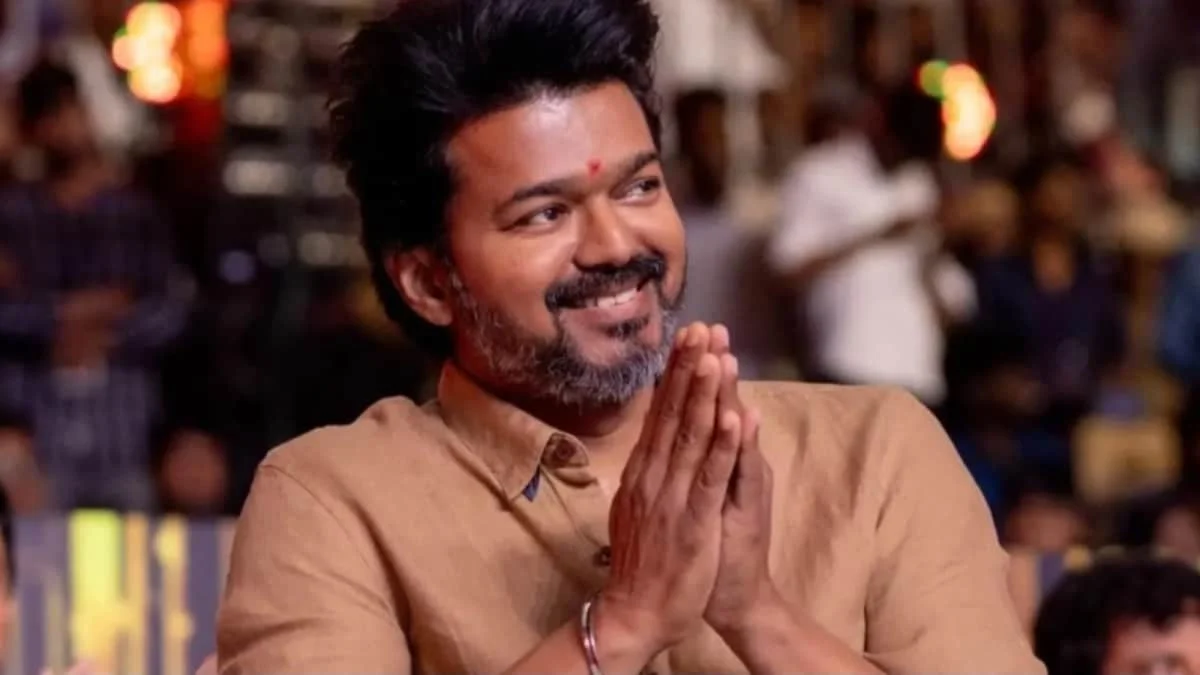
Bengaluru, India – May 9, 2026 – The political landscape of Tamil Nadu stands at the precipice of a monumental transformation. The historic ascent of actor-politician Vijay, affectionately known as ‘Thalapathy’ (Commander) by his legions of fans, to the Chief Minister’s office heralds a paradigm shift, echoing the cinematic entries of his legendary predecessors, M.G. Ramachandran and J. Jayalalithaa. Yet, the journey from the silver screen to the secretariat is fraught with a complex array of structural and political hurdles that will test the mettle of his nascent administration. As the Tamilaga Vettri Kazhagam (TVK) prepares to take the reins, the success or failure of Vijay’s debut as Chief Minister will be defined by his ability to navigate ten critical challenges, each demanding a blend of political acumen, administrative foresight, and unwavering resilience.
A New Dawn: Main Facts of Vijay’s Ascent
The recent state elections have seen the Tamilaga Vettri Kazhagam (TVK), under the charismatic leadership of actor Vijay, emerge as the single largest party in Tamil Nadu. This electoral triumph marks a significant departure from the decades-long duopoly of the Dravida Munnetra Kazhagam (DMK) and the All India Anna Dravida Munnetra Kazhagam (AIADMK). However, despite its impressive performance, the TVK fell short of an absolute majority, necessitating the formation of a coalition government with crucial support from the Congress, various Left parties, and the Viduthalai Chiruthaigal Katchi (VCK). This delicate arithmetic immediately places Vijay’s administration under intense scrutiny, as it grapples with the inherent vulnerabilities of coalition politics while simultaneously transitioning from a movement fueled by fan adulation to a functioning government tasked with addressing the complex socio-economic realities of a diverse state. The expectations are monumental, not just from his fervent fanbase but from a populace yearning for change, stability, and effective governance.
From Screen to Secretariat: A Chronology of a Political Journey
Vijay’s political foray has been a slow burn, meticulously planned over years, culminating in this unprecedented electoral victory. His journey from a beloved film star to the Chief Minister-designate of Tamil Nadu is a narrative woven with strategic public appearances, subtle political messaging in his films, and extensive philanthropic activities through his fan clubs.
Early Political Signalling (2000s-2010s): While initially focused on his film career, Vijay’s movies often carried themes of social justice, anti-corruption, and governance, subtly aligning him with the aspirations of the common man. His fan clubs, initially serving as promotional tools, gradually transformed into a vast social network, undertaking relief work and community service, laying the groundwork for a political organization.
Increased Engagement (Mid-2010s): Post-2014, Vijay began to speak more openly about political issues, often criticizing existing government policies without explicitly naming parties. His meetings with fan club members became more structured, resembling political conventions. He also made symbolic gestures, such as urging fans to vote and to be aware of their democratic rights.
Formation of Tamilaga Vettri Kazhagam (TVK) (Early 2020s): After years of speculation, Vijay officially announced the formation of the Tamilaga Vettri Kazhagam (TVK), signifying his formal entry into electoral politics. The party’s initial agenda focused on clean governance, youth empowerment, and a departure from the perceived dynastic politics of the established Dravidian parties. This announcement sent ripples across the state, immediately positioning him as a formidable third alternative.
Pre-Election Campaign (2025-2026): The TVK launched an aggressive campaign, leveraging Vijay’s unparalleled popularity. His rallies drew massive crowds, reminiscent of MGR and Jayalalithaa. The party skillfully used social media and grassroots outreach, promising a "new era" of politics for Tamil Nadu. The campaign focused heavily on anti-incumbency sentiments against the DMK and the perceived weakening of the AIADMK.
Election Results and Coalition Formation (May 2026): The election results were historic, with the TVK emerging as the single largest party, defying many pre-poll predictions. However, the shortfall in achieving a solo majority led to swift negotiations, culminating in a coalition agreement with the Congress, Left parties, and the VCK, paving the way for Vijay to assume the Chief Minister’s office. This sequence of events underscores the rapid and impactful transition of a cinematic icon into a pivotal political figure, setting the stage for a period of dynamic and potentially turbulent governance.
Navigating the Gauntlet: Supporting Data and Key Challenges
The road ahead for Chief Minister Vijay is paved with ten critical challenges, each demanding a strategic approach and a nuanced understanding of Tamil Nadu’s complex political, economic, and social fabric.
1. Proving Political Stability: The Coalition Conundrum
The TVK’s reliance on a multi-party coalition for majority support presents an immediate and profound test of political stability. With the Congress, Left parties, and the VCK as essential allies, Vijay faces constant bargaining for key ministries, policy influence, and resource allocation. Political analysts, drawing parallels to past coalition governments in India, note that such arrangements are inherently fragile. "The first 6 to 12 months will be a baptism by fire," observes Dr. Rajeshwari Sunder, a political science professor at Madras University. "Every policy decision, every ministerial appointment, will be a negotiation. The Governor, often a key player in such scenarios, will be watching closely, potentially acting as a check on the government’s stability if internal rifts emerge."
Historical data from other states shows that coalition partners, while offering numerical strength, often bring diverse ideological agendas and regional demands. The Congress, for instance, will likely push for its national agenda and greater representation, while the Left parties may advocate for specific labour and social welfare policies. The VCK, representing Dalit interests, will demand robust social justice initiatives. Managing these disparate demands without alienating any partner, while maintaining the TVK’s core vision, requires extraordinary diplomatic skill and a robust conflict resolution mechanism. The absence of a clear majority also means that any minor defection or withdrawal of support could trigger a crisis, keeping the administration perpetually on its toes.
2. Transition from Cinema to Governance: From Charisma to Credibility
Vijay walks a path previously trodden by titans like M.G. Ramachandran and J. Jayalalithaa, who successfully converted their immense cinematic popularity into administrative credibility. However, the transition is far from guaranteed. Governance demands a distinct skill set—meticulous bureaucracy management, adept handling of cabinet factions, and mastery of budget discipline, far removed from the narrative control of a film set. "The public voted for ‘Vijay the symbol,’ an embodiment of hope and change," remarks noted political commentator, S. Ramakrishnan. "The challenge now is to prove that the TVK, as an organization, possesses the depth and expertise for effective administration. The honeymoon period will be brief; the public will soon demand tangible results, not just cinematic promises."
Supporting data suggests that while charisma can win elections, sustained governance requires institutional strength. MGR, despite his initial popularity, faced considerable challenges in his early years, learning the ropes of administration. Jayalalithaa, a formidable administrator, honed her skills over decades. Vijay, a relative newcomer to executive politics, must rapidly acquire these skills, delegate effectively, and build a team that can translate his vision into actionable policy, rather than relying solely on his personal appeal.
3. Building a Strong Administrative Team: The Organizational Deficit
As a nascent political entity, the TVK is largely populated by first-time MLAs and relatively inexperienced district leaders. Unlike the DMK or AIADMK, which boast decades of administrative machinery, seasoned bureaucrats, and a vast network of experienced cadres, the TVK lacks this institutional memory. "Finding capable ministers who can prevent the formation of internal power centers while establishing a professional and efficient governance structure will be a daunting task," states a retired Chief Secretary, requesting anonymity. "The risk of internal dissent and power struggles within an inexperienced party is high."
Data on new political parties in India indicates a common struggle to attract and retain experienced technocrats and administrators. Vijay must not only identify individuals with the necessary expertise but also ensure their loyalty and integration into the TVK’s ethos. This includes appointing Principal Secretaries, Department Heads, and other crucial administrative staff who can navigate the intricacies of state governance. The challenge extends to building a robust party structure from the grassroots upwards, ensuring that policy implementation reaches the remotest villages and is not hampered by a lack of organizational depth.
4. Handling the DMK as a Formidable Opposition: The Shadow of Stalin
Despite their electoral setback, M.K. Stalin and the DMK remain a deeply entrenched force in Tamil Nadu’s institutional fabric. With a massive cadre network, significant strength in local bodies, and a sophisticated media ecosystem, the DMK is poised to be an aggressive and relentless opposition. "Every move of the inexperienced TVK government will be placed under a political microscope," warns Dr. Kausalya Devi, a senior journalist covering Tamil Nadu politics. "The DMK knows the administrative playbook inside out and will exploit every misstep, every policy loophole, and every perceived failure with surgical precision."
The DMK’s historical strength lies in its ability to mobilize public opinion, conduct effective protests, and leverage its extensive media presence to shape narratives. Vijay’s administration can expect constant challenges in the Assembly, relentless questioning on policy, and organized opposition on the streets. The DMK’s deep roots in the state’s bureaucracy also mean that any attempt by the TVK to re-orient the administrative machinery might face subtle but effective resistance. Vijay must anticipate these tactics and be prepared to counter them with transparent governance and effective communication.
5. Managing AIADMK Dynamics: The Residual Influence
The AIADMK, though diminished by the TVK’s surge, still retains a significant rural vote bank and considerable influence, particularly in the Thevar belt. Reports of behind-the-scenes negotiations and potential factional movements among AIADMK MLAs suggest that Tamil Nadu’s political environment will remain highly fluid and unpredictable. "The AIADMK’s fragmented leadership could either lead to its further decline or, paradoxically, create opportunities for other parties to poach its disillusioned members," observes political strategist, Arun Kumar.
The AIADMK’s lingering presence means that Vijay cannot afford to ignore its traditional strongholds or underestimate its capacity for resurgence. Any internal strife within the AIADMK could present both an opportunity and a threat. While some MLAs might be lured to the TVK, a consolidated AIADMK, even in opposition, could still pose a formidable challenge, particularly if it capitalizes on any dissatisfaction with the new government. The political environment is ripe for horse-trading and shifting allegiances, demanding constant vigilance from the TVK.
6. Economic and Employment Pressure: The Burden of Expectations
Public expectations are sky-high, particularly regarding job creation for the youth and robust industrial growth. However, Vijay inherits a state facing significant fiscal pressure, with a substantial debt burden and a heavy commitment to welfare subsidies. "The promise of ‘fast change’ expected by young voters will be difficult to deliver given the economic realities," cautions Dr. Lakshmi Narayanan, an economist specializing in state finances. "Urban infrastructure stress, competition from neighbouring industrial hubs like Karnataka and Maharashtra, and the need for fresh investment will require pragmatic, long-term economic planning, not quick fixes."
Supporting data indicates that Tamil Nadu’s fiscal health has been a concern for several years, with rising debt-to-GSDP ratios. Balancing populist promises with fiscal prudence will be a tightrope walk. The TVK must articulate a clear economic roadmap that attracts both domestic and international investment, stimulates job growth in diverse sectors, and manages existing welfare schemes without exacerbating the state’s financial woes. Failure to deliver tangible economic improvements could quickly erode public trust, especially among the youth who voted for change.
7. Managing the Expectations of the Fanbase: Reel vs. Real Governance
This remains Vijay’s most unique and potentially perilous challenge. His core supporters, accustomed to the swift resolution of problems and heroic transformations depicted in his films, expect a similar "cinematic transformation" in governance—clean administration and anti-corruption action delivered with the speed and decisiveness of a movie script. "The problem is, the wheels of administration move slowly, often bogged down by bureaucracy, legalities, and political compromises," explains cultural critic, Maya Krishnan. "Any perceived gap between cinematic expectation and bureaucratic reality could lead to rapid public disappointment and disillusionment among his most fervent followers."
Vijay must manage this delicate balance by constantly communicating the complexities of governance to his fanbase, tempering their expectations without dampening their enthusiasm. He needs to transition them from passive admirers to active, informed citizens who understand the challenges of public administration. Failing to do so could turn his greatest strength into his greatest vulnerability, as frustrated fans become vocal critics.
8. The Centre-State Relationship: Navigating Federal Friction
Vijay’s campaign positioning, which often carried undertones of opposition to the BJP-led central government, ensures that his relationship with New Delhi will be watched closely. Friction is likely in perennial areas of conflict: the National Eligibility cum Entrance Test (NEET), Goods and Services Tax (GST) dues, language policy, and broader federal rights. The recent tension with the Lok Bhavan (Governor’s residence) during government formation suggests that interactions with the Governor will remain politically sensitive and potentially contentious.
Data from other non-BJP ruled states highlights the challenges of cooperative federalism when political ideologies clash. Tamil Nadu has a history of asserting its federal rights, particularly on issues of language and state autonomy. Vijay will need to strike a delicate balance: advocating for Tamil Nadu’s interests robustly while maintaining a functional working relationship with the Centre to secure funds and support for state development projects. The Governor, as the Centre’s representative, will play a crucial role, and any perceived overreach could escalate tensions.
9. Law & Order and Political Violence: A Trial by Fire
A change in power often triggers a period of heightened political volatility, leading to cadre clashes, protest mobilizations, and political defections. For a government led by inexperienced political managers, the early months are often defined by law-and-order tests. "Maintaining peace while handling the pressure tactics of rival parties will be a trial by fire for the new Home Minister and the entire administration," states former DGP, Mr. Srinivasan. "Any lapse in law and order can quickly erode public confidence and provide ammunition to the opposition."
Historical precedents show that new governments must quickly establish their authority over the state’s law enforcement machinery. This involves ensuring impartiality, preventing political interference in policing, and proactively addressing potential flashpoints. The TVK government will need to demonstrate its ability to control any outbreaks of political violence, address communal tensions, and maintain public order, especially in a state with a history of strong political activism.
10. Defining a Distinct Ideology: Beyond Anti-Establishment Rhetoric
To survive beyond the initial honeymoon period and establish a long-term political trajectory, the TVK must evolve past its "anti-establishment" and "anti-DMK" rhetoric. The real question remains: What is the TVK governance model? Without a clear framework for economic policy, social justice, and minority outreach, sustaining long-term political momentum will be a struggle. "Simply being ‘different’ or ‘clean’ is not enough," argues Dr. Prema Sridhar, a political sociologist. "Voters eventually demand a coherent ideology, a clear vision for the state’s future that goes beyond the personality of the leader."
The TVK must articulate its stance on critical issues like caste politics, environmental protection, education reform, and the balance between tradition and modernity. It needs to develop a distinct identity that resonates with a broad cross-section of society and offers a clear alternative to the Dravidian ideologies that have dominated Tamil Nadu for decades. Failure to define a clear ideological compass could lead to policy paralysis, internal disagreements, and a gradual erosion of its unique appeal.
Official Responses: Vijay’s Stated Vision and Commitments
While the challenges are immense, Chief Minister-designate Vijay and the TVK have consistently articulated a vision focused on addressing these very issues. In his recent public addresses and party communiqués, Vijay has emphasized:
- On Coalition Stability: "We are committed to providing a stable and inclusive government. Our allies are integral to this journey, and we will operate on principles of collective responsibility and mutual respect, ensuring that every voice is heard in policy-making."
- On Governance: "The era of cinematic promises ends here; the era of decisive governance begins. We will bring efficiency and transparency to every level of administration, learning from best practices and harnessing the talent within our state."
- On Team Building: "My team will be chosen on merit, dedication, and a commitment to serve the people. We will identify and empower capable individuals, both from within the party and outside, to build a robust administrative machinery that delivers results."
- On Opposition: "We respect the democratic role of the opposition. However, our focus will remain on governance, and we will not be deterred by political rhetoric. Constructive criticism will be welcomed; obstructionism will be met with firm resolve."
- On Economy & Employment: "Job creation for our youth and sustainable industrial growth are paramount. We will implement prudent fiscal policies, attract investment, and streamline processes to ensure Tamil Nadu remains an economic powerhouse."
- On Fan Expectations: "My fans have given me this opportunity, and I understand their immense expectations. I ask for their patience and support as we tackle deep-rooted issues. Real change takes time, but I promise relentless effort and unwavering dedication."
- On Centre-State Relations: "We believe in cooperative federalism and will work with the Union government for the welfare of Tamil Nadu. However, we will never compromise on the rights and dignity of our state, be it on language, resources, or policy autonomy."
- On Law & Order: "Maintaining peace and order is the fundamental duty of any government. We will ensure that law enforcement is impartial, efficient, and responsive to the needs of the public, fostering an environment of safety and security for all."
- On Ideology: "The TVK stands for clean governance, social justice, and inclusive growth for every Tamilian. Our policies will be guided by these core principles, aiming to build a prosperous, equitable, and progressive Tamil Nadu for generations to come."
Implications: The Future of Tamil Nadu and Actor-Politics
The implications of Vijay’s debut administration extend far beyond the immediate political landscape of Tamil Nadu. His success or failure will have profound consequences for the state’s trajectory, potentially ushering in a new political era or reinforcing the dominance of established Dravidian parties. If he manages to overcome these formidable hurdles, Vijay could redefine the template for actor-politicians, demonstrating that mass appeal can indeed translate into effective, stable governance. His model could inspire similar movements across India, where cinematic charisma often struggles to find political footing.
Conversely, a turbulent or short-lived tenure could serve as a cautionary tale, highlighting the immense challenges of transitioning from reel to real leadership. It might reinforce skepticism about the ability of celebrity figures to navigate complex administrative and political environments. The very nature of Tamil Nadu’s unique blend of Dravidian ideology, personality cults, and socio-economic challenges makes Vijay’s experiment a high-stakes affair. The journey from ‘Thalapathy’ to a stable Chief Minister will not just be a test of his leadership, but a defining moment for the future of actor-politics and the enduring political narrative of one of India’s most dynamic states. The eyes of the nation, and indeed the world, will be fixed on Chennai as Vijay embarks on this historic, yet undeniably thorny, path.
