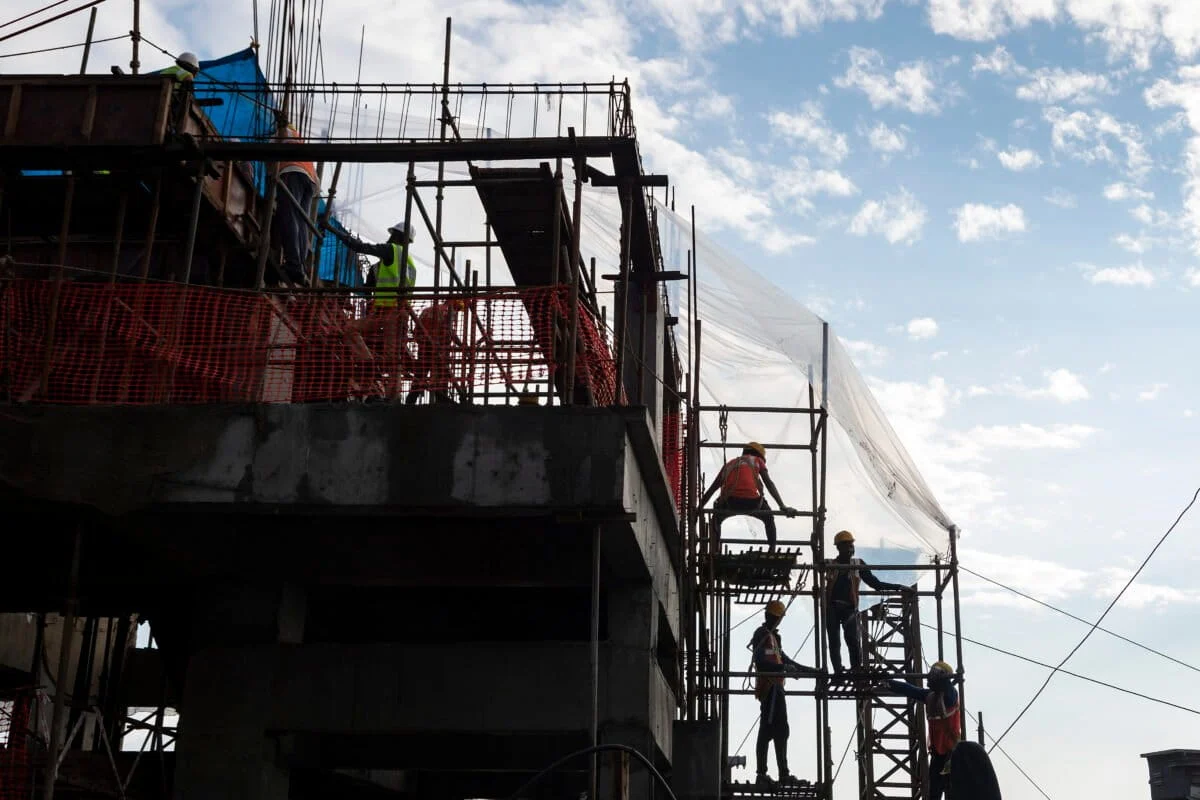
NEW DELHI – In a move signaled to redefine the fiscal architecture of Indian municipalities, the Government of India officially released the operational guidelines for the Urban Challenge Fund (UCF) on April 15. With a staggering outlay of ₹1 trillion (₹1,00,000 crore) for the 2025–2030 period, the UCF represents a fundamental shift in how the world’s most populous nation intends to finance its rapid urbanization.
The scheme arrives at a critical juncture, serving as the spiritual and financial successor to the Smart Cities Mission, which concluded in 2024. By moving away from a pure grant-based model toward a competitive, market-linked framework, the UCF aims to catalyze "transformative" rather than "incremental" urban development. However, as the guidelines move from paper to practice, policy analysts warn that the success of this ambitious fund hinges on overcoming the chronic financial frailty of Urban Local Bodies (ULBs) and a lack of explicit climate-resilience mandates.
Main Facts: The ₹1 Trillion Blueprint
The Urban Challenge Fund is designed as a catalytic Central Assistance (CA) mechanism. Of the total ₹1 trillion outlay, the government has earmarked ₹900 billion for direct project funding. The remaining ₹100 billion is split equally between two critical support pillars: ₹50 billion for project preparation and capacity building, and ₹50 billion for a Credit Repayment Guarantee Scheme specifically targeting tier-2 and tier-3 cities.
![Urban Challenge Fund’s promise rests on implementation capacity [Commentary]](https://imgs.mongabay.com/wp-content/uploads/sites/30/2026/05/26112432/AP20255498403521-1200x800.jpg)
The UCF’s funding philosophy marks a departure from previous urban missions. Central assistance is capped at 25% of the approved project cost. The "challenge" lies in the remaining 75%: implementing agencies must mobilize 50% of the project cost through market-based financing—such as municipal bonds, commercial bank loans, or Public-Private Partnerships (PPPs)—while the final 25% must come from the city or agency’s own internal resources.
Eligible projects are categorized under three broad pillars:
- Cities as Growth Hubs: Focusing on economic productivity and infrastructure that drives GDP.
- Creative Redevelopment of Cities: Emphasizing brownfield projects and urban renewal.
- Water and Sanitation: Prioritizing service saturation in essential utilities.
Notably, the scheme excludes metro rail and public housing, which continue to be funded through dedicated alternative channels.
Chronology: From Smart Cities to the UCF
The path to the UCF has been marked by both ambition and administrative delays.
![Urban Challenge Fund’s promise rests on implementation capacity [Commentary]](https://imgs.mongabay.com/wp-content/uploads/sites/30/2026/05/26114404/53250551050_536e5dfda5_4k-768x512.jpg)
- 2015–2024: The Smart Cities Mission (SCM) served as the primary vehicle for urban intervention. While it successfully introduced the concept of Special Purpose Vehicles (SPVs), it was often criticized for being "top-down" and overly dependent on central grants.
- Early 2024: As the SCM neared its sunset, the urban sector faced a looming investment vacuum. Budgetary allocations for urban development saw a visible contraction, and actual fund releases to ULBs slowed down.
- Union Budget 2025: The UCF was formally announced as the next flagship urban scheme. However, the absence of immediate operational guidelines led to a "wait-and-watch" period, during which investment in urban infrastructure reportedly suffered.
- April 15, 2025: The Ministry of Housing and Urban Affairs (MoHUA) released the comprehensive operational guidelines, officially opening the window for states and UTs to propose projects.
- 2025–2030: The primary implementation window, with a provision to extend the scheme for an additional three years based on performance reviews.
Supporting Data: The Fiscal Reality of Indian Cities
The UCF’s requirement for cities to provide 25% of costs and borrow 50% from the market is set against a backdrop of significant fiscal distress. According to data from the 16th Finance Commission and World Bank reports, the financial autonomy of Indian ULBs remains precarious:
- Own-Source Revenue (OSR): For most Indian municipalities, OSR constitutes only 20% to 50% of total revenue. This means the majority of cities rely on state and central transfers for even basic operational expenses.
- Capital Expenditure Dependency: Currently, nearly 85% of capital expenditure in the urban sector is grant-dependent. Revenue surpluses, which are necessary to service market-based debt, typically hover between a narrow 10% and 15%.
- The Credit Gap: While the UCF encourages municipal bonds, the Indian municipal bond market remains nascent. Only a handful of "A" rated cities, such as Indore, Pune, and Ahmedabad, have successfully tapped into this market. For the hundreds of other tier-2 and tier-3 cities, the 50% market-financing requirement represents a steep climb.
The inclusion of a ₹50 billion Credit Repayment Guarantee Scheme is a data-driven response to this reality. It seeks to provide a safety net for lenders, potentially lowering interest rates for smaller cities that lack the credit history of major metros.
Official Rationale and Institutional Framework
The Ministry’s guidelines emphasize that the UCF is not merely a funding pool but a reform-driving instrument. By broadening the implementation framework, the government is acknowledging that urban services are no longer the sole domain of ULBs.
Under the new guidelines, eligible implementing agencies include:
![Urban Challenge Fund’s promise rests on implementation capacity [Commentary]](https://imgs.mongabay.com/wp-content/uploads/sites/30/2026/05/26114819/Imphal_At_Dusk-768x512.jpg)
- Urban Local Bodies (ULBs).
- Special Purpose Vehicles (SPVs) created by states or cities.
- Development Authorities and Parastatal agencies.
- Other state-notified agencies.
The National Apex Committee (NAC):
The scheme will be overseen by the NAC, which holds the power to reallocate funds. In a significant "flexibility clause," the NAC will review progress after two years. Funds from states or cities that fail to meet physical and financial milestones can be diverted to "performing" entities. This "use-it-or-lose-it" approach is intended to prevent the parking of funds and ensure that the ₹1 trillion outlay translates into ground-level infrastructure.
Implications: The Reform "Catch-22" and the Climate Gap
While the UCF is a sophisticated evolution of urban policy, its implementation faces three primary hurdles that could determine its ultimate legacy.
1. The Capacity and Absorption Paradox
The UCF introduces a "Catch-22" regarding institutional capacity. To access funds, cities must demonstrate "transformative" project designs and long-term financial sustainability. However, the very cities that need the most help often lack the technical staff to draft such complex proposals. While the ₹50 billion Project Preparation and Capacity Building Fund (PPCBF) aims to bridge this gap, the time required to build this expertise may lead to initial delays, potentially triggering the NAC’s fund-reallocation clause.
2. Political Will vs. Financial Sustainability
The UCF mandates that projects have a viable revenue model. This implies a shift toward "user-pays" principles—higher water charges, property tax reforms, and parking fees. Implementing these reforms requires significant political courage at the local level. Without a front-loaded commitment to revenue reform, the 50% debt component of the UCF projects could lead to a future debt crisis for municipalities, or worse, projects may fail to find lenders altogether.
![Urban Challenge Fund’s promise rests on implementation capacity [Commentary]](https://imgs.mongabay.com/wp-content/uploads/sites/30/2026/05/26115854/Beautiful_Nature_-_Garbage_Dump_at_Sonmarg_Glacier_-_Jammu__Kashmir_-_India_26843490645-768x512.jpg)
3. The Missing Climate Resilience Mandate
Perhaps the most significant critique of the UCF guidelines is the lack of explicit climate-resilience conditionality. As Indian cities face escalating threats from urban flooding, heatwaves, and water scarcity, infrastructure built today must be resilient to the climate of 2050.
While the "Water and Sanitation" pillar touches on waste management, the guidelines do not currently require projects to undergo climate-risk assessments or adhere to "Net Zero" engineering norms. Experts argue that without integrating climate resilience as a cross-cutting requirement, the "transformative" impact of the UCF may be undermined by the increasing frequency of climate-induced disasters.
Conclusion: A High-Stakes Urban Experiment
The Urban Challenge Fund is a bold declaration that the era of "free" urban infrastructure is ending. By tethering central assistance to market discipline and local contribution, the Government of India is attempting to force a professionalization of municipal governance.
If successful, the UCF could create a self-sustaining ecosystem where cities are seen as bankable entities capable of driving national growth. If the capacity and political hurdles prove too high, however, the fund risks widening the gap between India’s elite, credit-worthy metros and the struggling smaller cities that house the bulk of the country’s burgeoning population. The next five years will determine whether the UCF is the catalyst for a new urban dawn or a reminder of the immense difficulty of reforming the foundations of Indian local governance.