

KOLKATA — On a sweltering July afternoon in South Kolkata’s Lake Market, two of India’s most influential bartenders were not looking for a refreshing drink. Instead, they were hunting for the components of one. Manoj Kumar and Krishna Kumar, the driving forces behind Bengaluru’s acclaimed cocktail bar Soka, stood amidst the vibrant chaos of the market, their senses attuned to the unfamiliar.
One was seen meticulously inspecting bunches of local herbs, crushing leaves to release essential oils; the other was hefting a massive, knobbled jackfruit, gauging its ripeness by the sound of a rhythmic tap on its green skin. This was not a casual shopping trip for a home-cooked meal. It was a deep-dive immersion into the "language" of the Bengali pantry, part of an innovative guest shift collaboration titled "The Joker Shift," hosted by Kolkata’s own ingredient-forward cocktail parlour, Nutcase Etc.
The collaboration represents a shifting tide in the Indian alcobev industry, where the focus has moved from standard global recipes to "hyper-localism"—a philosophy where the terroir of a city dictates the profile of the glass.
Main Facts: A New Template for Bar Collaborations
The "Joker Shift" is a biannual guest shift format conceptualized by Nutcase Etc. to challenge the traditional norms of bar takeovers. Typically, when celebrated bartenders travel for a guest shift, they arrive with pre-batched syrups, specific garnishes, and a finalized menu of their "greatest hits."

The Joker Shift flips this script. Visiting bartenders are required to arrive "empty-handed," with no preconceived recipes. Their task is to spend 36 to 48 hours in the host city, absorbing its culinary nuances, exploring its markets, and ultimately creating a one-night-only menu based entirely on their discoveries.
The Protagonists
- Soka (Bengaluru): Founded by Chef Sombir Choudhary and Avinash Kapoli, Soka has rapidly ascended the ranks of the global bar scene. It currently holds the #2 spot on the 30 Best Bars India 2025 list and is ranked #28 on Asia’s 50 Best Bars 2025.
- Nutcase Etc. (Kolkata): An intimate, ingredient-driven parlour located on Manohar Pukur Road. Within a year of its inception, it was recognized as #15 on 30 Best Bars India 2026 and featured in Condé Nast Traveller India’s Hottest New Openings of 2025.
The collaboration, held on July 2, aimed to bridge the gap between Bengaluru’s sophisticated, technique-heavy mixology and Kolkata’s rich, often overlooked, indigenous produce.
Chronology: From Mystery Box to the Shaker
The creative process for The Joker Shift was structured into three distinct phases: The Reveal, The Exploration, and The Execution.
Phase 1: The "Googly" Mystery Box
The journey began the evening before the market visit. Upon landing in Kolkata, Manoj and Krishna (affectionately known in the industry as MK and KK) were presented with a plain cardboard box by the Nutcase team.

"When they landed, they expected the usual suspects like gondhoraj (fragrant lime) or kasundi (mustard sauce)," explained Priyadarshini Chitrangada, Manager of Brand and Community at Nutcase Etc. "But we wanted to throw them a googly."
Inside the box were eight ingredients that served as a culinary map of Bengal:
- Smoked Bandel Cheese: A salty, pungent cheese with Portuguese origins, unique to the town of Bandel.
- Patali Gur: Solidified date palm jaggery, known for its deep, caramel-like sweetness.
- Sundarban Honey: Wild-harvested honey from the world’s largest mangrove forest.
- Badshah Bhog Rice: A tiny, aromatic grain used in festive Bengali offerings.
- Panch Phoron: The "five-spice" blend of cumin, brown mustard, fenugreek, nigella, and fennel.
- Jamun: The astringent Indian blackberry.
- Hog Plum (Amra): A tart, fibrous fruit often used in chutneys.
- Karamcha: Glossy pink Bengal currants, known for their sharp, acidic bite.
Phase 2: The Lake Market Expedition
The following afternoon, the group moved to Lake Market to find the missing pieces of their liquid puzzles. This stage was crucial for MK and KK to understand the context of the ingredients they had received.
In the dry goods section, the bartenders encountered pyramids of rice and sacks of lentils. It was here that a major realization occurred: the "dialect" of the Indian pantry. While the names changed—Patali Gur in Bengal vs. Ola Bella in Karnataka—the soul of the ingredients remained strikingly similar.

"Both of them felt the produce here was extraordinary," noted Rahul Banerjee, head bartender and co-founder of Nutcase. "There were these lovely moments when we realized the same ingredient exists across states. Strip away language and geography, and Indian pantries often speak the same dialect."
Phase 3: The Creative Synthesis
Back at Nutcase Etc., the bartenders had only a few hours to translate their observations into a menu. The karamcha, which neither MK nor KK had tasted before, became a focal point. They studied its taut skin and the way its initial sharp acidity gave way to a lingering sweetness.
The jackfruit KK had tapped in the market was destined for a smoky, savory cocktail, while the panch phoron and aromatic rice inspired drinks that played with texture and scent.
Supporting Data: The Rise of the Indian Cocktail Scene
The Joker Shift occurs at a time when India’s bar culture is experiencing a "Golden Age." The data reflects a significant shift in consumer behavior and industry recognition:

- International Recognition: In 2024-2025, a record number of Indian bars appeared on "Asia’s 50 Best" and "World’s 50 Best" lists, with Bengaluru, Delhi, and Mumbai leading the charge.
- Market Growth: The Indian craft spirits market is projected to grow at a CAGR of over 12% through 2030, driven by a younger demographic that prioritizes "storytelling" and "origin" over brand names.
- The "Guest Shift" Phenomenon: Once a rare occurrence, guest shifts are now a staple of the industry. However, the "Joker Shift" model represents a move away from commercialized takeovers toward "educational residencies."
Official Responses: Defining the Vision
The organizers and participants emphasized that the event was less about selling drinks and more about an intellectual exchange between two of India’s most prominent "bar hubs."
Rituparna Banerjee, Chef and Founder of Nutcase, highlighted the philosophical intent: "Usually, bars collaborate by making the drinks they’re already known for. We wanted MK and KK to discover Kolkata through their own eyes—but through the eyes of Bengaluru. It wasn’t about replicating a city; it was about finding the overlap."
Rahul Banerjee added that the "mystery" element was essential for growth. "When you’re forced to work with an unfamiliar berry like karamcha or a complex protein like Bandel cheese on the fly, it pushes your technical boundaries. You can’t rely on your old specs."
Implications: The Future of "Glocal" Mixology
The success of the first Joker Shift carries several implications for the future of the Indian hospitality industry:

1. The Death of the "Standardized" Menu
As bars like Soka and Nutcase Etc. continue to gain international acclaim, the pressure to maintain a unique identity grows. This collaboration proves that "local" does not mean "traditional." By using Dewar’s Scotch or Patrón Tequila as canvases for karamcha and jackfruit, the bartenders created "Glocal" (Global + Local) drinks that appeal to both the neighborhood regular and the international traveler.
2. Cross-Pollination of Regional Identities
India’s regional cuisines have long been siloed. This event suggests that the bar counter is an ideal place for these identities to merge. The comparison of Karnataka’s jaggery with Bengal’s patali gur fosters a deeper national culinary pride and encourages bartenders to look within the country for "exotic" ingredients rather than importing them from Europe or Japan.
3. Sustainability through Seasonality
By relying on what is available in the local market (like the July jackfruit or the monsoon berries), bars can reduce their carbon footprint and support local farmers and vendors. The Joker Shift turns the market vendor into a "creative consultant," elevating the entire supply chain.
Conclusion: The Final Pour
The four drinks that emerged from the 36-hour experiment were more than just cocktails; they were liquid postcards.

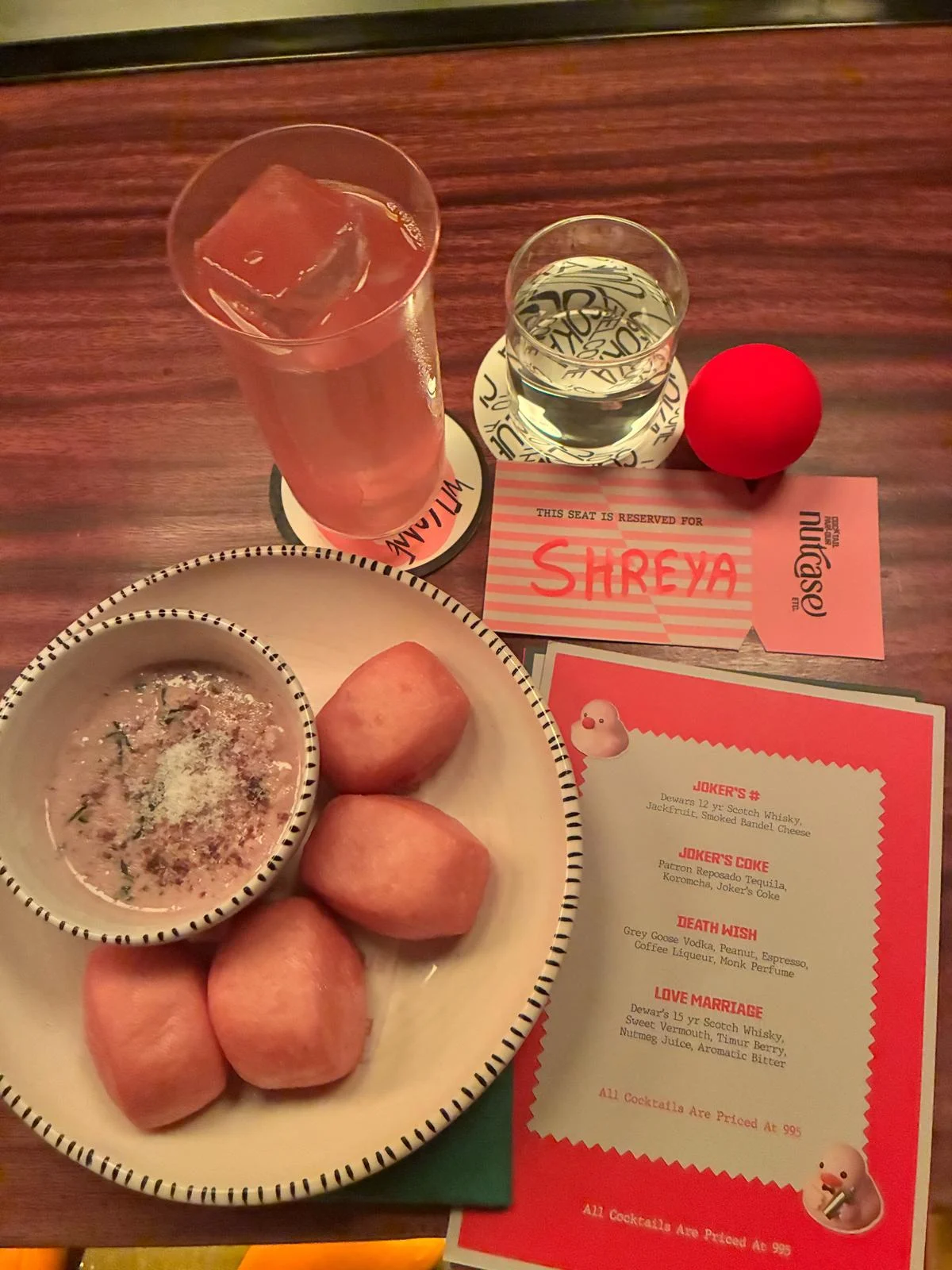
- Joker’s #: A bold mix of Dewar’s 12-Year Scotch, jackfruit, and the funky, smoky notes of Bandel cheese.
- Joker’s Coke: A vibrant, acidic take on a tequila cocktail using Patrón Reposado and the tart karamcha.
- Love Marriage: A sophisticated blend of Dewar’s 15-Year Scotch, sweet vermouth, Timur berry, and fresh nutmeg juice.
- Death Wish: A rich, dessert-like concoction of Grey Goose vodka, peanut, espresso, and "monk perfume."
As the last "Joker’s Coke" was served under the dim lights of Manohar Pukur Road, the collaboration had achieved its goal. It proved that when you remove the flight cases and the pre-set menus, what remains is the pure, unadulterated skill of the maker and the endless possibilities of the Indian pantry. For Nutcase Etc. and Soka, the Joker Shift was not just a guest shift—it was a revelation of what happens when two cities decide to speak the same language.
