

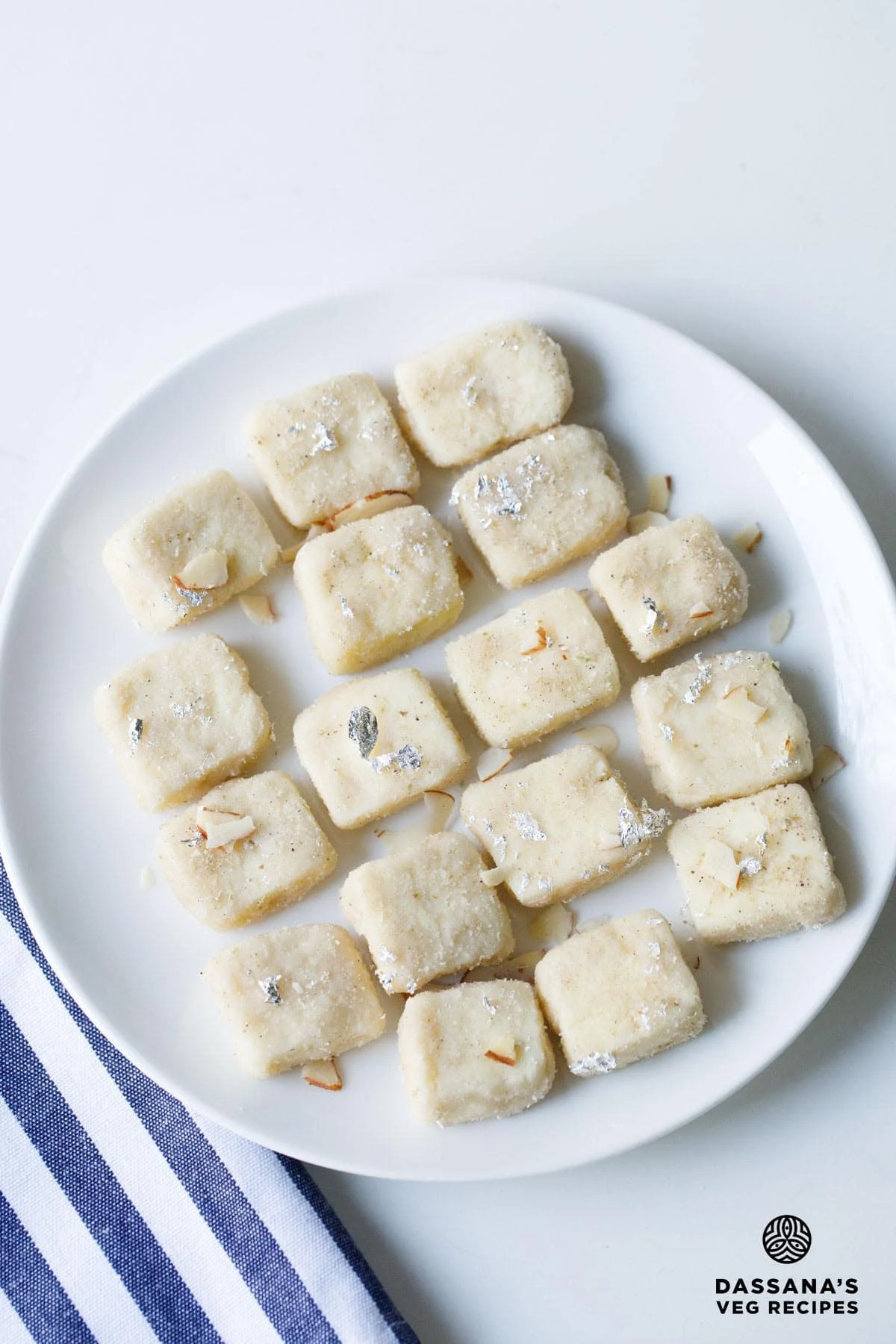
The landscape of Indian confectionery, or mithai, is a vast and intricate tapestry woven with regional specialties, seasonal ingredients, and ancient techniques. Among the most revered traditions is that of Bengal, a region synonymous with milk-based delicacies. While world-famous exports like Rasgulla and Sandesh often dominate the narrative, a minimalist masterpiece continues to hold its ground in traditional households and festive platters: Chena Murki.
A bite-sized marvel, Chena Murki consists of small cubes of fresh chhena (hand-crafted cottage cheese) or paneer, encased in a delicate, translucent layer of crystallized sugar. It is a study in textures—offering a crisp, sugary exterior that yields to a tender, milky core. As the culinary world moves toward artisanal and "clean label" treats, this centuries-old sweet is seeing a resurgence, prized for its simplicity and its reliance on just a handful of high-quality ingredients.

Main Facts: The Anatomy of a Minimalist Classic
Chena Murki is fundamentally defined by its two primary components: high-quality dairy and precisely treated sugar. Unlike many other Indian sweets that rely on heavy frying or complex reductions of milk (such as khoya), Chena Murki preserves the fresh, clean profile of the cheese.
The Core Ingredient: Chhena vs. Paneer
The soul of the sweet lies in the chhena. In Bengali culinary terminology, chhena refers to fresh curd cheese made by curdling cow’s milk with an acidic agent like lemon juice or vinegar, then draining the whey. While commercially available paneer is a common and effective substitute for the modern home cook, traditionalists argue that homemade chhena provides a superior, airy texture that better absorbs the essence of the sugar syrup.

The "Murki" Technique
The term "murki" in Bengali traditionally refers to items coated in crystallized sugar or jaggery. This is a distinct culinary process where a sugar syrup is cooked to a specific concentration, after which the solid ingredient is added and stirred as the temperature drops. This mechanical agitation causes the sugar to "recrystallize" around the object, creating a dry, snowy coating rather than a sticky glaze.
A Global Appeal
Naturally gluten-free and devoid of artificial preservatives, Chena Murki aligns with modern dietary trends. A single serving (approximately one cube) contains roughly 49 calories, making it a relatively light option compared to denser, deep-fried alternatives like Gulab Jamun. Its dry exterior also makes it highly portable, a factor that historically contributed to its popularity as a travel snack and a gift during the long festival seasons of Durga Puja and Diwali.

Chronology: The Lifecycle of a Chena Murki Batch
The creation of Chena Murki is a time-sensitive operation that requires a keen eye for physical transitions in the sugar’s state. The process can be broken down into four distinct phases.
Phase I: Preparation and Dehydration
The process begins with the slicing of fresh paneer or chhena into uniform cubes, typically measuring between 2.5 to 3 centimeters. Uniformity is not merely aesthetic; it ensures that each piece cooks at the same rate and receives an even coating. A crucial, often overlooked step is the air-drying of these cubes for 10 to 15 minutes. Removing surface moisture prevents the paneer from releasing water into the syrup, which would otherwise dilute the sugar concentration and prevent proper crystallization.

Phase II: The Precision of the One-String Syrup
The foundation of the coating is the sugar syrup (shira). In a thick-bottomed vessel, sugar and water are combined in a ratio that allows for controlled evaporation. The goal is to reach the "one-string" consistency (ek-taar). This is a professional benchmark where a drop of syrup pressed between the thumb and forefinger forms a single, resilient thread when pulled apart. This specific density is the "tipping point"—thin enough to soak into the outer layer of the paneer, yet thick enough to crystallize upon cooling.
Phase III: The Simmer
Once the syrup reaches the desired thread consistency, the heat is lowered, and the paneer cubes are introduced. They are simmered for approximately five to six minutes. This stage allows the syrup to penetrate the paneer, ensuring the sweet is not just a sugary shell but is flavored throughout. During this time, the syrup begins to foam and bubble aggressively, a visual cue that the water content has evaporated to the point where the sugar is ready to return to its solid state.

Phase IV: The Agitation and Crystallization
The final phase is the most labor-intensive. The pan is removed from the heat, and flavorings—typically green cardamom powder and rose water—are added. The cook must then stir the mixture continuously with a flat wooden spatula. As the temperature drops, the sugar’s solubility decreases. The constant movement prevents the cubes from clumping into a single mass and encourages the sugar to form small, fine crystals that "snow" over each cube. This process can take anywhere from 10 to 20 minutes depending on ambient humidity.
Supporting Data: Nutritional and Material Analysis
To understand the profile of Chena Murki, one must look at the data behind the ingredients and the resulting product.

Nutritional Breakdown (Per Serving/Cube)
Based on standard recipes using 200g of paneer and 150g of sugar:
- Calories: 49 kcal
- Carbohydrates: 6g (primarily from sucrose)
- Protein: 1g (derived from milk solids)
- Fat: 2g (saturated fat: 1g)
- Calcium: 41mg (approx. 4% of Daily Value)
- Cholesterol: 6mg
The Impact of Sugar Quality
The visual and textural outcome of Chena Murki is heavily dictated by the type of sweetener used:

- Refined White Sugar: Results in a bright, stark white coating with larger, crunchier crystals. This is the standard for commercial "halwai" style sweets.
- Organic Cane Sugar: Produces a pale cream or light brown hue due to residual molasses. The crystals are often finer and the flavor profile carries hints of caramel.
Shelf Life and Stability
Chena Murki is classified as a "semi-dry" sweet. While it can be stored in a refrigerator for 3 to 4 days, it is hydroscopic—meaning the sugar coating absorbs moisture from the air. Over time, the crisp exterior will soften, altering the intended experience. For optimal texture, it is best consumed within 24 hours of preparation.
Professional Perspectives: Culinary and Dietary Insights
While there is no "official regulatory body" for traditional sweets, culinary historians and nutritionists offer significant insights into the role of Chena Murki in the modern diet.

The Historian’s View: Regional Nuance
Food historians often point to the distinction between Bengali Chena Murki and Odisha’s Chhena Gaja or Chena Khurma. "While they share a base of milk solids and sugar, the Bengali version is unique in its avoidance of the deep fryer," notes culinary researcher Dr. Arpan Mukhopadhyay. "By skipping the frying stage, the Chena Murki maintains a ‘purer’ milk flavor. It is a testament to the Bengali preference for shubhra (white/pure) sweets."
The Chef’s View: The Importance of Tools
Professional Moiras (Bengali confectioners) emphasize the use of wooden spatulas. Metal spoons have sharp edges that can lacerate the delicate, warm paneer cubes during the crystallization phase. The "hand-work" involved in the final stirring is considered a hallmark of artisanal quality—a machine-stirred Murki often lacks the uneven, "snow-dusted" charm of the handmade variety.

The Dietitian’s View: Portion Control
Registered dietitians often cite Chena Murki as a "smarter" festive choice. Because the sweets are small and the sugar is concentrated on the surface, the sensory satisfaction of "sweetness" is achieved quickly, often leading to lower overall consumption compared to syrup-soaked sweets like Rasgulla, where the sugar is hidden throughout the liquid.
Implications: Tradition in the Age of Modernity
The continued relevance of Chena Murki carries several implications for the future of Indian food culture.

Preservation of "Slow Food"
In an era of instant desserts and processed snacks, the requirement of 20 minutes of continuous manual stirring to make Chena Murki serves as an act of "culinary mindfulness." It preserves a technique—sugar crystallization—that is fundamental to confectionery science but is increasingly being replaced by chemical stabilizers in commercial production.
Economic and Domestic Sustainability
Chena Murki represents an accessible entry point for home-based entrepreneurs. Because it requires no specialized equipment (like a deep fryer or heavy-duty blenders) and uses shelf-stable sugar and easily sourced dairy, it is a staple of cottage-industry gift boxes during the festive season.

The Zero-Waste Philosophy
The preparation of Chena Murki inherently follows a zero-waste logic. The excess sugar that falls off the cubes during the crystallization process is not discarded. In traditional households, this "paneer-scented" sugar is collected and stored to sweeten morning tea or coffee, ensuring that every gram of ingredient is utilized.
Conclusion
Chena Murki is more than just a sweet; it is a cultural artifact that exemplifies the Bengali culinary philosophy of "minimum ingredients, maximum technique." As the global palate moves toward authentic, regional, and gluten-free treats, this humble crystallized cube stands ready to represent the sophisticated simplicity of Indian heritage. Whether served on a silver platter during a high-stakes wedding or enjoyed with a simple cup of Darjeeling tea, Chena Murki remains an enduring symbol of the sweet life, crafted one stir at a time.
